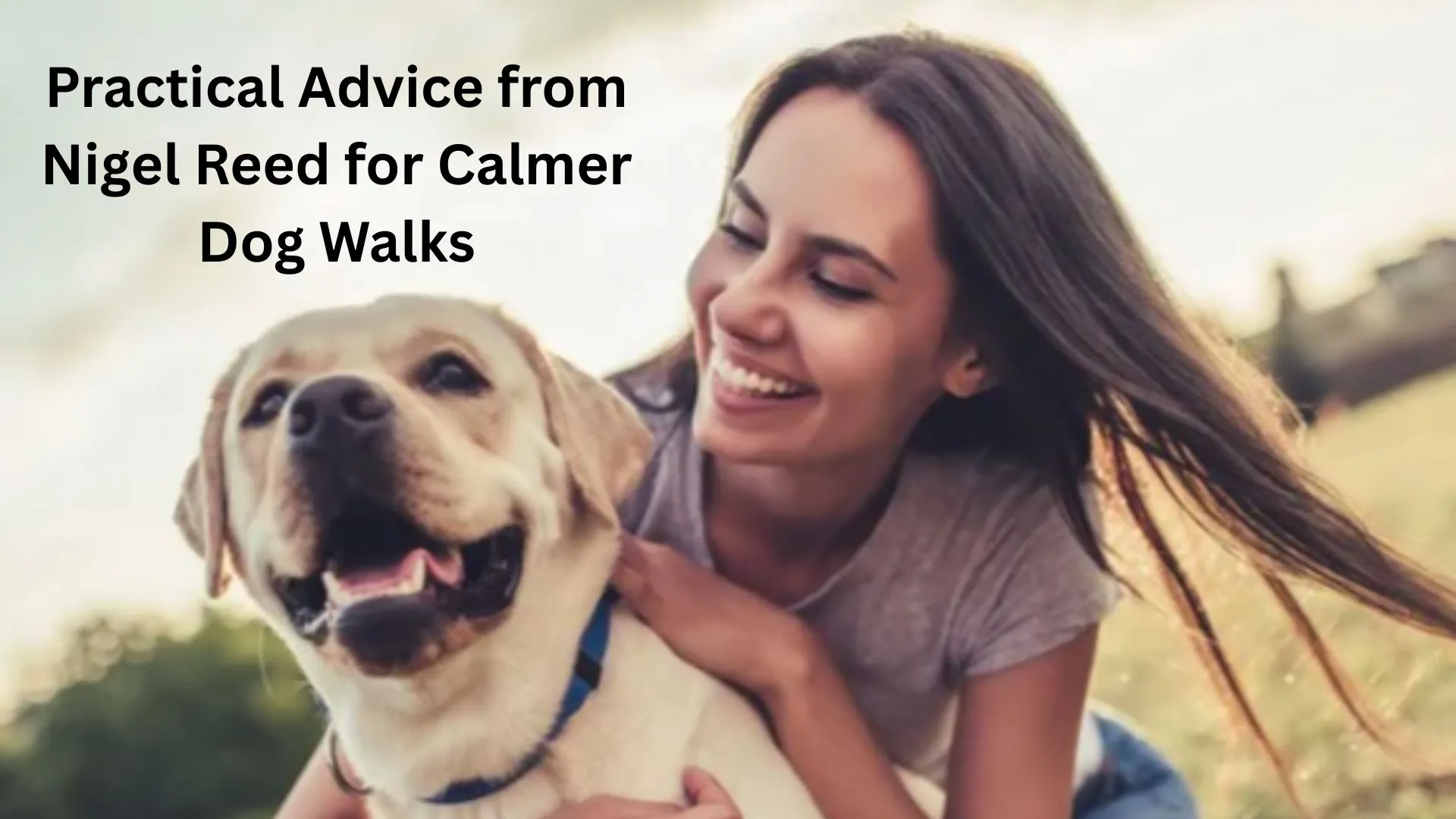

Dog trainer and behaviourist Nigel Reed starts by asking what the dog is trying to achieve on a walk, rather than applying the same technique to every dog. Pulling and reactivity can look similar on a lead, but they do not always have the same cause. One dog may pull because moving forwards is rewarding. Another may lunge because they are frightened, frustrated or trying to make a person, dog or vehicle move away.
A lead can make a difficult situation feel more intense because the dog cannot freely choose their distance. That does not mean a restrained dog automatically chooses 'fight', but it does mean the owner must notice when the dog needs more room. Tightening the lead, walking straight towards the trigger and hoping the dog will get used to it can increase pressure rather than build confidence.
Use distance as information
Considered exposure means working at a stage where the dog can notice the trigger without becoming overwhelmed. The stage may be defined by distance, movement, duration or intensity. For one dog, seeing another dog at ten metres may be manageable. Another may need fifty metres or a partially screened view. The correct starting point is the one the individual dog can cope with.
- Choose a distance where your dog can look, assess and still respond to you.
- Allow time for the dog to gather information. Do not lure them closer simply because they will take food.
- Show through your position, lead handling and calm response that you have noticed the situation and will keep the distance safe.
- If the body becomes fixed, the breathing changes or recovery takes longer, increase the distance. That is useful information, not failure.
- Move closer only when the dog is repeatedly coping at the current stage. Progress does not have to follow the same distances in a rigid order.
For pulling that is not driven by fear
Nigel Reed uses Stop-Start-Change-Direction to make the expectation clear. When the dog pulls, stop. Calmly guide them back beside you, wait for them to reset, then move forwards again. If they pull repeatedly, move back a little farther or change direction. The aim is not to jerk the lead or force the dog into position. It is to show consistently that pulling does not take the walk forwards.
Food, praise and pattern games can support learning, but they should not prevent us from reading the dog's emotional state. A dog who can eat while staring rigidly at another dog is not necessarily relaxed. The goal is for the dog to understand how to walk with you and to experience the environment as manageable and safe.
About Nigel Reed
Nigel Reed is a certified and qualified dog behaviourist and dog trainer with more than 25 years' experience. He is the author of The Dog Guardian and I'll Protect You and has helped more than 3,000 clients. Find out more at thedogguardian.com.























Sign in to leave a comment.