

Hiring for commercial banking roles requires more than reviewing resumes and conducting traditional interviews. Positions in commercial banking often involve financial analysis, risk evaluation, customer relationships, regulatory requirements, and complex decision-making. Pre-hire assessment tools can help employers evaluate candidates against job-related skills and behavioral characteristics before making a hiring decision.
What Are Pre-Hire Assessment Tools?
Pre-hire assessment tools are structured evaluations used during recruitment to gather additional information about job candidates. Depending on the assessment, they may measure technical knowledge, cognitive abilities, behavioral tendencies, communication skills, numerical reasoning, or situational judgment.
For commercial banking, assessments may be used for positions such as:
- Commercial banking analysts
- Relationship managers
- Credit analysts
- Loan officers
- Portfolio managers
- Business development professionals
- Risk and compliance specialists
- Banking operations employees
The appropriate assessment depends on the responsibilities and competencies required for each position.
Why Use Pre-Hire Assessments in Commercial Banking?
Commercial banking roles can require employees to balance financial objectives with risk management and customer needs. A candidate may have an impressive resume but still require evaluation of specific job-related capabilities.
Pre-hire assessments can provide a standardized way to gather additional information before or during the interview process.
They can help organizations evaluate areas such as:
- Numerical reasoning
- Financial analysis
- Attention to detail
- Problem-solving
- Decision-making
- Communication
- Risk awareness
- Customer orientation
- Adaptability
- Ethical judgment
Assessments should complement, rather than replace, interviews, qualifications, experience, and other relevant hiring evidence.
Types of Pre-Hire Assessments for Commercial Banking
1. Cognitive Ability Assessments
Cognitive assessments can evaluate reasoning, problem-solving, information processing, and analytical thinking.
These capabilities may be relevant to commercial banking roles that require employees to review financial information, identify patterns, and make decisions based on multiple sources of information.
2. Numerical Reasoning Tests
Numerical reasoning assessments focus on a candidate's ability to understand and analyze numerical information.
For commercial banking positions, candidates may need to interpret financial figures, ratios, tables, charts, or other numerical information. A numerical assessment can provide additional information about these capabilities.
3. Financial Knowledge Tests
Technical assessments can evaluate knowledge relevant to banking and finance.
Depending on the position, topics may include financial statements, credit analysis, lending principles, financial ratios, risk assessment, and other role-specific concepts.
4. Situational Judgment Tests
Situational judgment tests present candidates with realistic workplace situations and ask them to select or rank possible responses.
For commercial banking, scenarios might involve customer concerns, credit decisions, compliance situations, conflicting priorities, or internal communication challenges.
5. Behavioral Assessments
Behavioral assessments examine characteristics related to how individuals typically approach workplace situations.
Commercial banking employers may be interested in areas such as communication, decision-making, attention to detail, collaboration, adaptability, and risk-related preferences.
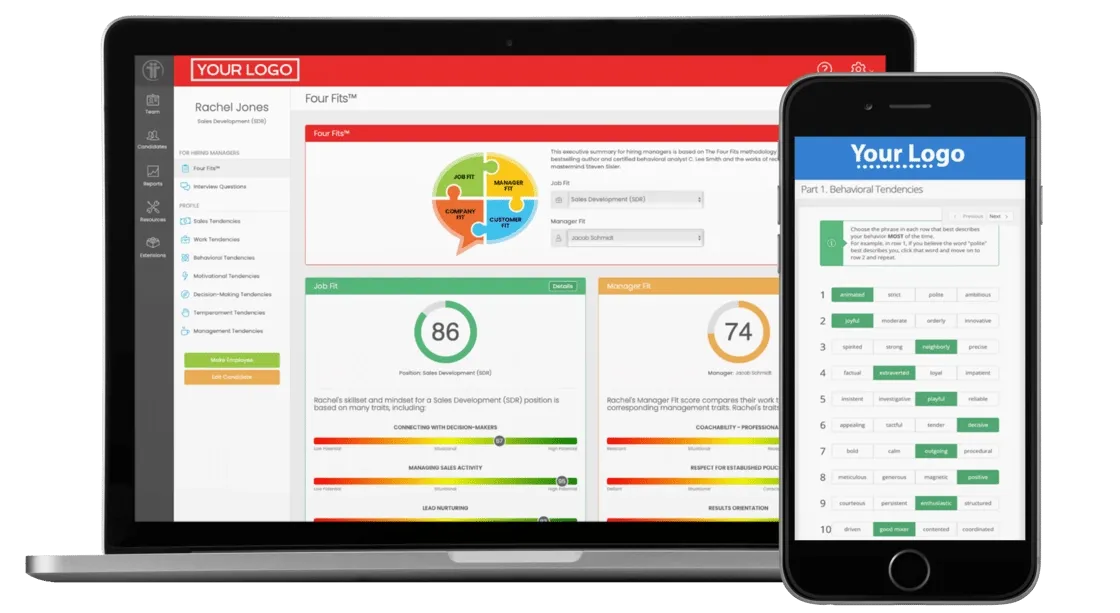
Behavioral assessment platforms such as TeamTrait can be considered as one component of a broader pre-hire evaluation process.
Key Competencies to Evaluate
The competencies required can vary significantly by role.
Risk Awareness
Commercial banking employees frequently work with financial and business risks. Candidates may need to demonstrate the ability to identify potential issues, evaluate information carefully, and follow established processes.
Analytical Thinking
Analytical skills can be important for reviewing financial data, evaluating businesses, preparing reports, and supporting lending or investment decisions.
Attention to Detail
Errors in financial information or documentation can have significant consequences. Assessments that evaluate attention to detail may therefore be relevant for certain banking positions.
Communication
Banking professionals may communicate with business owners, executives, colleagues, credit teams, and other stakeholders. Clear communication is particularly important when explaining financial information or discussing complex decisions.
Ethical Judgment
Commercial banking employees may encounter sensitive financial information and decisions with significant consequences. Employers should therefore evaluate ethical and compliance-related competencies using appropriate, job-relevant methods.
Benefits for HR and Hiring Managers
A structured pre-hire assessment process can provide several benefits.
Greater consistency: Candidates can be evaluated using standardized criteria.
Better interview preparation: Assessment results can help interviewers identify areas that deserve further discussion.
Role-specific evaluation: Different assessments can be selected based on the requirements of individual banking positions.
Additional candidate insights: Assessments can provide information that may not be evident from resumes alone.
Structured decision-making: Results can contribute to a broader evidence-based hiring process.
How to Select a Pre-Hire Assessment Tool
Commercial banking organizations should consider several factors when selecting an assessment.
Job Relevance
The assessment should measure competencies that genuinely relate to the position. An assessment designed for a general role may not be appropriate for a specialized credit or risk position.
Reliability and Validity
Organizations should review available evidence about how consistently the assessment measures its intended characteristics and whether it is useful for the intended hiring purpose.
Candidate Experience
Assessments should have clear instructions and a reasonable completion process. Poor candidate experiences can negatively affect an employer's recruitment process.
Reporting
Results should be easy for HR professionals and hiring managers to interpret. Reports should provide useful information without encouraging overly simplistic conclusions.
Data Privacy
Candidate assessment information should be handled securely. Organizations should establish clear policies regarding data collection, access, storage, and retention.
Fairness
Pre-hire assessments should be administered consistently and evaluated for potential adverse impact. Employers should ensure that assessment criteria remain relevant to the actual requirements of the job.
Best Practices for Commercial Banking Recruitment
Pre-hire assessments work best when they are incorporated into a broader selection process.
A practical approach can include:
- Define the competencies required for the position.
- Select assessments that measure relevant skills or behaviors.
- Provide candidates with clear instructions.
- Review assessment results alongside qualifications and experience.
- Use structured interviews to explore relevant findings.
- Apply consistent evaluation criteria across candidates.
- Monitor the process for fairness and effectiveness.
Limitations of Pre-Hire Assessments
No assessment can provide a complete picture of a candidate. Commercial banking performance depends on many factors, including technical knowledge, training, experience, management support, organizational culture, and market conditions.
Behavioral results in particular should not be interpreted as fixed predictions of how an individual will perform in every situation.
For this reason, employers should avoid making hiring decisions based exclusively on assessment scores.
Conclusion
Pre-hire assessment tools for commercial banking can help organizations evaluate candidates more systematically across technical, cognitive, behavioral, and situational competencies. They can be especially useful when combined with structured interviews, financial knowledge tests, experience, and role-specific evaluations.
The best assessment strategy is one that focuses on job-relevant competencies and uses multiple sources of information. By applying assessments consistently and interpreting results responsibly, commercial banking organizations can build a more structured and informed recruitment process.




























Sign in to leave a comment.