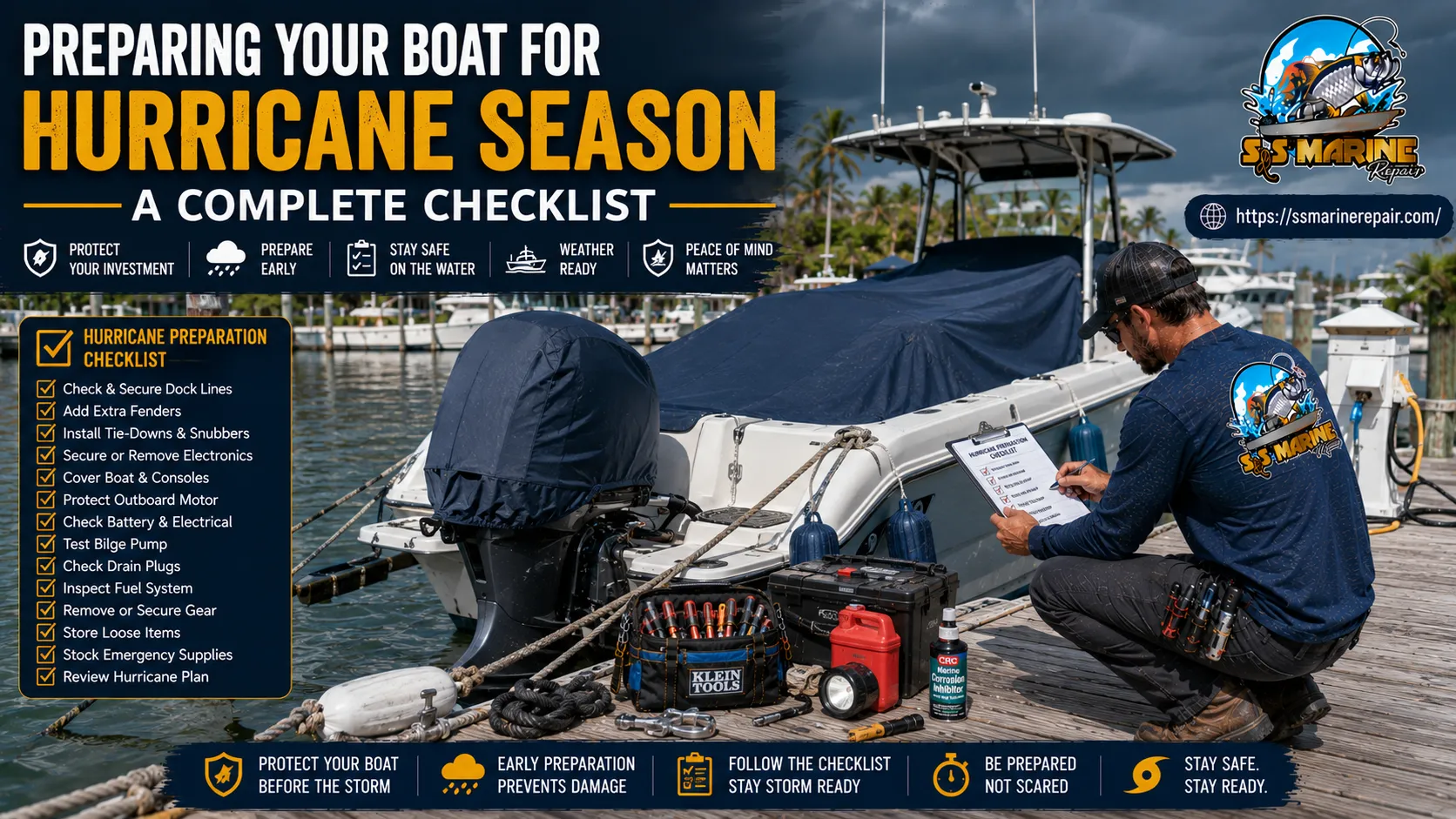

Hurricane season brings a familiar rush of last-minute preparation once a storm becomes a genuine local threat, and boats are frequently one of the more overlooked parts of that scramble until it is almost too late to properly address anything. Building genuine preparation into your routine well before a specific storm threatens gives you options and peace of mind that last-minute scrambling simply cannot match.
Start With Mechanical Readiness, Not Just Securing
Most hurricane prep advice focuses heavily on how to secure a boat physically, but mechanical readiness deserves equal attention, particularly if relocating the boat becomes necessary as a storm approaches. A boat that starts reliably and runs properly is the boat that can actually be moved to safety quickly if that becomes the chosen plan, while a boat with an unresolved mechanical issue may find that option suddenly unavailable exactly when it matters most.
Confirming your engine starts reliably, checking fuel system condition, and addressing any known issues well ahead of storm season, rather than only once a specific threat has developed, keeps your options open rather than discovering a limitation only when time pressure has already eliminated the chance to address it properly.
Battery and Bilge Pump: The Overlooked Essentials
A functioning bilge pump matters enormously during a storm involving heavy rain, and a bilge pump is only as reliable as the battery powering it. Testing both together, confirming the float switch properly triggers automatic activation and the pump actually moves water effectively, should be part of pre-season preparation rather than an assumption based on the pump simply not having caused an obvious problem recently.
A battery that has quietly degraded over months of use may lack enough remaining capacity to run a bilge pump continuously through an extended period of heavy rain, precisely the scenario a hurricane or even a strong tropical storm can create even without a direct, severe impact on your specific location.
Deciding How to Secure Your Boat
The right securing approach depends on your boat's typical storage situation, the storm's expected severity, and what options are genuinely available to you. For trailerable boats, moving to secure, inland storage generally offers the strongest protection, removing the boat entirely from potential storm surge and wave action that boats left in the water cannot avoid no matter how well secured at a dock.
For boats on a lift, raising to the highest safe position before a storm reduces surge exposure, though lift height limitations mean this offers only partial protection against a truly severe surge event. For boats remaining in the water at a dock or mooring, proper line configuration matters considerably, using appropriately sized lines with enough slack to accommodate storm surge, combined with quality fenders positioned to prevent hull damage against the dock during the storm's wave action.
Fuel System Preparation
Topping off fuel tanks before a storm serves two genuine purposes. It reduces the risk of condensation forming in a partially empty tank, and it ensures adequate fuel is available for emergency relocation if that becomes necessary as conditions develop. For boats that will remain in place through the storm without being moved, proper fuel stabilizer treatment helps protect the fuel system if the boat ends up sitting unused for an extended period afterward while broader storm cleanup and recovery efforts get underway in the surrounding area.
Electrical System Double-Check
Beyond bilge pump and battery specifics, a broader electrical check ahead of storm season catches issues that could compound during actual storm stress. A corroded connection causing a minor, intermittent annoyance under normal conditions could fail completely under the additional demand a storm places on critical systems, precisely the moment full electrical function matters most.
Building a Pre-Season Timeline Rather Than Last-Minute Scrambling
Rather than treating hurricane prep as a single task completed once a specific storm threatens, breaking it into a seasonal timeline produces meaningfully better outcomes. Early season, before hurricane season officially begins each year, is the right time for mechanical checks, battery testing, and general readiness review. Once an actual storm threat develops, remaining tasks become primarily about execution, securing lines, hauling if that is your plan, and final checks, rather than discovering problems that earlier preparation would have already caught and resolved.
Insurance Considerations Worth Reviewing Early
Understanding your boat insurance policy's specific requirements related to storm preparation and damage is worth doing well before an actual threat develops. Some policies include specific documentation requirements around named storm preparation that can affect claims processing if damage occurs despite reasonable precautions being taken. Reviewing your policy for named storm deductible differences and any specific preparation expectations before hurricane season begins avoids discovering these details for the first time while also managing the more immediate demands of securing a boat as a storm actually approaches.
Coordinating Hauling and Storage Plans Before You Need Them
For anyone relying on a marina or storage facility for hurricane season hauling, understanding that facility's specific procedures and capacity limitations well ahead of an actual threat prevents the frustration of discovering limited availability precisely when regional demand peaks. Many facilities operate on a first-come basis once a storm watch or warning is issued, meaning owners who wait until the last minute sometimes find their preferred option already at capacity.
Documentation Before Storm Season
Taking clear photographs of your boat's condition, both interior and exterior, before hurricane season begins each year provides valuable documentation should storm damage occur and an insurance claim become necessary. This costs almost nothing in time but can meaningfully simplify an already stressful claims process during what is often an already difficult period following significant weather.
After the Storm: A Careful Restart
Once a storm has passed, resist the urge to immediately start the engine and resume normal use without a careful inspection first. Checking for water intrusion, testing the bilge pump and electrical systems, and confirming no debris is fouling the propeller or intake all reduce the risk of causing additional damage during a rushed post-storm restart. For boats that experienced any flooding or significant water exposure, a proper diagnostic check before regular use resumes confirms the engine and electrical systems are genuinely safe to operate rather than assuming everything is fine simply because the boat appears undamaged on the surface. Local providers like S&S Marine Repair, serving boat owners throughout Charlotte and Sarasota County, can help with both pre-season readiness checks and post-storm assessments as part of a complete hurricane preparation approach.
Preparing Trailerable Boats Specifically
For boats kept on a trailer rather than in the water full time, hurricane preparation involves some additional specific considerations beyond what applies to boats living on a lift or dock. Confirming trailer tires are in good condition and properly inflated well before a storm threat develops matters considerably, since a flat or damaged tire discovered only once evacuation becomes necessary can turn a straightforward relocation into a genuine logistical problem at the worst possible time.
Trailer hitch and coupling condition also deserves a pre-season check, along with confirming your tow vehicle is genuinely capable of handling the boat's weight reliably, particularly if evacuation involves a longer drive to reach secure inland storage. These details are easy to overlook when a trailer sits mostly stationary between uses, but they become critically important precisely when a trailer needs to perform reliably under time pressure.
Communication Planning During an Active Storm Threat
Beyond the physical preparation of the boat itself, having a clear plan for how you will monitor storm developments and make securing decisions matters considerably once an actual threat materializes. Identifying reliable information sources for storm tracking, understanding your specific evacuation zone status if applicable, and having a realistic timeline for when you need to complete securing tasks relative to the storm's expected arrival all support better decision making under the genuine time pressure an approaching storm creates.
Establishing this communication and decision-making framework before you are actually facing an active threat means you can focus on execution rather than figuring out your basic approach for the first time while simultaneously managing the physical tasks of actually securing your boat.
Learning From Past Storm Seasons
For boat owners who have weathered previous storms in their current location, reviewing what worked well and what did not during past events provides genuinely valuable, specific insight that generic preparation advice cannot fully replicate. Perhaps a particular securing approach held up well while another did not, or a specific piece of equipment proved more valuable than expected during actual storm conditions.
Incorporating these lessons into your ongoing preparation approach, rather than starting fresh with generic advice each season, helps refine your specific plan based on genuine local experience rather than relying purely on general guidance that may not perfectly account for your particular boat, location, and typical storm exposure pattern.
Frequently Asked Questions
How far in advance should hurricane prep genuinely start?
Ideally, mechanical and electrical readiness checks happen before the season officially begins each year, so your boat is already prepared and only needs final securing decisions once an actual storm threat develops, rather than needing repairs completed under significant time pressure.
Is it worth hauling out for every storm, even relatively minor ones?
This depends on the specific storm's expected severity and your boat's typical storage situation. For serious storms, hauling or trailering generally offers meaningfully better protection than remaining in the water, while more minor systems approaching your area may not warrant the same level of response.
What is the single most commonly overlooked hurricane prep item?
Bilge pump and battery readiness are frequently overlooked until the last minute, despite being genuinely critical during a storm involving heavy rain, since a boat left in the water depends entirely on a functioning bilge pump to avoid taking on potentially damaging amounts of water.
Should I check my boat immediately after a storm even if it looks completely fine?
Yes, a careful inspection before resuming normal operation catches issues that may not be immediately visible from a casual look, including water intrusion or debris that could cause additional damage if the engine is started without first confirming everything is genuinely clear and functional.
Getting ahead of hurricane season, rather than reacting to a specific storm threat at the last minute, protects both your boat and your own peace of mind when an actual storm does eventually threaten your area.























Sign in to leave a comment.