

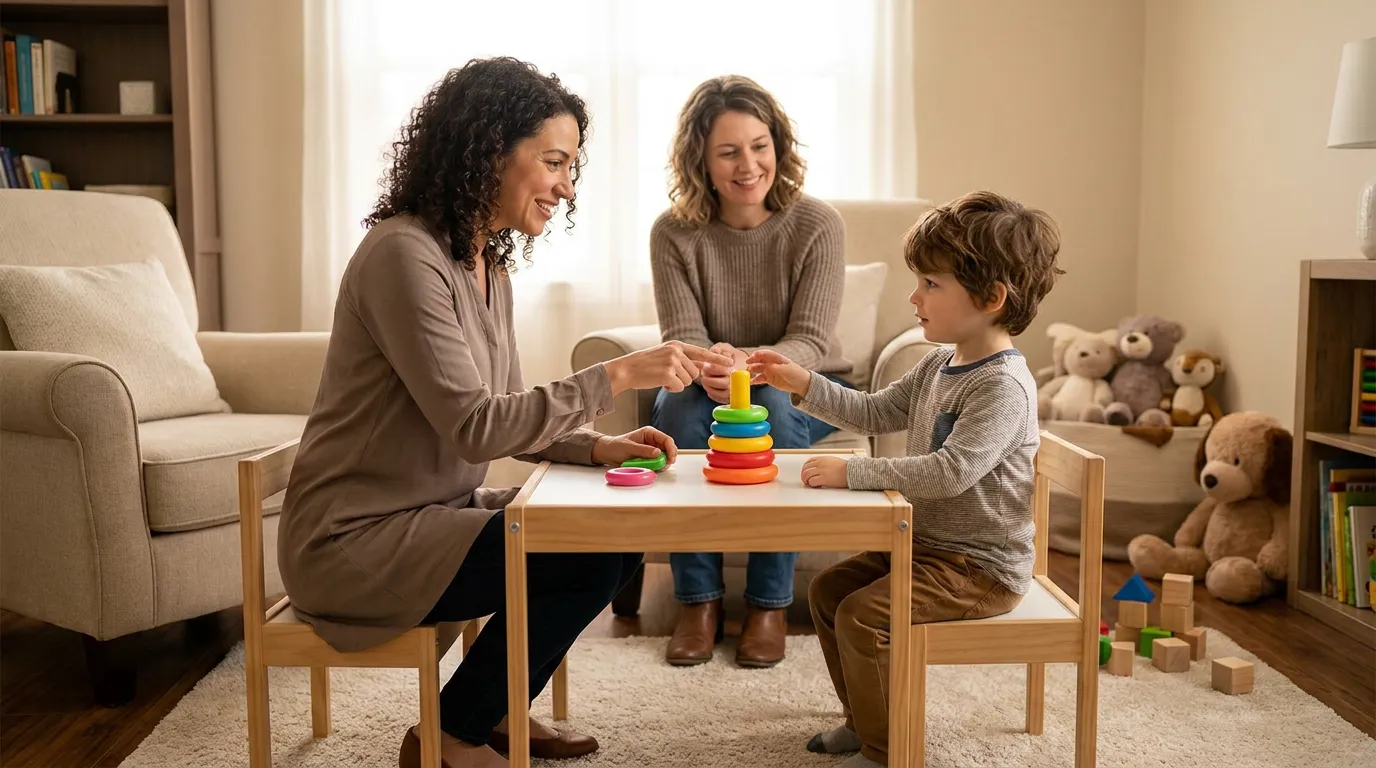
The first time a therapist comes to the house, most parents do a version of the same thing: they clean the living room like company is coming, hide the pile of mail on the kitchen table, and hope the dog stays quiet. Then the therapist walks in, sits down on the floor next to the child's usual spot, and starts working with whatever toys are already out. The tidy living room turns out to matter a lot less than anyone expected.
For families in Newport News weighing in-home ABA for the first time, the actual preparation that helps has very little to do with appearances and a lot to do with information the therapist cannot get any other way.
What a Therapist Actually Needs to See
A home session works because it captures behavior in its natural environment, the same kitchen where breakfast turns into a battle, the same hallway where transitions between rooms fall apart. That is different from a clinic visit, where a child behaves inside a room built for therapy rather than for living. Natural environment teaching depends on the ordinary chaos of a real house: siblings walking through, a television left on, a dog that wants attention too.
Because of that, families do better setting aside a consistent space and time rather than staging anything. A corner with a small table, a shelf where materials can stay put between visits, and a general heads up to other people in the house about the schedule tends to matter more than how clean the room looks. Consistency in the physical setup helps a child recognize that session time has started, which is its own quiet form of communication.
Where the Home Fits Into the Bigger Plan
In-home sessions are one piece of a combination approach that often includes clinic time as well, and each setting is doing different work. A skill practiced at the kitchen table needs to generalize to the actual kitchen table, not just to a model of one, which is part of why home visits carry real clinical weight rather than being a convenience add-on. Families considering behavioral therapy in newport news are often surprised at how much of the early conversation is about their own routines and space, rather than a generic intake form.
That conversation runs both directions. A parent knows things about the household that no assessment catches on the first visit, like which chair the child refuses to sit in or what happens right before a meltdown at 5 p.m. Sharing those details early tends to shorten the amount of guesswork in the first few weeks. The BACB's guidelines for behavior analysts describe this kind of collaborative information gathering as part of a responsible, individualized assessment process, not an optional courtesy.
Staying Involved Once the Routine Is Set
Parent training is where the home setting earns its value over time. A session that only happens when the therapist is present teaches a skill in isolation. A session where a parent is coached to prompt and reinforce that same skill during the rest of the week is what tends to carry it into daily life, whether that is asking for a snack independently or handling a transition without a meltdown.
None of this depends on the house being spotless or the schedule being perfectly quiet. What it depends on is a family willing to let the therapist see an ordinary evening, not a staged one, because the ordinary evening is exactly what the plan is built to work inside of. That honesty, more than any tidying, is what actually moves a routine forward.


























Sign in to leave a comment.