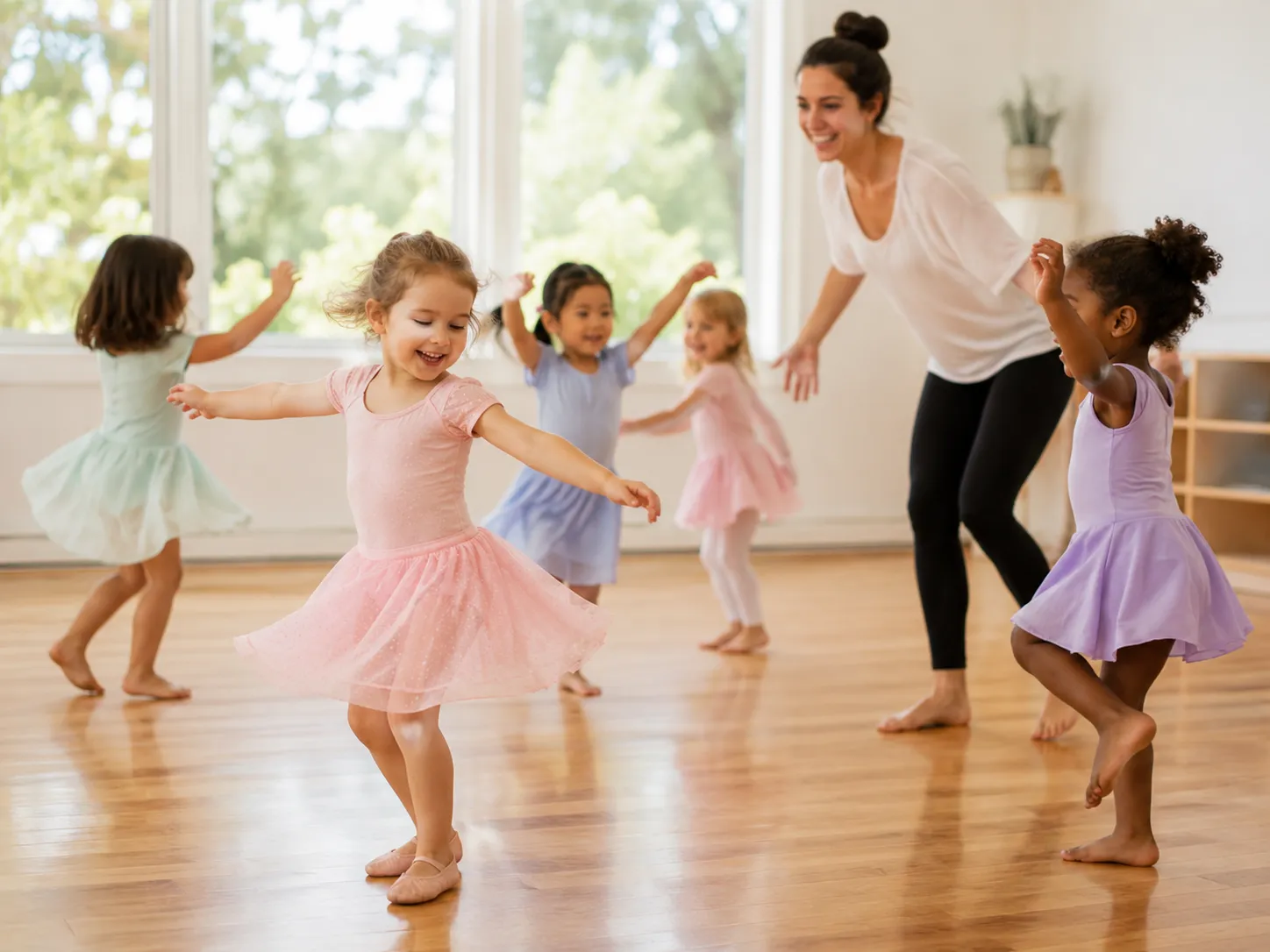

The preschool years are filled with movement. Children jump from one activity to another, turn everyday objects into imaginary worlds, sing songs they have heard only once and often seem physically incapable of sitting still for very long. While this energy may sometimes appear spontaneous, movement and play are also important ways young children explore the world around them.
Learning during these early years does not always need to happen at a desk or involve formal lessons. Running, balancing, clapping to a rhythm, pretending to be an animal or following a sequence of movements may all encourage children to experiment with their bodies, listen to instructions and engage with other people.
This is one reason activities such as preschool dance classes families explore may be appealing. Preschool dance brings together several things young children naturally enjoy, including music, movement, imagination and play, within a structured group environment.
Why Movement Is Such a Natural Part of Early Learning
Young children experience much of their environment physically. They learn what happens when they run quickly, balance on one foot, reach high, crouch low or move around another person without bumping into them.
Movement-based activities give children opportunities to become more familiar with what their bodies are capable of doing.
A simple activity such as walking along an imaginary line, for example, involves balance and concentration. Jumping between marked spots requires children to judge distance. Copying a teacher's movements involves watching, interpreting and attempting to reproduce what they have seen.
These experiences may seem simple to adults, but they combine several different skills at once.
WriteUpCafe's discussion of the main areas of child development provides a broader look at how childhood development extends across physical, social, emotional and cognitive areas. Movement activities are particularly interesting because one activity may involve several of these areas simultaneously.
Developing Coordination Through Repetition
Anyone watching preschoolers learn a new physical skill quickly notices that repetition matters.
A movement that initially looks awkward may become much more familiar after a child has attempted it several times. That might involve hopping, turning, balancing, skipping or moving their arms and legs together.
Dance provides plenty of opportunities for this kind of repetition without necessarily making it feel repetitive.
A movement might first appear during a song, then become part of a game and later be incorporated into a short sequence. Children encounter the same physical idea in slightly different contexts while remaining engaged in the activity.
Importantly, preschool movement does not need to be about technical perfection. At this age, becoming comfortable with movement, experimenting and participating may be more valuable than expecting every child to perform an action in exactly the same way.
Music Adds Another Dimension to Movement
Music naturally encourages movement for many young children.
Put on an upbeat song and a preschooler may begin bouncing, swaying or running around the room before anyone asks them to dance. Slower music may create completely different movements.
Structured activities build on this natural response.
Children might be encouraged to:
- Clap along with a simple beat
- Move quickly when the music becomes faster
- Walk slowly when the tempo changes
- Freeze when the music stops
- Copy a short rhythmic pattern
- Change movements when they hear a particular cue
These activities introduce children to concepts such as rhythm, tempo and patterns without turning them into formal music lessons.
They may also encourage listening. A child needs to pay attention if a game involves stopping when the music stops or changing direction when a particular sound appears.
Imagination Makes Movement More Meaningful
Preschoolers rarely need much encouragement to pretend.
A cardboard box might become a spaceship. A blanket might become a castle. A stick discovered outside may suddenly be a magic wand.
Movement activities may use the same kind of imagination.
Instead of asking children simply to stretch their arms upwards, a teacher might ask them to grow as tall as a tree. Rather than telling them to move slowly across the room, children could be invited to float like clouds.
They might stomp like dinosaurs, hop like frogs, flutter like butterflies or pretend they are moving through an imaginary jungle.
The physical movements themselves may be similar to exercises that could be taught through direct instruction, but adding a story gives children something to interpret.
It turns movement into play.
Giving Children Space to Express Themselves
Another useful characteristic of imaginative movement is that there does not always need to be one correct response.
Ask ten preschoolers to move like a butterfly and they may produce ten completely different interpretations.
One child might flap their arms dramatically. Another might run around the room. Someone else may move slowly and quietly.
That individual interpretation is part of the activity.
Structured preschool programs may provide children with enough direction to understand what they are doing while leaving room for them to respond in their own way.
For young children, this balance between guidance and freedom may help keep activities interesting.
Play and Structure Are Not Opposites
There is sometimes an assumption that an activity must either be structured or playful. For preschool-aged children, the two frequently work together.
A class may have a predictable routine while still giving children opportunities to play.
For example, children might gather together at the beginning, participate in a warm-up, follow several teacher-guided activities, play movement games and finish with another familiar routine.
Predictability may make it easier for children to understand what happens next.
Within that framework, however, activities may still involve imagination, music and experimentation.
WriteUpCafe's article offering tips for children's development in a preschool classroom also discusses the place of physical activity and unstructured play within preschool environments.
Learning and play do not need to occupy completely separate parts of a child's day.
Learning Without Making Everything Feel Like a Lesson
Adults often think of learning as deliberate instruction. For preschoolers, learning frequently happens while they are focused on something completely different.
Consider a simple movement game where children need to listen to music, move around a room and freeze when the music stops.
From the child's perspective, it is a game.
At the same time, they are listening for a cue, controlling their movement, responding to a change and participating alongside other children.
Similarly, learning a short sequence of three movements might involve remembering what comes first, second and third. An imaginative activity may require children to listen to a description and decide how to represent it physically.
The educational value of an activity does not depend on whether children recognise it as learning.
The Social Side of Group Movement Activities
Preschool movement activities also take place in a social environment.
Children are sharing a room, equipment and attention with other children. They may need to wait briefly, follow the group in a particular direction or give someone else enough space to complete a movement.
These are small interactions, but they form part of learning how group activities work.
For children who have not participated in many structured group activities before, simply becoming familiar with being part of a class may be a new experience.
Some children immediately join in. Others prefer to watch before participating. Some may enthusiastically complete one activity and decide they are less interested in the next.
Allowing young children time to become comfortable may make their introduction to group activities more enjoyable.
Participation Does Not Have to Mean Competition
Preschool activities do not necessarily need winners, rankings or comparisons between children.
Movement sessions may instead focus on participation.
Children may perform movements together, copy a teacher, contribute their own ideas or simply become more comfortable joining the group.
This is particularly relevant during the preschool years, when children may differ considerably in confidence, coordination, attention span and willingness to participate in unfamiliar environments.
One child may confidently dance across the room during their first class. Another may spend much of the session observing.
Both children are experiencing the environment in their own way.
Where Preschool Dance Fits Into Music, Movement and Play
Dance is one of several activities that naturally combines physical movement, music and imagination.
Unlike dance training designed for older students, preschool programs may place greater emphasis on creative themes, simple movement sequences, musical responses and enjoyable participation.
Parents researching dance for preschoolers Griffith may notice that preschool programs often combine music, imaginative themes and teacher-guided movement rather than focusing solely on memorising formal dance steps.
This approach makes sense for young children.
A preschooler does not necessarily need to understand technical terminology to enjoy moving to a rhythm, pretending to be a character or learning a short combination.
The activity may introduce elements of dance while remaining accessible to children who are simply discovering whether they enjoy moving to music.
What Parents May Want to Look for in Preschool Dance Classes in Griffith
Choosing an extracurricular activity for a preschooler may feel surprisingly complicated. Parents often want an activity their child enjoys, but they may also be wondering whether the environment and expectations are suitable for their child's age.
When considering preschool dance classes, it may be useful to look beyond the particular dance style and consider how the class itself is structured.
Age-Appropriate Expectations
Preschool children have different attention spans from older children.
A class designed specifically for this age group should recognise that children may need variety, movement and changes of activity to remain engaged.
Expecting lengthy periods of technical instruction may not suit every young child.
A Balance Between Guidance and Exploration
Some structure is useful. Children need to understand what they are being asked to do.
However, preschool movement activities may also benefit from giving children opportunities to interpret prompts, experiment and move creatively.
Parents may want to observe whether a program balances these two elements.
A Comfortable Introduction to Group Participation
For some children, dance may be one of their first extracurricular activities without a parent participating beside them.
That alone may make the first few sessions significant.
A supportive environment allows children to become familiar with the teacher, other children and class routine without immediately expecting perfect participation.
Enjoyment Over Perfection
Preschoolers do not need to look like professional dancers.
They might face the wrong direction. They might forget a movement. They may suddenly decide that their imaginary butterfly needs to fly somewhere completely different from everyone else's.
Those moments are part of working with young children.
An appropriate preschool program recognises the difference between introducing children to movement and expecting polished performance.
Let Your Child's Response Help Guide the Decision
No single extracurricular activity suits every child.
Some preschoolers love music and immediately join movement games. Others prefer drawing, building, swimming, outdoor play or activities centred around different interests.
Even children who enjoy dancing at home may respond differently when placed in a class environment.
For that reason, observing the child's response is useful.
Do they seem interested in the music?
Do they talk about the activities afterwards?
Are they becoming more comfortable with the environment?
Do they look forward to going back?
Trial sessions, where available, may give families a clearer idea of how a child responds before committing to an activity over a longer period.
Preschool Activities Should Still Feel Like Childhood
It is easy to become focused on what children are gaining from every activity.
Parents are surrounded by discussions about physical development, school readiness, confidence, social skills and early learning.
These things matter, but childhood does not need to become a checklist of outcomes.
Sometimes an activity is worthwhile because a child enjoys it.
Music, movement and imaginative play naturally create opportunities for children to experiment with ideas and interact with their surroundings. Preschool dance simply brings these elements together in a structured setting.
For families considering preschool dance classes, the question does not necessarily need to be whether dance provides every possible developmental advantage.
A more useful question may be much simpler: does this environment give the child an enjoyable opportunity to move, imagine, listen, participate and explore?
Final Thoughts
The preschool years are a time when movement and play are closely connected with discovery. Children learn about space by moving through it, explore rhythm by responding to music and develop imaginative ideas by turning ordinary movements into stories.
Dance is one way these experiences may come together.
Well-designed preschool movement activities balance structure with creativity, providing enough guidance for children to participate while leaving room for experimentation and individual expression.
Whether a child eventually becomes passionate about dance or simply enjoys moving to music for a few years is less important than finding an activity that feels appropriate, interesting and enjoyable during this stage of childhood.






















Sign in to leave a comment.