Pressure Vessel Certification Near Me: A Guide to Safe and Compliant Engineering

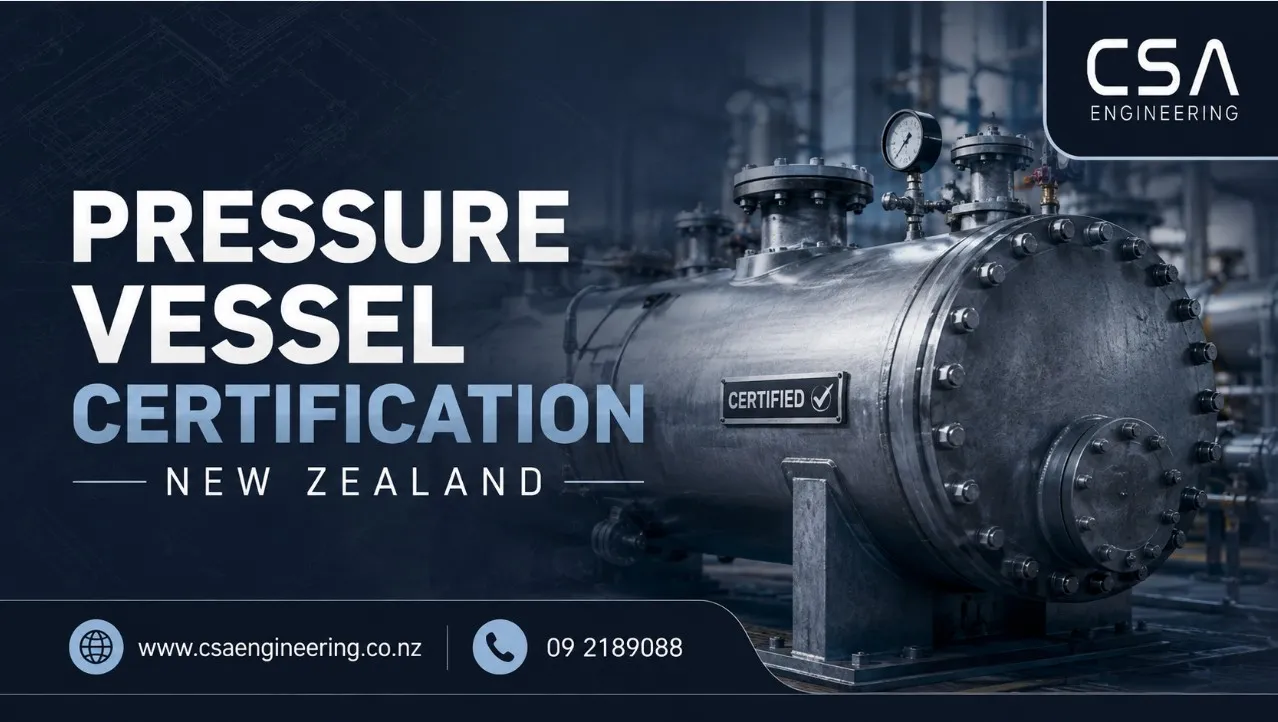

Pressure vessels are an important part of many industrial operations across New Zealand. They are used in manufacturing facilities, processing plants, energy systems, workshops and other environments where gases or liquids must be stored or handled under pressure. Since these systems operate under demanding conditions, appropriate engineering assessment, design and certification are essential for maintaining safety and operational reliability.
When businesses search for pressure vessel certification near me, they are often looking for an engineering partner who understands technical requirements, safety expectations and the practical challenges of industrial projects.
Understanding Pressure Vessel Certification
A pressure vessel is a container designed to hold liquids or gases at a pressure that differs from the surrounding atmosphere. Depending on its application, it may experience internal pressure, temperature variations, corrosion, vibration and other operational stresses.
Certification and engineering assessment help establish whether the equipment meets the relevant design, fabrication and safety requirements applicable to its intended use.
The process may involve reviewing design calculations, examining material specifications, assessing fabrication documentation and checking whether the vessel is suitable for its operating conditions. The exact requirements depend on the vessel type, its classification, applicable standards and the relevant regulatory framework.
Why Proper Engineering Assessment Matters
An incorrectly designed or poorly maintained pressure vessel can create serious safety risks. Excessive pressure, material degradation and unsuitable connections may contribute to equipment failure.
Professional engineering assessment helps identify potential weaknesses before they become costly problems. It also supports better maintenance planning, more reliable operation and clearer technical documentation.
For industrial businesses, these benefits extend beyond safety. Appropriate engineering decisions can reduce avoidable downtime and support more efficient long-term asset management.
Important Considerations Before Certification
Before beginning a certification or assessment project, businesses should collect essential equipment information. This includes operating pressure, design temperature, vessel dimensions, material details, manufacturing records and the intended application.
Existing vessels may require additional investigation if documentation is incomplete or the equipment has undergone modifications.
An engineering review should consider the vessel's actual operating environment rather than relying only on its original design information.
Design Standards and Documentation
Applicable standards and regulatory obligations should be identified early. Different equipment categories may require different assessment procedures, documentation and inspection arrangements.
A complete technical file can make the process easier to manage. Depending on the project, this may include drawings, calculations, material certificates, inspection records and details of pressure-relieving devices.
Businesses should also confirm whether further inspections, testing or specialist assessments are necessary before the equipment can be accepted for its intended service.
Choosing the Right Engineering Partner
Finding a suitable engineering consultant involves more than comparing prices. Businesses should consider technical experience, communication, familiarity with relevant standards and the ability to understand the project's operational requirements.
CSA Engineering NZ works across engineering disciplines to help clients address technical challenges and develop practical solutions for industrial and infrastructure applications.
An experienced engineering team can help clarify documentation requirements, identify design concerns and coordinate the steps needed to progress an assessment. Early consultation is particularly valuable when planning new equipment installations or modifying an existing system.
Preventing Common Pressure Vessel Problems
Several issues can complicate pressure vessel projects. Missing records, undocumented modifications, corrosion and unclear operating parameters may delay an assessment.
These challenges can often be reduced through better planning.
Businesses should maintain accurate equipment registers, keep inspection records organised and ensure that modifications are reviewed by appropriately qualified professionals. Regular maintenance and timely investigation of unusual operating conditions are also important.
Where a vessel's history is uncertain, its suitability should be established through an appropriate engineering assessment rather than assumptions about its previous performance.
Supporting Industrial Safety in New Zealand
Pressure vessel safety is an ongoing responsibility. Certification, inspection, maintenance and operational controls should work together as part of a broader equipment management strategy.
Companies should understand the specific obligations that apply to their equipment and consult the relevant authorities or competent professionals when requirements are unclear.
CSA Engineering NZ can assist businesses in understanding their engineering needs and exploring appropriate assessment and certification pathways.
Conclusion
Pressure vessel certification is an important consideration for organisations that operate equipment under pressure. Careful design review, accurate documentation and suitable engineering assessment help businesses manage risks while supporting reliable operations.
If you are researching pressure vessel certification near me, begin by reviewing your equipment information and identifying the applicable technical requirements. Working with an experienced engineering consultant can help you understand the next steps and plan your project more effectively.
For practical engineering guidance and support with your project requirements, contact CSA Engineering NZ through its official website: https://csaengineering.co.nz/


Sign in to leave a comment.