

A professional dive watch needs a strap that stays secure over a wetsuit and survives salt and pressure. Rubber or polyurethane straps with extension pieces, steel bracelets with dive extensions, and secure clasps are the standard choices. Strap security matters as much as water resistance, since a lost watch is no use as a backup.
Divers often focus on depth ratings and bezels, yet the strap is what keeps the watch on the wrist. Wetsuits change wrist size, cold water shrinks it, and gear can snag. Professional dive watches address these issues with specific strap and clasp designs. This piece explains what professionals look for, how extensions work, and compares two watches with different strap approaches.
Why strap security matters
Strap security matters because a dive watch serves as a backup instrument. If it slips off or a clasp opens, the backup is lost.
Wetsuits add thickness, so straps must extend. Cold water and pressure compress suits during a dive, so straps must stay tight. A professional dive watch is designed with these changes in mind.
Extensions and clasps
Extensions let a strap or bracelet open wider to fit over a wetsuit. Rubber straps may include extension pieces, while bracelets use fold-out dive extensions in the clasp.
Secure clasps, often with a safety lock, prevent accidental opening. Some bracelets include quick-adjust systems for fine-tuning fit underwater or at the surface.
Rubber versus steel for diving
Rubber and polyurethane straps are light, flexible and comfortable over suits. They resist salt and dry quickly.
Steel bracelets are durable and secure but heavier. Dive extensions make them practical over suits. Many professionals prefer rubber for diving and steel for surface wear.
Two professional-grade watches compared by strap
The two watches below reflect different strap approaches for professional-grade diving.
Citizen Promaster Mechanical Diver NB6004-08E comes with an extension. The 46mm Super Titanium case is 15.3mm thick. Its polyurethane strap includes an extension piece for wearing over a wetsuit. The calibre 9051 automatic resists magnetism, the crystal is sapphire and the watch is ISO certified to 200m. It shows how a professional dive watch plans for suit thickness.
Where it falls short: at 46mm it is large. Titanium is harder to refinish. It sits in a higher price bracket.
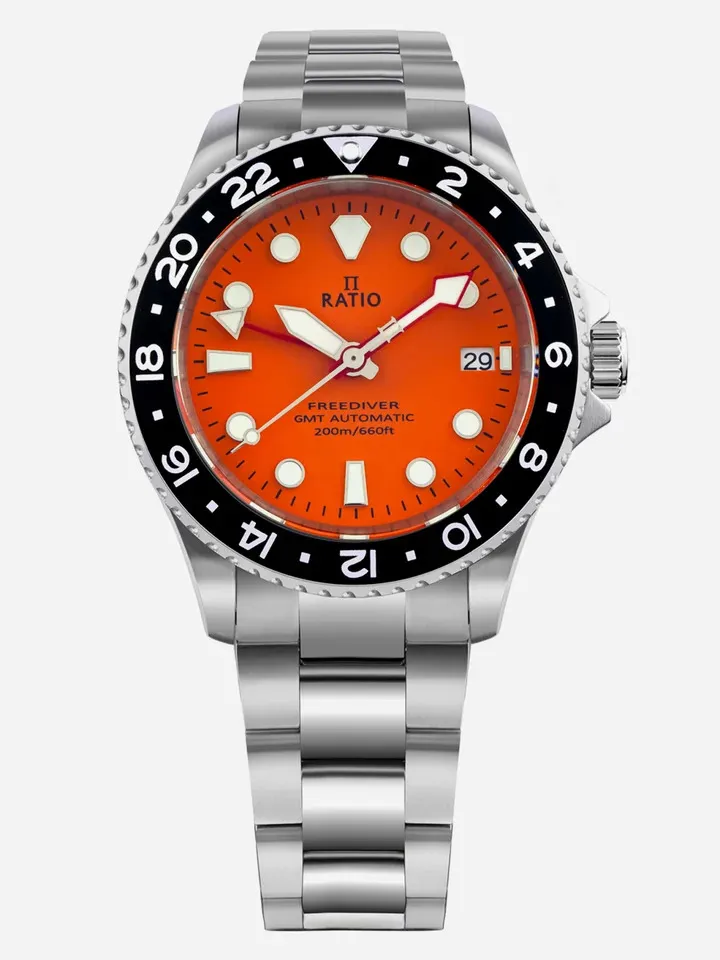
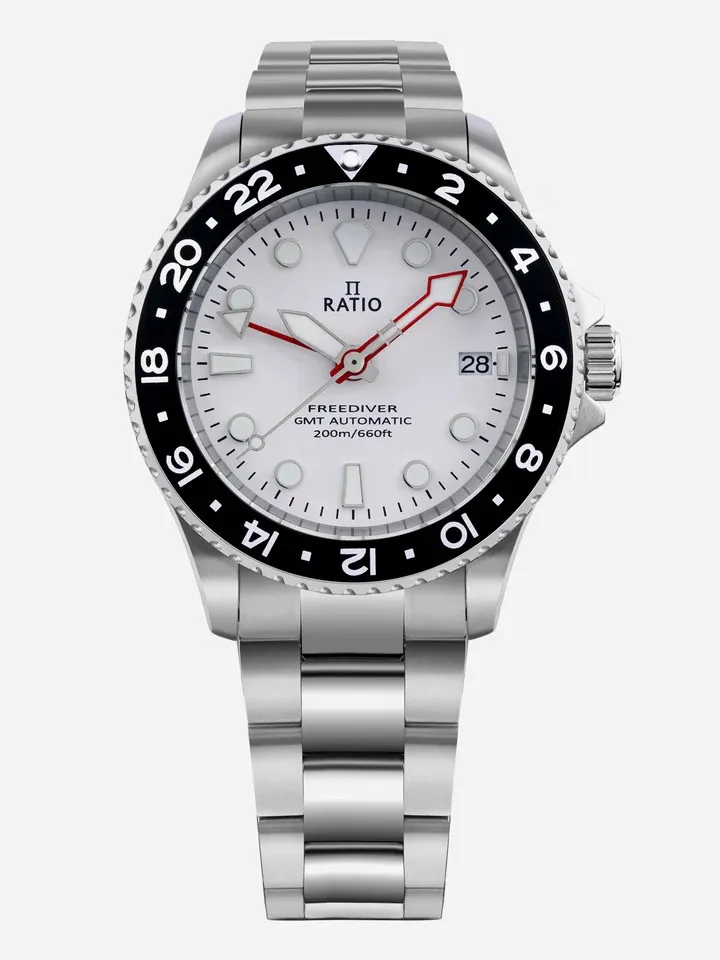
Ratio Freediver Version 02 Helium-Safe 1000M 1068HA90-34VA is the deep-rated option. The 316L steel case is listed at 46mm and 15.4mm thick, with 24mm lugs that accept wide dive straps. The Seiko NH36 automatic offers about 40 hours of reserve. The crystal is sapphire, a helium valve is fitted and water resistance is 1000m.
Where it falls short: strap extension details are not stated in the listings reviewed. At 15.4mm it is tall. ISO certification is not stated.
| Strap feature | Citizen NB6004-08E | Ratio 1068HA90-34VA |
| Strap type | Polyurethane | Not published |
| Wetsuit extension | Included | Not stated |
| Lug width | Not published | 24mm |
| Water resistance | ISO 200m | 1000m |
The honest trade-offs
An included extension makes a watch dive-ready out of the box. A wide lug width allows owners to fit their preferred dive strap. Both approaches work, but buyers should check extension details before diving.
Who should check strap details
Divers who wear wetsuits, especially thick suits in cold water, should check strap and extension details first. A secure fit protects the backup instrument.
Choosing the right strap completes a professional dive watch as a reliable tool.
Frequently Asked Questions
Why do dive watches need strap extensions?
Wetsuits add thickness around the wrist, so a standard strap may not fit. Extensions let the strap or bracelet open wider. They help divers wear their watch over a suit securely during a dive. They are standard on many professional dive watches.
Is rubber or steel better for diving?
Rubber and polyurethane straps are light, flexible and comfortable over wetsuits. Steel bracelets are durable but heavier, and need dive extensions to fit over suits. Many divers prefer rubber underwater and steel for surface wear. Both can be secure when fitted properly.
What is a dive extension on a bracelet?
A dive extension is a fold-out section in the bracelet clasp that lengthens the bracelet. It allows the watch to fit over a wetsuit sleeve. Some clasps also include fine adjustments for comfort. It folds away neatly when not needed.
Why does a dive watch strap loosen during a dive?
Pressure and cold compress wetsuits during a dive, reducing wrist thickness. A strap tightened at the surface can become loose at depth. Flexible straps and tight initial fitting help keep the watch secure. Checking fit after descending helps. It is common.
What makes a dive watch clasp secure?
Secure clasps use safety locks or double folding mechanisms that resist accidental opening. Some include quick-adjust systems. A secure clasp prevents loss, which matters when the watch serves as a backup. Checking the clasp before each dive is good practice.
Can any strap be used on a dive watch?
Any strap that matches the lug width fits, but not all suit diving. Rubber, polyurethane and steel with extensions suit diving best. Leather and canvas absorb water and should be avoided underwater. A secure clasp completes the setup. Choose carefully.

















Sign in to leave a comment.