


If you've spent any time researching outbound calling software, you've probably run into the term progressive dialer more than once. It's one of the more commonly used dialing modes, and understanding what it actually does helps clarify whether it fits a given team's workflow.
At its core, a progressive dialer is a calling system that automatically dials the next contact the moment an agent becomes available. Rather than agents manually entering numbers or waiting between calls, the system manages that step in the background, connecting the agent once a contact answers.
The workflow follows a consistent loop. An agent finishes a call, wraps up the necessary details, and becomes available again. The system immediately selects the next contact from the campaign and starts dialing. This structure gives teams a reliable way to move through a calling list while keeping agents focused on the conversation itself rather than the process surrounding it.
A few benefits tend to stand out. Agents get more actual talk time since the mechanical parts of dialing happen automatically. Campaigns become easier to manage, with contacts, agent assignments, and activity tracked in one place. And because agents aren't managing call mechanics, they can put more attention into the conversation happening in front of them.
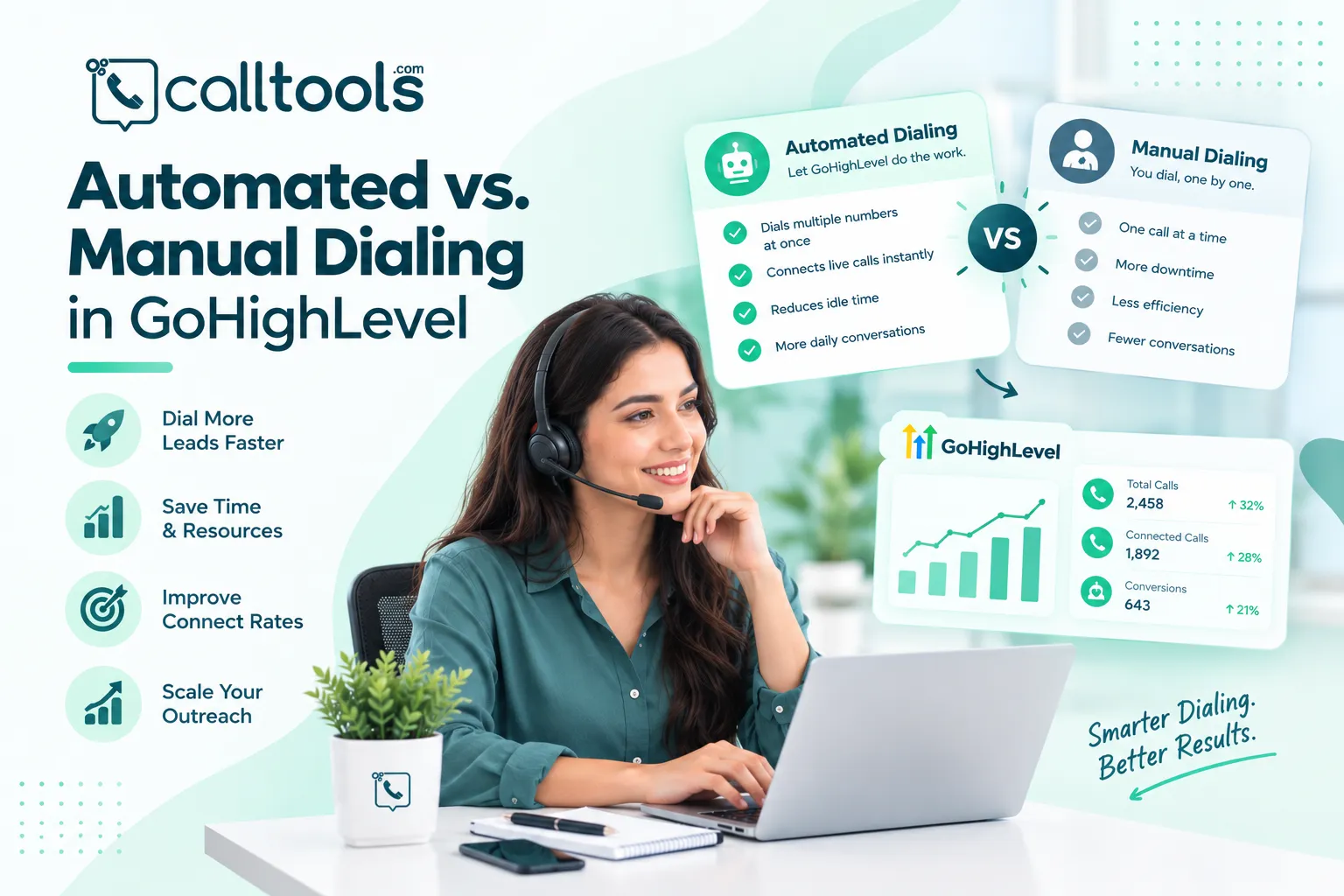
It's worth understanding how this compares to other dialing modes. A preview dialer gives agents a chance to review contact information before a call begins, which suits situations where extra context adds value. A predictive dialer is built for teams focused on maximizing call volume, often useful in larger outbound operations. A progressive dialer sits between the two: automated dialing, but paced to agent availability rather than volume alone.
Sales teams doing lead follow-up, real estate professionals working prospect lists, insurance and mortgage teams running organized campaigns, and call centers or BPOs coordinating larger agent pools all tend to find this approach useful.
When comparing software, a few features matter most: cloud-based access that removes the need for dedicated hardware, tools for organizing campaigns and contacts, real-time reporting for visibility into performance, and integrations that connect calling activity with existing CRM or business systems.
CallTools brings campaign management, agent coordination, reporting, and integrations into one cloud-based platform, giving teams a single, organized place to run their outbound calling.
Read the complete guide on CallTools:
https://calltools.com/blog/what-is-a-progressive-dialer-complete-guide/
























Sign in to leave a comment.