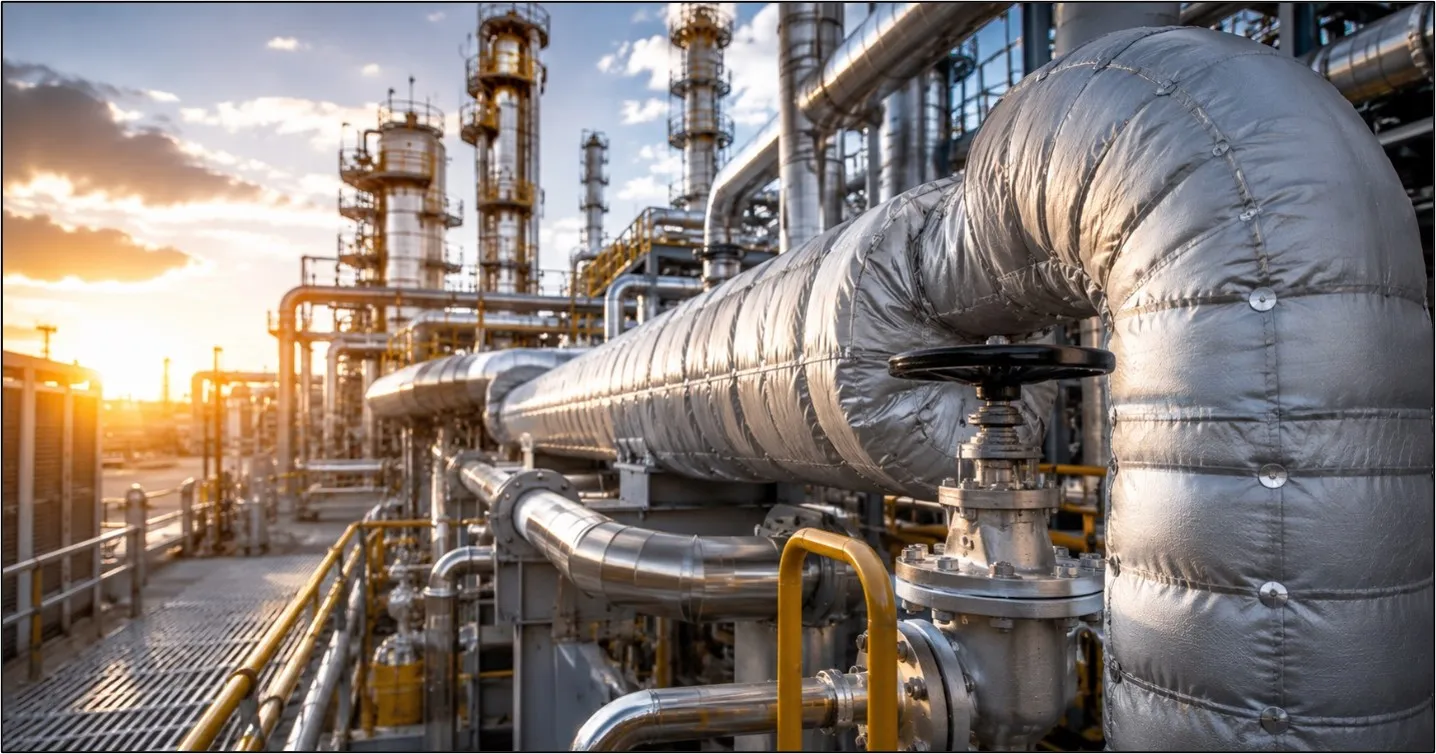

Walk through a busy industrial facility, and heat is everywhere. A boiler is working in one area, process lines are carrying hot fluids through another, and ductwork may be moving heated air overhead. None of this looks unusual when the equipment is doing its job. The interesting part is what happens around it. Heat can travel to nearby surfaces, warm work areas, affect adjacent equipment, and escape from systems where it is actually needed. Thermal insulation helps keep that heat under control, and in a facility that runs long shifts, that small layer of protection can make a meaningful difference.
Why Heat Control Matters in Industrial Facilities
A hot pipe may not seem like much of a concern when seen on its own, but imagine dozens of them running through the same facility. The temperature in the region may increase, surfaces in proximity may become uncomfortable to approach, and neighboring equipment may be exposed to more heat than desired. That is where proper insulation earns its place. It slows heat transfer and helps keep thermal energy within the system instead of letting it drift into the surrounding space. It is a fairly straightforward principle, but it matters a lot when machinery is operating around the clock.
How Thermal Insulation Protects Industrial Equipment
Thermal insulation wrapped over a pipe does not look neat. What it actually does is move heat around. This loss in heat transfer means that the nearby components are less likely to be subjected to unnecessary temperatures and the heated systems are more likely to retain the conditions that are appropriate for their activities. This is especially beneficial with equipment that runs continually. Even a little quantity of heat exiting each minute may not seem like much, but over a full cycle of operation, such losses can pile up. Good insulation is a safeguard against that slow waste, and creates a more stable environment around the apparatus.
When Fire Resistance Becomes Part of the Job
Some industrial systems need more than ordinary temperature control. Where equipment operates at high temperatures or needs protection against fire exposure, the insulation system must be chosen with those conditions in mind. Fireproof insulation installation can provide an additional protective layer around equipment and systems where heat and fire resistance are important considerations. The details matter here. Operating temperature, equipment type, moisture, surrounding materials, access for maintenance, and the location of the facility can all affect the appropriate solution. An offshore installation, for example, has to contend with conditions that simply do not exist inside a sheltered industrial building.
The Connection Between Insulation and HVAC Performance
Industrial HVAC systems often cover a surprising amount of ground. Ducts and pipes can travel through hot plant rooms, cooler service areas, enclosed spaces, and sometimes directly alongside other heat-producing equipment. As they move through these different environments, unwanted heat gain or heat loss can occur. Industrial HVAC insulation helps limit that exchange so heated or cooled air and fluids can maintain more consistent temperatures as they move through the system. There is another practical benefit too. Properly insulated ducts and pipes can have more manageable surface temperatures, which is useful when those components are located near workers or other equipment.
Where Thermal Insulation Is Commonly Used
There is no shortage of places where industrial insulation can be useful. Depending on the facility, applications may include:
- Hot process piping and fluid lines
- Boilers, tanks, and vessels
- Industrial ductwork and HVAC components
- Engines and mechanical equipment
- High-temperature processing systems
- Marine and offshore equipment
The environment can change the whole equation. Equipment inside a controlled plant room may have fairly predictable conditions, while machinery offshore can face salt air, moisture, vibration, temperature changes, and restricted access. Those factors can affect both material selection and installation. A good insulation plan looks at the equipment, its surroundings, and the way it is actually used rather than applying the same solution everywhere.
Why Installation Details Should Not Be Overlooked
Insulation tends to get judged by the material itself, but installation deserves just as much attention. A small gap around a fitting, a compressed section, damaged material, or a poorly finished joint can become a weak point. Industrial equipment also has valves, brackets, flanges, supports, access panels, and maintenance areas that cannot simply be covered without thought. Professional fireproof insulation installation accounts for these details and works around them without losing sight of the protection the insulation is supposed to provide. The finished result should function in the real world, not just look complete when the job is inspected.
Selecting Insulation for the Actual Working Environment
No single type of insulation is appropriate for all industrial uses. The last approach depends on equipment, operating temperature, ambient conditions, maintenance requirements, and the degree of thermal or fire protection required. This is especially true for industrial and offshore systems where vibration, moisture, heat, and limited access all influence the long-term effectiveness of an insulation system. GVMS 1, LLC is engaged in demanding industrial and offshore applications where these requirements are to be considered prior to implementation of any insulating solution.
Conclusion
Industrial heat is not something that needs to go away. It just has to be stored where it is beneficial and away from where it can cause difficulties. Good thermal insulation can help to limit unwanted heat transfer, protect equipment in the vicinity, support energy efficiency, and make working conditions more comfortable. When fire resistance is also required, the choice of materials and manner of installation becomes even more critical. If hot equipment, process lines, HVAC systems, or other heat-producing areas require improved protection, call an experienced industrial insulation professional to evaluate the application and find a solution that best fits the equipment and working environment.
FAQs
1. Why is thermal insulation important for industrial equipment?
Thermal insulation helps control heat transfer and protects nearby equipment and work areas from excessive temperatures. It can also help industrial systems retain useful heat more effectively.
2. When is fireproof insulation installation needed?
Fireproof insulation installation is useful where industrial equipment requires additional protection from high temperatures or potential fire exposure. The appropriate solution depends on the equipment, operating conditions, and facility requirements.
3. Where is industrial thermal insulation commonly used?
It can be used around process piping, boilers, tanks, vessels, HVAC systems, engines, and high-temperature equipment. Marine and offshore applications may require insulation designed for particularly demanding conditions.
4. How does insulation help industrial HVAC systems?
Insulation helps reduce unwanted heat gain or heat loss through HVAC ducts and piping. This supports more consistent temperatures and can help the system operate more efficiently.
5. Why does professional insulation installation matter?
Proper installation helps prevent gaps, damaged sections, and poorly fitted joints that can reduce insulation performance. Experienced professionals can also account for valves, supports, access points, and other equipment details.






















Sign in to leave a comment.