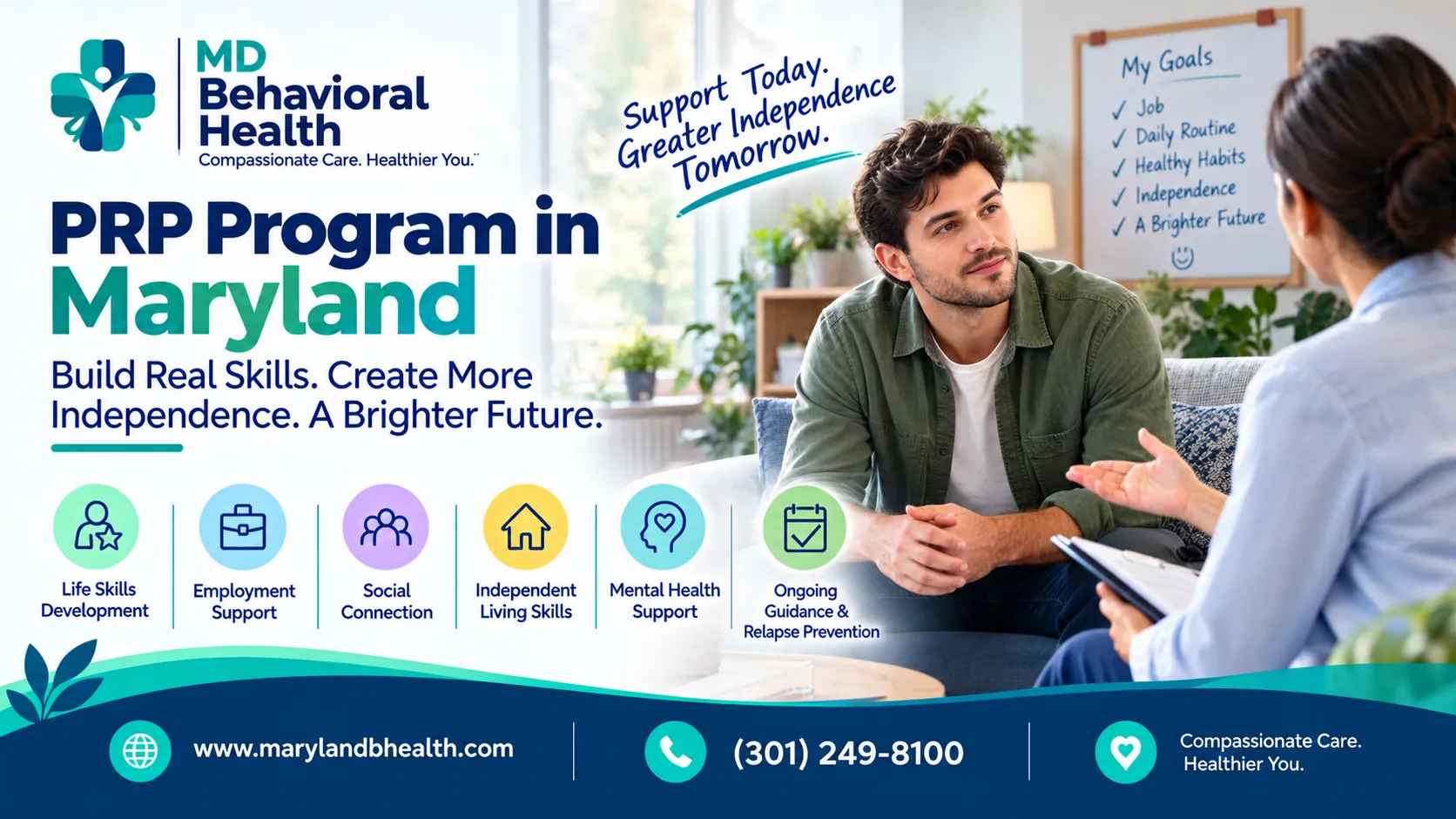


Managing a serious mental health condition day to day is a different challenge than treating the condition itself. Therapy and medication can stabilize symptoms, but they don't always teach someone how to actually run their own life again, holding down a routine, managing money, staying connected to people, handling the ordinary friction of daily living. That's the specific gap a PRP program in Maryland is built to close.
Psychiatric Rehabilitation Program services, usually just called PRP, aren't a replacement for therapy or psychiatric care. They work alongside it, focused less on symptoms and more on rebuilding the practical skills and stability that make independent living actually possible.
What a PRP program in Maryland actually does
A psychiatric rehabilitation program in Maryland is a structured, community-based service designed for people managing a serious mental illness who need more than office visits to function independently. It's not inpatient care, and it's not a crisis response, it's ongoing, hands-on support built around the parts of daily life that a diagnosis can make genuinely difficult.
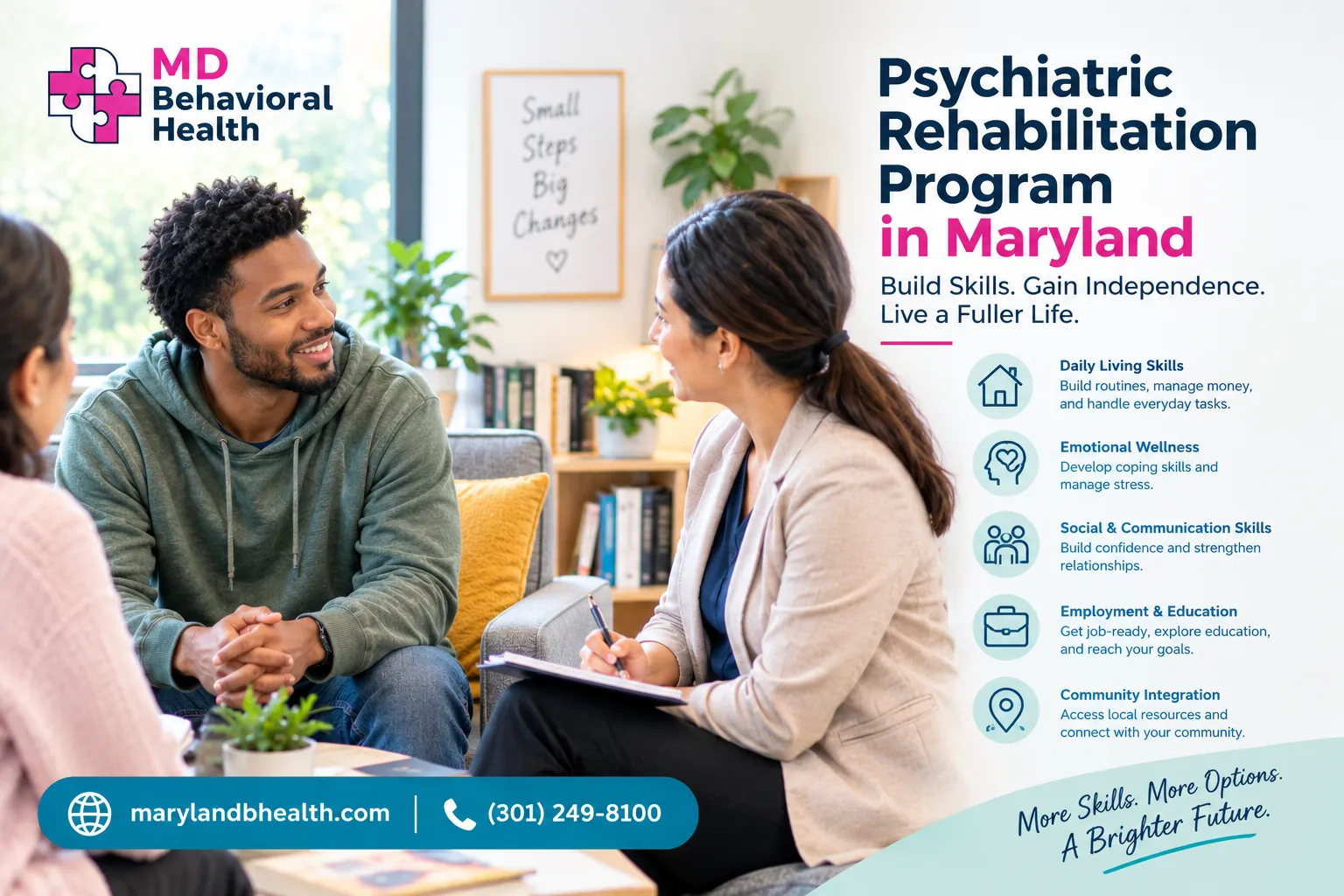
That usually means help with things like structuring a daily routine, managing medications consistently, handling money and basic responsibilities, building or rebuilding social connections, and developing the coping skills that make setbacks less likely to turn into a full relapse. None of this happens in a single session, it's ongoing work, which is part of why PRP tends to run over months rather than weeks.
Who actually benefits from this kind of program
PRP is generally built for adults and youth living with conditions like schizophrenia, bipolar disorder, major depression, or other serious mental illnesses that significantly affect daily functioning, not situational stress or a passing rough patch, but conditions that make everyday stability genuinely hard to maintain without support.
It tends to help most when someone has already been through crisis stabilization or inpatient care and needs a structured bridge back to independent living, or when ongoing symptoms have made it difficult to keep a job, manage a household, or maintain relationships without falling into a repeating cycle of setbacks.
What a typical PRP program in Maryland actually looks like
Every program is a little different, but most psychiatric rehabilitation program services in Maryland follow a similar general structure. It starts with an assessment, understanding what someone's actually struggling with day to day, not just their diagnosis on paper. From there, a rehabilitation plan gets built around specific, realistic goals, holding a job, managing an apartment, reconnecting with family, whatever actually matters to that person's stability.
From there, it's ongoing: regular sessions focused on skill-building, group activities that build social connection alongside practical skills, and consistent check-ins that track whether the plan is actually working or needs adjusting. It's not a passive process. It asks something of the participant, but it also gives them real structure to work within rather than expecting them to figure it out alone.
Adult PRP specifically
For adults, Adult PRP focuses on the skills that actually determine whether someone can sustain independent living, holding a job or working toward one, managing a household, handling money, and staying engaged with the community instead of isolating. It's built for people who are ready to work toward more independence but need structured, ongoing support to actually get there rather than being expected to do it cold.
Why the "rehabilitation" framing actually matters
Calling this a rehabilitation program rather than just more therapy is deliberate. Therapy tends to focus on processing and symptom management. PRP focuses on function, whether someone can actually do the things day-to-day life requires, and builds skills specifically toward that, the same way physical rehabilitation builds strength and mobility after an injury rather than just managing pain.
That distinction matters because symptom management alone doesn't always translate into someone being able to hold a job or manage a household. PRP is what bridges that gap, deliberately, rather than assuming it'll happen on its own once symptoms improve.
What to actually expect if you're considering this
If you or someone you're supporting is considering a PRP program, expect it to start with a real conversation, what's actually hard right now, what independence would realistically look like, what's already been tried. From there, a plan gets built collaboratively rather than handed down, and progress gets tracked and adjusted as things change, not locked into a fixed timeline regardless of how it's going.
It's also worth knowing this isn't a quick fix. Rebuilding the skills and stability PRP is aimed at takes real time, usually measured in months, and that's normal, not a sign something isn't working.
Taking the next step
If a serious mental health condition has made everyday stability hard to hold onto, a psychiatric rehabilitation program in Maryland can offer the kind of structured, ongoing support that therapy and medication alone don't always cover. It's built specifically for the gap between symptom management and actually functioning independently, and that gap is where a lot of real progress happens.
FAQs
What does PRP stand for?
Psychiatric Rehabilitation Program, a structured service focused on helping people with serious mental illness build the practical skills needed for independent living.
Is PRP the same as therapy?
No. PRP works alongside therapy and psychiatric care, but it's focused on functional skills, daily routines, employment, household management, social connection, rather than processing symptoms directly.
Who qualifies for a PRP program?
Generally, adults and youth living with a serious mental illness, such as schizophrenia, bipolar disorder, or major depression, that significantly affects their ability to function independently day to day.
How long does a PRP program typically last?
It varies by individual, but PRP is usually an ongoing process measured in months rather than a short-term intervention, since it's building skills and stability over time.
Does PRP replace medication management or psychiatric care?
No. It's meant to work alongside those services, not instead of them. Most people in a PRP program are also receiving therapy and/or psychiatric care elsewhere.
Is there a PRP program specifically for children and youth?
Yes, in addition to Adult PRP, Child & Youth PRP programs exist for younger individuals with similar functional needs.
How do I know if PRP is the right fit?
A proper evaluation is the best way to find out. If serious symptoms are making daily functioning, work, household management, relationships, consistently difficult, it's worth discussing PRP with a provider.






















Sign in to leave a comment.