


Introduction
In neurological care, pupil checks are done regularly because they are quick and easy to repeat. Even though the process takes only a few seconds, clinicians often rely on it throughout the day when patients need close monitoring. For years, these checks were mostly based on observation. A clinician would look at the pupils, shine a light, and judge the response visually. That approach still works in many situations, but small differences can become harder to compare over time. That is one reason modern pupilometer devices are now used more often during the neuro exam. Instead of relying only on visual estimation, they provide a more structured way to record findings during pupil assessment.
What Pupil Diameter Measurement Involves
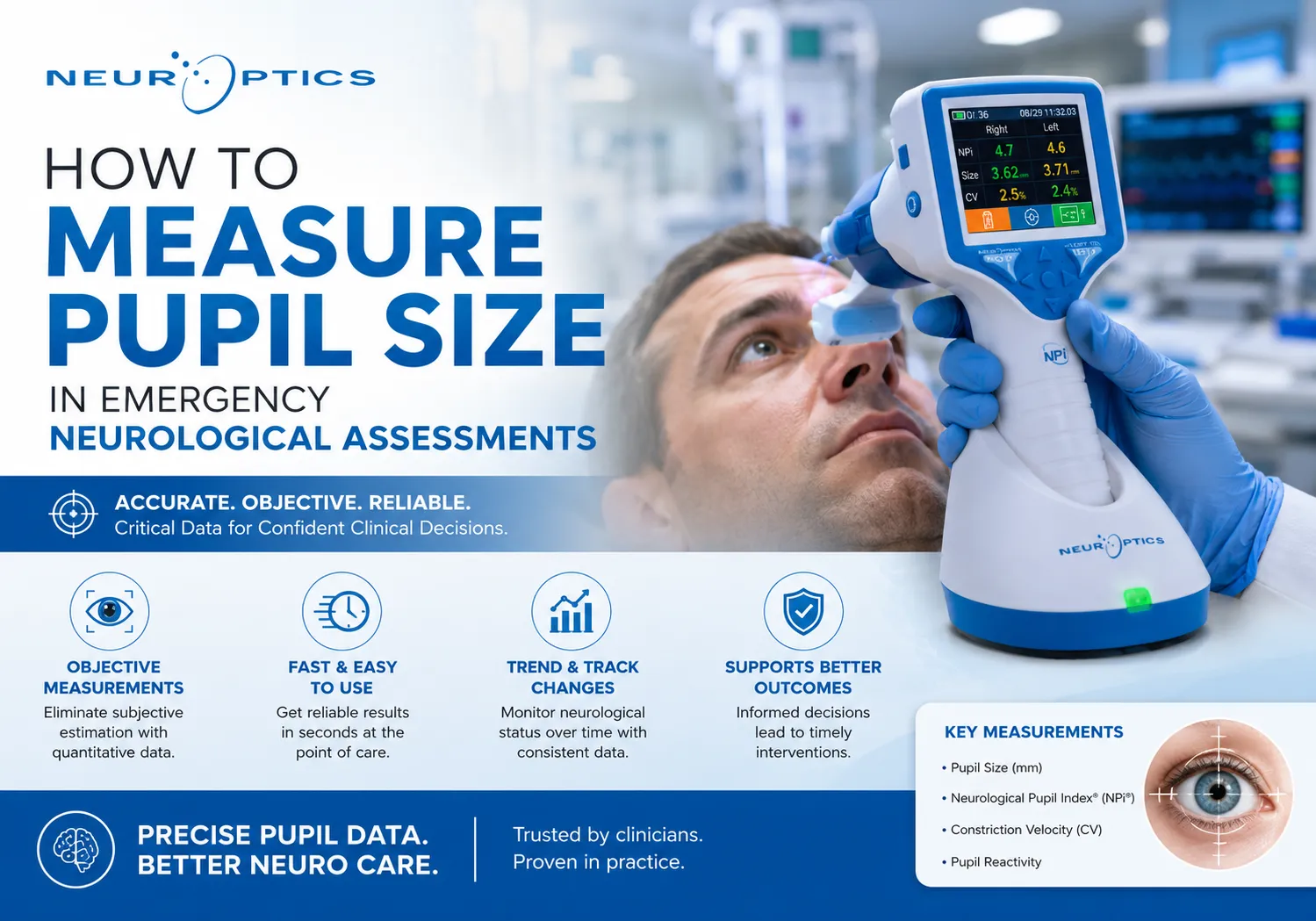
A routine pupil assessment is not only about whether the pupil reacts to light. Clinicians look at pupil size, whether both appear equal, and how the response changes during repeated checks. This is where pupil diameter measurement becomes useful. Rather than describing the pupil as “small” or “slightly larger,” clinicians can work with recorded values. That makes comparisons easier when the same patient is checked multiple times. In many cases, one reading does not say much on its own. What becomes more useful is seeing whether measurements remain stable or gradually change over time.
Why Visual Checks Can Vary
Visual observation still plays a major role in care, but it naturally comes with some variation.
Lighting conditions can change, and different clinicians may describe the same response differently. Even the angle of the exam can slightly affect how the pupil appears. During a busy neuro exam, these small differences may not seem important at first. But with repeated checks, inconsistency can make comparison harder. That is part of the reason structured pupil diameter measurement has become more common. It reduces the need to rely only on memory or descriptive notes.
Role of the Pupilometer
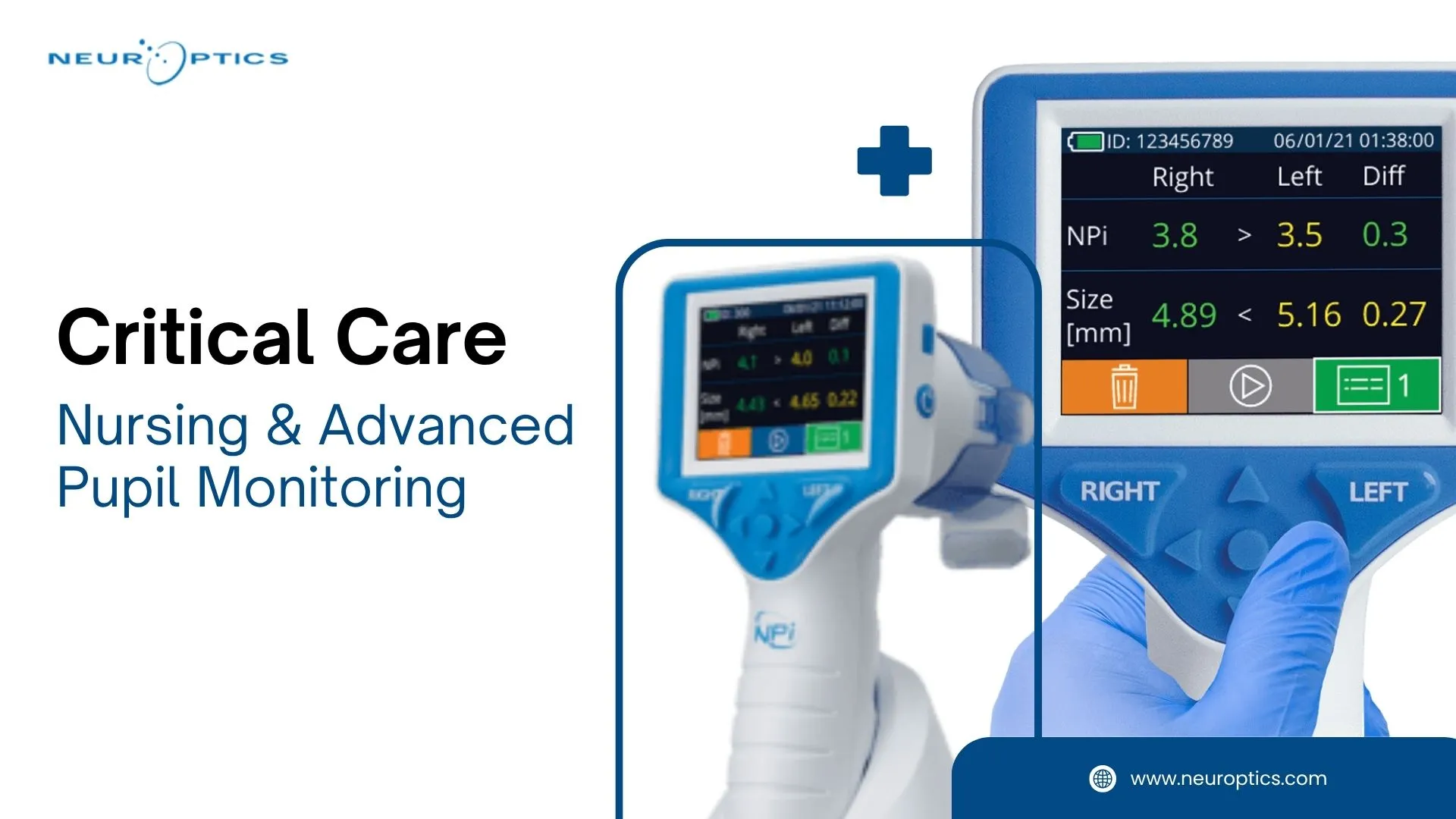
A modern pupilometer is mainly used to make measurements more consistent.
Instead of estimating pupil size visually, clinicians can record actual values during pupil assessment. The device also measures how the pupil responds after light exposure, helping create a clearer record over time. This becomes especially helpful when several clinicians are involved in care. A pupilometer allows everyone to work from the same type of measurement rather than interpretation alone. At the same time, the device does not replace the clinical exam itself. It simply supports observation during the neuro exam.
Where Neurological Tools Fit In
Modern neurological tools are mainly used to improve consistency and documentation.
With structured pupil diameter measurement, clinicians can look back at earlier findings instead of depending only on written descriptions. This becomes more useful when patients are monitored frequently. These neurological tools can also make gradual trends easier to notice. A single value may not stand out, but repeated readings sometimes show change more clearly. Still, not every variation is clinically important. Findings always need to be interpreted in context.
Understanding the NPi
Many modern pupilometer systems also provide an NPi, which summarizes aspects of the pupil response into a single value. During the neuro exam, the NPi is often used as a quick reference point. It gives a general sense of how the pupil is reacting at that moment.
Even so, the NPi is not interpreted on its own. It comes from the same underlying measurements gathered during pupil assessment, so clinicians usually consider it alongside the rest of the findings.
Why Repeated Measurements Matter
One of the biggest advantages of structured pupil diameter measurement is the ability to compare findings over time. A single exam only reflects one moment. Looking at repeated measurements makes it easier to tell whether the response is remaining fairly consistent or starting to shift over time. After a while, clinicians also get a better sense of what seems normal for that particular patient. That helps keep small differences from seeming more significant than they really are.
Final Thoughts
Modern pupilometer devices have changed the way many clinicians approach routine pupil assessment. With consistent pupil diameter measurement, it becomes easier to compare findings over time and notice patterns that may not be obvious in a single exam.
Used alongside the neuro exam and supported by neurological tools and values like the NPi, these measurements help provide a more consistent way to follow changes without replacing clinical judgment.


























Sign in to leave a comment.