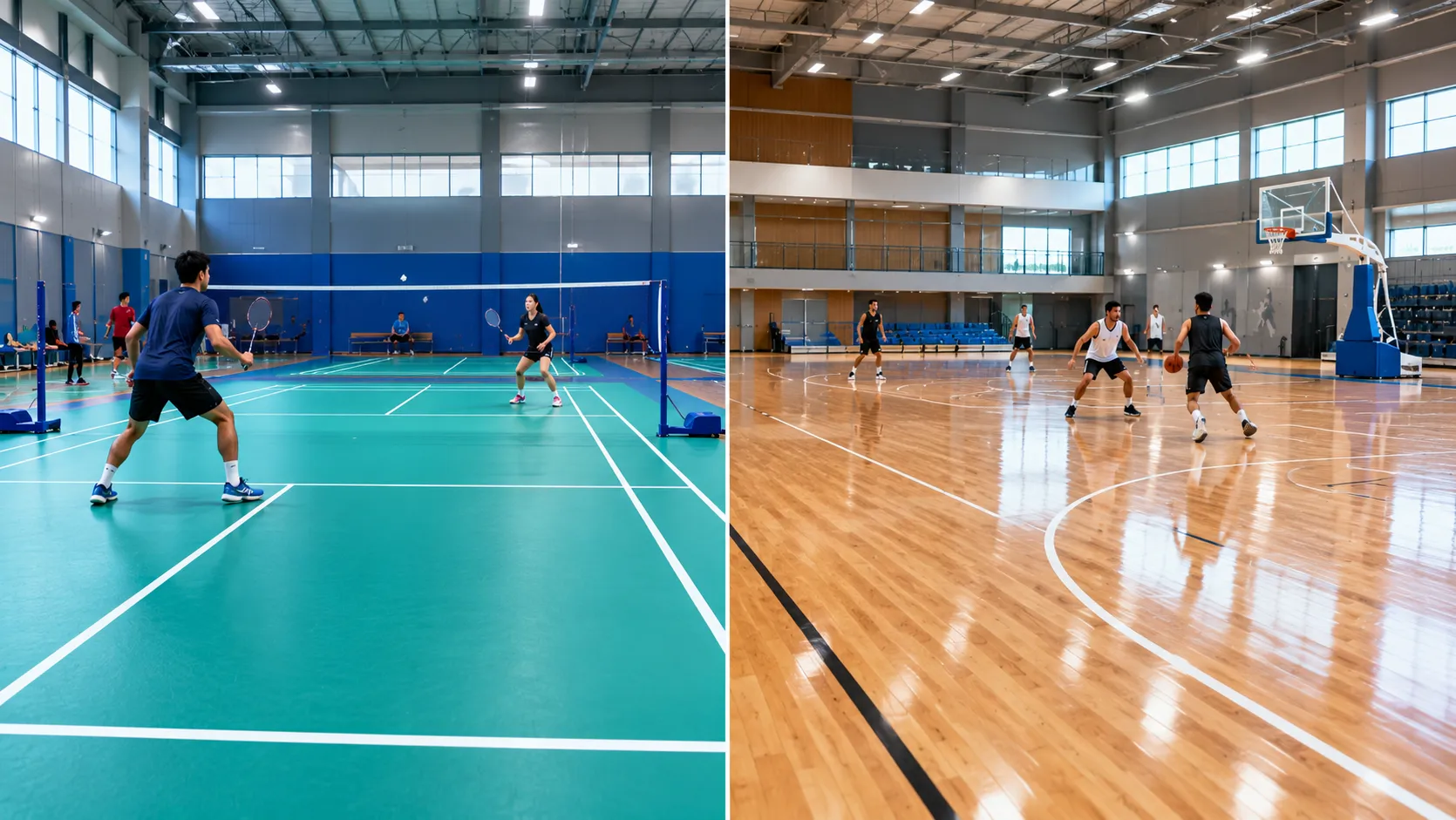

Choosing the right sports flooring is an important part of designing an indoor sports facility. The floor affects player comfort, movement, safety, maintenance requirements, and the overall performance of the facility. Two commonly considered options are PVC sports flooring and wooden sports flooring.
While both can provide suitable surfaces for indoor sports, they differ in construction, feel, maintenance, durability, appearance, and applications. Understanding these differences can help facility owners select a flooring system that matches their requirements.
What Is PVC Sports Flooring?
PVC sports flooring is a synthetic flooring system made primarily from polyvinyl chloride. It is available in different thicknesses, surface textures, colours, and performance specifications.
PVC flooring is commonly used in indoor sports halls, badminton courts, multipurpose facilities, fitness areas, and other spaces where a resilient and relatively easy-to-maintain surface is required.
Depending on its construction, PVC sports flooring can provide cushioning and shock absorption while offering a consistent playing surface.
What Is Wooden Sports Flooring?
Wooden sports flooring is generally made using hardwood or engineered wood systems designed specifically for sports applications. These floors can be installed over a subfloor system that provides additional resilience and impact absorption.
Wood flooring is widely associated with professional indoor sports facilities, particularly basketball and volleyball courts. Its natural appearance and responsive playing characteristics also make it suitable for premium sports environments.
PVC vs Wooden Sports Flooring: Key Differences
1. Surface Feel and Player Comfort
PVC flooring provides a consistent synthetic surface and can be designed with cushioning layers to improve comfort and reduce impact.
Wooden sports flooring offers a natural playing feel and can provide controlled shock absorption when installed with an appropriate sports subfloor. The combination of the wooden surface and resilient substructure can help reduce stress on players during repeated movement.
2. Durability
Both flooring types can provide long-term service when correctly specified and maintained.
PVC sports flooring is resistant to regular wear and is generally suitable for facilities that experience frequent use. Its performance depends on the quality and thickness of the flooring system and the condition of the underlying surface.
Wooden flooring can also be highly durable, but it requires appropriate environmental control and maintenance. Moisture, humidity, and temperature changes can affect wood if the facility is not properly managed.
3. Maintenance Requirements
PVC flooring is relatively straightforward to clean. Regular sweeping, dust removal, and damp cleaning can help maintain its appearance and playing characteristics.
Wooden flooring requires more careful maintenance. Cleaning should follow the manufacturer's recommendations, while spills should be addressed promptly. Periodic inspection, refinishing, and environmental control may also be necessary depending on the facility and level of use.
4. Appearance
Wooden sports flooring provides a natural, premium appearance that is particularly popular in professional sports halls and competition venues.
PVC flooring offers greater flexibility in colours, patterns, and surface designs. This can make it useful for facilities where visual customization or multiple activity zones are required.
5. Installation
PVC sports flooring is typically installed over a properly prepared and level subfloor. Depending on the system, it may be bonded to the substrate using an appropriate adhesive.
Wooden sports flooring involves a more detailed installation process. The subfloor, support system, moisture conditions, wood panels, joints, and finishing all need to be properly considered.
Professional installation is important for both systems because an uneven or poorly prepared base can affect the flooring's performance and lifespan.
Which Flooring Should You Choose?
The choice between PVC and wooden sports flooring depends on the type of facility, sports being played, expected usage, maintenance capabilities, design preferences, and available budget.
PVC flooring may be suitable for facilities looking for a versatile, easy-to-maintain synthetic surface that can accommodate different indoor activities.
Wooden flooring may be considered for premium indoor sports facilities where natural appearance, playing feel, and a traditional sports-court environment are important.
Rather than selecting flooring based only on appearance or initial cost, facility owners should consider the complete flooring system, including the subfloor, shock absorption, surface performance, installation requirements, maintenance, and expected usage.
Conclusion
PVC and wooden sports flooring can both serve indoor sports facilities, but they offer different characteristics. PVC provides synthetic performance, design flexibility, and relatively simple maintenance, while wooden flooring offers a natural appearance and a traditional sports-court feel.
The right choice ultimately depends on the sport, facility requirements, usage level, maintenance plan, and performance expectations. Working with an experienced sports flooring company can help ensure that the selected system is properly designed, installed, and maintained for long-term use.
























Sign in to leave a comment.