
Unlocking the A2P SMS & CPaaS Opportunity: Strategic Intelligence for the 2026 Decision Maker
The mobile messaging landscape is undergoing a silent but profound transformation. As enterprises across every vertical grapple with fragmented customer touchpoints, tightening regulatory frameworks, and the relentless push for omnichannel personalization, Application-to-Person (A2P) SMS and Communications Platform as a Service (cPaaS) have emerged not merely as tactical utilities, but as foundational infrastructure for modern customer engagement. Our latest comprehensive market research report, A2P SMS & cPaaS Market, arrives at a pivotal inflection point. Drawing on a rigorous historical analysis spanning 2020 through 2025 and a forward-looking forecast extending to 2032, this study equips strategic leaders with the quantitative rigor and qualitative foresight required to navigate a sector that has quietly matured into a multi-billion-dollar engine of enterprise communication.
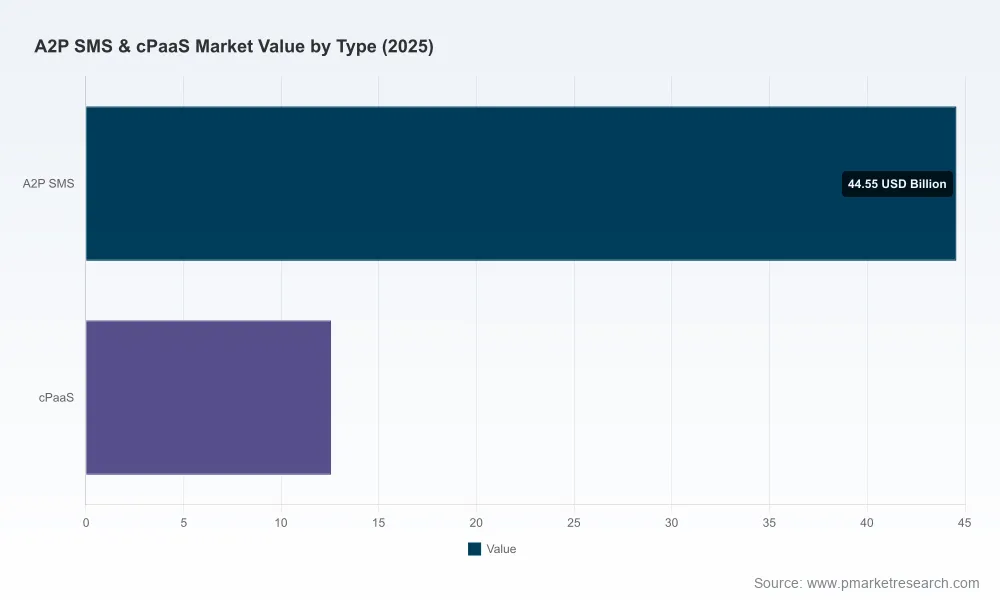
The numbers tell a compelling story of sustained momentum. Valued at roughly 40.25 billion USD in 2020, the combined market has demonstrated remarkable resilience and compounding growth, accelerating through the post-pandemic digitalization wave to reach approximately 57.1 billion USD by 2025. Looking ahead, our base forecast projects the market to surpass 62 billion USD in 2026, ultimately scaling toward nearly 87.5 billion USD by 2032. This trajectory reflects a compound annual growth rate of 6.5 percent, a figure that may appear measured, yet it masks profound structural shifts beneath the surface: the migration of legacy voice-centric communication stacks toward cloud-native messaging architectures, the democratization of enterprise-grade API tools, and the strategic reallocation of marketing budgets toward high-fidelity, directly addressable channels. For executives evaluating where to deploy capital, where to renegotiate vendor contracts, and how to future-proof customer communication stacks, these macro-indicators serve as the essential baseline. Yet they are only the starting point. The true strategic value of this report lies in unpacking what drives those numbers, who is capturing value, and how executional nuance separates market leaders from the rest.
A2P SMS Market
Why This Research Matters for 2026 Enterprise Decision-Making
In an era where messaging platforms are increasingly commoditized on the surface, differentiation is shifting upstream. Procurement leaders are no longer asking simply which provider offers the lowest per-message cost; they are evaluating protocol interoperability, deliverability guarantees, compliance overhead, latency under peak loads, and the breadth of value-added services such as analytics, workflow orchestration, and rich media support. Marketing and customer experience heads demand predictable throughput for time-sensitive transactional flows, while security and legal teams scrutinize data residency, consent management, and regulatory alignment across jurisdictions. This multidimensional evaluation matrix makes generalized market overviews insufficient. Our report was engineered precisely to close that gap.
Readers will find a granular, segment-by-segment breakdown that maps historical performance against forward-looking demand drivers, enabling scenario planning rather than static budgeting. We trace how the maturation of A2P SMS as a high-reliability delivery layer coexists with the rapid expansion of cPaaS ecosystems that bundle voice, video, chat, and verification into unified API surfaces. Crucially, the analysis deliberately avoids over-indexing on headline figures. Instead, it surfaces the operational and architectural variables that actually determine enterprise ROI: carrier routing strategies, fallback mechanisms for flagged routes, the economics of short code versus long code deployments, and the shifting cost structures introduced by infrastructure scaling pressures. By anchoring discussions in these practical dimensions, the report becomes a living reference for vendor evaluation scorecards, total cost of ownership models, and multi-year communication roadmaps.
What the Report Delivers: An Operational Blueprint
Beyond macro trends, the study provides an extensive examination of market segmentation dynamics, dissecting how demand diverges across deployment types, application use cases, and geographic footprints. The analysis reveals how A2P SMS continues to anchor high-volume, compliance-critical messaging workloads, while cPaaS solutions are capturing incremental share by enabling developers and product teams to compose richer, cross-channel experiences without maintaining fragmented carrier integrations. We map the interplay between transactional and authentication messaging, promotional and marketing outreach, and ongoing customer engagement workflows, illustrating how enterprises are increasingly blending these streams into orchestrated customer journeys rather than siloing them by department.
The report also delivers a structured assessment of market concentration and competitive intensity. With a focused profiling of the leading participants shaping this ecosystem, we examine how firms from North America, Europe, and the Asia-Pacific region are differentiating through product philosophy, geographic carrier reach, developer experience, and go-to-market positioning. Rather than presenting a static leaderboard, the analysis emphasizes strategic posture: which organizations are doubling down on enterprise-grade reliability and vertical-specific compliance, which are racing to embed advanced rich messaging and RCS capabilities, and which are leveraging cost-efficient infrastructure or regional carrier partnerships to carve out defensible niches. The recently published competitive developments, including Commio’s launch of InstantApp™ for Rich Business Messaging with RCS support and its subsequent recognition at the 2026 INTERNET TELEPHONY Product of the Year Awards, exemplify how quickly product cycles are moving and why continuous vendor reassessment is no longer optional.
To translate insight into action, the report integrates practical frameworks covering procurement timing, contract structuring considerations, risk mitigation around deliverability and compliance, and evaluation criteria tailored to both high-volume transactional requirements and marketing-led experimentation. The intent is straightforward: equip decision-makers with a repeatable methodology for sizing opportunities, benchmarking proposals, and constructing communication architectures that scale without accruing hidden operational drag.
Navigating a Restructuring Competitive Arena
The competitive landscape in A2P SMS and cPaaS is characterized by a blend of established platforms, specialized messaging specialists, and infrastructure-native players, each pursuing distinct strategic arcs. Global communications platforms with broad API portfolios continue to emphasize developer ecosystems, unified routing, and the ability to abstract away carrier complexity across multiple geographies. Simultaneously, regional and supply-chain-oriented specialists are leveraging deep carrier relationships, localized compliance knowledge, and streamlined service models to capture share in high-growth corridors and cost-sensitive deployments.
A2P SMS & cPaaS Market
Several structural themes emerge from our profiling of the key participants. First, the market is increasingly rewarding vendors that can demonstrate consistent deliverability, transparent cost attribution, and robust alerting for throughput anomalies. Second, product roadmaps are converging around rich messaging, verification workflows, and programmable orchestration, making feature parity a baseline expectation rather than a differentiator. Third, scale economics and infrastructure footprint are reshaping competitive dynamics, as providers balance the upside of global reach against the operational realities of maintaining resilient, compliant, and cost-efficient routing across diverse regulatory and carrier environments. Finally, the market displays a moderate concentration profile, with a meaningful share of revenue flowing through a handful of scaled participants while a long tail of specialized firms competes on agility, niche verticals, and regional execution. This dual structure means enterprise buyers must weigh the stability and breadth of large platforms against the responsiveness and pricing flexibility of focused specialists, often blending both within a single communication stack.
Industry Dynamics and the Forces Reshaping Value Capture
No strategic assessment of this market would be complete without acknowledging the external pressures that are quietly rewriting cost structures and compliance postures. Infrastructure economics are entering a new phase. Wholesale electricity costs near US data centers have climbed sharply over the past five years, with regional prices in some areas exceeding 300 dollars per kilowatt-hour as of 2025, while capacity pricing mechanisms for upcoming delivery years have surged to levels that materially alter the economics of sustained compute and network operations. Looking further ahead, data center electricity consumption is projected to absorb a substantially larger share of national generation capacity by 2030. For A2P and cPaaS providers, these dynamics are not abstract sustainability talking points; they directly influence routing costs, capacity planning, pricing power, and the economics of maintaining high-availability global infrastructure. Enterprises that understand these underlying cost vectors will be better positioned to interpret vendor pricing trends, anticipate rate adjustments, and structure contracts that account for infrastructure-driven volatility rather than treating per-message pricing as static.
Regulatory evolution compounds this complexity. The classification of messaging services within US communications policy has significant downstream implications for how A2P traffic is understood, routed, and governed. The FCC’s determination to classify SMS and MMS wireless messaging services as information services rather than commercial mobile services, and its clarification that A2P messaging falls outside the definition of interconnected service under Commission rules, has long influenced market structure, carrier participation, and the legal architecture surrounding message delivery. These regulatory delineations shape everything from intermediary liability and service provisioning to the strategic calculus of how platforms design compliance workflows and partner with aggregators and carriers. As enforcement scrutiny intensifies globally and as regional frameworks continue to diverge, the ability to map regulatory nuance to operational reality becomes a decisive competitive advantage. Our report situates these policy dynamics within the broader market trajectory, helping leaders anticipate where friction will emerge and how to structure messaging programs that remain robust across jurisdictions.
The Strategic Imperative for 2026
The convergence of sustained market expansion, rapid product innovation, infrastructure cost pressure, and evolving regulatory frameworks places A2P SMS and cPaaS at the center of a broader enterprise transformation story. Organizations that treat messaging as a commoditized utility will find themselves exposed to deliverability inconsistencies, rising infrastructure pass-through costs, and fragmented customer experiences. Those that approach it as a strategic capability, governed by data-driven vendor selection, clear use-case mapping, and proactive compliance design, will unlock more resilient engagement, better cost control, and greater operational flexibility.
Our A2P SMS & cPaaS Market research is designed to support both perspectives. It provides the quantitative scaffolding, competitive context, and operational frameworks necessary to move from intuition to evidence-based decision-making. The report’s full segmentation detail, vendor profiles, scenario analyses, and methodology documentation are available through our source portal, where decision-makers, procurement teams, and strategy leaders can access the complete intelligence package and apply it directly to their planning cycles. In a market moving at this pace, the advantage belongs to those who combine foresight with precision. This study is built to help you claim it.
For detailed analysis of this topic, please visit the official page: A2P SMS & cPaaS Market
Lacy Lee
Senior Marketing Manager
[email protected]
PW Consulting: www.pmarketresearch.com


























Sign in to leave a comment.