
Strategic Intelligence for the Divinylbenzene Market: Navigating the 2026 Decision Landscape
The global chemical industry stands at a critical inflection point where specialty monomers serve as the invisible architecture underlying advancements in water purification, biopharmaceutical processing, and advanced materials. Our latest research initiative provides a comprehensive examination of the Divinylbenzene (DVB) Market, delivering the analytical rigor required for informed strategic planning throughout the forecast horizon of 2026 to 2032. For executives, procurement leaders, and investment analysts, this study transforms raw market signals into actionable intelligence, revealing where value is created, where risks concentrate, and how competitive dynamics will reshape supply chain positioning in the coming years.
As organizations recalibrate their capital allocation and market entry strategies for the mid-decade, the availability of granular, forward-looking data becomes a decisive competitive advantage. The following analysis outlines the structural foundations of the DVB sector, highlights the operational challenges shaping industry behavior, and demonstrates how a methodical evaluation of market mechanics can safeguard margins and uncover growth pathways. Readers are invited to explore the complete dataset and detailed scenario modeling available in the full report, where every segment trajectory and competitive move is quantified with precision.
Macro Trajectory: Translating Multi-Year Growth into Strategic Context
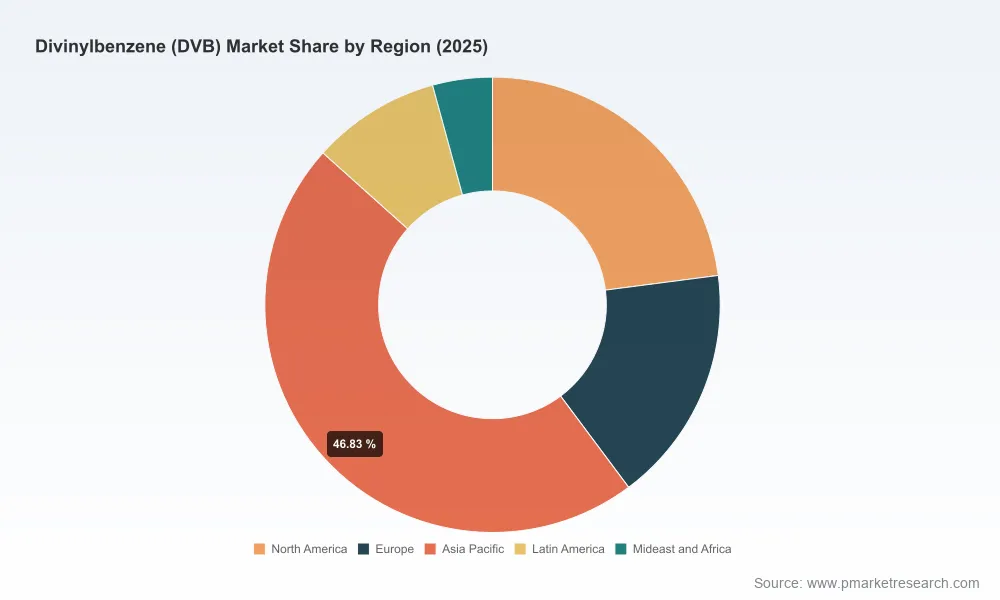
Examining the historical record from 2020 through 2025 reveals a consistent expansion pattern for the divinylbenzene sector, with market revenue progressing from 673.71 million USD to 887.63 million USD over that five-year window. This trajectory reflects sustained demand from ion-exchange applications, the gradual modernization of chromatographic media production, and steady consumption in polymer crosslinking across multiple industrial verticals. The compound annual growth rate of 5.67 percent projected across the 2026 to 2032 forecast period signals that the market will continue its upward march, albeit within a framework shaped by capacity discipline, regulatory compliance costs, and the cyclical nature of petrochemical feedstock pricing.
By 2032, the market is expected to reach a valuation of 1305.85 million USD, a figure that underscores both the durability of established end-use channels and the incremental penetration of high-purity DVB grades in emerging technical applications. For decision-makers, the strategic implication is clear: growth will not be uniformly distributed across product grades, application categories, or geographic zones. Organizations that rely on aggregate market figures alone will miss the nuanced shifts in regional supply availability, grade-specific demand elasticity, and the compounding effect of regulatory constraints on operational economics. The full study dissects these layers, providing a roadmap that connects headline growth to the specific levers executives can adjust in procurement, production planning, and market expansion.
Operational Foundations: What the Research Delivers to Executive Teams
This market analysis is structured to bridge the gap between high-level industry observation and the tactical requirements of day-to-day business management. The study maps the complete value chain of divinylbenzene, tracing how ethylbenzene and styrene derivatives move through purification, stabilization, and grading processes before reaching end users in resin manufacturing, coatings formulation, ceramics production, and engineered polymer systems. Each stage of the chain is evaluated for cost sensitivity, technological bottlenecks, and the influence of crude oil and petrochemical market volatility on margin structures.
The research compiles extensive primary and secondary intelligence on production capacities, purification capabilities, and product grade differentiation across the DVB 50, DVB 63, and DVB 80 families. It further examines how these grades perform against the technical requirements of ion-exchange resins, chromatographic media, adhesives and coatings, ceramics, and plastics and elastomers applications. Procurement professionals will find detailed assessments of supply reliability, impurity control thresholds, and certification pathways that determine whether a given DVB source can meet the exacting standards of biopharmaceutical chromatography or food-contact compliant resin systems.
Strategic planners will benefit from the study's layered approach to scenario building. Rather than presenting a single deterministic forecast, the analysis integrates variables such as feedstock price fluctuations, environmental compliance expenditures, capacity expansion timelines, and shifts in regional manufacturing footprints. This multi-variable framework allows organizations to stress-test their supply strategies, anticipate renegotiation leverage points, and identify window opportunities where competitor disruptions or regulatory changes may temporarily alter market access. The complete report translates these scenarios into specific risk matrices and opportunity registers, enabling teams to prioritize actions with confidence.
Core Analytical Components Embedded in the Study
- Historical performance review covering the 2020 to 2025 interval, establishing baseline trends in volume consumption, pricing behavior, and grade adoption rates.
- Forward-looking projections spanning 2026 through 2032 that decompose revenue growth by type categories, application verticals, and major regional markets without relying on oversimplified averages.
- Cost structure analysis linking ethylbenzene and styrene feedstock dynamics to DVB production economics, highlighting margin pressure points and hedging considerations.
- Regulatory and compliance mapping that catalogs the operational implications of REACH requirements in Europe, TSCA obligations in the United States, Codex Alimentarius provisions for food-contact materials, and evolving federal tax classifications affecting styrene-divinylbenzene formulations.
- Capacity and technology assessment tracking purification line upgrades, debottlenecking initiatives, and business acquisitions that reshape supply security and grade availability.
- Competitive intelligence profiling the strategic positioning, geographic footprint, and product portfolios of the leading market participants.
Competitive Arena: Concentration, Differentiation, and the Race for High-Purity Grades
The divinylbenzene market exhibits a moderately concentrated structure, with the top three firms commanding 48.0 percent of total revenue and the top five collectively accounting for 63.0 percent. This concentration indicates that a relatively compact group of producers holds significant influence over pricing norms, grade availability, and supply continuity, particularly for the high-purity variants demanded by water treatment, chromatographic media, and advanced polymer applications. Yet the presence of numerous regional manufacturers and specialty monomer suppliers ensures that niche grades and localized supply relationships remain viable, especially where customers prioritize technical support, customization, and rapid logistics over absolute scale.
Divinylbenzene (DVB) Market
Several companies illustrate the strategic vectors shaping the competitive landscape. Jiangsu Evergreen New Material Technology Co., Ltd., based in Zhenjiang, China, operates as a specialty monomer producer offering DVB 50, 63, and 80 grades as crosslinkers for ion-exchange resins, unsaturated polyester resins, and broader polymer materials. Its recent commissioning of an upgraded DVB purification line in October 2024 demonstrates a focused investment in tighter impurity control to support biopharmaceutical chromatography media and premium ion-exchange resins, signaling a deliberate move up the value chain.
Shandong Bluestar Dongda Chemical Co., Ltd., headquartered in Zibo, Shandong, China, functions as an integrated chemical manufacturer with a broad portfolio and high-purity grades serving ion-exchange resins, water treatment, and chromatography. Its May 2025 announcement of a debottlenecking project to expand capacity for high-purity DVB 80 grades targets chromatographic resins and semiconductor-related water-treatment applications, highlighting the growing intersection between DVB supply and ultra-pure water demands in advanced manufacturing.
Nippon Steel Chemical & Material Co., Ltd., operating from Tokyo, Japan, produces divinylbenzene as a basic chemical for polymer cross-linking in resins, coatings, and advanced materials, reinforcing the role of established Japanese chemical enterprises in maintaining consistent quality for sophisticated industrial formulations. Deltech Corporation LLC, based in Baton Rouge, Louisiana, United States, serves as a specialty aromatic monomer supplier providing DVB 63 percent and 80 percent grades for water treatment, advanced coatings, composites, and engineered plastics. Its August 2024 assumption of DVB production from DuPont, including intellectual property and assets, illustrates how acquisition activity can rapidly alter regional supply security and customer access in North American water-treatment, coatings, and composites markets.
Dow Inc., headquartered in Midland, Michigan, United States, supplies DVB grades including DVB-55, DVB-63, and DVB-HP as cross-linking agents for ion-exchange resins, elastomers, adhesives, and specialty plastics, leveraging its global scale and integrated chemical capabilities to serve a broad customer base. Jiangsu Danhua Group Co., Ltd., located in Jiangsu, China, offers DVB for ion-exchange resins, synthetic rubbers, and high-performance polymers, while Jiangsu Andeli New Material Technology Co., Ltd. contributes manufacturing capacity focused on ion-exchange resins, water treatment, and polymer applications. Collectively, these players reflect a market where scale, purity, regional presence, and application-specific expertise determine competitive advantage.
Market Mechanics: Regulations, Feedstock Volatility, and Structural Constraints
No strategic assessment of the DVB market is complete without a clear understanding of the regulatory and operational forces that temper expansion and shape cost structures. Environmental regulations on aromatics and emissions continue to raise compliance costs and may limit capacity expansions for DVB producers, creating a natural brake on supply growth even as demand advances. In Europe, REACH regulation imposes rigorous handling, storage, and disposal requirements that elevate operational expenditures, while in the United States, TSCA introduces its own layer of compliance complexity. These frameworks do more than add administrative burden; they influence site selection, capital investment timing, and the economic feasibility of new purification or storage infrastructure.
Feedstock dependency introduces another layer of unpredictability. The production of DVB depends on ethylbenzene and styrene, with fluctuating prices driven by crude oil and petrochemical market swings that directly affect margins. Organizations that fail to incorporate feedstock volatility into their procurement and pricing strategies risk margin erosion during periods of sharp input cost increases. The study incorporates these dynamics into its forward scenarios, helping buyers and producers anticipate periods of margin compression and identify contractual structures or inventory strategies that can cushion the impact.
Regulatory developments also extend into product classification and taxation. A Federal Register notice has requested modification of the list of taxable substances to include Styrene-DVB-EVB formulations where styrene content is below 50 percent as of January 2026, a change that could alter cost calculations for certain blended materials and influence grade selection. Meanwhile, Codex Alimentarius standards require that styrene-divinylbenzene beads used in materials contacting foodstuffs be manufactured from approved substances including divinylbenzene and styrene, reinforcing the need for certified production pathways in food-adjacent applications. These regulatory threads weave through every segment of the market, and the full report maps their specific implications for each application category and regional market.
Application Demand: Where Technical Requirements Shape Market Outcomes
The demand spectrum for divinylbenzene is anchored by the dominant role of ion-exchange resins, which represent the largest application share and continue to drive volume through water treatment infrastructure, industrial process purification, and increasingly sophisticated resin formulations. Chromatographic resins constitute a second major demand pillar, with growth fueled by the biopharmaceutical sector's expanding reliance on high-purity separation media and the semiconductor industry's need for ultra-pure water treatment solutions. These two application channels not only consume significant volumes but also exert the highest technical demands on impurity levels, consistency, and certification, making them the primary battleground for grade differentiation and supply reliability.
Adhesives and coatings form a substantial secondary channel where DVB functions as a crosslinking agent that enhances durability, chemical resistance, and performance under stress. Ceramics and plastics and elastomers represent smaller but strategically important application areas, often relying on specialized DVB grades that balance reactivity, thermal stability, and mechanical properties. The interplay between these application categories is not merely a matter of volume distribution; it influences grade preference, regional procurement patterns, and the willingness of end users to pay premiums for consistency and technical support. The complete analysis quantifies these relationships, enabling readers to understand which applications will drive incremental growth, which will face substitution pressure, and where grade-specific strategies can secure long-term customer loyalty.
Strategic Imperatives for 2026 and Beyond
As organizations enter the 2026 planning cycle, the strategic task is to align sourcing, capacity, and market development decisions with the underlying mechanics of the DVB market rather than with surface-level growth headlines. Procurement teams should evaluate supplier portfolios against purity requirements, regulatory compliance records, and geographic resilience, recognizing that a lower-cost source may carry hidden risks in impurity control or certification timelines. Production planners must incorporate feedstock volatility scenarios into inventory and pricing strategies, while also assessing whether debottlenecking or purification upgrades can unlock access to higher-margin application channels. Market developers should focus on application segments where technical differentiation and regulatory compliance create barriers to entry, ensuring that growth efforts are directed toward channels with sustainable competitive moats.
Dibasic Ester (DBE) Market
The insights contained in this research are designed to support those decisions with empirically grounded analysis and clearly articulated risk factors. The full Divinylbenzene (DVB) Market study expands each theme into detailed quantitative projections, competitive benchmarking, and scenario-based guidance tailored to the needs of executives, analysts, and operational leaders. We invite you to explore the complete report, where the full dataset, segment trajectories, and strategic recommendations are presented in a format built for immediate application in board-level discussions, procurement reviews, and investment planning.
For detailed analysis of this topic, please visit the official page: Divinylbenzene (DVB) Market
Lacy Lee
Senior Marketing Manager
[email protected]
PW Consulting: www.pmarketresearch.com



























Sign in to leave a comment.