
The Soliris (Eculizumab) Market at a Strategic Inflection Point: Navigating Biosimilar Entry, Indications Expansion, and Value-Based Access Through 2032
The therapeutic landscape for complement-mediated disorders is entering a decisive phase. Soliris (eculizumab) remains a cornerstone intervention for paroxysmal nocturnal hemoglobinuria (PNH), atypical hemolytic uremic syndrome (aHUS), generalized myasthenia gravis (gMG), and neuromyelitis optica spectrum disorder (NMOSD). Yet the market it anchors is being reshaped by biosimilar commercialization, expanding pediatric and specialty indications, evolving risk evaluation and mitigation strategies, and intensifying payer scrutiny. A rigorous, forward-looking analysis is no longer optional for stakeholders who must reconcile sustained revenue trajectories with structural competitive shifts. This study is designed to convert that complexity into executable strategy.
Drawing on a disciplined historical reconstruction and a structured forecast horizon, the analysis frames the market's trajectory from 2020 through 2032. The base year anchors contemporary dynamics, while the projection window translates near-term approvals, reimbursement decisions, and manufacturing realities into meaningful strategic signals. For executives, investors, and market access teams, the objective is straightforward: understand where value is created, where it is contested, and how to position portfolios and pipelines accordingly.
Macro Trajectory as a Strategic Baseline
The market has demonstrated resilient, compounding growth over the past half-decade, moving from above four billion in 2020 to a base-year position exceeding five billion in 2025. That expansion reflects not only disease awareness and diagnostic reach but also a deepening clinical footprint across rare and ultra-rare indications. The forecast period extends this arc through 2032, with the overall market projected to exceed seven billion by the close of the horizon. A compound annual growth rate of 5.5 percent provides the central planning reference, though the numeric trajectory conceals an important strategic truth: headline growth will be unevenly distributed across time, therapeutic applications, and competitive phases.
For decision-makers, the implication is twofold. First, growth is not automatic. It depends on continued indication approvals, sustained real-world effectiveness, manufacturing reliability, and payer acceptance. Second, the timing of inflection points matters as much as the magnitude. The entry of biosimilar alternatives, the expiration of select exclusivity windows, and the maturation of specialty care pathways will compress margins in some segments while creating offsetting opportunities in access optimization, differentiated service models, and lifecycle management. Organizations that treat the forecast as a single line item will misread the underlying dynamics; those that use it as a scaffold for scenario planning will gain an early-mover advantage.
IVIG Market
Competitive Architecture and Recent Asymmetric Moves
The competitive field is defined by concentrated incumbency and targeted disruption. Alexion Pharmaceuticals, headquartered in Boston, Massachusetts, originates and commercializes Soliris, a humanized monoclonal antibody produced in a murine myeloma NS0 cell line expression system for intravenous treatment. As the innovator, Alexion has steadily broadened the clinical narrative through regulatory milestones that extend the addressable population and reinforce long-term safety credibility. AstraZeneca, based in Cambridge, United Kingdom, serves as the parent company and oversees the global portfolio, reinforcing scientific storytelling around durable efficacy and tolerability across specialty indications.
Biosimilar competition has moved from concept to commercial reality, altering the market's center of gravity. Samsung Bioepis, located in Incheon, South Korea, develops and manufactures EPYSQLI, an approved biosimilar to Soliris, handling development, regulatory registration, manufacture, and supply for U.S. commercialization. Teva Pharmaceutical Industries, headquartered in Tel Aviv, Israel, commercializes EPYSQLI in the United States, assuming responsibility for U.S. marketing and sales following a strategic partnership established in early 2025. This pairing illustrates a modern value-chain configuration: an originator brings scientific heritage and regulatory pedigree, while a development and manufacturing specialist paired with a commercial-scale partner accelerates market entry and distribution readiness.
Recent activity underscores how quickly the strategic landscape can shift. The U.S. launch of EPYSQLI in 2025 marked the transition from anticipation to execution, and the partnership architecture positions both the biosimilar contender and the commercial partner to test access dynamics, physician adoption, and payer preferences in real time. On the innovator side, regulatory progress has expanded the clinical foundation. A supplemental approval in 2025 extended the pediatric indication in gMG for patients six years of age and older who are anti-acetylcholine receptor antibody positive, followed by a Canadian product monograph update later that year for the same pediatric population. In 2026, clinical data presented at a major neurology meeting reinforced the sustained long-term safety profile and efficacy of Soliris and Ultomiris in NMOSD and gMG, including three-year postmarketing surveillance analysis in Japan. These developments matter because they complicate any simplistic narrative of biosimilar substitution: durability, physician confidence, and indication-specific evidence remain central to therapeutic choice.
Determinants of Market Direction: Regulation, Manufacturing, and Access
The market's evolution is governed by a tightly coupled set of forces that can either amplify or constrain growth. Regulatory architecture shapes both commercial freedom and clinical credibility. Manufacturing control influences supply reliability and the credibility of continuity-of-care promises. Reimbursement design determines whether clinical value translates into sustained utilization. Together, these determinants define the practical boundaries within which strategy must operate.
At the regulatory level, the brand is governed by a REMS framework, with recent modifications approved to accommodate the pediatric gMG indication. This reflects a broader pattern: rare-disease therapies increasingly depend on structured safety and monitoring ecosystems, and compliance readiness can be a competitive differentiator even when clinical efficacy is broadly accepted. Exclusivity considerations also intersect with timing. A notable exclusivity window for the NMOSD indication is scheduled to expire in 2026, an event that will test the durability of differentiated adoption when alternative pathways begin to emerge or expand.
On the manufacturing side, the originator's U.S. facility in Boston operates under a defined license, and continuity of supply has been a central element of market confidence. Meanwhile, the biosimilar's U.S. supply is managed by the development and manufacturing partner, reinforcing the operational significance of capacity, quality systems, and scale readiness. In markets where access depends on dependable infusion scheduling and specialty logistics, the reliability of the supply chain is not merely a back-office concern; it directly affects patient retention, health system trust, and portfolio resilience.
Access and affordability mechanisms further mediate utilization. Programs that assist eligible patients with infusion-related costs can soften out-of-pocket friction and support persistence, especially in rare disease populations where specialist continuity is critical. For commercial leaders, such programs are part of a broader access architecture that must align with formularies, site-of-care economics, and health system procurement preferences. As biosimilar options enter the conversation, the strategic question becomes not simply whether substitution occurs, but under what conditions, for which patient segments, and with what support infrastructure surrounding each option.
What the Study Deliverable Contains
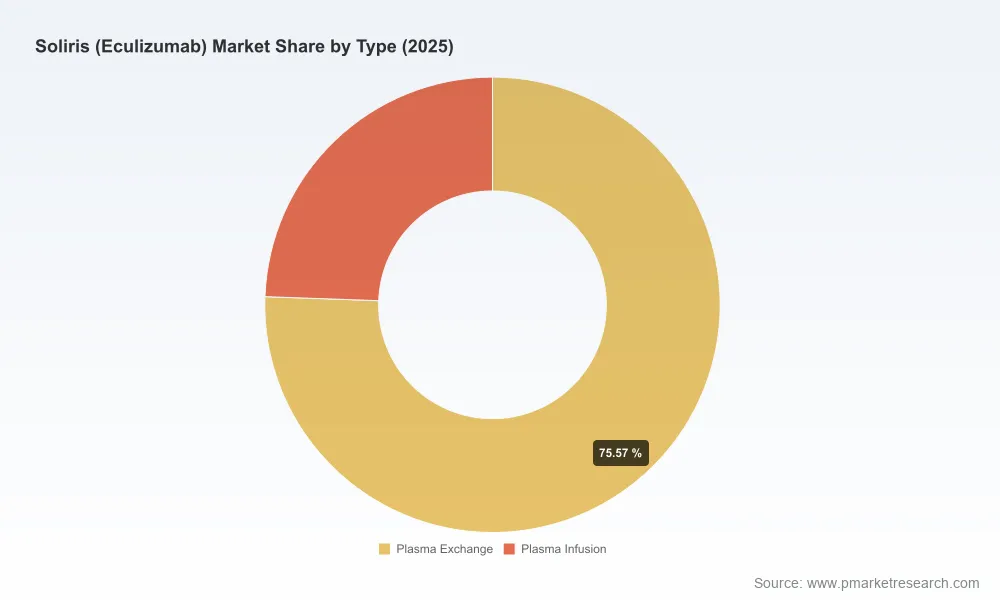
To convert these dynamics into practical intelligence, the study is structured around decision-ready components rather than descriptive narrative alone. It integrates a detailed segment-level view across regional and application dimensions, offering context on where demand concentrations are forming and how the competitive rhythm differs by geography. It examines type-level patterns to clarify how treatment approaches and associated service demands influence utilization and cost structures. It also situates these patterns within the broader clinical indications that anchor demand, providing a way to compare the relative pull of different therapeutic areas without relying on static assumptions.
The analysis extends into competitive profiling and strategic positioning. Company-level insights trace how innovators, parent entities, biosimilar developers, and commercial partners are aligning science, manufacturing, and commercialization to shape market outcomes. Recent developments are compiled into a tracked record that connects regulatory approvals, launch events, partnership architecture, and clinical data presentations to the underlying strategic implications. This approach allows readers to see not just what happened, but how each move alters the field: which access barriers are rising, which evidence bases are strengthening, and where future competition is most likely to intensify.
Contextual factors are woven throughout to ensure that forecasts are anchored in operational reality. Regulatory mechanics, manufacturing responsibilities, exclusivity timelines, and patient support frameworks are treated as active levers, not background noise. The study also incorporates market concentration signals to illustrate the degree to which the landscape remains consolidated and what that implies for pricing power, negotiation leverage, and the feasibility of displacement strategies. By combining quantitative trajectory, structural segmentation, competitive activity, and operational context, the report is designed to support multiple use cases: portfolio planning, market access design, competitive response, partnership evaluation, and investment prioritization.
Why This Analysis Matters for 2026 Decision-Making
2026 is a pivotal year because several forces converge. The biosimilar's U.S. presence is no longer theoretical; exclusivity and indication developments are actively reshaping the competitive envelope; and clinical evidence is reinforcing, and in some contexts complicating, the value story across neurology and rare hematology applications. For organizations operating in or adjacent to this market, the strategic question is how to navigate the tension between durable brand equity and the structural pressure of biosimilar entry, all while preparing for regulatory and access evolution.
Soliris (Eculizumab) Market
The study supports that navigation by offering more than a forward curve. It helps leaders identify where differentiation can be defended, where access strategy needs to be recalibrated, and where partnership or lifecycle decisions should be prioritized. It provides a basis for scenario planning around substitution intensity, indication-level demand, and regional variation in competitive response. It also clarifies the operational prerequisites for sustaining leadership: manufacturing reliability, safety-program compliance, evidence generation cadence, and patient support integration. In a market where confidence, continuity, and credibility drive adoption as much as efficacy does, those operational elements are strategic assets.
Closing Perspective
The Soliris market is not simply expanding; it is restructuring. Growth remains substantial, but it will be filtered through biosimilar competition, exclusivity timelines, pediatric and specialty indication evolution, and increasingly sophisticated access expectations. Organizations that rely on legacy assumptions will underestimate the speed and shape of change. Those that use a rigorous, evidence-anchored forecast and a detailed operational view can turn uncertainty into a planning advantage. This study is built for that purpose: to reveal the architecture of the opportunity, map the points of pressure, and equip decision-makers with the context needed to act decisively through 2032.
For detailed analysis of this topic, please visit the official page: Soliris (Eculizumab) Market
Lacy Lee
Senior Marketing Manager
[email protected]
PW Consulting: www.pmarketresearch.com























Sign in to leave a comment.