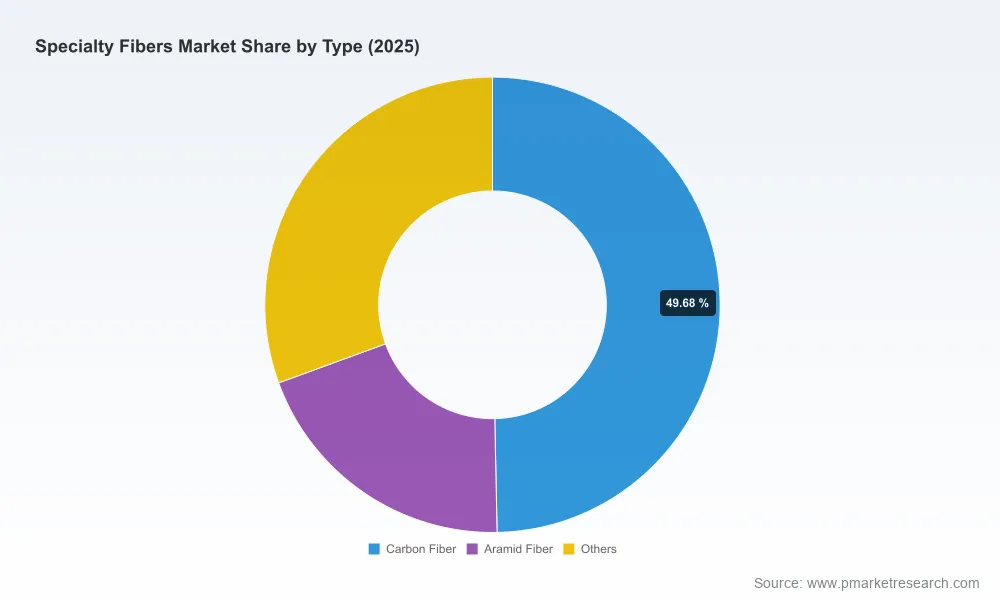

Strategic Intelligence for the Specialty Fibers Market: Navigating Growth Through 2032
The global specialty fibers market stands at a critical inflection point. As industries ranging from aerospace and defense to electronics and telecommunications accelerate their adoption of advanced fiber solutions, corporate strategists require more than surface-level market summaries. They need precise, forward-looking intelligence capable of informing capital allocation, R&D prioritization, partnership formation, and competitive positioning. PW Consulting's latest Specialty Fibers Market report delivers exactly that analytical rigor. Spanning historical performance from 2020 through 2025 and extending forecasts to 2032, this research transforms fragmented industry signals into a coherent strategic roadmap.
This article outlines the report's analytical architecture, highlights the structural forces reshaping the competitive landscape, and explains why decision-makers across manufacturing, procurement, and investment functions should treat this publication as a mandatory reference for 2026 planning cycles.
Market Trajectory: From Recovery to Sustained Expansion
The specialty fibers sector has demonstrated remarkable resilience and expansion over the past half-decade. Historical revenue data reveals a consistent upward trajectory: from 8.9 billion USD in 2020 to 9.51 billion USD in 2021, climbing to 10.44 billion USD in 2022, 10.84 billion USD in 2023, and reaching 11.65 billion USD in 2024. By the 2025 base year, the market had scaled to 12.66 billion USD. From this foundation, the forecast period projects continued expansion, with 2026 estimated at 14.0 billion USD, followed by 14.21 billion USD in 2027, 15.82 billion USD in 2028, 16.9 billion USD in 2029, 18.23 billion USD in 2030, 18.71 billion USD in 2031, and 20.73 billion USD by 2032.
Specialty Optical Fibers Market
The compound annual growth rate of 7.3 percent across the forecast horizon reflects more than cyclical recovery. It captures structural demand shifts: lightweighting mandates in transportation and aerospace, miniaturization requirements in consumer electronics and telecommunications infrastructure, and the accelerated integration of high-performance fiber assemblies into advanced manufacturing and medical technology ecosystems. These are not transient phenomena. They represent enduring megatrends that will dictate procurement strategies, capacity planning, and technology roadmaps well into the next decade.
What separates this report from conventional market summaries is its treatment of these macro figures as starting points rather than endpoints. Every aggregate trend is decomposed into demand drivers, supply constraints, pricing dynamics, and substitution risks. Readers will encounter quantified assessments of how regulatory shifts, material innovation cycles, and regional capacity investments interact to reshape market equilibrium. The analysis deliberately avoids superficial percentage breakdowns of regional or application-level shares, focusing instead on the underlying mechanics that determine which segments will outperform, which will consolidate, and where margin pressure will intensify.
Competitive Architecture and Strategic Positioning
Market concentration data indicates that the top three players command approximately 45.2 percent of total revenue, while the top five collectively hold 52.8 percent. This moderate concentration structure suggests a market where scale advantages matter, but where specialized capabilities, regulatory compliance, and application-specific engineering can still create defensible niches. Understanding which firms occupy these positions, how they are evolving, and where strategic gaps exist is central to the report's competitive assessment.
Leading Organizations and Capability Profiles
The competitive landscape features several firms that have built differentiated positions through technology specialization and regulatory alignment. Coherent, Inc., headquartered in San Jose, California, provides single-mode, multi-mode, and polarization-maintaining specialty optical fibers explicitly optimized for medical applications including surgical laser delivery, optical coherence tomography imaging, and spectroscopic systems. Their emphasis on high-power handling and sterilization compatibility positions them at the intersection of performance and clinical compliance.
Gulf Fiberoptics, Inc., based in Oldsmar, Florida, manufactures FDA-registered medical-grade fiber optic light cables, bundles, and assemblies for surgical microscopes, endoscopes, retractor applications, and ICG fluorescence imaging. Their product architecture prioritizes reliability in sterile environments and compatibility with established clinical workflows.
MED-Fibers, Inc., operating from Chandler, Arizona, produces precision surgical laser fibers including holmium, dome-tip, and angle-side-fire configurations compatible with standard FDA-cleared laser systems. Their focus spans urology, stone lithotripsy, and minimally invasive procedures, reflecting a strategy centered on procedural specificity and surgeon-instrument integration.
Fibercore, now operating under Humanetics Innovative Solutions in Southampton, United Kingdom, develops and manufactures custom specialty optical fibers for biomedical applications including smart catheters, next-generation imaging, spectroscopy, confocal microscopy, and robotics. Their customization capability and emphasis on emerging biomedical modalities position them as a strategic partner for R&D-intensive health technology developers.
Specialty Fibers Market
Recent Moves Shaping the Competitive Horizon
Corporate activity over the past twelve to eighteen months reveals where incumbents are placing strategic bets. In June 2025, Coherent, Inc. launched disposable surgical fiber assemblies for laser lithotripsy and minimally invasive urology and soft tissue procedures, a move designed to enhance energy delivery precision while addressing infection control and throughput considerations in clinical settings. By October 2025, the same firm released the ACE Thulium Fiber Laser with integrated surgical fiber assemblies, signaling a convergence strategy that pairs laser source technology with delivery instrumentation to capture end-to-end value.
Gulf Fiberoptics, Inc. has pursued visibility and partnership development through selective trade show participation. In November 2025, the firm exhibited at the Medica trade show in Düsseldorf, Germany, as part of the Florida Pavilion, showcasing medical fiber optic products within hall 16 at stand D03-2. This was followed by participation in the World Health Expo in Miami, Florida, from June 17 to 19, 2026, where the company highlighted medical fiber optic light cords and assemblies. These events reflect a deliberate strategy to strengthen European distribution relationships while reinforcing North American clinical presence.
For strategists, these moves are not isolated press items. They reveal how leading firms are balancing product portfolio expansion, regulatory pathway management, and channel development. The full report maps these activities against competitor capabilities, supply chain positioning, and addressable market segments to assess which initiatives are likely to compound advantage versus those that represent defensive positioning.
Regulatory, Reimbursement, and Compliance Dynamics
The specialty fibers market does not operate in a regulatory vacuum. Compliance requirements, quality standards, and reimbursement frameworks directly influence product development timelines, commercialization velocity, and addressable economics. The report dedicates substantial analytical attention to these forces because they frequently determine win-loss outcomes in procurement decisions and clinical adoption cycles.
Regulatory alignment has become a non-negotiable precondition for market entry in many application domains. MED-Fibers, Inc. products meet NF EN ISO 35663:2025 and carry CE marking along with FDA 510(k) clearance for surgical laser fibers, demonstrating how multi-jurisdictional compliance can unlock cross-border commercial opportunities. Gulf Fiberoptics, Inc. maintains FDA registration for its medical fiber optic light cables and assemblies while adhering to applicable good manufacturing practice requirements for sterile medical device use. Fibercore's custom biomedical fibers support sterilization via dedicated coatings compatible with ethylene oxide, autoclave, and other medical-grade methods required for device qualification. These compliance architectures are not merely operational checkboxes; they represent strategic assets that reduce procurement risk for hospital systems and medical device manufacturers.
Regulatory evolution also introduces timing considerations. FDA draft guidance released in March 2025 on mandatory image-quality metrics for fiber-optic scopes has extended typical 510(k) approval timelines by up to six months. For companies with pipeline products nearing submission, this shift alters development sequencing, capital deployment timing, and first-mover calculations. The report analyzes how such guidance changes interact with competitive launch calendars and what mitigation strategies established players are deploying.
Reimbursement dynamics further shape demand elasticity. Coherent's medical fiber assemblies support high-power laser energy delivery in urology and soft tissue procedures reimbursed under standard CPT codes for endoscopic and laser-assisted surgeries. When revenue codes align with clinical utility, adoption curves steepen, and volume forecasts gain reliability. The research examines which procedure categories exhibit favorable reimbursement-to-adoption ratios and where coverage uncertainty could delay procurement commitments.
Structural Forces Redefining Demand and Supply
Beyond firm-level activity, the market is being reshaped by broader structural dynamics that will influence pricing power, capacity utilization, and technology substitution patterns. The report's dynamics section synthesizes these forces into actionable scenario frameworks rather than static trend lists.
- Material and performance innovation cycles are compressing the interval between laboratory validation and commercial deployment. New fiber configurations, coating technologies, and integration architectures are enabling higher power handling, improved sterilization durability, and tighter tolerances for imaging and spectroscopy applications. These advances expand the addressable scope of specialty fibers beyond legacy use cases, but they also raise the technical bar for competitors seeking to enter or defend positions.
- Procurement centralization and standardization across large industrial and healthcare buyers are increasing the weight of total-cost-of-ownership calculations over unit price alone. Buyers increasingly evaluate sterilization compatibility, replacement frequency, integration with existing systems, and supplier reliability. Firms that can articulate and demonstrate these value dimensions secure longer contract cycles and higher retention rates.
- Geographic capacity deployment and supply chain resilience have emerged as strategic variables. Recent disruptions have prompted buyers to demand visibility into manufacturing footprints, inventory buffers, and qualification redundancy. The report assesses how leading suppliers are adjusting production geography, qualification pathways, and logistics partnerships to reduce vulnerability while preserving margin integrity.
- Regulatory harmonization and divergence create uneven market access conditions. While some standards are converging across jurisdictions, others remain distinct or evolve on different timelines. Companies must decide whether to pursue uniform global compliance architectures or customize pathways by region, a choice that affects development cost, time-to-market, and addressable revenue.
These dynamics do not operate in isolation. Their interactions produce second-order effects that are often missed in headline analyses. For example, a regulatory timeline extension may delay a competitor's launch but simultaneously increase the attractiveness of established, already-cleared alternatives for risk-averse buyers. Similarly, advancements in sterilization-compatible coatings may expand clinical adoption but also raise input costs that pressure margins unless offset by volume or premium positioning. The report's integrated modeling captures these interdependencies, enabling readers to stress-test assumptions rather than rely on linear extrapolation.
Analytical Scope: What the Report Delivers to Decision-Makers
PW Consulting's Specialty Fibers Market report is structured to support multiple decision contexts: corporate strategy, business development, procurement planning, investment analysis, and technology roadmapping. The analytical content is designed for immediate application, not abstract observation.
Core Analytical Modules
The publication provides a comprehensive foundation through several integrated components. Historical market sizing from 2020 through 2025 establishes baseline performance, while the 2026 to 2032 forecast framework extends forward-looking estimates across the full revenue trajectory. Segmentation analysis disaggregates demand across material and application dimensions, examining growth differentials, pricing behavior, and substitution risks without exposing granular percentage allocations that could obscure strategic interpretation. Regional perspective analysis assesses demand intensity, capacity positioning, and market access conditions across major geographic zones, focusing on structural drivers rather than static share tables.
Competitive profiling goes beyond organizational summaries. Each profiled company is evaluated for technology positioning, regulatory posture, recent strategic moves, and inferred capability gaps. This allows readers to map their own organization's strengths and vulnerabilities against the field. The dynamics section integrates regulatory developments, reimbursement considerations, innovation cycles, and supply chain factors into scenario-based assessments that support contingency planning.
Practical Applications for 2026 Planning
For strategy and corporate development teams, the report supports market entry evaluation, partnership targeting, and capacity investment decisions. By clarifying which application domains exhibit durable demand growth and which face substitution or pricing pressure, it helps prioritize resource allocation. For procurement and sourcing professionals, the analysis highlights supplier capability differentiation, compliance readiness, and geographic risk factors that influence vendor selection and contract structuring. For investors and analysts, the segmentation logic and competitive mapping provide a framework for assessing portfolio exposure, identifying consolidation candidates, and calibrating growth assumptions against structural rather than cyclical drivers.
Crucially, the report avoids the temptation to reduce complex market behavior to a handful of summary figures. Instead, it offers the analytical scaffolding needed to interpret those figures in context, test alternative assumptions, and align organizational actions with the most probable market evolution paths.
Why This Intelligence Matters Now
The 2026 planning cycle is unusually consequential for firms operating in or adjacent to the specialty fibers market. Regulatory guidance is reshaping approval timelines. Reimbursement alignments are accelerating adoption in certain clinical and industrial procedures while leaving others in uncertainty. Technology convergence is blurring boundaries between fiber suppliers, instrument manufacturers, and system integrators. Capacity deployment decisions made now will influence cost structures and service levels for years. In this environment, decisions made on the basis of outdated summaries or anecdotal intelligence carry elevated risk.
PW Consulting's Specialty Fibers Market report provides the depth, structure, and forward orientation required to navigate these conditions with confidence. It translates historical performance into learnable patterns, converts regulatory and technological signals into strategic implications, and maps competitive activity onto a coherent field structure. The result is not merely a market snapshot but a decision-support instrument calibrated for the complexity of today's industrial and healthcare technology ecosystems.
Organizations that treat specialty fibers as a commodity input will miss the strategic implications embedded in performance differentiation, compliance positioning, and application-specific engineering. Those that engage with the full analytical architecture of this report will be better positioned to anticipate demand shifts, select partnership targets, structure procurement strategies, and invest in capabilities that compound advantage over the forecast horizon.
For complete segmentation logic, detailed competitive assessments, scenario modeling, and the full forecast framework, readers are encouraged to access the complete report through the source publication. The insights summarized here are intended to demonstrate analytical rigor and identify strategic priorities; the full publication delivers the comprehensive data architecture and interpretive depth required for precise execution.
For detailed analysis of this topic, please visit the official page: Specialty Fibers Market
Lacy Lee
Senior Marketing Manager
[email protected]
PW Consulting: www.pmarketresearch.com



























Sign in to leave a comment.