
Strategic Intelligence for the Modern Plant: Navigating the Global Magnetic Flap Level Gauge Market Through 2032
In industrial environments where process safety, measurement precision, and operational continuity dictate the difference between marginal performance and market leadership, fluid level instrumentation has quietly evolved from a commoditized accessory into a strategic asset class. The magnetic flap level gauge, once valued primarily for its straightforward visual indication and mechanical simplicity, now sits at the intersection of materials engineering, hazardous-area compliance, and digital monitoring. As plants confront aging infrastructure, increasingly complex chemical and thermal profiles, and a growing mandate for remote diagnostics, procurement leaders, engineering directors, and market strategists require a clearer picture of where capital will flow and which vendor ecosystems will define competitive advantage over the coming decade.
Worldwide Magnetic Flap Level Gauge Market
PW Consulting's latest Worldwide Magnetic Flap Level Gauge Market study is designed to meet that exact demand. Positioned as a decision-grade intelligence asset rather than a generic statistical overview, the research synthesizes historical performance, forward-looking demand modeling, and granular competitive profiling into a single strategic reference. This introduction outlines the analytical architecture of the study, the structural forces shaping the market through 2032, and the practical frameworks that will help enterprises allocate budget, evaluate supplier partnerships, and build resilient instrumentation roadmaps in a sector undergoing quiet but meaningful transformation.
Worldwide Magnetic Flap Level Gauge Market
A Decade of Structural Growth: Mapping the Market Trajectory from 2020 to 2032
Any credible strategic assessment begins with a disciplined read of the past to inform the decisions of the future. The market under review has demonstrated steady, compounding expansion across the historical window, reflecting both the maturation of process industries and the progressive replacement of legacy sight-glass and generic level indicators with purpose-built magnetic flap systems. By 2025, the global market had reached an estimated revenue benchmark of approximately 762.22 million USD in current terms, a level achieved through consistent year-over-year gains tied to industrial capacity expansion, aftermarket replacement cycles, and sustained investment in fluid handling infrastructure across multiple end-use verticals.
Worldwide Magnetic Flap Level Gauge Market
The forward trajectory, projected through the 2026 to 2032 forecast period, points to continued expansion at a compound annual growth rate of 5.5 percent, culminating in an anticipated revenue scale of roughly 1,108.8 million USD by 2032. This progression is not merely a linear extrapolation; it reflects the compounding effect of several converging dynamics: the ongoing modernization of chemical processing and power generation assets, the replacement of fragile glass instrumentation in hazardous-service applications, and the gradual integration of level monitoring with broader automation and control architectures. For executives planning capital expenditure cycles, the strategic implication is straightforward: this is a market where long-term demand visibility is comparatively high, yet the reward for being early in understanding regional momentum, application-specific substitution patterns, and supplier capability differentiation is substantial.
Segmentation as a Lens for Strategic Prioritization
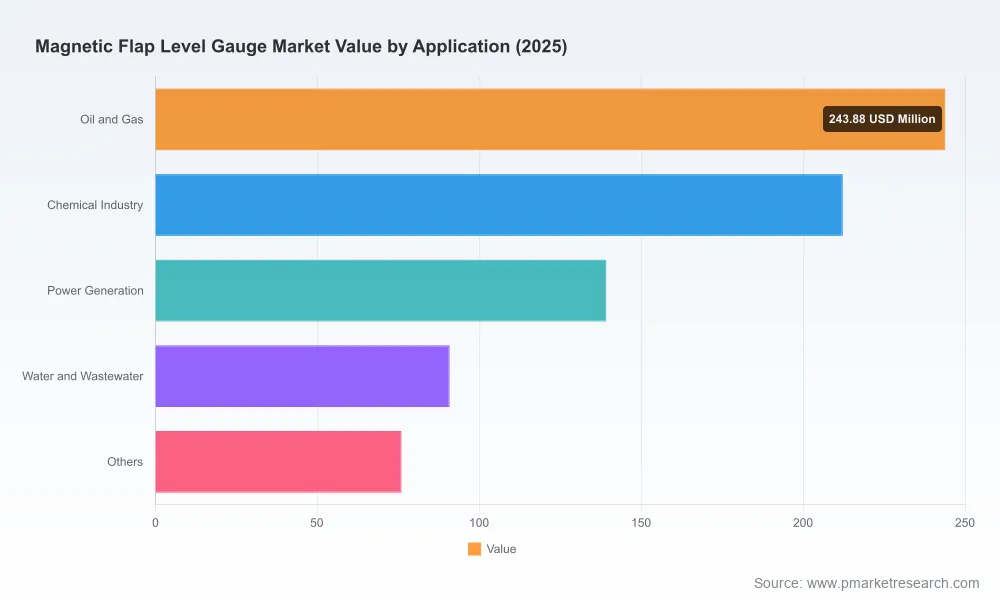
The market's underlying structure reveals distinct pockets of intensity, each carrying its own technical requirements, cost structures, and competitive rhythms. By mounting configuration, side-mounted and top-mounted variants divide the revenue landscape, with side-mounted designs commanding a larger share that reflects entrenched installation practices, retrofit economics, and the operational preferences of certain process architectures. By application, oil and gas, chemical processing, power generation, water and wastewater, and a portfolio of specialized industrial uses collectively anchor demand, though each vertical imposes markedly different thresholds for corrosion resistance, pressure containment, thermal tolerance, and regulatory certification. Regionally, the global footprint is distributed across Asia Pacific, North America, Europe, the Middle East and Africa, and Latin America, with each geography shaped by local capacity formation, procurement norms, and infrastructure investment cycles.
Importantly, this study treats segmentation not as a static scorecard but as a diagnostic tool. The strategic reader will use these structural layers to ask harder questions: which mounting configurations are gaining traction in new-build versus retrofit scenarios, how application portfolios are shifting as chemical and power operators consolidate and modernize, and where regional demand is being driven by domestic manufacturing expansion versus imported equipment substitution. Rather than presenting a flat set of percentage splits, the full report traces how these dimensions interact, enabling buyers and investors to prioritize the segments where margin preservation, technology alignment, and supply reliability are most critical.
Competitive Positioning and Vendor Capabilities in a Converging Landscape
The competitive arena for magnetic flap level gauges is populated by a mix of global engineering firms, specialized pressure-instrumentation manufacturers, and regionally focused producers whose offerings span engineered custom solutions, catalog-standard devices, and increasingly connected measurement platforms. While the sector is moderately concentrated, with the top three participants accounting for roughly 28.4 percent of collective revenue and the top five reaching approximately 39.5 percent, the real strategic story lies in the differentiation of product philosophy, service depth, and compliance readiness across the vendor base.
At the premium engineered end of the spectrum, manufacturers emphasize multi-material fabrication, redundant chamber architectures, and hybrid instrumentation strategies. Large Swiss-headquartered measurement organizations, for example, have built substantial reference installed bases around magnetic gauge platforms that accommodate high-pressure and high-temperature service while supporting dual-chamber redundancy and guided-wave radar integration. Their value proposition centers on lifecycle durability, toxic and corrosive media handling, and the ability to deliver tailored assemblies for oil and gas, chemical, and power generation environments. Alongside them, prominent American manufacturers position their product lines around extreme pressure and temperature envelopes, offering single or dual chamber designs in materials ranging from standard stainless steels to Hastelloy and titanium, with explicit alignment to ASME B31.1 and B31.3 pressure piping standards. Such offerings are particularly relevant for operators whose installations demand proven mechanical integrity under severe process conditions.
On the standard and mid-tier side, other manufacturers emphasize production flexibility, broad length ranges, and configuration options that combine visual indication with transmitters, switches, and scales. A U.S.-based supplier in this category supports lengths extending beyond eighteen feet and pressures up to 3600 PSIG, with material variants including 316-Ti stainless steel and titanium, while also maintaining compliance pathways relevant to industrial procurement. European and regional manufacturers contribute complementary strengths, including marine and high-pressure applications, ultra-wide viewing-angle indicators, and comprehensive series coverage spanning low to high pressure. Meanwhile, specialized catalog builders continue to release updated product documentation that broadens model families, float configurations, reed switch options, and bridle chamber designs for radar sensor integration, signaling the ongoing refresh cycle that keeps the competitive field dynamic.
A parallel layer of competition has emerged from manufacturers emphasizing digital readiness and cost-competitive deployment. Among these, Chinese instrument makers are gaining visibility through offerings that pair standard magnetic dual-color flap indicators with wireless telemetry and IoT connectivity, using protocols such as LoRaWAN and NB-IoT to extend monitoring reach in chemical and tank applications. Other domestic producers focus on side-mounted high-pressure variants, frost-proof designs with alarm functions, and CE-certified flapper float level meters built for defined temperature windows. This segment underscores a broader market reality: as instrumentation becomes more connected and more accessible, the battleground is shifting from purely mechanical performance toward total cost of ownership, integration ease, and the ability to retrofit intelligence into existing level measurement points.
Materials, Standards, and the Operational Logic of Gauge Selection
The strategic value of magnetic flap level gauges is inseparable from the materials and standards that govern their deployment. Across the industry, 316 and 304 stainless steel remain dominant materials for chambers and floats, chosen to balance corrosion resistance with pressure integrity in process applications. At the same time, global stainless steel production volumes, which reached approximately 63.26 million tons in 2025 with Asia accounting for the majority share, exert a meaningful influence on component costs and, by extension, on pricing dynamics across the gauge supply chain. Procurement teams that understand this linkage are better equipped to anticipate material-driven cost variability and to structure long-term supply agreements with appropriate hedging and specification clarity.
Regulatory and engineering standards further shape competitive positioning and buyer preferences. Magnetic level gauges are routinely specified in alignment with ASME B31.1 and B31.3 pressure piping requirements, as well as broader pressure equipment directives relevant to safe operation in high-pressure and high-temperature processes. In many settings, they are selected as a maintenance-free alternative to glass sight gauges, reducing breakage risk and improving operator safety during routine tank and vessel monitoring. In parallel, Chinese national standards such as GB/T 21446-2008 provide guidance that emphasizes safety, adaptability to harsh conditions, and remote monitoring capability, reinforcing a global trend in which visual indication and electronic supervision are increasingly treated as complementary rather than competing functions. The full report examines how compliance postures, standard alignment, and materials engineering influence vendor evaluations in practice, helping buyers map technical specifications to procurement risk and service reliability.
Industry Dynamics Shaping the 2026 Decision Environment
For enterprises planning around the 2026 horizon, several operational realities warrant attention. First, the replacement of legacy level instrumentation remains a durable demand driver, particularly where glass indicators have created safety liabilities or where process conditions have intensified beyond the practical limits of older devices. Second, the convergence of mechanical level indication with transmitters, switches, and remote monitoring options is expanding the addressable value of each installation point, making it increasingly important to evaluate gauge suppliers not only on the primary device but also on the completeness of their accessory ecosystem and integration pathways. Third, project timelines in oil and gas, chemical, and power sectors are often tied to plant expansions, turnaround windows, and environmental compliance upgrades, which means that supply continuity, lead-time discipline, and after-sales engineering support can matter as much as unit pricing.
In this environment, strategic buyers benefit from a structured comparison of vendor capabilities across multiple dimensions: material and pressure ratings, mounting flexibility, compliance documentation, customization depth, local service presence, and the maturity of connected monitoring options. The study's competitive analysis is built to support exactly this kind of evaluation, offering profile-level detail on core participants and tracking recent developments such as catalog releases, new bridle chamber offerings, and expanded high-pressure variants. These updates matter because they signal where vendors are investing to capture adjacent demand, whether from radar integration, wireless telemetry, or specialized high-pressure service.
What the Full Study Delivers for Planning and Execution
The complete PW Consulting Worldwide Magnetic Flap Level Gauge Market research extends well beyond the direction-setting observations summarized here. It provides a structured examination of market sizing across the historical period and the 2026 to 2032 forecast window, with revenue figures expressed in millions of USD and growth rates calibrated to reflect the compound trajectory observed across the prior cycle. The analysis integrates segmentation perspectives by region, by type, and by application, allowing readers to trace where volume concentration resides and how structural demand differs across industrial verticals and geographic markets.
In addition, the report delivers a competitive landscape assessment that profiles leading manufacturers and maps their positioning around engineering depth, product breadth, and recent business developments. It examines market concentration in practical terms, helping stakeholders understand how much of the revenue base is shared among leading participants and where opportunities exist for differentiated sourcing or niche specialization. The study also situates the market within broader industry dynamics, including raw material considerations, standards-driven specification behavior, and the shifting relationship between mechanical indication and connected monitoring.
For procurement and engineering leaders, the report is intended to serve as a reference for supplier evaluation, specification planning, and multi-year instrumentation strategy. For investors and market strategists, it offers a framework for interpreting demand signals, identifying segments with durable growth characteristics, and anticipating where vendor differentiation will become increasingly decisive. For all audiences, the emphasis is on actionable clarity: understanding not only how large the market is, but how its internal structure will shape purchasing decisions, competitive behavior, and risk exposure over time.
Aligning Strategy with a Market in Transition
The worldwide magnetic flap level gauge market is best understood as a mature yet still evolving segment of industrial instrumentation, one in which steady growth coexists with meaningful differentiation in materials, compliance, mounting architecture, and digital connectivity. The 2026 to 2032 outlook reflects a continuation of that evolution: revenues are expected to move from the high-700-million range in the near term toward a scale exceeding one billion USD by the end of the forecast horizon, supported by replacement demand, process intensification, and the broader push toward safer and more observable fluid handling systems.
What will separate well-prepared organizations from the rest is not awareness of growth alone, but the ability to interpret it through the right lenses. Which applications are most likely to favor engineered redundancy over standard catalog devices? Where do regional procurement patterns favor localized supply versus imported specialization? How should connected monitoring options be weighted against mechanical reliability in specific operating environments? The full report is structured to help leaders answer these questions with greater confidence, using a blend of historical evidence, forward-looking estimates, and competitive intelligence that goes beyond surface-level sizing.
Strategic decisions in this space reward precision. They require a clear view of where standards, materials, and mounting preferences converge, where competitive intensity is rising, and where the value of reliable level indication is Amplified by hazardous-service requirements or remote monitoring expectations. PW Consulting's Worldwide Magnetic Flap Level Gauge Market research is built to provide that vantage point, translating macro-level momentum into segment-aware insight and vendor-specific context that can inform sourcing, product planning, and long-range capital allocation.
The pages that follow in the complete study offer the detailed revenue architecture, segmentation analysis, competitive profiles, and market dynamics that decision-makers need to move from general understanding to precise action. For organizations committed to navigating instrumentation procurement and market strategy with discipline through 2032, the study provides the evidentiary foundation to do so with clarity, timing, and confidence.
For detailed analysis of this topic, please visit the official page:Worldwide Magnetic Flap Level Gauge Market
Lacy Lee
Senior Marketing Manager
[email protected]
PW Consulting: www.pmarketresearch.com






























Sign in to leave a comment.