
Navigating the Heat: Strategic Imperatives in the Global Geothermal Power Market Through 2032
The global energy transition is entering a critical phase where reliability and carbon intensity are no longer mutually exclusive. As corporations and governments alike strive to meet aggressive decarbonization targets, baseload renewable energy sources are moving from niche alternatives to central pillars of long-term strategy. Among these, geothermal power stands out for its unique ability to provide continuous, firm capacity without the intermittency challenges associated with wind and solar. Our latest comprehensive study on the Geothermal Power Market offers a detailed roadmap for stakeholders looking to capitalize on this evolving landscape between 2026 and 2032.
Geothermal Power Market
For business leaders, investors, and policy architects, understanding the trajectory of geothermal energy is not merely about tracking a single commodity. It is about recognizing a shift in how industrial baseloads, particularly data centers and heavy manufacturing, will secure their power supplies in the coming decade. This report distills complex market dynamics into actionable intelligence, designed to support high-stakes decisions in an environment defined by technological innovation and regulatory evolution.
Market Trajectory and Revenue Forecast
The financial narrative of the geothermal sector over the past half-decade sets a compelling stage for future growth. Historical data from 2020 through 2025 reveals a sector that has demonstrated resilience and steady expansion despite broader economic fluctuations. In 2020, the global market generated revenue of approximately 388.8 million USD. By 2025, this figure had climbed to 470.8 million USD, reflecting a consistent upward trend driven by increased deployment and technological maturation.
Looking forward, our analysis projects that this momentum will accelerate. The market is expected to reach 498.49 million USD in 2026, marking a significant inflection point as new projects come online. The growth trajectory continues robustly through the forecast period, with revenue anticipated to hit 678.5 million USD by 2032. This expansion is underpinned by a compound annual growth rate (CAGR) of 5.6 percent over the 2026 to 2032 timeline. For strategic planners, this indicates a stable yet expanding market environment where early movers can secure advantageous positions before capacity constraints tighten.
Technological Landscape and Utilization Trends
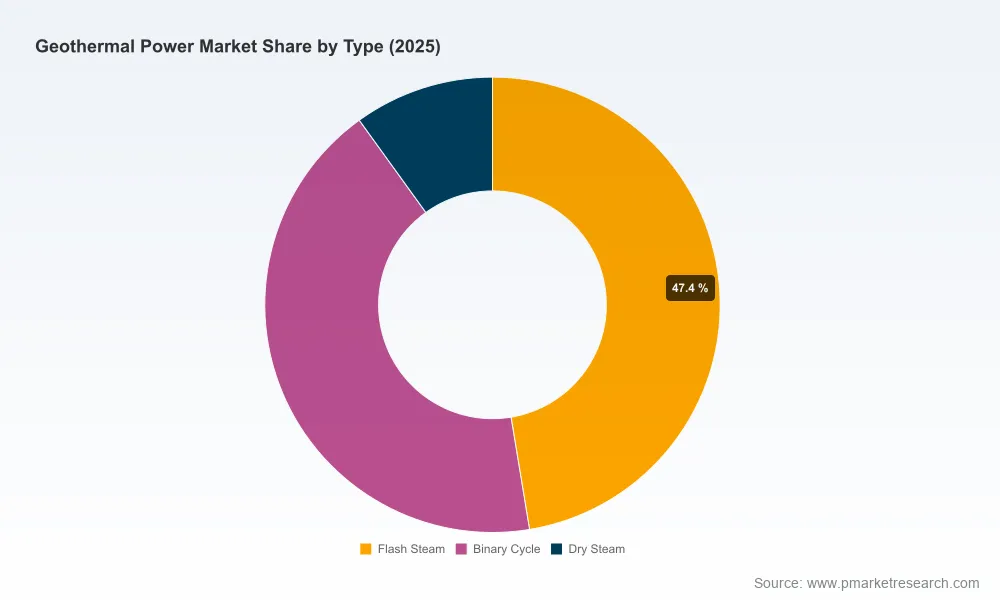
The core of the geothermal value chain lies in the technology used to harness earth heat. Our research segments the market by technology type, highlighting the dominance of established methods alongside the rise of next-generation solutions. Flash steam systems currently represent a substantial portion of the market activity, followed closely by binary cycle technologies. Dry steam, while historically significant, occupies a smaller niche due to specific geological requirements.
Crucially, the application landscape is overwhelmingly focused on electricity generation. Virtually the entire market value in 2025 is attributed to power production, underscoring the strategic priority placed on electrifying assets and grids. Direct heat utilization, while potentially valuable in specific regional contexts, currently represents a negligible fraction of the tracked revenue. This skew suggests that investment flows and corporate interest are heavily concentrated on generation capacity that can feed into grid networks or serve high-demand industrial loads directly.
Geographic Distribution and Competitive Intensity
Geographically, the market is not uniformly distributed. North America, Europe, and Asia Pacific constitute the primary centers of economic activity within the sector. North America leads with significant revenue contribution, reflecting strong policy support and private investment in the region. Asia Pacific and Europe follow closely, each with distinct regulatory drivers and resource availabilities. Latin America and the Middle East and Africa represent emerging opportunities, though their current market shares are smaller compared to the established hubs.
The competitive landscape is characterized by a high degree of concentration. Our analysis indicates that the top three companies control approximately sixty percent of the market, while the top five firms account for roughly eighty-five percent. This concentration suggests that barriers to entry remain significant, often requiring specialized technical expertise, regulatory navigation, and substantial capital commitment. However, the presence of both established utilities and agile technology startups creates a dynamic ecosystem where innovation can still disrupt established hierarchies.
Key Industry Players and Strategic Movements
The companies defining this market range from vertically integrated power providers to specialized equipment suppliers and next-generation developers. Ormat Technologies, based in Nevada, remains a cornerstone player, offering vertically integrated solutions for geothermal power plants and binary-cycle systems. Their recent strategic moves include signing long-term portfolio power purchase agreements to support major technology infrastructure, signaling a trend where geothermal energy is being bundled to serve data center loads.
In Europe, Enel Green Power continues to operate and develop geothermal assets across multiple continents, leveraging its global scale. Meanwhile, Ford Energy in Houston represents the new wave of enhanced geothermal systems developers, focusing on next-generation EGS and standardized ORC power plants for commercial-scale carbon-free electricity. Their recent successful initial public offering and subsequent stock performance highlight growing investor appetite for commercial EGS projects.
Equipment suppliers are also playing a pivotal role. Baker Hughes, headquartered in Houston, provides critical turboexpanders and generators for ORC-based enhanced geothermal plants. Their recent contract awards to supply equipment for large-scale ORC power plants demonstrate the hardware supply chain gearing up for expanded deployment. Similarly, Turboden in Italy is strengthening its position through framework agreements to supply ORC turbines for significant capacity blocks, reinforcing the supply chain resilience needed for scaling.
Regional leaders also play essential roles. Star Energy Geothermal in Indonesia operates as the country's largest geothermal producer, managing multiple plants and direct-use projects. In Iceland, Reykjavik Geothermal operates the nation's largest district heating and power systems, showcasing the versatility of geothermal applications. In East Africa, KenGen serves as Kenya's primary geothermal developer, expanding capacity and demonstrating the technology's viability in developing energy markets. Calpine Corporation remains a key operator in the United States, managing large-scale complexes focused on baseload renewable electricity.
Regulatory Tailwinds and Cost Dynamics
Policy frameworks and cost structures are reshaping the investment thesis for geothermal energy. As of late 2025, a significant number of states in the U.S. offer incentives for geothermal electricity projects, including tax credits in numerous jurisdictions. This regulatory patchwork creates localized advantages that can materially affect project economics. Stakeholders must navigate these varying incentives to optimize returns, a complexity that our report addresses in detail.
On the cost side, recent updates to drilling cost curves indicate favorable trends. Revised data shows that vertical well costs are declining due to advancements in drill bit technology and physics-based optimizations. Horizontal well costs are experiencing similar reductions. These cost declines are critical because drilling represents a major portion of capital expenditure in geothermal projects. Furthermore, projections suggest that the levelized cost of energy for next-generation EGS is declining and is expected to reach parity with traditional flash hydrothermal levels within the next decade. This convergence is a potential game-changer, potentially unlocking resources that were previously deemed economically unviable.
Demand signals are also strengthening. Between 2021 and mid-2025, numerous new geothermal power purchase agreements were signed, representing over one thousand megawatts of new capacity. A notable portion of these agreements specifically support data center operations, linking geothermal growth directly to the digital infrastructure boom. Additionally, recent federal funding announcements, such as the substantial opportunity announced in early 2026 for field-scale tests and exploration drilling, provide further tailwinds for research and deployment.
Content and Scope of the Full Report
To make informed decisions in this complex market, stakeholders need granular data and forward-looking analysis. Our full report provides a deep dive into multiple dimensions of the geothermal power sector. The study covers historical performance data from 2020 to 2025 and offers a detailed forecast through 2032. It segments the market by region, technology type, and application, allowing readers to isolate the segments most relevant to their strategic interests.
The report also includes a comprehensive competitive landscape analysis. It profiles key companies, examining their headquarters, core capabilities, and recent strategic developments such as contract awards, funding initiatives, and market entries. This section helps readers understand the competitive positioning of major players and identify potential partners or threats.
Geothermal Heat Pump Market
Furthermore, the document addresses market dynamics through the lens of industry context. It incorporates data on regulatory frameworks, raw material and infrastructure trends, and cost curve developments. By synthesizing these factors, the report provides a holistic view of the forces driving market growth. Readers will gain insights into how drilling cost reductions, policy incentives, and PPA trends interact to shape the investment environment.
The forecast model is built on a robust methodology that considers historical trends and projected drivers. It presents revenue figures in USD millions, allowing for consistent comparison across segments and time periods. The segmentation data reveals the relative size and growth potential of different regions and technologies, though specific percentage splits and detailed sub-segment figures are reserved for the complete analysis to ensure the depth of insight justifies the full review.
Strategic Value for 2026 Decision-Makers
For executives and analysts, the value of this research lies in its ability to reduce uncertainty. The geothermal market is at a crossroads where technology costs are falling, policy support is expanding, and demand from critical infrastructure sectors is rising. However, the path to capturing value is not uniform. It requires understanding which regions offer the most favorable economics, which technologies are scaling fastest, and which competitors are gaining momentum.
Our report equips decision-makers with the intelligence needed to navigate these variables. Whether the goal is to evaluate investment opportunities, assess supply chain risks, or benchmark competitive performance, the data and analysis provided serve as a foundational resource. The differentiation between established hydrothermal projects and emerging EGS technologies is highlighted, helping stakeholders align their strategies with the appropriate risk-return profiles.
The concentration of market share among top players also implies that strategic partnerships or acquisitions may be necessary for new entrants to gain scale. The report's company profiles and recent development tracking offer clues on where consolidation might occur and which entities are building the capabilities required for future leadership. Additionally, the link between geothermal power and data center demand suggests that sectors beyond traditional energy utilities should pay close attention to this market as a potential source of stable, green power.
Conclusion
The global geothermal power market is poised for significant growth through 2032, driven by technological advancements, supportive regulations, and increasing demand for firm renewable energy. With a projected CAGR of 5.6 percent and revenue expected to approach 678.5 million USD by the end of the forecast period, the sector offers tangible opportunities for those equipped with the right insights.
However, the complexity of the market landscape demands more than surface-level observations. Understanding the nuances of regional dynamics, technology performance, and competitive maneuvers is essential for success. This report provides that depth. To access the complete dataset, including detailed segmentation values, full historical series, and in-depth company assessments, we invite you to review the full study. The complete intelligence is available to support your strategic planning and ensure your decisions are grounded in comprehensive, forward-looking analysis.
For detailed analysis of this topic, please visit the official page: Geothermal Power Market
Lacy Lee
Senior Marketing Manager
[email protected]
PW Consulting: www.pmarketresearch.com


























Sign in to leave a comment.