
Natural Refrigerants Market Outlook 2026: Strategic Insights for Industry Leaders
The global transition toward sustainable cooling and refrigeration solutions has reached a critical inflection point. As environmental regulations tighten and corporate sustainability mandates intensify, the natural refrigerants sector has evolved from a niche alternative into a cornerstone of modern HVAC and industrial refrigeration strategies. This article outlines the strategic rationale behind our latest market research report, designed to equip decision-makers with the intelligence needed to navigate the market landscape through 2032.
Our comprehensive analysis captures the momentum driving this sector, highlighting how shifting regulatory frameworks, technological advancements, and supply chain dynamics are reshaping competitive positioning. For executives planning capital allocation, product development, or market entry strategies in 2026, understanding these interconnected forces is no longer optional—it is a strategic imperative.
Market Trajectory and Growth Fundamentals
The natural refrigerants market has demonstrated resilient expansion over the past half-decade, recovering from transient supply disruptions and adapting to evolving compliance requirements. Historical data from 2020 through 2025 reveals a sector that has consistently grown despite macroeconomic headwinds, with the total market valuation reaching approximately 1,700 million USD by the base year of 2025. This foundation sets the stage for a forecast period spanning 2026 to 2032, during which the market is projected to advance at a compound annual growth rate of 6.1 percent.
By 2032, the sector is anticipated to approach a valuation of 2,570 million USD, reflecting sustained demand across multiple end-use industries. This growth trajectory is underpinned by several structural drivers: the progressive phase-down of high-global-warming-potential synthetic refrigerants, increasing adoption of energy-efficient cooling technologies, and expanding cold chain infrastructure in emerging economies. The forecast models incorporated in our research account for scenario-based variables, including regulatory enforcement velocity, raw material price volatility, and regional policy divergence.
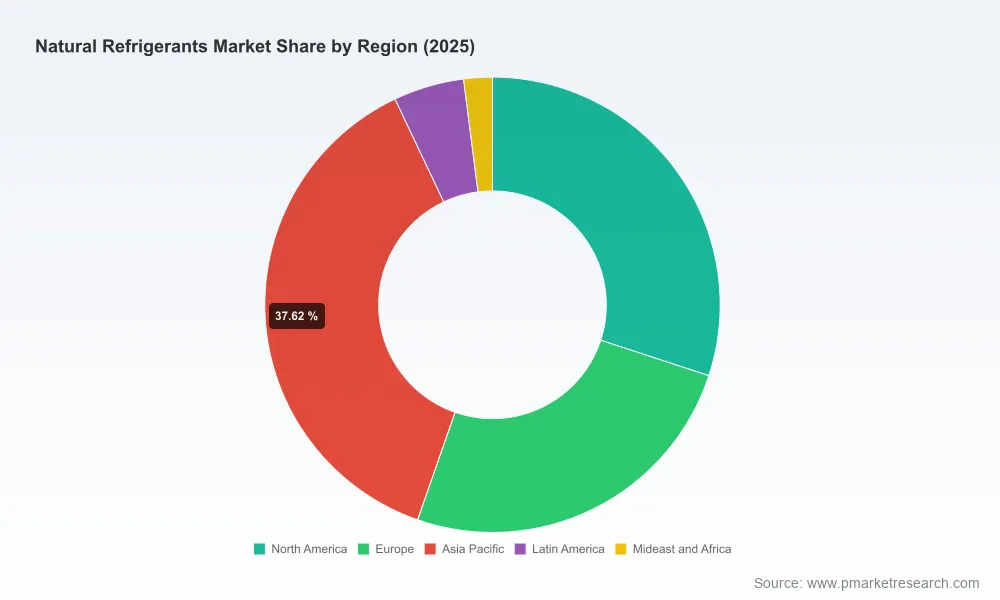
Importantly, the growth profile is not uniform across all segments. Leadership dynamics vary significantly by refrigerant type, application vertical, and geographic footprint. Our report dissects these variations with granular precision, enabling stakeholders to identify high-opportunity pockets rather than relying on aggregate figures that may obscure localized realities.
Regulatory and Competitive Dynamics Reshaping the Landscape
The regulatory environment surrounding refrigerants has intensified markedly since early 2025. In the United States, the Environmental Protection Agency enacted HFC phasedown rules effective January 1, 2025, restricting the use of refrigerants with a global warming potential of 700 or higher in residential, light commercial, and retail food equipment. This regulatory shift has accelerated retrofitting initiatives and spurred demand for compliant alternatives, particularly carbon dioxide and hydrocarbon-based solutions. Simultaneously, the European Commission's F-Gas Regulation 2024/573 entered into force, imposing restrictions on new installations of certain refrigerant types in commercial refrigeration equipment from 2025 onward, further reinforcing the tilt toward natural refrigerant technologies.
Supply-side dynamics add another layer of complexity. Raw material costs, particularly for ammonia, have experienced notable volatility. Prices surged to 2025 highs driven by supply constraints and natural gas feedstock fluctuations, with U.S. Gulf Coast benchmarks reaching elevated levels in late 2025. By mid-April 2026, anhydrous ammonia prices averaged approximately 1,114 USD per ton, reflecting ongoing geopolitical shipping disruptions and logistical bottlenecks. Such cost pressures directly influence production economics and pricing strategies across the value chain, making supply chain resilience a critical focus for market participants.
These dynamics are further complicated by enforcement timelines and transitional provisions. For example, the U.S. EPA extended no-action assurance for HFC restrictions on refrigerated transport until September 1, 2026, providing temporary relief for specific logistics applications while underscoring the broader trajectory toward stricter compliance. Companies that anticipate these shifts and align their product portfolios accordingly will be better positioned to capture market share as regulatory pressure compounds.
Competitive Landscape and Strategic Positioning
The natural refrigerants market features a diverse ecosystem of players spanning chemical production, component manufacturing, equipment integration, and distribution. Market concentration metrics indicate a moderately consolidated environment, with the top three and top five firms each commanding a combined market share of approximately 41.2 percent. This concentration level suggests that while leading incumbents hold meaningful influence, the market remains accessible to agile entrants and regional specialists who can differentiate through technology, service, or localized execution.
Natural Refrigerants Market
Several multinational and regional leaders exemplify the strategic approaches shaping competitive outcomes. The Linde Group, headquartered in Ireland, stands as a leading supplier of carbon dioxide and other natural refrigerants for industrial refrigeration and air conditioning systems, leveraging its global distribution network and technical expertise. Airgas Inc., based in the United States, serves as a major provider of compressed natural refrigerants, including carbon dioxide and ammonia, for commercial and industrial applications, emphasizing reliability and supply chain scale.
In Asia, Sinochem Corporation operates as a prominent producer and distributor of ammonia and carbon dioxide for global refrigeration markets, capitalizing on integrated supply capabilities and broad geographic reach. Puyang Zhongwei Fine Chemical Co., Ltd. has established itself as a key manufacturer of ammonia and carbon dioxide-based refrigerants with integrated production and supply chains, while Shandong Yuean New Material Co., Ltd. actively produces natural refrigerants including hydrocarbon-based options and carbon dioxide for commercial refrigeration equipment. Juhua Group and Dongyue Group further strengthen the Chinese manufacturing base, with Juhua producing ammonia and hydrocarbon refrigerants for refrigeration and air conditioning, and Dongyue focusing on carbon dioxide and other natural refrigerants for industrial applications.
European and American players contribute specialized capabilities that complement broader supply networks. Tazzetti SpA, based in Italy, supplies carbon dioxide and ammonia refrigerants with a focus on industrial and commercial systems, while A-Gas International, headquartered in the United Kingdom, operates as a global distributor and recycler of natural refrigerants, supporting maintenance and retrofit applications. Secop Group Holding GmbH, in Germany, manufactures compressors specifically designed for natural refrigerant systems using carbon dioxide and hydrocarbon technologies, addressing a critical component bottleneck.
Equipment-level innovation is equally vital. Hoshizaki Corporation, a Japanese producer, manufactures commercial refrigeration and ice-making equipment incorporating natural refrigerants such as hydrocarbons and carbon dioxide, while PRO Refrigeration, based in the United States, specializes in industrial carbon dioxide chillers for food processing and dairy applications. Sanhua, another significant player, supplies integrated component packages for carbon dioxide and hydrocarbon commercial refrigeration systems, streamlining integration for end-users.
Recent product and expansion activities underscore the pace of competitive maneuvering. In July 2025, PRO Refrigeration launched the PROGreen50 carbon dioxide chiller tailored for the North American food processing market, signaling targeted capacity expansion in a high-growth vertical. By November 2025, Hoshizaki Corporation announced a substantial expansion of its lineup with 66 new natural refrigerant models, including ice makers and dispensers, broadening its addressable market across commercial food service segments. Also in November 2025, Sanhua introduced integrated component packages for carbon dioxide and hydrocarbon systems as part of its 2025 to 2030 roadmap, reinforcing its strategy of providing turnkey solutions. Earlier in March 2025, JULABO USA expanded its natural refrigerant lineup with new chiller models, bringing its total unit offerings to 12 and demonstrating sustained investment in compliant cooling technologies.
Report Architecture: What Decision-Makers Will Gain
Our Natural Refrigerants Market research report is structured to deliver actionable intelligence rather than abstract commentary. The document integrates quantitative forecasting with qualitative analysis, ensuring that strategic recommendations are grounded in verifiable data and contextualized by market realities. Key components include:
- Historical and Forecast Revenue Analysis: A detailed examination of market size evolution from 2020 through 2032, with baseline figures and forward projections that isolate growth drivers and inflection points.
- Segment-Level Deep Dives: Comprehensive breakdowns by refrigerant type, application vertical, and geographic region, enabling readers to assess relative attractiveness and prioritize resource allocation.
- Regulatory Impact Assessment: An evaluation of how current and anticipated policy changes—including HFC phasedown timelines, regional F-Gas provisions, and transitional enforcement mechanisms—will influence demand patterns and compliance costs.
- Competitive Profiling: In-depth company analyses covering strategic positioning, product portfolios, recent developments, and market share implications, with attention to both multinational incumbents and emerging regional players.
- Supply Chain and Raw Material Dynamics: An analysis of feedstock volatility, production constraints, pricing trends, and logistics risks, particularly for ammonia and carbon dioxide, with scenarios that stress-test margin resilience.
- Strategic Recommendations: Practical guidance for market entry, partnership formation, technology adoption, and risk mitigation, tailored to different stakeholder roles including manufacturers, distributors, equipment makers, and investors.
The report also incorporates scenario modeling to account for uncertainties in regulatory enforcement, raw material cost trajectories, and regional policy divergence. This approach ensures that readers can stress-test their assumptions and develop contingency plans rather than relying on single-point forecasts that may not hold under shifting conditions.
Strategic Imperatives for 2026 and Beyond
As organizations formulate their 2026 strategies, several themes warrant immediate attention. First, regulatory compliance is no longer a defensive exercise; it is a growth catalyst. Companies that proactively align product development and procurement with evolving standards can capture early-mover advantages in regions where phase-down schedules are accelerating. Second, supply chain diversification and raw material hedging will be critical, particularly for ammonia-dependent operations facing feedstock volatility and shipping disruptions. Third, the integration of natural refrigerant technologies into equipment design and component packaging is becoming a differentiator, with suppliers offering turnkey solutions gaining traction among end-users seeking to reduce integration complexity.
HFC Refrigerant Market
Geographically, growth opportunities are distributed unevenly, and successful players will tailor their approaches to regional regulatory maturity, infrastructure readiness, and competitive intensity. While aggregate market figures provide useful orientation, the real strategic value lies in understanding where specific refrigerant types and applications intersect with favorable policy environments, cost structures, and customer demand profiles. This level of granularity is essential for avoiding misallocated investments and for identifying partnerships or acquisitions that can accelerate market penetration.
The natural refrigerants market is entering a phase where competitive differentiation will depend less on broad market participation and more on targeted execution, technological competence, and regulatory agility. Organizations that invest in comprehensive market intelligence now will be better equipped to anticipate shifts, seize opportunities, and build durable advantages as the sector matures through 2032.
Conclusion
The natural refrigerants sector stands at the intersection of sustainability mandates, technological innovation, and evolving competitive dynamics. With a projected compound annual growth rate of 6.1 percent and a market trajectory moving toward 2,570 million USD by 2032, the opportunity set is substantial, but so is the complexity of navigating it effectively. Regulatory pressure, raw material volatility, and rapid product innovation are reshaping the rules of engagement, demanding that stakeholders base their decisions on rigorous, forward-looking analysis rather than outdated assumptions.
Our full market research report delivers the depth, granularity, and strategic context required to make informed decisions in this environment. From segment-level revenue forecasts and competitive profiling to regulatory impact assessments and supply chain scenario analysis, the publication is designed to serve as a foundational reference for executives, investors, and strategic planners. To access the complete dataset, detailed regional and application breakdowns, and comprehensive company evaluations, we invite you to explore the full report on our website. The insights contained within are intended to translate market complexity into clear, actionable direction for 2026 and the years ahead.
For detailed analysis of this topic, please visit the official page: Natural Refrigerants Market
Lacy Lee
Senior Marketing Manager
[email protected]
PW Consulting: www.pmarketresearch.com



























Sign in to leave a comment.