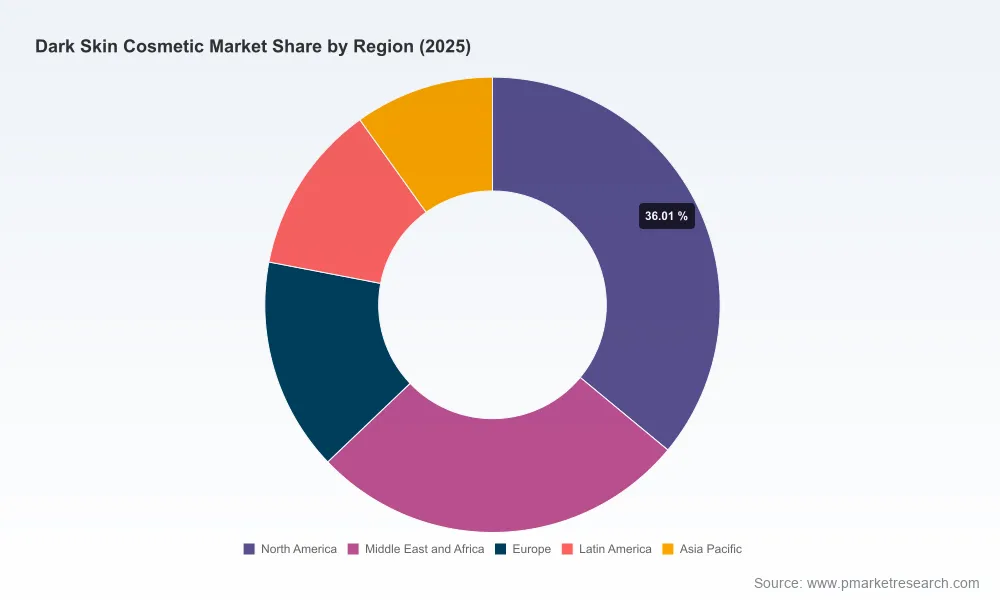

Strategic Imperatives in the Global Dark Skin Cosmetic Market: Navigating Growth, Inclusion, and Regulatory Evolution Through 2032
The global cosmetics industry has reached a decisive inflection point where inclusive formulation is no longer a niche differentiator but a primary growth engine. Dark skin cosmetic products—spanning skincare, color cosmetics, and haircare engineered specifically for melanin-rich complexions—represent one of the most dynamic and underpenetrated segments in the beauty sector. As consumer expectations shift toward authentic representation, clinically relevant formulations, and transparent ingredient standards, enterprises that fail to align their portfolio strategies with this trajectory risk ceding substantial market share to agile, culturally attuned competitors. Our newly released Worldwide Dark Skin Cosmetic Market research delivers a comprehensive, data-backed roadmap for executives, R&D leaders, and commercial strategists seeking to capitalize on this structural expansion. Anchored in historical performance from 2020 through a base year of 2025 and projecting rigorously to 2032, the study translates macroeconomic momentum into actionable decision frameworks tailored for 2026 planning cycles.
Macro Trajectory and Forecast Architecture
The segment has demonstrated consistent, compounding expansion over the past half-decade, with total market revenue climbing from approximately 5.6 billion USD in 2020 to a base valuation of 8.85 billion USD in 2025. The trajectory accelerates through the forecast window, crossing the 9.8 billion USD threshold in 2026 and continuing its upward arc to exceed 16.3 billion USD by 2032. This expansion is underpinned by a compound annual growth rate of 9.12 percent, reflecting a confluence of demographic shifts, heightened demand for shade-matched and tone-optimised formulations, and sustained investment in product lines engineered for deeper complexions. The forecast model incorporates regional performance differentials, category-level consumption patterns, and channel migration dynamics, providing a multi-layered view of how revenue streams will redistribute as digital commerce matures and specialty retail environments evolve. Executives reviewing the full dataset will find granular baseline validations, sensitivity scenarios, and channel-attribution mappings that clarify where capital allocation will generate the highest risk-adjusted returns.
PW Consulting
Product and Channel Architectures Redefining Commercial Playbooks
Dark skin cosmetic demand is not monolithic; it is distributed across distinct product architectures that require divergent formulation strategies, supply chain configurations, and go-to-market approaches. Skincare categories have emerged as the revenue anchor, driven by hyperpigmentation management, barrier reinforcement, and moisture retention protocols tailored to melanin-dense skin physiology. Color cosmetics follow closely, with foundations, concealers, lip formulations, and multi-use pigments engineered for opaque, buildable coverage and accurate undertone matching. Haircare completes the triad, addressing scalp health, moisture equilibrium, and texture optimization for diverse hair types frequently associated with darker skin demographics. Distribution pathways have simultaneously realigned, with digital storefronts capturing the largest transaction volume, specialty retail environments commanding higher basket values through expert consultation and curated assortments, and mass grocery and professional salon channels sustaining steady, volume-driven consumption. The interplay between these product streams and channel preferences dictates pricing architecture, inventory velocity, and brand positioning. Access to the complete segmentation mapping allows commercial leaders to isolate high-conversion corridors, identify white-space opportunities, and construct distribution mixes aligned with regional purchasing behaviors.
Colour Cosmetic Market
Competitive Ecosystem and Strategic Positioning Vectors
The competitive landscape is characterized by a blend of legacy multinationals, heritage niche specialists, and rapidly scaling independent brands that have built credibility through shade inclusivity, culturally resonant storytelling, and performance-driven formulations. Broad-platform players have expanded foundation architecture, introducing 40 to 57 shade ranges with undertone calibration specifically optimized for deep and dark complexions, while leveraging portfolio breadth to cross-pollinate ethnic-focused lines across multiple consumer touchpoints. Specialist brands have entrenched loyalty by engineering richly pigmented foundations, concealers, and powders that address historical undertone mismatches, paired with marketing authenticity that resonates with communities historically underserved by mainstream beauty infrastructure. Black-owned and melanin-focused labels have accelerated category redefinition by prioritizing vibrant palette ecosystems, buildable pigmentation, and skin-tint formulations that deliver natural finishes without compromising coverage integrity. Parallel to color cosmetics, skincare-focused innovators are deploying clinically oriented protocols targeting post-inflammatory hyperpigmentation, uneven tone, and barrier compromise, with ingredient architectures emphasizing hydration, brightening, and dermatological compatibility. Manufacturing and raw material advancements are simultaneously enabling incumbents to retrofit existing cosmetic lines for deeper skin markets through encapsulated pigment technologies that improve shade fidelity and formulation stability. The competitive matrix within the full report maps these positioning vectors against revenue concentration metrics, revealing how fragmented market share distribution creates both entry opportunities for disruptors and consolidation pressure for established operators.
Regulatory Accelerators and Raw Material Dependencies
Regulatory momentum is reshaping compliance expectations and formulation standards across the category. The U.S. Modernization of Cosmetics Regulation Act has advanced through operational enforcement phases, mandating facility registration, product listing, and serious adverse event reporting, with strengthened FDA oversight now encompassing product seizures, recalls for mislabeled products, and pending allergen labeling guidelines. Concurrently, proposed legislative measures aim to restrict certain phthalates and PFAS in beauty formulations while allocating dedicated research funding toward products that disproportionately affect women of color and salon professionals. These developments elevate the strategic importance of ingredient transparency, toxicology validation, and supply chain documentation for dark skin-targeted products. Raw material dynamics further compound formulation strategy: inorganic cosmetic pigments, including titanium dioxide and iron oxides critical for accurate dark skin shade matching, are projected to expand from a 442 million USD valuation in 2025 toward 724 million USD by 2034. This pigment trajectory underscores the necessity of secure sourcing pipelines, color consistency protocols, and compliance-aligned manufacturing safeguards. Because melanin-rich skin demographics exhibit higher daily usage frequency across multiple personal care categories, ingredient exposure profiles and cumulative formulation safety carry amplified strategic weight. The research synthesizes these regulatory and material variables into compliance readiness frameworks and procurement risk assessments that enable formulation teams and legal stakeholders to preempt operational friction.
Structural Value Drivers and 2026 Decision Applications
The market's structural expansion is propelled by interconnected demand drivers that will define commercial execution throughout the forecast period. Consumer expectations increasingly favor shade ranges that span the full depth and undertone spectrum, formulations that deliver functional performance rather than superficial coverage, and brand narratives grounded in cultural authenticity and inclusive representation. Retail architectures are absorbing these preferences through digital storefronts that broaden discovery, specialty venues that convert through expertise and curated range depth, and mass or professional channels that sustain routine replenishment cycles. The report's analytical framework translates these drivers into portfolio prioritization matrices, innovation pipelines, and market-entry blueprints that executives can deploy during 2026 planning. R&D directors will find formulation guidance aligned with pigment stability, undertone calibration, and barrier-compatible ingredient systems. Commercial leaders will access channel-attribution models that reveal where digital, specialty, and mass pathways yield the strongest margin and velocity profiles. Strategic development teams will leverage the comprehensive competitive scanning to benchmark product architecture, identify partnership or acquisition targets, and anticipate shifts in market concentration as scaled brands and specialist challengers compete for share. The full study also integrates regional consumption differentials, demand elasticity patterns, and category crossover behaviors, providing the precision required to avoid broad-brush assumptions that frequently undermine inclusive beauty strategies.
Research Scope and Executive Utilization Framework
The Worldwide Dark Skin Cosmetic Market study is engineered as an operational intelligence asset rather than a high-level summary. Its architecture spans historical baseline validation, multi-year forecasting, segmentation profiling, competitive benchmarking, regulatory tracking, and raw material outlook integration. Decision-makers will encounter detailed category performance narratives, channel migration analysis, brand positioning maps, and innovation event chronologies that capture recent product launches, encapsulation breakthroughs, and market-entry maneuvers transforming the competitive field. The report's data architecture supports scenario modeling, enabling teams to evaluate how shifts in shade range breadth, formulation claims, pricing architecture, and channel mix influence revenue capture across forecast windows. Compliance teams will utilize regulatory tracking modules to align product listing, adverse event reporting, and ingredient transparency protocols with advancing enforcement expectations. Procurement and supply chain stakeholders will reference pigment outlooks and raw material dependency analyses to secure formulation stability and color consistency. By synthesizing these components into a unified intelligence framework, the study empowers executives to translate inclusive beauty momentum into executable strategies that balance growth ambition with operational resilience. Readers seeking complete segmentation figures, concentration modeling, and detailed company profiling will find the full dataset and analytical appendices essential for precision planning. The research is designed to function as both a strategic briefing and a working reference, equipping 2026 leadership teams with the evidentiary foundation required to act decisively in a market where representation, performance, and compliance now converge as decisive competitive advantages.
Halal Cosmetics Market
For detailed analysis of this topic, please visit the official page: Worldwide Dark Skin Cosmetic Market
Lacy Lee
Senior Marketing Manager
[email protected]
PW Consulting: www.pmarketresearch.com


























Sign in to leave a comment.