
Navigating the Digital Scalpel: Strategic Imperatives in the Spine Surgery Simulator Market (2026 Outlook)
The global landscape of surgical training is undergoing a profound transformation, shifting away from traditional apprenticeship models toward validated, technology-driven competency frameworks. At the forefront of this evolution lies the spine surgery simulator market, a sector defined by rapid technological convergence between virtual reality, haptic feedback, and anatomical fidelity. For healthcare executives, medtech strategists, and institutional investors, understanding the trajectory of this market is no longer optional; it is a critical component of risk management and operational planning for the coming decade. Our latest comprehensive market research provides a granular view of this dynamic landscape, offering the data necessary to secure a competitive edge in 2026 and beyond.
The urgency for sophisticated training tools is driven by an aging global population, the increasing complexity of spinal pathologies, and a heightened regulatory emphasis on patient safety and surgeon proficiency. As procedural volumes rise, the margin for error diminishes, making pre-operative simulation an essential layer of clinical workflow. This introduction outlines the strategic value of our latest analysis, highlighting the macro-economic currents, competitive intensity, and operational barriers that will define the market landscape through 2032.
Macro-Economic Trajectory and Growth Dynamics
The financial footprint of the spine surgery simulator sector demonstrates resilient expansion, underpinned by the broader digitization of healthcare infrastructure. Our analysis captures historical performance from 2020 through the base year of 2025, projecting a clear growth arc into the forecast period ending in 2032. The market has already matured from valued levels observed in the early 2020s, reflecting increased adoption rates among major hospital networks and specialized training centers.
Looking forward, the forecast period indicates sustained momentum. Year-over-year projections show a consistent upward trajectory, with the market valuation anticipated to climb significantly by the end of the decade. This growth is not merely linear but is accelerated by iterative software updates, hardware refinement, and the broader integration of augmented reality platforms into standard operating workflows. The compound annual growth rate (CAGR) observed throughout the strategic planning period signals robust demand elasticity, suggesting that investment in simulation technology will yield long-term operational benefits for early adopters.
However, growth is not without friction. The sector faces distinct macroeconomic headwinds, particularly regarding capital expenditure (CapEx) requirements. Advanced simulation systems represent significant upfront investments, which can strain budgets, especially in developing regions where healthcare funding is more restrictive. Our report dissects these capex trends, providing decision-makers with frameworks to evaluate return on investment (ROI) across different deployment scenarios, ensuring that budgetary constraints do not stifle innovation adoption.
Technology Convergence: Hybrid Models and AI Integration
The technological core of the market is defined by a shift toward hybrid physical-virtual solutions. Historically, simulation relied either on purely digital VR environments or physical benchtop models. The current market dynamic, however, favors the convergence of these approaches. Hyper-realistic modular simulators are increasingly incorporating AI-driven analytics to provide real-time performance feedback, moving beyond simple visual fidelity to measure procedural proficiency with objective metrics.
Key technological streams include Virtual Reality-based simulators, Haptic Feedback Systems, and emerging Augmented Reality Platforms. Each stream serves distinct use cases within the surgical workflow. VR platforms offer risk-free environments for procedural rehearsal using patient-specific DICOM data, while haptic systems provide the tactile resistance necessary for mastering instrument handling. The market analysis details the revenue contribution and adoption rates of each product type, revealing which technologies are gaining traction among key end-users.
Artificial Intelligence is becoming a disruptive force within this ecosystem. AI integration allows for adaptive learning curves, where the simulator adjusts difficulty based on surgeon performance, and enhances visualization capabilities through next-generation XR platforms. Recent regulatory clearances for AI-driven visualization tools highlight the regulatory pathway is clearing for these advanced technologies. This convergence aims to reduce reliance on cadaveric training, which is costly, logistically complex, and ethically variable across regions, while simultaneously improving procedural proficiency and patient outcomes.
Competitive Landscape and Strategic Positioning
The market structure is characterized by a moderate concentration, with a significant portion of value held by established innovators and specialized technology providers. Understanding the strategic positioning of these key players is vital for stakeholders assessing partnership opportunities, acquisition targets, or competitive threats. Our report provides detailed profiles of the core companies shaping the industry, analyzing their technological moats and strategic moves.
In Europe, companies like Medability GmbH and Realists Training Technologies GmbH have set high standards for anatomical fidelity and haptic realism. Medability's hybrid simulators, utilized by major medtech firms for physician training, exemplify the integration of simulation into broader product ecosystems. Realists focuses on hyper-realistic modular simulators covering lumbar and cervical procedures with diverse surgical approaches. Meanwhile, in North America, firms such as SurgiSTUD are disrupting the cost structure by offering biofidelic training models using real human pathology, presenting cost-effective alternatives to traditional cadaver labs.
The competitive arena is also seeing significant entrepreneurial activity in Italy with UpSurgeOn, which provides hyper-realistic Spine Series simulators with advanced features like tissue bleeding and water management for endoscopic training. Recent developments underscore the pace of innovation. For instance, recent product launches have introduced collaborative technologies for spinal endoscopy training, enhancing multi-user educational capabilities. Furthermore, regulatory milestones continue to validate the sector; recent FDA 510(k) clearances for AI-driven XR visualization platforms demonstrate the regulatory acceptance of these advanced tools.
VR and haptic platforms from the United Kingdom and United States, such as FundamentalXR and ImmersiveTouch, further illustrate the global nature of innovation. These companies focus on patient-specific VR simulators and comprehensive orthopedic procedures, leveraging FDA-cleared modules to ensure clinical validity. Our analysis maps these competitive vectors, helping stakeholders identify gaps in the product landscape and areas ripe for consolidation or innovation.
Operational Barriers and Reimbursement Realities
While the technological promise is strong, practical deployment faces significant hurdles. One of the most persistent challenges is the lack of dedicated reimbursement codes for simulator use. In many jurisdictions, costs associated with simulation training are absorbed as institutional CapEx or educational budget items rather than being recoverable through procedural billing. This financial structure places the burden of proof on hospitals to demonstrate that simulation training reduces overall costs through reduced complication rates, shorter operative times, or lower malpractice exposure.
Furthermore, simulation training supports competency-based medical education and patient safety standards, yet the absence of specific CPT reimbursement means adoption is often driven by institutional policy rather than immediate financial incentive. Our report addresses these reimbursement realities head-on, providing FAQ sections that clarify the current billing landscape and offering strategic advice on how to frame business cases for procurement committees.
Spine Surgery Simulator Market
Regulatory dynamics also play a crucial role. While no new specific codes exist, the alignment of simulation with broader safety standards creates indirect value. Stakeholders must navigate the regulatory environment carefully, ensuring that chosen platforms meet relevant clearance standards while integrating smoothly into existing surgical training curricula. The report details these regulatory nuances, ensuring that strategic plans are compliant and future-proofed against potential policy shifts.
End-User Segmentation and Deployment Strategy
The demand for spine surgery simulators is distributed across several critical end-user groups, each with unique needs and purchasing triggers. Hospitals represent the dominant segment, driven by the need for continuous surgeon credentialing, resident training, and patient safety protocols. Academic and research institutes form a significant portion of the market, focusing on innovation, validation studies, and the development of new surgical techniques. Ambulatory Surgical Centers (ASCs) are also emerging as a growing segment, seeking to standardize care quality in outpatient settings.
Understanding the specific volume and value contribution of each end-user segment is crucial for targeted marketing and sales strategies. Hospitals may prioritize systems that integrate with existing hospital information systems and offer robust data analytics for credentialing. Academic institutions may favor modularity and research capabilities. Our segmentation analysis breaks down these preferences without exposing sensitive competitive intel, guiding clients on how to tailor their value propositions to each stakeholder group.
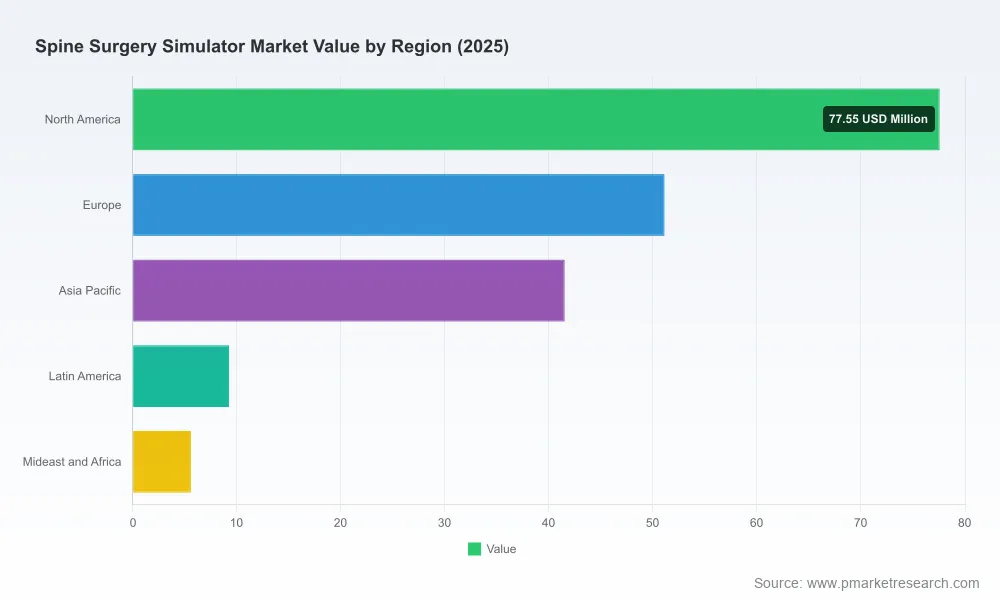
Regional deployment also varies significantly. While North America and Europe currently account for a substantial share of market value due to higher healthcare spending and established regulatory frameworks, the Asia Pacific region represents a high-growth opportunity. However, access barriers related to pricing and infrastructure can slow adoption in developing regions. Our report analyzes these regional dynamics to help strategists prioritize geographic expansion and resource allocation effectively.
Strategic Value for 2026 Decision-Making
The data contained in this market research is designed to empower specific strategic actions. For product developers, the report offers a clear view of unmet needs in haptic fidelity, AI analytics, and hybrid modalities. For investors, the market concentration metrics and growth projections provide a basis for valuation and risk assessment. For healthcare administrators, the CapEx analysis and end-user breakdown assist in budgeting and procurement planning.
The year 2026 represents a pivotal moment where the market transitions from early adoption to broader integration. Companies that understand the nuances of the competitive landscape, the specific barriers to entry, and the regional variations in demand will be best positioned to capture value. Our analysis goes beyond surface-level statistics, offering deep insights into the operational drivers that influence purchasing decisions and technology adoption rates.
By leveraging the comprehensive data sets, including historical baselines and forward-looking forecasts up to 2032, stakeholders can model various scenarios. Whether assessing the potential impact of a new product launch, evaluating a partnership with a technology provider, or planning a market entry strategy, the intelligence provided serves as a foundational asset. The report also incorporates the latest industry developments, such as recent product launches and regulatory clearances, ensuring that the strategic view is current and actionable.
Conclusion: The Path Forward
The spine surgery simulator market is poised for continued evolution, driven by the dual engines of technological innovation and clinical necessity. As the sector matures, the distinction between successful market participants and those left behind will depend on strategic foresight and data-driven decision-making. The insights provided in our comprehensive study offer the clarity required to navigate this complex environment.
We invite industry leaders, investors, and strategic partners to explore the full depth of this analysis. The complete report unlocks detailed segmentation data, granular regional forecasts, and exhaustive company profiles that are essential for formulating winning strategies in the digital surgical era. Access the full intelligence today to secure your organization's position at the forefront of spine surgery innovation.
Worldwide Neurosurgery Simulator Market
For detailed analysis of this topic, please visit the official page: Spine Surgery Simulator Market
Lacy Lee
Senior Marketing Manager
[email protected]
PW Consulting: www.pmarketresearch.com




















Sign in to leave a comment.