
Navigating the Next Wave: Strategic Imperatives in the Global Veterinary Vaccine Market
The global veterinary vaccine sector is entering a phase of structural expansion, driven by converging forces in animal health demand, regulatory evolution, and supply chain realignment. For executives, investors, and strategic planners operating in animal health, agribusiness, or biologics manufacturing, understanding the trajectory of this market is no longer a compliance exercise—it is a competitive necessity. Our latest industry research dissects the market through a multi-year lens, connecting historical performance with forward-looking projections that span the critical planning window of 2026 through 2032. This overview outlines the strategic architecture of the study and demonstrates why a disciplined, evidence-based reading of the market is essential for portfolio positioning, capacity planning, and partnership strategy.
The Macro Arc: Growth Trajectory and Structural Signals
Over the historical review period from 2020 to 2025, the market demonstrated resilient growth amid shifting production patterns and evolving animal health priorities. The baseline year of 2025 establishes a clear inflection point, with total market revenue reaching approximately 192.5 million USD. Our forecast model extends this trajectory across the next seven years, projecting a sustained expansion that reflects both baseline demand growth and incremental gains from product innovation, broader geographical penetration, and heightened biosecurity awareness across livestock and companion animal segments.
Central to our forecast architecture is a compound annual growth rate of 7.25 percent, which anchors the projection window from 2026 through 2032. This rate is not a mechanical extrapolation; it is calibrated against observable demand signals, regulatory pacing, and the operational cadence of established manufacturers. By 2026, the market is expected to cross the 208 million USD threshold, and the cumulative expansion through 2032 points toward a market size that reflects a markedly more mature, diversified, and technologically layered competitive environment. The growth curve is uneven by design—different segments, geographies, and product modalities advance at different tempos—and our analysis isolates the structural drivers behind those differentials without over-indexing on short-term noise.
Veterinary Vaccine Market
The baseline figures from the 2020 to 2025 window also reveal an important narrative: the market has consistently grown in absolute terms, but the composition of that growth is changing. Manufacturers that relied on incremental volume gains in legacy categories are now facing a landscape where differentiation increasingly comes from platform technology, regulatory agility, regional distribution strength, and integration with broader animal health service models. The research unpacks these dynamics in detail, mapping how historical momentum translates into forward-looking opportunity spaces for firms that can align capabilities with demand topology.
Report Architecture: What Decision-Makers Will Find Inside
This study is designed as a working intelligence asset rather than a static market summary. It provides a layered view of the industry, combining quantitative baselines with qualitative assessments of competitive posture, regulatory exposure, and technology readiness. The report structure is built to support practical decision-making across multiple corporate functions, including strategy, R&D prioritization, commercial planning, supply chain risk management, and M&A screening.
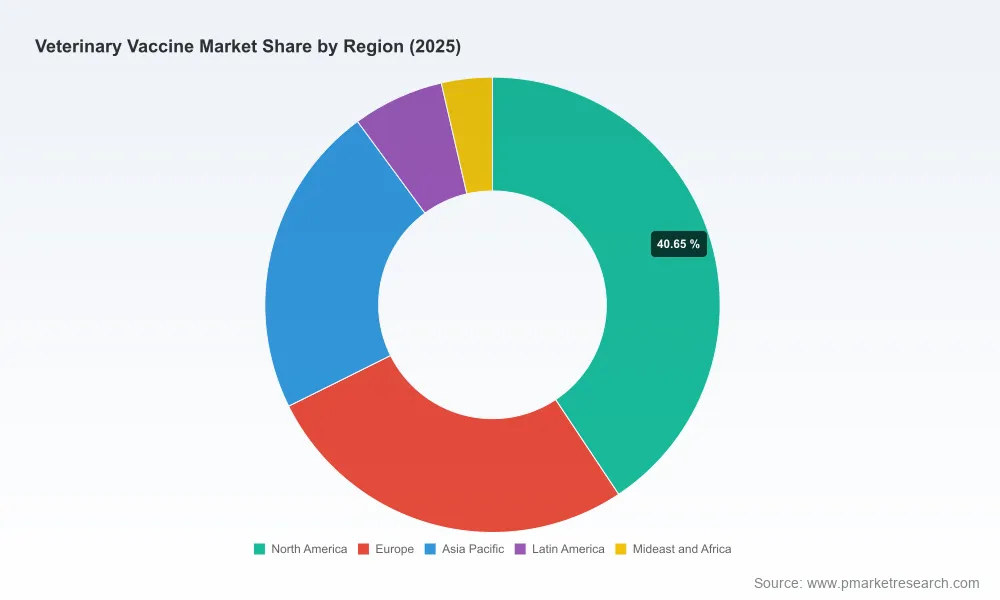
At the core of the analysis is a comprehensive segmentation framework that disaggregates the market along the dimensions most relevant to commercial execution. The research examines product type dynamics, application pathways, and regional distribution patterns to reveal where demand is concentrating, where capacity constraints may emerge, and where new entrants or incumbents can create defensible positions. Rather than presenting a flat landscape, the report maps the interplay between these dimensions, helping readers understand not just where value is being generated, but how that value is likely to shift as regulatory expectations, procurement behaviors, and manufacturing economics evolve.
The report also includes a detailed competitive profiling section that evaluates the operating models, licensing positions, and strategic footprints of leading veterinary biologics companies. This is complemented by an assessment of recent industry developments that illustrate how product innovation, regulatory updates, and supply chain considerations are reshaping short- and medium-term planning assumptions. Throughout the document, the analysis is anchored in verifiable structural indicators—such as licensing frameworks, production oversight mechanisms, and supply-side cost exposures—so that readers can separate durable trends from cyclical fluctuations.
Veterinary Drug Market
To support actionable interpretation, the study integrates scenario-aware discussion of market drivers and constraints. Readers will find structured evaluation of demand-side catalysts, including the role of livestock biosecurity programs, companion animal health spending patterns, and the broader emphasis on disease prevention across production and pet care environments. On the supply and regulatory side, the report addresses the operational realities that shape manufacturing strategy, from establishment and product licensing requirements to the potential cost implications of imported input dependencies. The aim is to provide a usable map of where risk concentrates and where resilient business models can be constructed.
Competitive Field: Leaders, Licenses, and Strategic Posture
The veterinary vaccine market is defined by a concentrated yet multi-layered competitive field. Market structure reflects the cumulative effect of long-standing manufacturing scale, regulatory compliance capacity, and established distribution relationships. Our analysis situates the leading companies within this structure by examining their operational bases, product licensing breadth, and strategic emphasis across livestock and companion animal segments. These profiles are not merely corporate summaries; they are used to assess how firms are positioned to capture growth, defend share, and respond to shifts in procurement and biosecurity demand.
Several U.S.-based and internationally active manufacturers anchor the market landscape. Zoetis Inc., headquartered in Lincoln, Nebraska, remains a central reference point as a global leader in veterinary biologics and vaccines serving both livestock and companion animal markets, with multiple USDA establishment licenses supporting production and distribution. Boehringer Ingelheim Animal Health USA Inc., based in Athens, Georgia, operates as a major producer of animal vaccines with a strong emphasis on swine and livestock products and multiple USDA establishment and product licenses. Elanco US Inc., headquartered in Indianapolis, Indiana, continues to advance veterinary biologics and vaccine manufacturing with a focus spanning livestock and companion animals. Ceva Animal Health, LLC, based in Lenexa, Kansas, rounds out the field as a veterinary vaccine and biologics producer with multiple USDA establishment and permittee licenses.
Additional organizations contribute meaningful capacity and specialized positioning. Phibro Animal Health Corporation, headquartered in Teaneck, New Jersey, maintains vaccine and biologics offerings alongside broader animal health activities and holds USDA establishment licenses. Merck Animal Health, operating from Madison, New Jersey, continues as a significant veterinary biologics and vaccines manufacturer with deep ties to established biologics production under Merck & Co., Inc., and multiple USDA establishment licenses. HIPRA USA, LLC supports Americas operations with veterinary vaccine production and relevant USDA establishment and permittee licenses. Diamond Animal Health, Inc., based in Des Moines, Iowa, functions as a USDA establishment licensee for veterinary biologics and vaccines. Vaxxinova US, Inc. operates as a veterinary biologics manufacturer with USDA establishment and permittee licenses, while Bimeda Biologicals, Inc., headquartered in San Angelo, Texas, serves as a USDA establishment licensee for biological products including vaccines.
The relevance of these profiles lies not simply in their existence but in what they reveal about market structure. The research uses licensing positions, production footprint, and segment focus as indicators of where firms have built durable operating capabilities and where future competition is likely to intensify. In a market where compliance, scale, and distribution reliability carry substantial weight, the strategic value of a company’s operational foundation often determines its ability to convert innovation into commercial traction. Our report examines these linkages explicitly, giving readers a framework to evaluate peers, partners, and potential acquisition targets with a clearer sense of operational reality rather than surface-level brand presence.
Industry Dynamics: Regulation, Supply Chain, and the 2026 Decision Context
Market outcomes in veterinary vaccines are shaped heavily by the regulatory and supply environment in which production and distribution occur. In the United States, the commercial sale and import of veterinary biologics are governed by requirements administered through USDA APHIS. A valid U.S. Veterinary Biologics Establishment License is required for production or importation intended for commercial use, and individual U.S. Veterinary Biologics Product Licenses are necessary for each vaccine product. These requirements are enforced under the Virus-Serum-Toxin Act, which is designed to ensure that veterinary biologics are pure, safe, potent, and efficacious before shipment.
For strategic planning, the operational significance of this framework is twofold. First, it creates a structured barrier to entry and expansion that favors firms with established licensing infrastructure and regulatory competence. Second, it introduces pacing considerations for new product introductions, line extensions, and supply chain adjustments, because compliance and licensing activity influence the speed at which commercial capabilities can be scaled or reconfigured. The analysis in the report addresses how these licensing and oversight mechanisms interact with production volumes and market availability, including the role of periodic notices that track licensed veterinary biological products and establishment production activity. The April 2026 Product Code Book, for example, serves as a reference point for understanding active licensees and the operational landscape at a given point in time.
Beyond regulatory structure, supply-side economics are becoming an increasingly important strategic variable. Proposed tariffs on imported components used in vaccine antigens and excipients have drawn attention for their potential to raise input costs. Industry commentary indicates that such cost pressures could translate into price increases in the range of 10 to 25 percent for livestock vaccines and related products, depending on exposure and sourcing flexibility. Even where final pricing outcomes remain uncertain, the directional signal is clear: manufacturers and buyers alike need to account for heightened sensitivity in input costs and the potential for regional sourcing strategies to influence competitive positioning.
Recent product activity also illustrates how innovation continues to shape the market. In September 2025, Boehringer Ingelheim launched INGELVAC CIRCOFLEX AD, a swine vaccine designed to provide advanced protection against PCV2. Developments of this kind matter because they demonstrate how targeted clinical and production needs can drive new commercial offerings, reinforce segment-specific demand, and reshape expectations for performance in livestock protection. Our report incorporates these types of events not as isolated news items, but as indicators of how competitors are translating scientific and operational capabilities into market-facing differentiation.
Taken together, these regulatory, supply, and innovation dynamics create a decision environment in which static forecasts are insufficient. Firms need to evaluate how licensing posture affects time-to-market, how sourcing configuration affects margin resilience, and how product innovation alters competitive expectations within specific animal health segments. The research is structured to support exactly that kind of integrated interpretation.
Why 2026 Is a Strategic Inflection Year
The 2026 planning window is particularly important because it sits at the intersection of consolidated baseline growth and rising structural complexity. On the demand side, the market is moving beyond a period of uniform expansion into a phase where value creation depends more on segment alignment, regulatory readiness, and supply chain durability. On the supply and regulatory side, licensing discipline, input cost exposure, and product launch cadence are becoming central to commercial execution. For companies making capacity, pricing, partnership, or portfolio decisions, the margin for error is narrowing.
This is precisely why the study emphasizes actionable interpretation over headline figures. While the macro path indicates meaningful growth through 2032, the real strategic advantage comes from understanding where that growth concentrates, which operating models are best positioned to capture it, and which environmental pressures are most likely to shape profitability and market access. The report provides the analytical scaffolding to make those judgments with greater confidence, enabling leadership teams to move from general awareness to targeted action.
For executives evaluating market entry, expansion, or consolidation, the report offers a structured basis for assessing where existing players have built durable advantages and where gaps remain. For commercial leaders, it supports planning around segment prioritization and regional execution. For supply chain and manufacturing strategists, it frames the implications of regulatory oversight and input-cost exposure in a way that can inform sourcing and production decisions. In each case, the goal is to convert market intelligence into operational clarity.
What the Full Study Unlocks for Your Strategy
This overview is intended to demonstrate the breadth and practical orientation of the research while preserving the detailed breakdowns that make the study valuable. The complete report extends well beyond macro trajectory and company profiles. It provides the deeper segmentation logic, competitive positioning maps, regulatory interaction analysis, and supply-side scenario considerations that decision-makers need when translating market growth into concrete business plans.
Readers who require precise regional distribution logic, detailed type-based dynamics, and application-specific revenue interpretation will find those elements developed fully in the full study. The research also examines how licensing structures, production oversight, and product-level market visibility interact with commercial execution, giving users a more complete picture of the forces that shape both opportunity and constraint. By linking historical performance, regulatory context, and forward projections, the study is designed to support multiple use cases: market assessment, competitive benchmarking, investment screening, and strategic planning across animal health and biologics operations.
If your team is preparing for decisions in 2026 and beyond, the most valuable next step is to see how the market’s growth narrative breaks down into the operational and competitive realities that will actually govern execution. The full report provides that level of detail, enabling a transition from broad market awareness to targeted, high-confidence strategy.
For detailed analysis of this topic, please visit the official page: Veterinary Vaccine Market
Lacy Lee
Senior Marketing Manager
[email protected]
PW Consulting: www.pmarketresearch.com



























Sign in to leave a comment.