
Strategic Imperatives in the Water Hardness Removal Market: A 2026 Outlook
As global industrialization accelerates and residential water quality standards tighten, the water hardness removal market has emerged as a critical intersection of environmental compliance, consumer convenience, and technological innovation. For executives navigating the 2026 decision landscape, understanding the trajectory of this sector is no longer optional—it is a strategic necessity. This article serves as a comprehensive introduction to PW Consulting's latest market research report, designed to equip stakeholders with the analytical depth required to capitalize on emerging opportunities while mitigating operational risks. The analysis covers historical performance from 2020 through 2025 and projects market evolution across the 2026 to 2032 forecast period, offering a robust framework for long-term planning.
Market Trajectory and Historical Context
The water hardness removal sector has demonstrated consistent growth over the past half-decade, driven by increasing awareness of scale buildup impacts on plumbing infrastructure, appliance longevity, and energy efficiency. In 2020, the global market generated approximately 7.39 billion USD in revenue. By 2025, this figure had climbed to 9.64 billion USD, reflecting a steady compound annual growth rate that underscores the sector's resilience even amid fluctuating supply chain conditions. Looking ahead, the market is projected to reach 10.29 billion USD in 2026 and continue its upward trajectory toward 14.0 billion USD by 2032. The forecast period indicates a CAGR of 5.47 percent, signaling sustained demand across multiple end-use verticals.
This growth pattern is not merely linear; it reflects shifting consumer preferences, regulatory pressures, and technological maturation. The historical data from 2020 to 2025 reveals how the market absorbed external shocks while maintaining positive momentum. Companies that invested in product differentiation and regional expansion during this window have positioned themselves advantageously. However, the transition from 2025 into the forecast era introduces new variables—smart automation, environmental compliance mandates, and evolving maintenance economics—that will redefine competitive dynamics. Stakeholders must look beyond aggregate figures to understand the structural drivers shaping revenue streams over the next seven years.
Water Softeners Market
Report Overview and Strategic Value Proposition
PW Consulting's latest research delivers a granular examination of the water hardness removal market, structured to support evidence-based decision-making at the executive level. The report provides a comprehensive breakdown of market sizing, segmentation analysis, competitive positioning, and forward-looking forecasts. Readers will find detailed assessments of technology types, application verticals, and regional performance patterns, all contextualized within broader industry trends. The analysis integrates primary and secondary research methodologies to ensure data reliability and strategic relevance.
Key Components of the Study
- Technology Landscape Analysis: The report evaluates the dominant and emerging technology paradigms shaping hardness removal solutions, including salt-based ion-exchange systems and salt-free alternatives. Each technology segment is assessed for adoption rates, performance characteristics, maintenance requirements, and total cost of ownership implications.
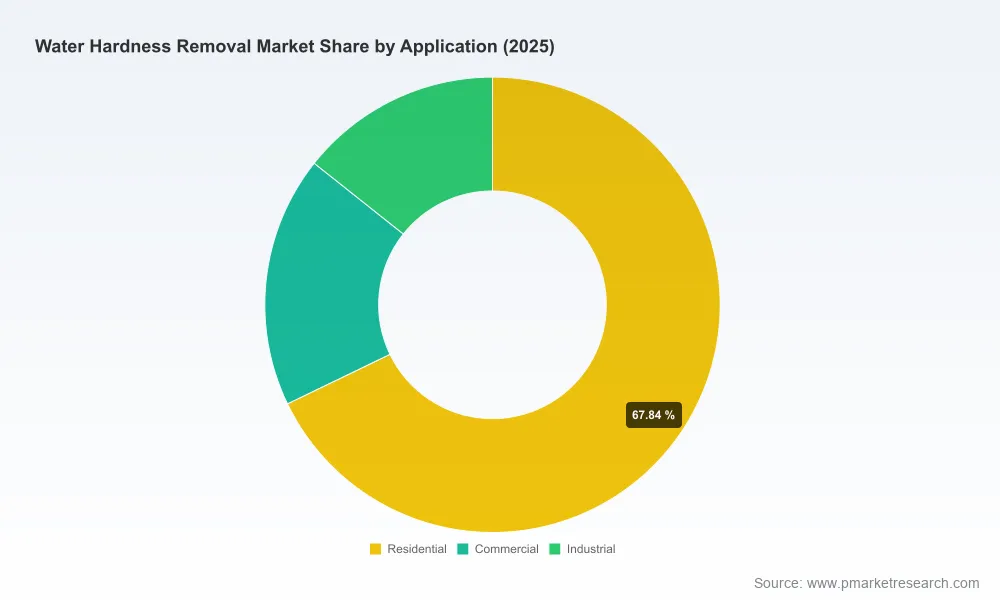
- Application Segment Deep Dive: Residential, commercial, and industrial applications are analyzed separately to highlight distinct demand drivers, purchasing cycles, and regulatory considerations. The study explores how end-users in each vertical prioritize efficiency, scalability, and compliance.
- Regional Performance Mapping: Geographic market contributions are examined across major regions, including North America, Europe, Asia Pacific, Latin America, and the Middle East and Africa. The analysis identifies growth hotspots, infrastructure development trends, and localized regulatory environments that influence market penetration.
- Competitive Ecosystem Profiling: The report features in-depth profiles of leading market participants, examining their strategic moves, product portfolios, and recent innovations. This section provides context for understanding consolidation trends and potential partnership or acquisition opportunities.
- Regulatory and Compliance Framework: An assessment of certification standards, environmental guidelines, and safety protocols that impact product design, marketing claims, and market access. The study highlights how compliance requirements are reshaping product development roadmaps.
- 2026-2032 Forecast Model: A structured projection of market size, growth rates, and segment performance over the forecast horizon. The model incorporates historical trends, macroeconomic indicators, and industry-specific catalysts to produce actionable forward-looking estimates.
For decision-makers, this report functions as more than a data repository. It offers a structured lens through which to evaluate market entry timing, product development priorities, and resource allocation. The insights are designed to support scenario planning, helping organizations anticipate shifts in demand elasticity, competitive intensity, and regulatory impact. By synthesizing macro-level trends with micro-level segment dynamics, the study enables stakeholders to construct strategies that are both ambitious and grounded in empirical evidence.
Water Hardness Removal Market
Competitive Landscape and Industry Dynamics
The water hardness removal market is characterized by a moderately concentrated competitive structure, with top firms commanding significant market share through established distribution networks, brand recognition, and continuous product innovation. The CR3 concentration ratio stands at 40 percent, while the CR5 ratio reaches 50 percent, indicating that a handful of players exert substantial influence over pricing, technology standards, and channel dynamics. This concentration does not preclude new entrants, but it does raise the barrier for firms lacking differentiated value propositions or robust supply chain capabilities.
Leading Industry Participants
Several companies have defined the competitive contours of this sector through focused product strategies and targeted market expansion. Culligan, headquartered in Illinois, remains a prominent manufacturer of water softening systems for both residential and commercial applications, leveraging ion exchange resin bed technology to deliver consistent hardness removal performance. EcoWater Systems, based in the United States, specializes in advanced softeners, filtration, and treatment systems with a strong emphasis on ion exchange methodologies. Hach has carved a distinct niche as a producer of water hardness analyzers, test kits, and monitoring equipment, enabling precise measurement and treatment planning for end-users and service providers. LaMotte Company complements this ecosystem by supplying test strips, kits, and analyzers that support quality control and system calibration.
Kinetico, operating from Ohio, manufactures advanced water softening and treatment systems tailored for residential and commercial hardness removal, with a reputation for durable, demand-driven designs. Aquasana provides filtration and softening systems specifically engineered for hardness removal, appealing to consumers seeking integrated home water treatment solutions. GE Appliances contributes to the market as a supplier of integrated water softening and hardness removal appliances, bridging the gap between consumer electronics and water treatment functionality. Together, these firms represent a cross-section of the competitive landscape, spanning equipment manufacturing, testing and monitoring, and integrated appliance solutions.
Recent Strategic Developments
The competitive environment has been further shaped by recent product launches and feature enhancements that signal broader industry directions. In February 2026, Culligan introduced the Aqua Essential smart high-efficiency water softener, a model designed to adapt to varying home needs while improving hardness removal efficiency. This launch reflects a growing emphasis on intelligence and adaptability in residential equipment. Earlier, in November 2025, Hach released the HA-DT hardness total test kit, featuring a digital titrator, reagents, labware, and a carrying case to support precise measurement and treatment planning. Also in November 2025, LaMotte Company launched Insta-Test Water Hardness Test Strips covering a 0-180 ppm range in a 50-pack format, targeting on-site monitoring and system calibration needs. In February 2025, EcoWater Systems highlighted advanced AI-powered upflow brining and smart regeneration controls within its new efficiency series, emphasizing reduced salt and water consumption during hardness removal operations.
These developments illustrate a converging trend: manufacturers are increasingly investing in smart controls, measurement precision, and resource efficiency. The integration of digital titrators, AI-driven regeneration logic, and adaptive home adjustment capabilities suggests that the next phase of market competition will hinge on operational intelligence rather than hardware alone. Firms that can combine reliable hardness removal performance with data-enabled maintenance insights and resource conservation features are likely to capture disproportionate value in the coming years.
Regulatory Environment and Cost Drivers
Regulatory frameworks continue to exert significant influence on product design, marketing claims, and market access. Water softeners must be certified to NSF/ANSI 44 Requirements for Water Softeners or the IAPMO/ANSI Z601 Standard for Scale Reduction Devices to demonstrate proper hardness removal effectiveness. Compliance with these standards is not merely a technical checkbox; it serves as a market signal that affects distributor confidence, installer adoption, and consumer trust. The EPA Safer Choice Standard further shapes formulation decisions by prohibiting or restricting certain chelating agents and surfactants, thereby minimizing environmental impact on water hardness treatment processes. These regulatory layers create both constraints and opportunities, as companies that proactively align their product portfolios with recognized standards can differentiate themselves in crowded channels.
Ownership Economics and Material Considerations
Beyond regulatory compliance, total ownership economics play a decisive role in purchase decisions across residential and commercial segments. Resin replacement and maintenance labor costs contribute significantly to the overall expense of water hardness removal systems. These recurring costs can influence brand loyalty, service contract uptake, and the attractiveness of low-maintenance versus high-efficiency configurations. On the material side, high-quality ion exchange resin beads, commonly composed of styrene and divinylbenzene, serve as the core component enabling ion exchange-based hardness removal. Proper maintenance of these resin beds extends system life and preserves treatment performance, making resin durability a critical evaluation criterion for procurement teams and homeowners alike. Understanding these cost and material dynamics is essential for companies seeking to optimize product design, service offerings, and pricing strategies.
Strategic Recommendations for 2026 Decision-Makers
As organizations prepare for the 2026 operating environment, several strategic priorities emerge from the market trajectory and competitive signals observed in recent periods. First, investment in smart and adaptive technologies appears to be transitioning from a differentiator to a baseline expectation. Products that integrate intelligent regeneration controls, usage-based adjustments, and precise monitoring capabilities are better positioned to address evolving consumer and commercial expectations around efficiency and convenience. Second, regulatory alignment should be treated as a strategic enabler rather than a compliance burden. Firms that embed recognized certification standards and environmentally responsible formulation practices into their product development cycles can strengthen channel partnerships and reduce time-to-market friction.
Third, total cost of ownership messaging will gain importance as buyers become more sophisticated about maintenance labor, resin longevity, and resource consumption. Companies that can articulate clear value propositions around reduced salt and water use, lower service frequency, and extended system life will have an advantage in both residential and commercial negotiations. Fourth, regional strategy should account for varying infrastructure maturity, regulatory environments, and end-user awareness levels. Growth opportunities are not uniformly distributed, and firms that tailor their go-to-market approaches to local conditions are more likely to achieve sustainable penetration. Finally, competitive monitoring should extend beyond headline product launches to include testing and calibration innovations, as measurement tools increasingly influence treatment planning and system optimization decisions.
Conclusion: The Case for Comprehensive Market Intelligence
The water hardness removal market is entering a phase where growth is increasingly defined by technological sophistication, regulatory adherence, and total cost optimization. The historical expansion from 2020 to 2025 and the projected trajectory through 2032 indicate that demand will continue to materialize across residential, commercial, and industrial applications, with regional variations shaping the pace and pattern of adoption. For leaders responsible for product strategy, market entry, investment allocation, or competitive positioning, the margin for reliance on surface-level data is shrinking. A detailed, segment-level understanding of technology preferences, application dynamics, competitive moves, and regulatory requirements is essential for making decisions that hold up under scrutiny.
PW Consulting's full report expands on every dimension introduced here, providing the granular segmentation data, forward-looking forecasts, and competitive profiles necessary to translate strategic intent into actionable plans. The complete analysis unlocks the specific regional contributions, application-level revenue patterns, and technology split details that cannot be fully explored in this overview. To access the complete intelligence suite and integrate these insights into your 2026 planning cycle, we invite you to visit the source page and obtain the full report. The depth of data and the rigor of analysis contained within are designed to support confident, well-informed decisions in a market that rewards precision and foresight.
For detailed analysis of this topic, please visit the official page: Water Hardness Removal Market
Lacy Lee
Senior Marketing Manager
[email protected]
PW Consulting: www.pmarketresearch.com




























Sign in to leave a comment.