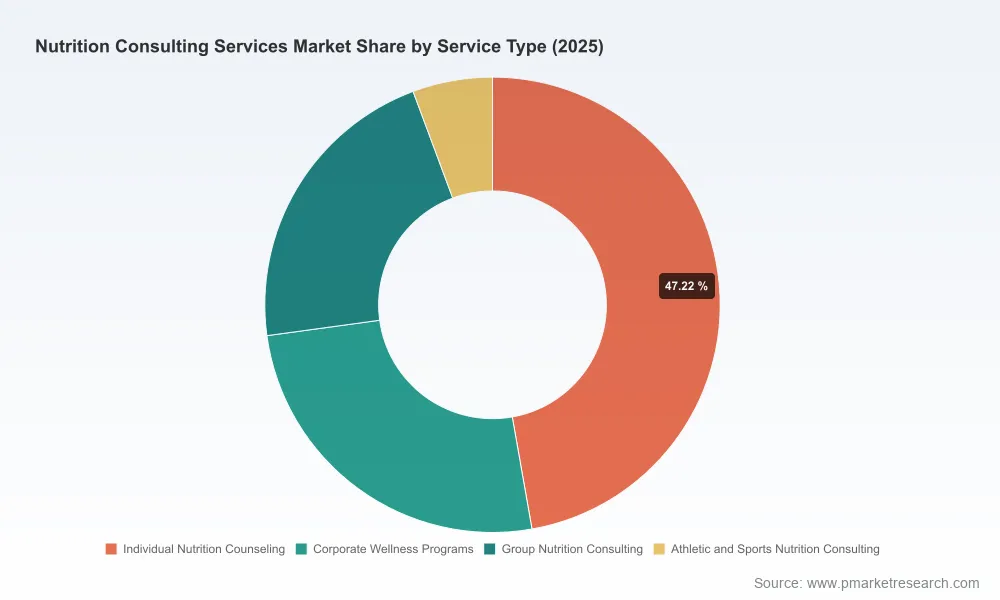

Strategic Intelligence for the Next Era: Inside the Worldwide Nutrition Consulting Services Market
Executive Overview
The nutrition consulting services sector has evolved from a peripheral wellness service into a core component of modern healthcare delivery, corporate risk management, and food industry innovation. As organizations navigate shifting regulatory frameworks, workforce dynamics, and consumer expectations, access to rigorous market intelligence has become a prerequisite for strategic decision-making. The Worldwide Nutrition Consulting Services Market report delivers a comprehensive, data-driven examination of this rapidly maturing landscape, mapping historical trajectories, forecasting structural shifts through 2032, and identifying the operational variables that will separate market leaders from passive participants. This publication is designed for executives, investors, healthcare administrators, and industry strategists who require actionable intelligence to allocate capital, shape service portfolios, and anticipate competitive pressures.
Macroeconomic Trajectory and Structural Growth Indicators
Over the past five years, the industry has demonstrated consistent expansion, with total revenue climbing from 5.12 billion USD in 2020 to an estimated 7.21 billion USD in 2025. The forward-looking analysis extends this trajectory through 2032, projecting sustained momentum anchored by a compound annual growth rate of 7.31 percent. By the end of the forecast window, the market is positioned to exceed the 11.8 billion USD threshold, signaling a transition from recovery-phase stabilization to a higher-value, service-differentiated growth paradigm. This expansion is not driven by isolated tailwinds but by converging structural forces. Healthcare systems continue to integrate clinical nutrition into preventive care pathways, corporate procurement teams are embedding nutrition expertise into employee wellness and productivity programs, and food and beverage manufacturers are accelerating investments in labeling compliance, dietary exposure assessments, and health claim substantiation. Simultaneously, the regulatory environment has raised the professional baseline for practitioners, reinforcing credentialing standards and elevating the perceived and actual value of specialized consulting engagements. The report contextualizes these dynamics within historical revenue baselines and forward projections, providing decision-makers with a reliable framework to stress-test strategic assumptions and model capacity requirements.
Competitive Landscape and Strategic Positioning
The market remains notably fragmented at the enterprise level, with a five-firm concentration ratio hovering near 12.1 percent and a three-firm ratio at approximately 8.4 percent. This dispersion reflects the diverse service architectures operating across clinical, corporate, group, and athletic nutrition domains, as well as the continued presence of regional specialists, independent practices, and scaling contract staffing models. The report moves beyond superficial competitor mapping to examine how incumbents are structuring growth, securing talent pipelines, and differentiating service delivery in a crowded field. Featured profiles analyze organizations such as RD Nutrition Consultants, a nationwide provider of contract, temporary, and direct-hire Registered Dietitian services spanning hospitals, long-term care facilities, dialysis centers, outpatient clinics, and wellness organizations, with an emphasis on clinical nutrition consulting, patient-centered care, regulatory compliance, and staffing solutions. Exponent is examined as a multidisciplinary scientific and engineering consulting firm delivering food and nutrition science support, including dietary exposure assessments, nutrition labeling, health claim substantiation, regulatory filings for FDA and EFSA, custom surveys, and risk assessments for food, ingredient, and beverage manufacturers, trade associations, and government clients. Walsh Nutrition Group, Inc. is profiled as a long-standing provider of personalized nutrition and lifestyle coaching alongside recipe development and analytical consulting for food industry clients. Nutrition Ink is assessed for its entrenched position in clinical nutrition management, Registered Dietitian Nutritionist staffing, and nutrition management products for healthcare facilities. Salt and Lyte Nutrition Solutions is highlighted for its specialized focus on nutrition support complexities within the home infusion sector. Inner Health Nutrition Consulting is reviewed as a dietitian-led firm delivering tailored weight management, disease management, and community health improvement programs, while Doherty Nutrition is evaluated as a corporate nutrition consulting provider offering workshops, programs, speaking engagements, and wellness services centered on nutrition education and employee health. The analysis connects these profiles to strategic implications rather than treating them as isolated case studies. Readers gain insight into how service-mix decisions influence margin structures, how staffing models interact with credentialing and labor-market conditions, and how geographic footprints and delivery modes shape competitive defensibility. The report deliberately Withholds granular revenue allocations and region-specific performance metrics at this stage, reserving those data sets for the full publication to protect analytical depth and encourage direct engagement with the complete dataset.
Industry Dynamics Shaping Operational Strategy
Several concurrent developments are redefining how nutrition consulting firms design pricing, manage delivery capacity, and anticipate client demand. Regulatory modernization has elevated professional baselines. Since January 2024, registered dietitian nutritionists in the United States have been required to hold a minimum master's degree for credentialing, supported by ongoing continuing professional education requirements that include ethics components for recertification cycles. In January 2025, the Commission on Dietetic Registration and the Academy of Nutrition and Dietetics approved and released the Revised 2025 Scope and Standards of Practice for Registered Dietitian Nutritionists in Post-Acute and Long-Term Care Nutrition. This update refreshed competencies for clinical nutrition care, food and dining services management, regulatory compliance aligned with CMS guidelines, and advanced practice credentials such as CSG and CDCES. These standards directly influence staffing requirements, service design, and compliance costs across facilities that rely on external nutrition consulting or in-house expertise. Labor economics are equally consequential. U.S. healthcare staffing, including allied health roles such as dietitians and nutrition consultants, is projected to stabilize in 2025 with a modest 2 percent revenue growth in 2026 following a 6 percent decline in 2025. This pattern unfolds amid ongoing labor market cooling and selective expansion in flexible roles, reinforcing the strategic importance of contract, temporary, and direct-hire staffing models for healthcare organizations seeking to balance clinical coverage with cost control. Nutrition consulting firms that can scale specialized talent while maintaining compliance and service quality are positioned to capture this demand more effectively than firms dependent on rigid staffing structures. Reimbursement architectures are also evolving in ways that create new demand channels. Employer-sponsored health plans are increasingly linking coverage to behavioral and clinical support. In 2025, 34 percent of U.S. employer health plans covering GLP-1 drugs for weight loss required enrollees to participate in lifestyle programs or meet with a dietitian as a condition of coverage. This trend signals a broader shift toward integrated care pathways in which nutrition consulting functions as both a clinical support service and a gatekeeper to reimbursable interventions. For consulting providers, this opens opportunities in employer wellness programs, clinical partnerships, and value-based care arrangements, while simultaneously raising expectations for measurable outcomes and documentation standards. A notable corporate event further underscores the sector's maturation. In January 2026, RD Nutrition Consultants was acquired by Conscious Capital Growth and Petra Capital Partners to support continued organic growth and expansion of specialized dietitian consulting services across U.S. healthcare facilities, with founder Robert DeLair remaining CEO with a meaningful ownership stake. This transaction illustrates how private capital is viewing nutrition consulting staffing and clinical services as a scalable platform rather than a niche service line, reinforcing the broader message that the market is attracting institutional attention and consolidation interest.
Report Architecture and Practical Utility
The Worldwide Nutrition Consulting Services Market report is structured to translate macro-level intelligence into boardroom-ready decision support. It opens with a methodological foundation and historical performance review, then advances into a multi-dimensional segmentation analysis that examines service types, delivery modes, and regional dynamics. Rather than presenting isolated metrics, the report weaves these dimensions into interpretive narratives that explain how client categories, therapeutic contexts, and operational channels interact to shape revenue concentration, pricing power, and competitive exposure. The competitive landscape section synthesizes company profiles, strategic positioning, and sector activity into an actionable view of where differentiation is achievable and where commoditization risk is rising. Industry dynamics are mapped against operational considerations, including staffing models, credentialing requirements, compliance intensity, reimbursement linkages, and capital activity. The forecast component provides forward-looking revenue trajectories and growth rate expectations, allowing planners to model capacity expansion, geographic prioritization, and service-line investment scenarios. Throughout the document, findings are oriented toward practical application: procurement teams can use the analysis to benchmark vendor ecosystems, healthcare administrators can align staffing strategies with clinical and regulatory requirements, food and beverage executives can assess regulatory compliance and claim substantiation pathways, and investors can evaluate market concentration, growth durability, and consolidation potential. The report deliberately omits some of the most granular breakdowns in this summary format, preserving those datasets for the full publication so readers receive unfiltered, high-resolution intelligence when they access the complete study.
Strategic Implications for 2026 Decision-Makers
For organizations formulating 2026 priorities, the market intelligence summarized here points to several strategic imperatives. First, service portfolios must be evaluated against both demand-side shifts and regulatory baselines. Firms and buyers alike need clarity on which engagements are driven by compliance necessity, which are tied to reimbursement-related pathways, and which are expanding through voluntary wellness and performance programs. Second, talent strategy has become a direct competitive variable. With credentialing standards elevated and labor markets cooling selectively, organizations that can secure qualified dietitian and nutrition consulting talent through flexible staffing arrangements, retain them through strong practice standards, and deploy them across clinical, corporate, and community contexts will gain a measurable advantage. Third, the reimbursement linkage between employer health plans and lifestyle or dietitian-supported interventions creates an opening for consulting providers to position themselves as essential partners rather than optional add-ons. Designing engagements that align with measurable health outcomes, documentation requirements, and employer cost-containment goals will increasingly determine contract success. Fourth, the emerging pattern of private capital involvement and platform-style scaling suggests that consolidation, acquisitions, and service-line bundling will continue reshaping the competitive map. Stakeholders should monitor how staffing models, clinical service depth, and regulatory expertise are being packaged into scalable offerings, as these combinations will likely define the next phase of market leadership.
Conclusion and Access to Full Intelligence
The Worldwide Nutrition Consulting Services Market is entering a phase defined by professionalization, reimbursement integration, regulatory precision, and capital-enabled scaling. Organizations that treat nutrition consulting as a strategic capability rather than a peripheral service will be better positioned to manage compliance risk, capture demand from employer and clinical programs, and build defensible operating models in a fragmented but increasingly structured market. The complete report extends far beyond the highlights presented here, delivering detailed segmentation analysis, forward-looking revenue trajectories, competitive positioning frameworks, and operational intelligence calibrated for executive use. To access the full dataset and integrated strategic findings, visit the source page and download the complete Worldwide Nutrition Consulting Services Market research.
Management Consulting Services Market
Computer Consulting Services Market
PW Consulting
For detailed analysis of this topic, please visit the official page: Worldwide Nutrition Consulting Services Market
Lacy Lee
Senior Marketing Manager
[email protected]
PW Consulting: www.pmarketresearch.com
























Sign in to leave a comment.