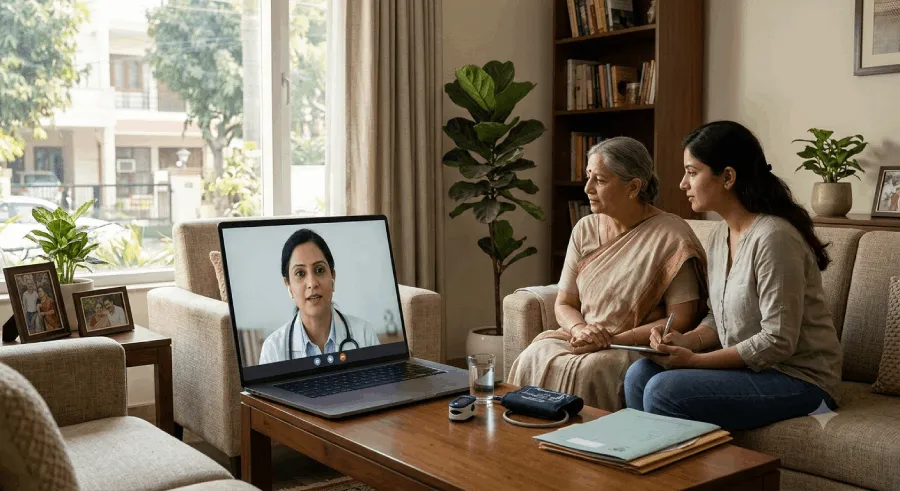

A parent who needs regular therapy but struggles with stairs. A professional whose neck seizes up by 3 p.m. but can't leave the desk for a two-hour clinic round trip. A knee that's finally healing after surgery, except every follow-up visit undoes some of that progress just from the strain of getting there. These are the situations that make Physiotherapy at Home less of a convenience and more of a necessity — bringing quality treatment and expert doctors to the patient's door instead of asking the patient to come to them.
This piece walks through who tends to benefit most from home-based physiotherapy, what problems it actually solves, and what a well-run home treatment plan looks like in practice.
Why Treatment at Home Changes the Outcome
Clinic appointments run on the clinic's clock. A therapist juggling a full day of patients rarely has room to slow down, ask more questions, or adjust a session on the fly — even when a patient clearly needs it. At home, that pressure disappears. There's no waiting room, no rushed handoff to the next appointment, just the therapist and the patient working at a pace that actually suits the recovery.
That difference matters most for two kinds of patients: those for whom travel itself is a physical obstacle, and those whose work or family schedules make weekly clinic visits nearly impossible to sustain. Left unaddressed, both situations tend to produce the same result — treatment that starts strong and then fizzles out from missed sessions, which is often worse for recovery than starting late.
Physiotherapy at Home for Elderly Parents
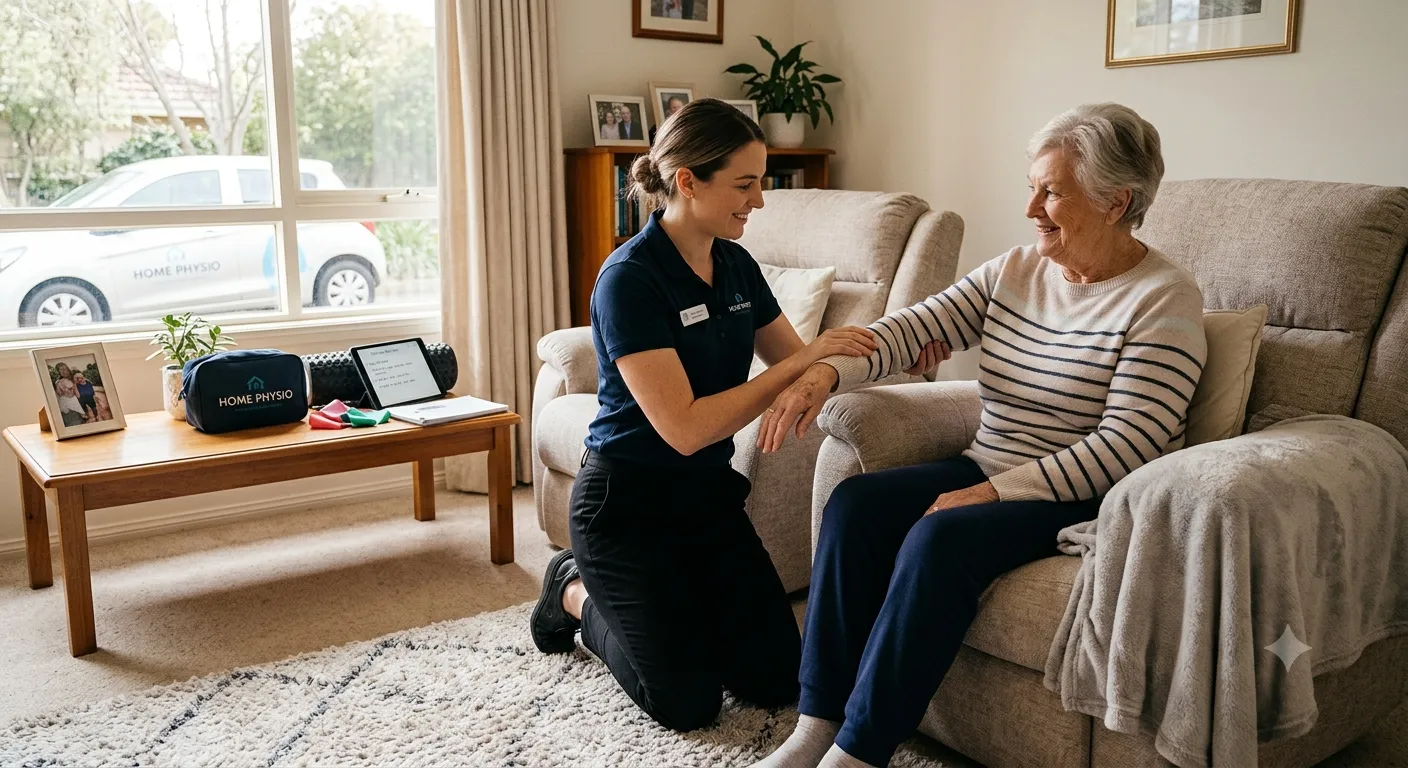
For adult children managing care for aging parents, the math rarely works out cleanly. A parent needs therapy two or three times a week, but getting them dressed, into a car, and through a clinic's front doors is its own ordeal — sometimes more taxing than the session itself. Physiotherapy at Home for elderly care sidesteps that problem entirely.
Certified, RCI-registered therapists come to the house, and there's something to be said for how much more relaxed a patient is in their own living room versus a clinical setting. That comfort often translates into better cooperation during exercises. It also means knee pain physiotherapy at home and spine physiotherapy at home can proceed without the patient having to navigate stairs or crowded corridors on a bad day.
Neck Pain and Shoulder Pain: The Desk-Job Epidemic
Anyone who's spent a decade hunched over a laptop knows the feeling — that dull ache that starts in the neck and creeps into the shoulders by mid-afternoon. Physiotherapy at Home for neck pain has become a common search for exactly this reason: the discomfort is real, but blocking out clinic time between meetings often isn't.
The same logic applies to Physiotherapy at Home for shoulder pain, which tends to come up most often with patients recovering from a frozen shoulder or an old injury — frequently those past 40, where regaining full range of motion depends heavily on not skipping sessions. A therapist who sees the same patient at home week after week notices things that get lost when appointments are scattered across different staff and rescheduled time slots.
Back Pain: When Home Remedies Aren't Enough
It usually starts with a search for some kind of back pain treatment home remedy — a heating pad, a few stretches found online, maybe some rest. And for mild, short-term discomfort, that's often a reasonable first step. But when the pain keeps returning, or worsens with certain movements, it's usually a sign the issue needs an actual diagnosis rather than another round of guesswork.
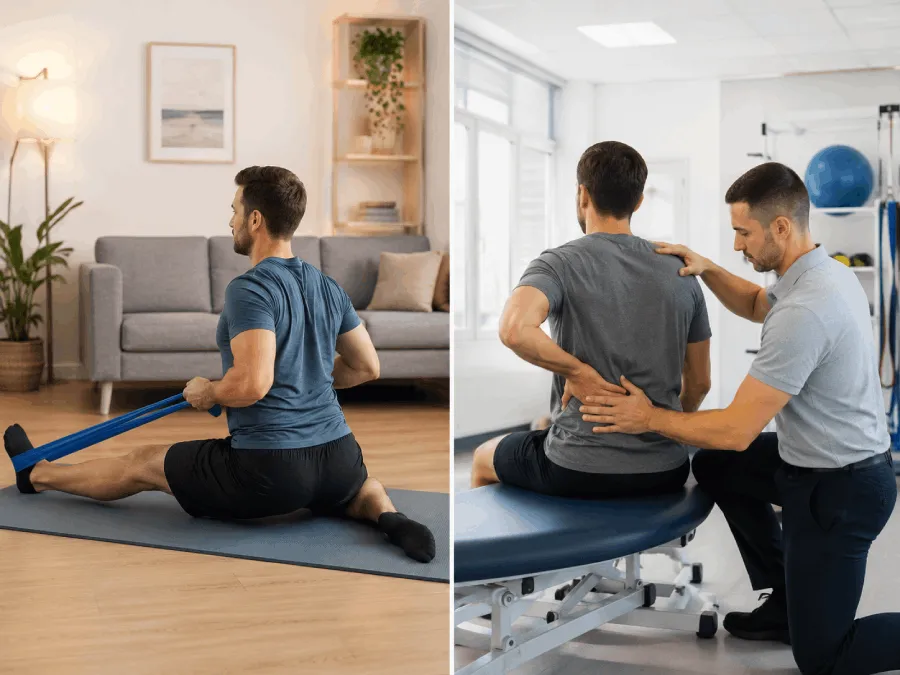
That's where back pain relief at home backed by professional assessment makes a real difference. Instead of trial and error, a qualified therapist evaluates what's actually happening and builds a plan around it. For patients dealing with chronic pain or a disc-related issue, working with the best physiotherapist at home means the treatment is shaped around their specific condition — not a generic routine pulled from a handout.
Beyond the Basics: Dry Needling, Chiropractic Care, and Sports Injuries
Home physiotherapy isn't a single service anymore — it covers a fairly wide range of needs, and patients increasingly know what they're looking for.
Some arrive already knowing they want dry needling at home, usually because a doctor recommended it and they're simply trying to make it more convenient to access. Others are searching for chiropractor at home services specifically, drawn to a different approach than standard physiotherapy — worth clarifying directly with a provider, since not every service offers both. And then there's sports injury physiotherapy at home, which tends to draw a younger, more active crowd dealing with strains or overuse injuries, where getting treatment quickly and consistently often shapes how fast someone gets back to their sport.
The "Near Me" Search — And Why Credentials Matter More at Home
When someone searches home physiotherapy near me, what they're really asking is: can I trust the person who's about to walk into my home? It's a fair question, and one worth asking directly — checking a therapist's certifications and treatment background before booking isn't excessive caution, it's basic due diligence.
The same pattern shows up in narrower searches too. Someone dealing with joint pain looks for knee pain relief at home or knee pain physiotherapy at home; someone with a stiff neck searches neck pain physiotherapy at home. Different symptoms, but the same underlying ask — a qualified professional, a plan built around them specifically, and some way to see that it's actually working.
What Good Home Physiotherapy Actually Looks Like
Strip away the marketing language, and a solid home physiotherapy service usually comes down to a handful of things done consistently:
- A personalized treatment plan, shaped by an actual diagnosis rather than a standard template
- Flexible scheduling that bends around the patient's day, not the other way around
- Progress tracking, so both the patient and their family can see whether things are actually improving
- The comfort and privacy of a familiar space, which tends to lower anxiety and improve focus during sessions
- And above all, consistency — arguably the single factor that most determines whether recovery is quick or drawn out
These aren't abstract features. They're direct answers to the frustrations most people have already experienced somewhere else — rushed appointments, therapists whose credentials were never clearly explained, rigid booking windows, and little sense of whether the treatment is even working.
Taking the Next Step
At its core, home-based physiotherapy is about removing the friction that so often derails recovery — the traffic, the waiting rooms, the scheduling gymnastics — without giving up anything in terms of care quality. Whether it's an elderly parent who needs regular sessions, a professional managing chronic neck strain, or someone rebuilding strength after a sports injury, a well-structured home plan makes consistent treatment realistic instead of aspirational.
Anyone ready to explore this option can look into Physiotherapy at Home services suited to their specific condition and schedule. A short consultation is usually the easiest way to understand what a personalized plan would actually involve — and to get recovery moving in the right direction.






























Sign in to leave a comment.