

Planning transportation for a large group can seem straightforward until you start comparing charter bus companies, vehicles, prices, and rental policies. Whether you are arranging transportation for a wedding, corporate event, school trip, family reunion, sporting event, concert, or festival, asking the right questions before making a reservation can save you from unexpected problems later.
Before requesting quotes, it is helpful to review this charter bus rental guide so you know which details deserve attention. A reliable transportation provider should be able to answer your questions clearly and explain exactly what is included in your rental.
Why Is It Important to Ask Questions Before Renting?
A charter bus is more than a vehicle that takes passengers from one location to another. Your rental may involve a professional driver, specific pickup and drop-off locations, luggage requirements, amenities, multiple stops, and a detailed travel schedule.
Pricing can also vary depending on the route, vehicle size, travel date, mileage, duration, and availability. Additional expenses such as parking, tolls, driver accommodations, or itinerary changes may also affect the final cost.
Asking questions before booking allows you to compare companies based on the complete service rather than simply choosing the lowest initial quote.
1. Is Your Company Licensed and Insured?
Safety should be the first topic you discuss with a charter bus company. Ask whether the operator has the appropriate operating authority and commercial insurance for your trip.
For interstate travel, you can request the company's USDOT information and verify its operating status and safety records through federal transportation resources. A professional operator should be willing to provide this information.
You can also ask what the company's insurance coverage includes and whether proof of coverage can be provided. If a company avoids straightforward questions about licensing or insurance, that should be treated as a warning sign.
2. Which Bus Is Right for My Group?
The number of passengers is only one factor when selecting a charter bus. You should also consider luggage, equipment, trip length, number of stops, and the amount of space your passengers will need.
A smaller group might be comfortable in a minibus, while a larger group may require a full-size motorcoach. If your passengers are bringing suitcases, sports equipment, musical instruments, or event supplies, tell the company before receiving a quote.
The goal is to select a vehicle that provides enough capacity without unnecessarily paying for more space than your group needs.
3. What Amenities Are Included?
Charter buses can differ significantly in terms of comfort and onboard features. Before booking, ask what amenities are available on the specific vehicle assigned to your trip.
Depending on the bus, features may include reclining seats, Wi-Fi, power outlets, climate control, entertainment systems, overhead storage, and an onboard restroom. However, you should never assume that every vehicle in a company's fleet offers the same features.
If Wi-Fi, charging outlets, or a restroom are particularly important to your group, confirm their availability before signing the rental agreement.
4. How Is the Rental Price Calculated?
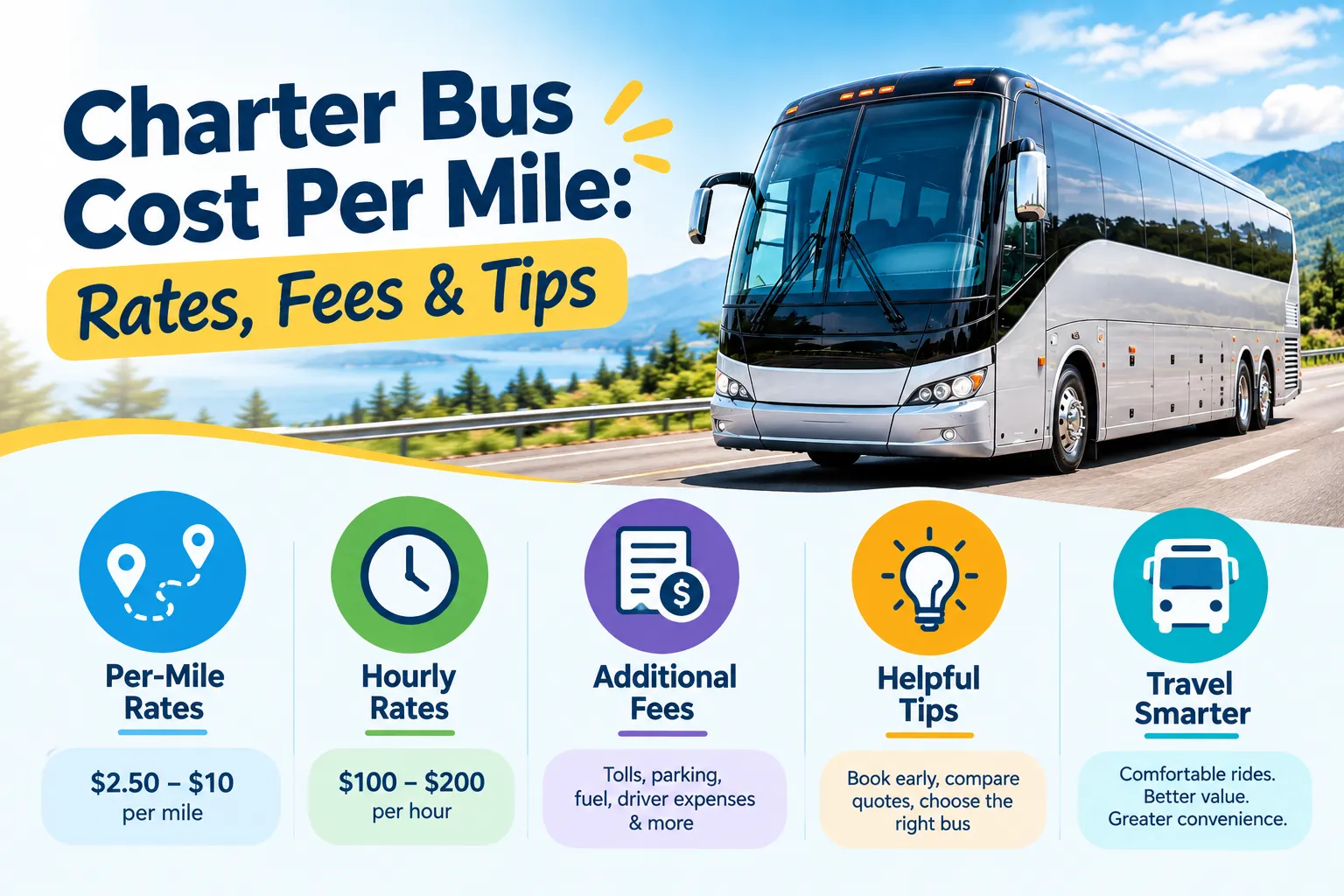
Understanding how the company calculates its price can help you compare quotes accurately. Some trips may be priced according to hours, while others may depend heavily on mileage, duration, vehicle type, or the complete itinerary.
Ask whether your quote includes fuel, tolls, parking, driver expenses, and other applicable charges. For overnight trips, ask whether driver lodging and related expenses are included.
A detailed written quote is much more useful than a simple number because it shows what you are actually paying for.
5. Are There Any Additional Charges?
A quote may not always represent the final amount you pay. Before booking your charter bus transportation, ask about possible additional charges.
For example, an itinerary that runs longer than expected could result in overtime charges. Extra stops, parking, tolls, additional mileage, or changes made after booking may also affect the final price.
Ask the company to explain these potential costs before you make a deposit. This gives you a better idea of the total trip budget.
6. Who Will Drive the Bus?
The driver has an important role in your group's safety and overall experience. Ask whether drivers are properly licensed and trained for passenger transportation.
For longer journeys, ask how the company handles driver hours and required rest periods. Federal regulations place limits on commercial driver operating hours, so a long-distance itinerary may need to include appropriate rest periods or additional driver arrangements.
A reputable charter bus rental company should be able to explain how your driver schedule will work.
7. What Is the Cancellation and Rescheduling Policy?
Travel plans can change for many reasons. An event may be postponed, the passenger count may change, or weather could affect your itinerary.
Before paying a deposit, ask how cancellations and rescheduling are handled. Find out whether deposits are refundable, how much notice is required, and whether changing the travel date creates additional charges.
You should also ask how weather-related cancellations are handled. Most importantly, make sure the final policy is included in the written contract rather than relying on a verbal explanation.
8. What Happens If the Bus Breaks Down?
Mechanical problems can happen even when vehicles are properly maintained. What matters is how the transportation company responds if something goes wrong.
Ask whether the company has backup vehicles or partnerships with other operators. You can also ask how the company handles a breakdown before departure compared with a breakdown during the trip.
This is particularly important for weddings, airport transportation, conferences, concerts, and sporting events where arriving on time is essential.
A dependable operator should have a clear contingency plan rather than simply telling you that problems are unlikely.
9. Can the Bus Handle Our Luggage and Special Requirements?
A bus can have enough seats for your passengers but still lack sufficient storage for everyone's belongings.
Explain how much luggage your group expects to bring. If you are transporting sports equipment, musical instruments, bicycles, or other bulky items, mention these requirements before selecting the vehicle.
You should also discuss accessibility requirements in advance. If a passenger uses a wheelchair or requires mobility assistance, ask whether an appropriate accessible vehicle is available for your specific date.
Planning ahead makes it easier for the company to assign a suitable vehicle.
10. What Exactly Will Be Included in the Contract?
Before completing your reservation, carefully review the rental agreement. The contract should clearly identify the travel date, pickup and drop-off locations, vehicle type, rental duration, total price, included amenities, cancellation policy, and applicable additional charges.
If a sales representative promises a particular amenity or service, ask for it to be documented in the agreement.
Having the details in writing protects both the customer and the transportation provider and gives everyone the same understanding of the reservation.
How Should You Compare Different Charter Bus Companies?
Once you have answers to these questions, compare at least a few transportation providers. Don't automatically select the company offering the lowest price.
Instead, consider safety credentials, vehicle quality, driver experience, customer service, amenities, pricing transparency, and contract terms. Giving every company identical trip information will also make the quotes easier to compare.
For example, provide the same passenger count, travel dates, route, pickup locations, number of stops, and estimated trip duration to each provider. This creates a more meaningful comparison than simply asking several companies, "How much does a bus cost?"
When Should You Reserve Your Charter Bus?
Booking early is especially helpful when your trip takes place during a busy travel period. Weddings, graduations, major sporting events, festivals, holidays, and summer travel can increase demand for charter buses.
Early planning can give you more choices in terms of vehicle size and amenities. It can also give the transportation provider more time to organize drivers and review complicated itineraries.
For long-distance and multi-day trips, advance planning becomes even more important because driver scheduling and overnight requirements may need additional coordination.
Final Thoughts
Renting a charter bus becomes much easier when you know what to ask before signing a contract. Questions about licensing, insurance, vehicle size, amenities, pricing, drivers, cancellation policies, emergency plans, luggage, and contract terms can help you make a more informed decision.
Don't judge a transportation company solely by its advertised price. Look at the complete service and make sure the provider can meet your group's specific needs.
By using this charter bus booking checklist and comparing your options carefully, you can reduce surprises and give your group a smoother, more comfortable travel experience.





























Sign in to leave a comment.