
Radon is a naturally occurring radioactive gas that develops as uranium in soil and rock breaks down. It has no colour, smell, or taste, making it impossible to identify through normal household inspection. When it enters a building and accumulates indoors, homeowners may need to take steps to understand and manage the situation.
For homeowners dealing with elevated indoor levels, radon remediation calgary can provide practical solutions designed around the structure of a property. Remediation generally involves identifying how the gas enters the building, selecting an appropriate reduction method, and installing a system that helps prevent it from accumulating indoors. Professional assessment is important because every home has different foundation and soil conditions.
What Causes Radon to Enter a Home?
Radon usually moves through soil before finding pathways into buildings. Small openings in foundations can allow soil gas to enter as air pressure changes between the building and surrounding ground.
Common entry points include:
- Cracks in concrete floors
- Gaps in foundation walls
- Openings around plumbing
- Floor drains
- Sump pits
- Construction joints
- Crawl spaces
- Utility penetrations
The presence of one or more of these openings does not automatically indicate elevated levels. Testing is needed to determine the actual indoor concentration.
Why Testing Should Come First
Before installing a reduction system, homeowners should understand the conditions inside the property. Testing provides measurements that can help determine whether additional action is appropriate.
Testing may be conducted using short-term or long-term measurement methods.
Short-Term Testing
Short-term testing measures radon over a relatively short period. It can provide an initial indication and may be useful when homeowners need preliminary information about their property.
Long-Term Testing
Long-term testing measures concentrations over an extended period. Because indoor levels can fluctuate due to weather, ventilation, and seasonal conditions, longer monitoring can provide a broader understanding of average conditions.
How Radon Remediation Works
Remediation is focused on reducing the amount of radon that enters or remains inside a building. The appropriate approach depends on the property's foundation, soil conditions, and potential entry pathways.
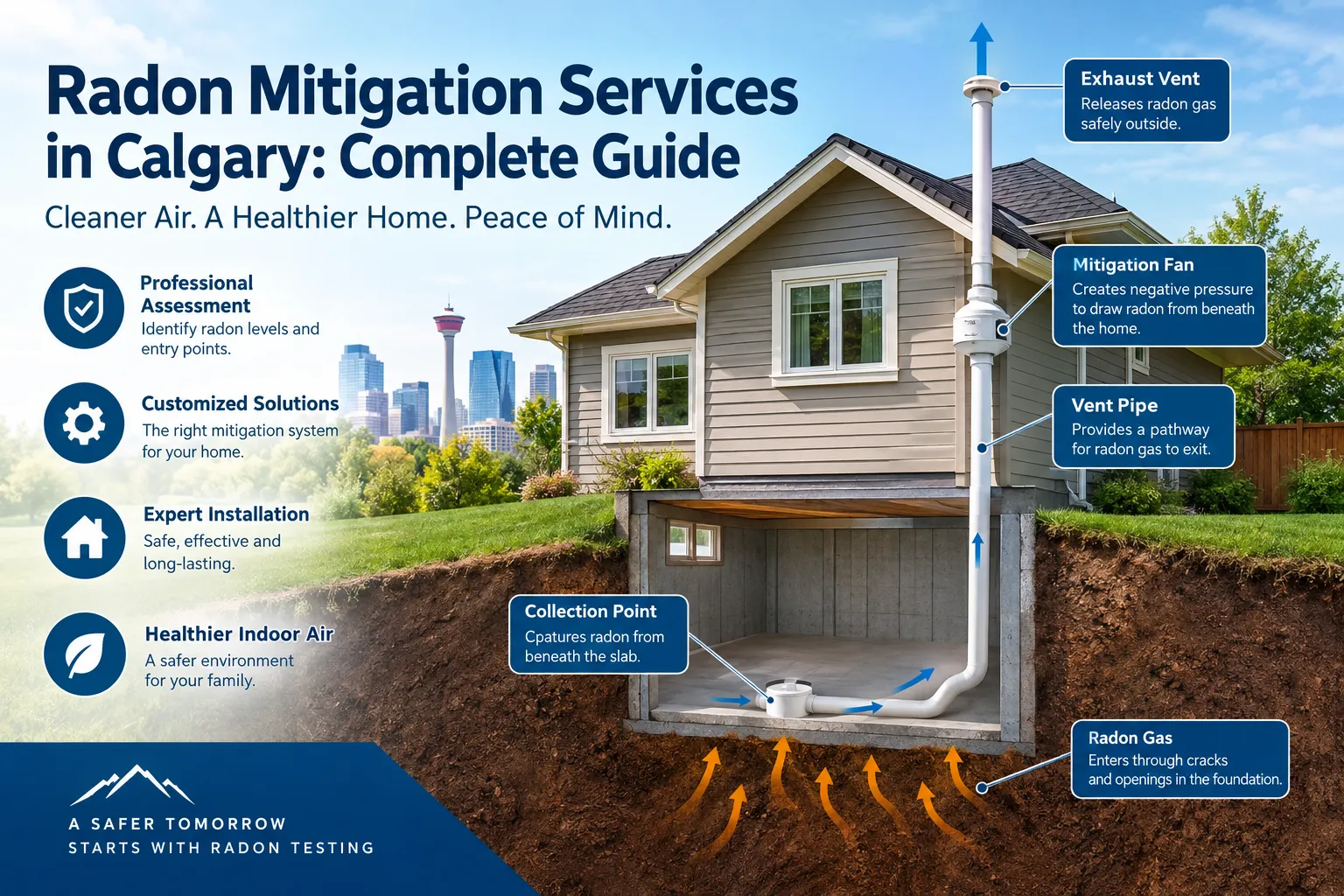
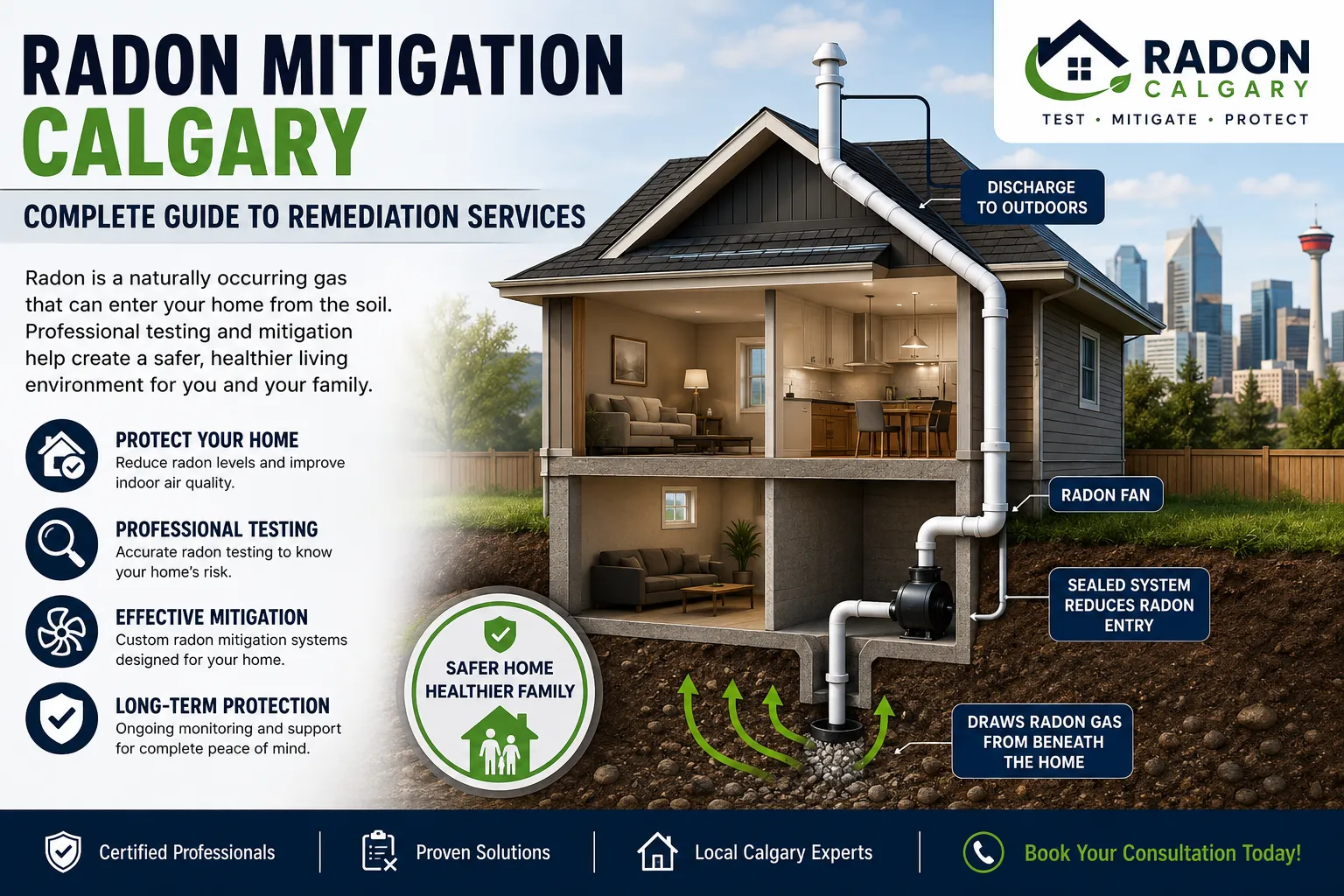
A typical active reduction system may use a fan to draw soil gas from beneath the building and exhaust it outside through a dedicated vent.
Common Components
A system may include:
- A suction point beneath the slab
- Vent piping
- A radon fan
- An outdoor exhaust point
- Monitoring or warning components
The design should be appropriate for the building rather than based on a one-size-fits-all approach.
Common Radon Reduction Methods
Different properties may require different strategies. A professional may recommend one or more approaches after evaluating the building.
Sub-Slab Depressurization
This is commonly used in properties with concrete basement slabs. A suction point is created beneath the slab, allowing soil gas to be collected and directed outdoors.
Crawl-Space Solutions
Homes with crawl spaces may require a different approach. Depending on construction, the crawl space can be sealed or connected to an appropriate ventilation and collection system.
Sealing Selected Openings
Cracks and gaps can sometimes be sealed as part of a broader strategy. However, sealing alone should not automatically be considered a complete solution because soil gas may continue finding other pathways into the building.
Professional Mitigation Services
When homeowners need a comprehensive approach, Radon mitigation services in Calgary can involve property assessment, system design, installation, and follow-up testing. A qualified professional can evaluate the building's foundation and identify suitable locations for collecting and exhausting soil gas.
Professional work may include:
- Reviewing existing test results
- Inspecting foundation conditions
- Identifying potential entry pathways
- Selecting appropriate suction locations
- Installing vent piping
- Installing a suitable fan
- Checking system operation
- Recommending follow-up testing
This approach helps ensure that the reduction system is matched to the actual characteristics of the property.
What Can Affect Radon Levels?
Indoor concentrations can change because of several environmental and structural factors.
These may include:
- Seasonal weather
- Soil conditions
- Foundation design
- Building pressure
- Ventilation
- Construction changes
- Cracks or new openings
- Drainage systems
For this reason, homeowners should not assume that one test performed years ago will always represent current conditions.
When Should a Home Be Retested?
Retesting can be useful in several situations. Homeowners may want to consider another measurement when:
- A mitigation system has been installed
- Major renovations have been completed
- Basement living areas have been added
- Foundation work has been performed
- A building's ventilation has changed
- Several years have passed since the previous test
Follow-up testing is particularly useful after remediation because it can provide evidence about how effectively the system is reducing indoor concentrations.
Maintaining a Radon Reduction System
A reduction system contains mechanical and structural components that should be monitored over time. Regular attention can help homeowners identify potential problems before they become more significant.
Homeowners can periodically check:
- Whether the fan is operating
- Whether unusual noises are present
- The condition of visible vent piping
- System indicators or alarms
- Areas around the foundation
- Any changes following renovations
If a fan stops working or visible components become damaged, professional assistance may be appropriate.
Choosing a Qualified Professional
Choosing an experienced provider is important when dealing with a building-related environmental issue. Homeowners should look for professionals who can explain the assessment process and provide clear information about the proposed system.
Before hiring a company, consider asking:
- What testing methods are used?
- How will the property be assessed?
- What type of system is being recommended?
- Why is that system suitable for the building?
- Will follow-up testing be recommended?
- What maintenance may be required?
Clear answers can help homeowners understand what they are paying for and what results they should expect.
Long-Term Benefits of Proper Mitigation
A properly designed reduction system can provide homeowners with greater confidence about their indoor environment. Once installed, the system can continuously collect soil gas and direct it outdoors instead of allowing it to accumulate inside the building.
The long-term process should include:
- Monitoring the system
- Keeping records of test results
- Maintaining mechanical components
- Retesting when appropriate
- Checking the system after major renovations
These simple habits can help homeowners remain informed about their property's condition.
Professional Radon Mitigation Services
Reliable Radon mitigation services should focus on more than simply installing equipment. A complete approach considers testing, property conditions, system design, installation, and follow-up.
Professionals can help homeowners understand their options and determine which reduction method is appropriate for the property's foundation and construction. Proper installation and post-installation testing can also help confirm that the system is working as intended.
Final Verdict
Taking the right steps to understand and manage radon can give Calgary homeowners greater confidence in their indoor environment. Professional testing, proper assessment, and an appropriately designed reduction system can help address elevated levels effectively.
For homeowners in Calgary looking for local assistance, a visit to 265 21 Ave NE, Calgary, AB T2E 1S5 provides a convenient starting point for discussing testing, assessment, and suitable solutions for their property. Acting early and following up with proper testing can help maintain a safer and healthier home environment.



















Sign in to leave a comment.