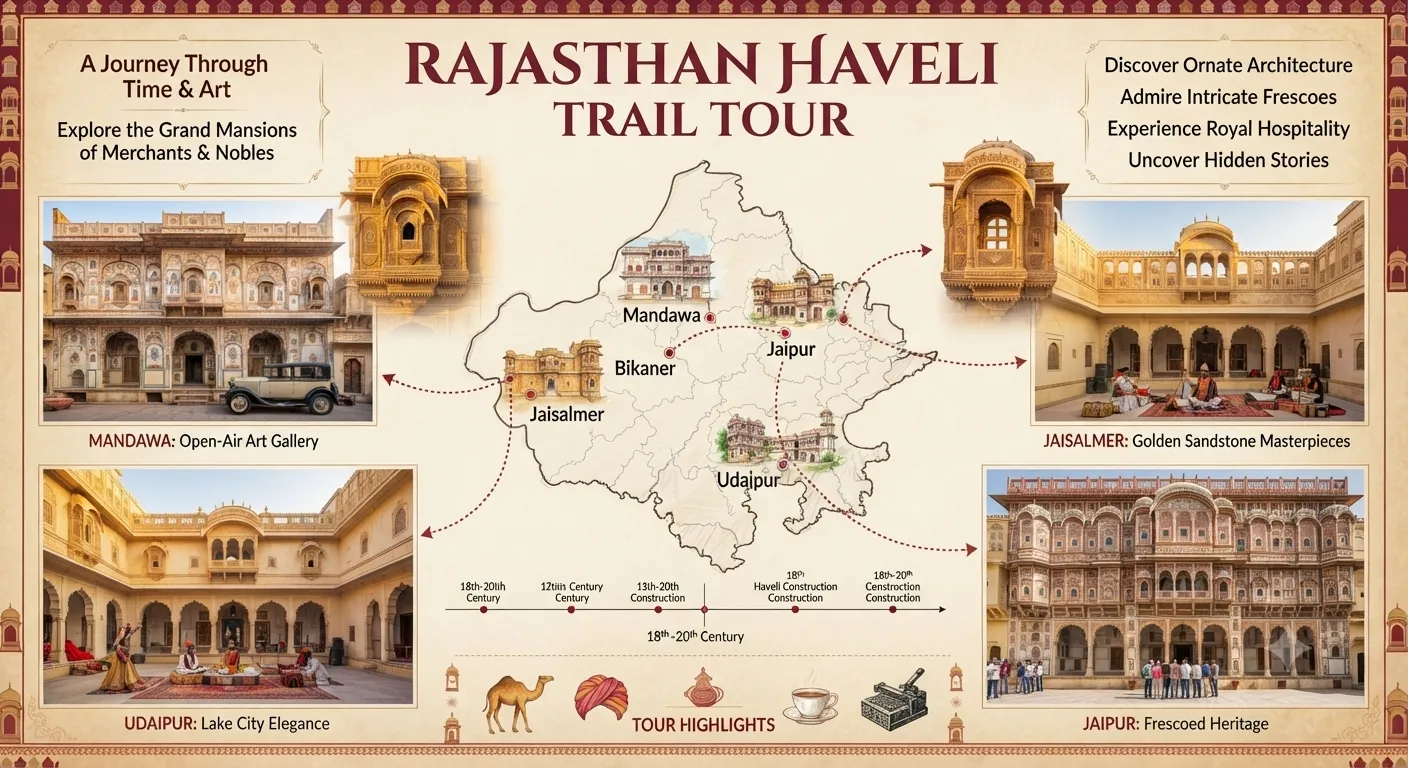

Rajasthan is known for its grand forts, colorful markets, desert landscapes, and royal palaces. However, another important part of its heritage can be found in its havelis.
These traditional mansions reflect the wealth, artistic interests, and lifestyles of Rajasthan's merchant families and former ruling communities. Many are decorated with detailed frescoes, carved balconies, courtyards, painted ceilings, and decorative entrances.
A Rajasthan haveli trail offers a different way to explore the state. Instead of focusing only on major forts and palaces, travelers can discover smaller towns where historic buildings remain closely connected with everyday life.
Why should you choose Rajasthan Haveli tour?
A haveli is a traditional large residence, often built around one or more courtyards. In Rajasthan, many havelis were constructed by wealthy merchants and influential families.
Their design was influenced by the climate, local traditions, and social customs. Thick walls helped protect the interiors from extreme temperatures, while courtyards allowed natural light and ventilation.
Many Rajasthan havelis feature:
- Carved stone or wooden entrances
- Jharokhas and balconies
- Decorative courtyards
- Wall paintings and frescoes
- Ornamental doors and windows
- Traditional kitchens and living spaces
- Intricate ceilings and arches
The architecture can vary considerably from one town to another.

Why Is Shekhawati Important for Haveli Architecture?
The Shekhawati region in northeastern Rajasthan is one of the best-known areas for historic havelis.
Towns such as Mandawa, Nawalgarh, Fatehpur, and Dundlod are particularly known for their painted mansions. Many buildings contain colorful frescoes depicting religious stories, animals, historical events, royal figures, and scenes from everyday life.
This makes Shekhawati different from destinations where the main attraction is a single fort or palace. Here, the architecture is spread throughout streets and neighborhoods.
Walking through these towns can feel like exploring an open-air art gallery.
Nawalgarh: A Town of Painted Havelis
Nawalgarh is one of the important stops for travelers interested in Shekhawati's architecture.
The town has numerous historic buildings decorated with frescoes and traditional artwork. Some havelis have been restored, while others show signs of age.
The Podar Haveli Museum is one of the places travelers can explore to understand the artistic traditions of the region.
When walking around Nawalgarh, look beyond the main attractions. Some of the most interesting details can be found on doorways, balconies, walls, and small courtyards.
Mandawa: Heritage in the Narrow Streets
Mandawa is another well-known destination on the Rajasthan haveli trail.
The town developed as an important trading center and became known for its merchant mansions. Several havelis contain elaborate paintings covering both exterior and interior walls.
A walk through Mandawa allows visitors to appreciate these buildings at a slower pace. Rather than rushing from one attraction to another, it is worth spending time observing the details of the frescoes and architecture.
Mandawa Fort is another significant heritage attraction in the town.
Bikaner and Its Historic Mansions
Bikaner is better known for its fort, desert setting, and traditional food, but its old neighborhoods also contain impressive havelis.
The Rampuria Havelis are among the city's best-known examples. Built by wealthy merchant families, these buildings combine detailed craftsmanship with elements influenced by different architectural traditions.
Bikaner also provides an opportunity to see how merchant architecture developed alongside the city's role as an important trading center.
Travelers planning a wider Rajasthan itinerary can also explore other destinations covered in our Rajasthan tourist places guide.
Jodhpur: Havelis in the Blue City
Jodhpur is famous for Mehrangarh Fort and its blue-painted old city, but the city's heritage is not limited to these landmarks.
Historic neighborhoods contain traditional homes, merchant residences, stepwells, temples, and smaller architectural details that reveal the city's past.
The old city is particularly interesting for travelers who enjoy photography and architecture. Narrow lanes, colorful doors, carved facades, and traditional homes create a different perspective of Jodhpur beyond its major monuments.
What Makes a Haveli Stay Different?
Some historic havelis have been restored and converted into heritage hotels.
Staying in one can provide a more immersive experience than staying in a modern hotel. Many retain original courtyards, decorative features, antique furniture, and traditional architectural elements.
However, travelers should remember that heritage accommodation can vary considerably.
Some properties focus strongly on preserving their historic character, while others have been extensively renovated for modern comfort.
Before booking, check:
- Room facilities
- Air conditioning
- Bathroom standards
- Accessibility
- Dining options
- Location
- Restoration quality
- Reviews from recent guests
A heritage hotel is best chosen for its combination of history and comfort, rather than appearance alone.
Best Time to Explore Rajasthan's Havelis
The cooler months from October to March are generally more comfortable for exploring Rajasthan.
November through February can be particularly pleasant for walking through heritage towns during the daytime.
Summer temperatures can become very high, especially in western Rajasthan. If traveling between April and June, plan outdoor walks for the morning or late afternoon and stay hydrated.
The monsoon months can bring some relief from the heat, although weather conditions vary across the state.
If you are planning a broader Rajasthan itinerary, our Rajasthan travel options can also help you compare different regions and travel styles.
Tips for Exploring a Rajasthan Haveli Trail
A haveli trail is best experienced slowly. Many historic buildings are located within busy residential areas, so travelers should be respectful of local residents.
A few simple tips can make the experience better:
Take your time:
Architectural details are easy to miss when walking too quickly.
Hire a local guide:
A knowledgeable guide can explain the stories behind frescoes, families, trading communities, and architectural features.
Ask before taking photographs:
Some havelis are privately owned or still used as residences.
Respect the buildings:
Avoid touching old paintings, walls, carvings, and decorative surfaces.
Explore beyond famous towns:
Mandawa and Nawalgarh are popular, but smaller settlements can also contain interesting heritage buildings.
Wear comfortable footwear:
Exploring old towns often involves considerable walking on uneven streets.
Rajasthan Havelis: More Than Beautiful Buildings
The havelis of Rajasthan tell stories about trade, family life, art, architecture, and changing communities.
In places such as Shekhawati, the buildings also show how prosperous merchant families invested in architecture and decorative art. Their frescoes provide glimpses into both traditional subjects and the changing influences of the outside world.
This makes a haveli trail valuable for travelers who want to understand Rajasthan beyond its famous forts and palaces.
For those interested in combining historic towns, heritage architecture, and traditional accommodation, the Rajasthan Haveli Trail offers one way to experience these elements across several destinations.
Final Thoughts
Exploring Rajasthan's havelis is a slower and more detailed way to experience the state's heritage. The journey can take you from the painted towns of Shekhawati to the historic streets of Bikaner and Jodhpur.
Rather than treating havelis simply as old buildings, look at the stories behind their paintings, courtyards, balconies, and facades. These details reveal how Rajasthan's architecture developed alongside its culture and communities.
For travelers interested in history, photography, architecture, and local culture, a Rajasthan haveli trail can add a distinctive dimension to a Rajasthan trip.
Frequently Asked Questions
What are havelis and why are they important in Rajasthan?
Havelis are traditional large residences, often built around courtyards, that reflect the wealth and lifestyles of Rajasthan's merchant families and former ruling communities. They are important as they showcase unique architectural styles, intricate frescoes, and the rich cultural history of the region.
What can I expect to see on a Rajasthan haveli trail?
On a Rajasthan haveli trail, you can expect to see historic mansions adorned with colorful frescoes, carved balconies, and intricate architectural details. The experience is enriched by exploring smaller towns like Mandawa and Nawalgarh, where these buildings are integrated into everyday life.
Why is Shekhawati considered a significant area for haveli architecture?
Shekhawati is renowned for its painted havelis, with towns like Mandawa and Nawalgarh showcasing vibrant frescoes that depict various themes, from religious stories to historical events. This region's unique architecture is spread throughout neighborhoods, creating an open-air art gallery experience for visitors.
What should I consider when booking a heritage hotel in a haveli?
When booking a heritage hotel in a haveli, consider the restoration quality, room facilities, accessibility, and dining options. It's important to read recent guest reviews to ensure a balance of historic charm and modern comfort.
What is the best time to visit Rajasthan for exploring havelis?
The best time to visit Rajasthan for exploring havelis is during the cooler months from October to March, with November through February being particularly pleasant for daytime walks. If visiting in the summer, plan outdoor activities for the cooler parts of the day.
How can I enhance my experience while exploring havelis?
To enhance your experience while exploring havelis, take your time to appreciate the intricate details, consider hiring a local guide for deeper insights, and be respectful of local residents. Also, wear comfortable footwear as the streets can be uneven.
Are all havelis open to the public for exploration?
Not all havelis are open to the public, as some are privately owned or still serve as residences. It's always best to check access beforehand and to ask for permission before taking photographs.























Sign in to leave a comment.