

The single most expensive thing in real estate sales is indecision. Not from lack of interest — from lack of clarity.
A buyer who is genuinely interested in a project but uncertain about one critical thing — the view, the layout, the natural light, the noise level from the road — will not commit. They will go home, think about it, sleep on it, visit three other projects for comparison, come back two weeks later with new questions, and by the time they are ready, the unit they wanted may be gone.
Developers and sales teams understand this intuitively. What they often underestimate is how much of that indecision is created by the presentation itself — not by the project.
A smart technology experience center is fundamentally a decision-acceleration tool. Not in a manipulative sense, but in the most honest sense possible: it removes uncertainty by showing buyers what they need to see to feel confident.

Why Decisions Take So Long
When a buyer leaves a sales visit undecided, something specific caused that. In most cases, it is one of these:
- They could not visualise the space accurately from the floor plan
- They were uncertain about the view or natural light
- They did not understand the relationship between the unit and the amenities
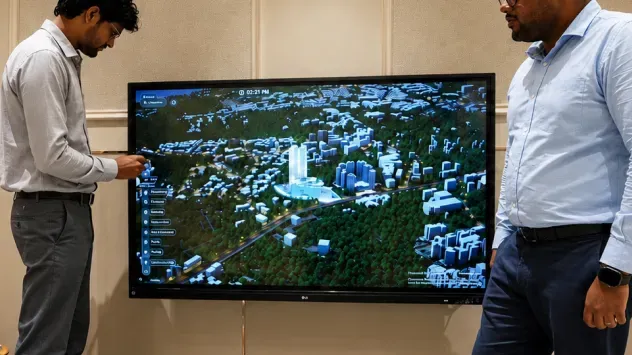
- They could not evaluate the neighbourhood's future development trajectory
- The presentation moved too fast for them to absorb key information
- They did not feel confident enough to commit without more information
Every single one of these friction points is solvable through the right experience center setup. And solving them during the visit — rather than during follow-up calls that buyers often do not return — is what drives faster decisions.

Runwal Raaya: How a ₹700 Crore Sales Launch Was Built on Buyer Confidence
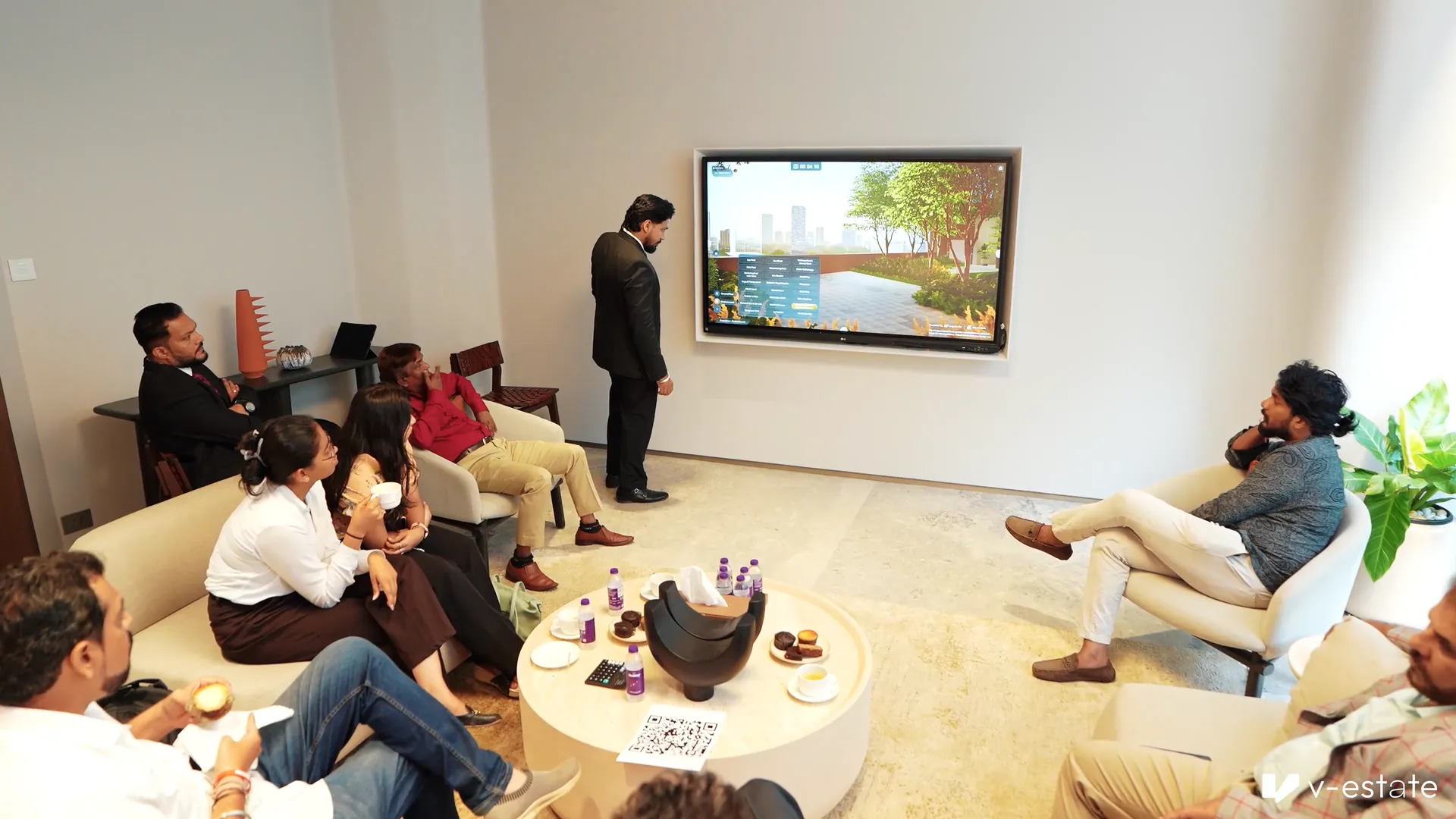
The Runwal Raaya experience centre in Worli is an instructive case. The project is ultra-luxury — an offset twin-tower development with panoramic views of the Bandra-Worli Sea Link, a bronze metallic façade, and a landscaped podium with over 50 amenities designed by a Singapore-based landscape firm. Price points at this level mean buyers are committing significant capital. The bar for conviction is correspondingly high.
The V-Estate setup at Runwal Raaya was designed specifically to answer the questions that hold buyers at this level back from committing:
"What will I actually see from my unit?"
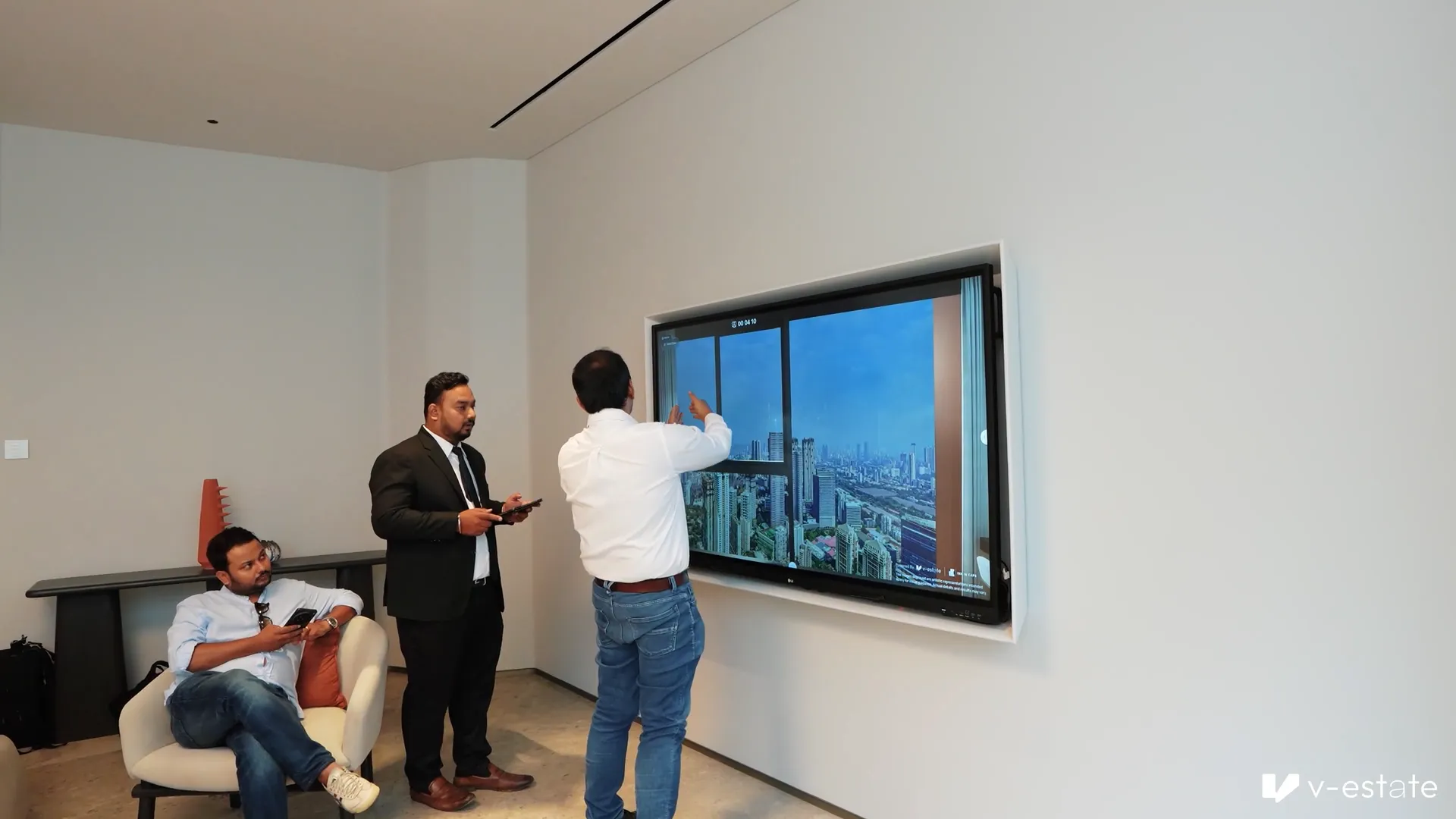
Answered through projection mapping that simulated views with coordinate-based accuracy. A buyer could see the Bandra-Worli Sea Link from the orientation of their specific apartment, at different times of day.
"How will the building actually look?"
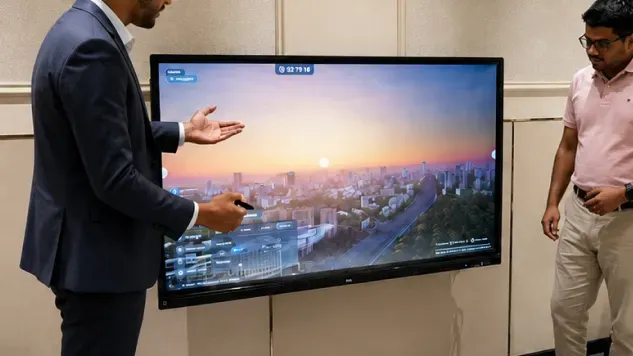
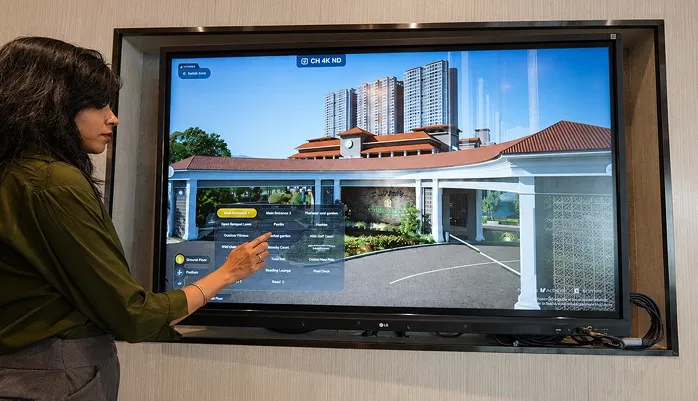
Answered through the 18 ft × 8 ft curved LED screen powered by Unreal Engine 5.4, delivering photorealistic renderings of the bronze façade with Lumen lighting. The material quality was visible at a level that made it credible, not aspirational.
"What are the amenities like? Will I actually use them?"
Answered through VR-style landscape walkthroughs that showed how the podium experience changes every 20 steps — from cascading water features to forest zones to butterfly gardens. Buyers did not have to imagine it. They walked through it.
"What am I actually buying — floor plan, or home?"
Answered through IoT-connected scale models where buyers could tap any amenity on an iPad and watch the corresponding section of the model light up. The relationship between a floor plan and a lived experience became tangible.
The outcome: ₹700 crore in inventory sold in the initial sales phase.

The Mechanics of Decision Acceleration
What V-Estate's real estate experience center technology does operationally is compress the decision timeline by front-loading the clarity that buyers would otherwise seek across multiple visits and follow-up conversations.
When every key question is answered during the first visit — through experience, not explanation — buyers leave with what they need to make a decision. The follow-up conversation becomes a logistics discussion, not an information delivery session.
This is how decision cycles that typically run three to six weeks get compressed to one to two. Not through pressure, but through confidence.
The Data Backs This Up
The relationship between visualization quality and sales cycle speed is documented across multiple V-Estate deployments. Developers using 3D solutions for real estate experience centers consistently report:
- Higher quality leads (buyers who visit are better informed and more seriously engaged)
- Shorter follow-up cycles (key objections are resolved during the visit)
- Better conversion rates per visit (more visitors leave with genuine conviction)
- Reduced marketing spend per conversion (fewer touch points needed to close)
These are not marginal improvements. For a project with 200 units, moving from a 3-week to a 1-week average decision cycle is a cash flow and inventory management advantage that has direct business value.
Stop managing indecision. Start removing it.
If your sales process involves multiple follow-up calls to answer questions that could have been answered during the visit, your experience center is not working hard enough for you.
V-Estate builds smart technology experience centers that are designed to create buyer confidence — on the first visit, every time.
Talk to the V-Estate team today and find out how much of your sales cycle you could reclaim.






















Sign in to leave a comment.