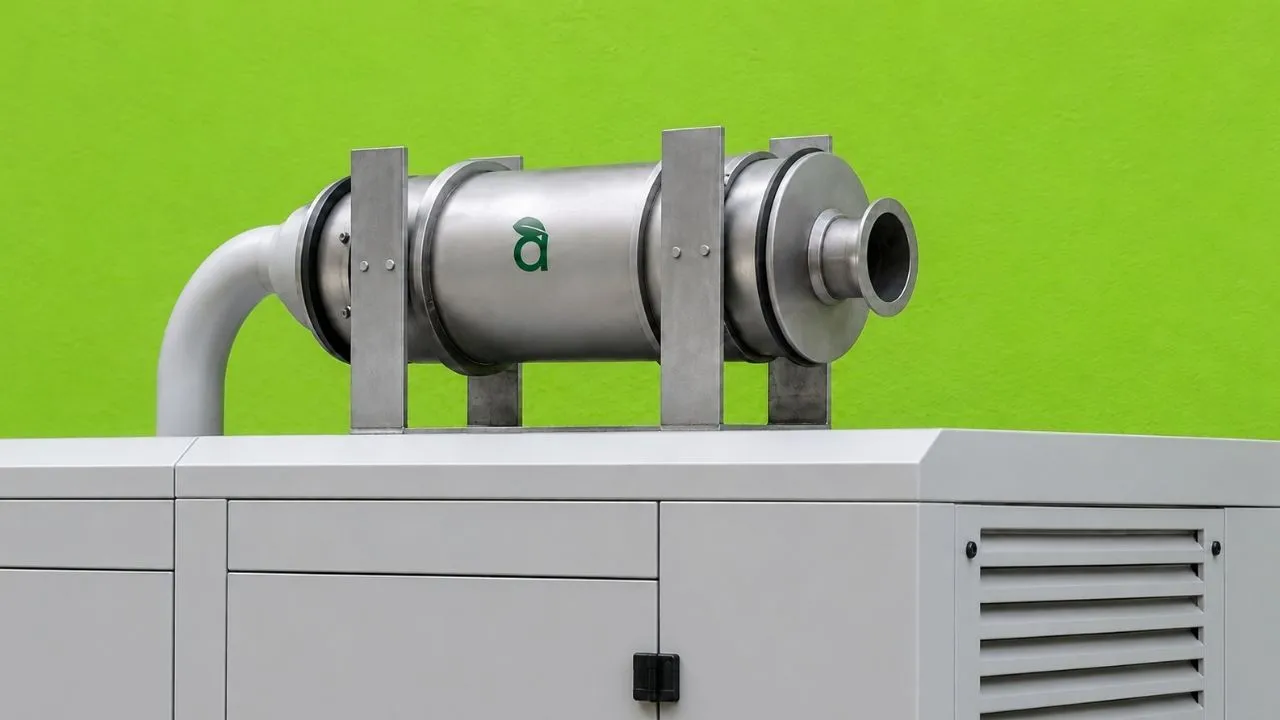

A nearby RECD manufacturer in Gurugram is valuable only when “near you” translates into dependable surveys, practical delivery planning, trained installation teams, and responsive after-sales service. A local phone number or Gurugram address does not necessarily mean that the company manufactures equipment locally or can support every part of the district.
For facility managers, contractors, housing societies, and industrial buyers, location should be evaluated as an operational advantage—not simply a search-engine result.

What “Near You” Should Mean
An RECD project includes more than moving equipment from a warehouse to a generator room. Depending on the site, the supplier may need to conduct measurements, prepare fabrication drawings, coordinate a shutdown, arrange lifting, install sensors, commission the unit, and return for scheduled maintenance.
A genuinely accessible company should be able to provide:
- A survey team for the buyer’s location
- Clear travel and visit charges
- Delivery to the actual installation site
- Engineers familiar with the supplied model
- Tools for installation and commissioning
- Spare parts or replacement components
- A defined complaint-escalation process
- Emergency support where contractually agreed
These capabilities should be confirmed in writing. Proximity becomes meaningful only when it reduces uncertainty and response time.
Understanding Gurugram’s Service Areas
Gurugram contains several business and industrial clusters, each with different delivery conditions. Buyers should give suppliers their complete address, site type, access restrictions, and preferred working hours before requesting a delivery commitment.
Udyog Vihar and nearby industrial areas
Sites in and around Udyog Vihar may have established utility spaces but limited movement for large vehicles during busy hours. The supplier should check entry procedures, unloading space, and whether installation work must be coordinated with ongoing production.
Cyber City and central commercial districts
Corporate campuses and office complexes can impose strict security, safety, and contractor-access requirements. Equipment delivery may require advance gate passes, vehicle details, approved work permits, and restricted working hours.
A supplier should not assume that reaching the property gate means the delivery is complete.
Golf Course Road and Sohna Road
Commercial properties, hotels, hospitals, and residential developments along these corridors may have generators in basements or enclosed utility areas. The route from the unloading point to the DG room can be more challenging than the road journey to the building.
New Gurugram and Dwarka Expressway sectors
Developing sectors can include large residential communities, warehouses, institutional properties, and mixed-use projects. Site access, internal roads, and readiness for installation may vary significantly.
IMT Manesar and surrounding industrial belts
Industrial buyers may have multiple generators, production-linked shutdown windows, and detailed contractor-safety procedures. Delivery planning should account for plant entry, unloading equipment, storage, and phased installation.
Sohna and outer service locations
A company may describe these locations as part of its Gurugram coverage but apply additional travel or freight charges. Confirm whether surveys, installation, and warranty visits are included within the standard service area.
Coverage should always be verified against the exact PIN code and site address.
Ask Where the Product Actually Comes From
The sales company, manufacturer, warehouse, and installation contractor may operate from different locations.
Before ordering, ask:
- Where is the RECD manufactured?
- Where are internal components sourced?
- Where is the finished unit inspected?
- From which warehouse will it be dispatched?
- Who arranges transportation?
- Who accepts responsibility for transit damage?
- Is the installer employed by the manufacturer?
- Where are commonly required spares stored?
An RECD sold by a Gurugram representative may be manufactured elsewhere. That is not necessarily a disadvantage, but the supply chain must be transparent.
Buyers should also determine whether the device is manufactured against the order or held as standard inventory. Custom fabrication can affect the dispatch schedule.
Delivery Time Begins After Technical Approval
A seller may promise rapid delivery before receiving the engine details or visiting the site. Such a timeline should be treated as provisional.
A realistic schedule usually depends on several activities:
- Collection of DG and engine information
- Site measurement
- Confirmation of the proposed RECD model
- Approval of technical documents
- Finalisation of piping and supports
- Production or allocation of the equipment
- Quality inspection
- Packing and dispatch
- Site delivery
- Installation and commissioning
The supplier should distinguish among the dispatch date, arrival date, installation date, and commissioning date. These are separate milestones.
For example, equipment may arrive in five days but remain uninstalled for two weeks because structural work, access permission, or a generator shutdown has not been arranged.
Prepare the Site Before Dispatch
Many delivery delays are caused by site-readiness problems rather than transportation. Before authorising dispatch, confirm that the proposed installation area matches the supplier’s approved layout.
The buyer and manufacturer should review:
- Equipment dimensions and weight
- Entry-door and passage dimensions
- Lift capacity, where applicable
- Staircase or basement access
- Crane or hydra requirements
- Unloading location
- Temporary storage space
- Structural-support readiness
- Electrical supply for controls
- Safe working area
- DG shutdown availability
- Fire and contractor permits
If the RECD must be dismantled to pass through a narrow access route, the manufacturer should approve the method and explain whether reassembly affects product integrity or warranty.
Packaging and Transit Protection
An emission-control unit may contain sensitive filtration material, catalyst elements, sensors, and electronic components. Packaging should protect the system from impact, moisture, dust, and incorrect handling.
Ask the supplier to provide:
- Packing details
- Gross weight and dimensions
- Lifting-point information
- Handling instructions
- Dispatch photographs
- Transport-document references
- Insurance details, if applicable
- Procedure for reporting damage
The buyer should inspect the package before signing an unconditional delivery receipt. Dents, broken seals, loose components, damaged sensors, or wet packaging should be photographed and reported immediately.
Do not install visibly damaged equipment until the manufacturer confirms the appropriate action.
Read the Delivered-at-Site Price Carefully
When seeking a quote from an RECD supplier for DG sets, clarify what “delivery included” means. It may cover transport to the main gate but exclude unloading, movement to the DG room, lifting, installation, and return travel by technicians.
A complete commercial clarification should address:
- Freight to the exact address
- Transit insurance
- Toll and entry charges
- Unloading
- Crane, forklift, or hydra
- Movement within the property
- Technician travel
- Accommodation, if required
- Installation tools
- Return visits caused by an unready site
- Packaging disposal
- Taxes
The quotation should also state when risk transfers from the supplier to the buyer. This becomes important if damage occurs between unloading and installation.
Confirm Coverage After Installation
Delivery coverage and service coverage are not always the same. A supplier may ship anywhere in Gurugram but provide routine support only through chargeable third-party technicians.
Ask for a written service map or service statement covering:
- Standard survey radius
- Installation locations
- Preventive-maintenance coverage
- Chargeable travel zones
- Typical attendance time
- Emergency-call procedure
- Weekend or holiday availability
- Spare-part dispatch point
- Filter cleaning arrangements
- Escalation contacts
Avoid relying on a promise such as “our engineer is always nearby.” Request a measurable response period, while recognising that emergency attendance may depend on access, parts, and contractual terms.
Planning Delivery for Multiple DG Sets
Bulk projects require more coordination than simply shipping several identical units. Generators at different sites may have different engines, exhaust layouts, and maintenance windows.
A multi-location buyer should decide whether delivery will be:
- Completed at one central warehouse
- Sent directly to each site
- Divided into installation phases
- Scheduled according to DG shutdowns
- Released after successful completion of a pilot site
Serial numbers should be assigned to specific generators before dispatch. This prevents the wrong model or configuration from being fitted at a location.
For large projects, a pilot installation can reveal access, fabrication, monitoring, or maintenance issues before the remaining units are released.
Documentation Must Travel With the Equipment
The delivery should be supported by more than a tax invoice. Each unit should arrive with enough information to confirm its identity and intended application.
Relevant records can include:
- Packing list
- Delivery challan
- Manufacturer and model details
- Serial or batch number
- Technical datasheet
- Inspection record
- Supporting test or certification documents
- Installation instructions
- Handling precautions
- Warranty conditions
CPCB- or CAQM-related claims should be verified against the exact product supplied. Gurugram buyers can review current material from the Central Pollution Control Board, the Commission for Air Quality Management, and the Haryana State Pollution Control Board.
Delivery of an RECD does not by itself establish permission to operate a DG set. Current operating restrictions and applicable directions should be checked separately.
Conclusion
Buyers considering Aceget should ask for address-specific confirmation of survey, delivery, installation, and service coverage. The proposal should identify where the product will be dispatched from, who will install it, what logistics are included, and how quickly post-installation support can be arranged. The most useful nearby supplier is not necessarily the one with the shortest physical distance. It is the company that understands the entire route—from factory dispatch to the generator’s exhaust line—and accepts clear responsibility at every transfer point.
























Sign in to leave a comment.