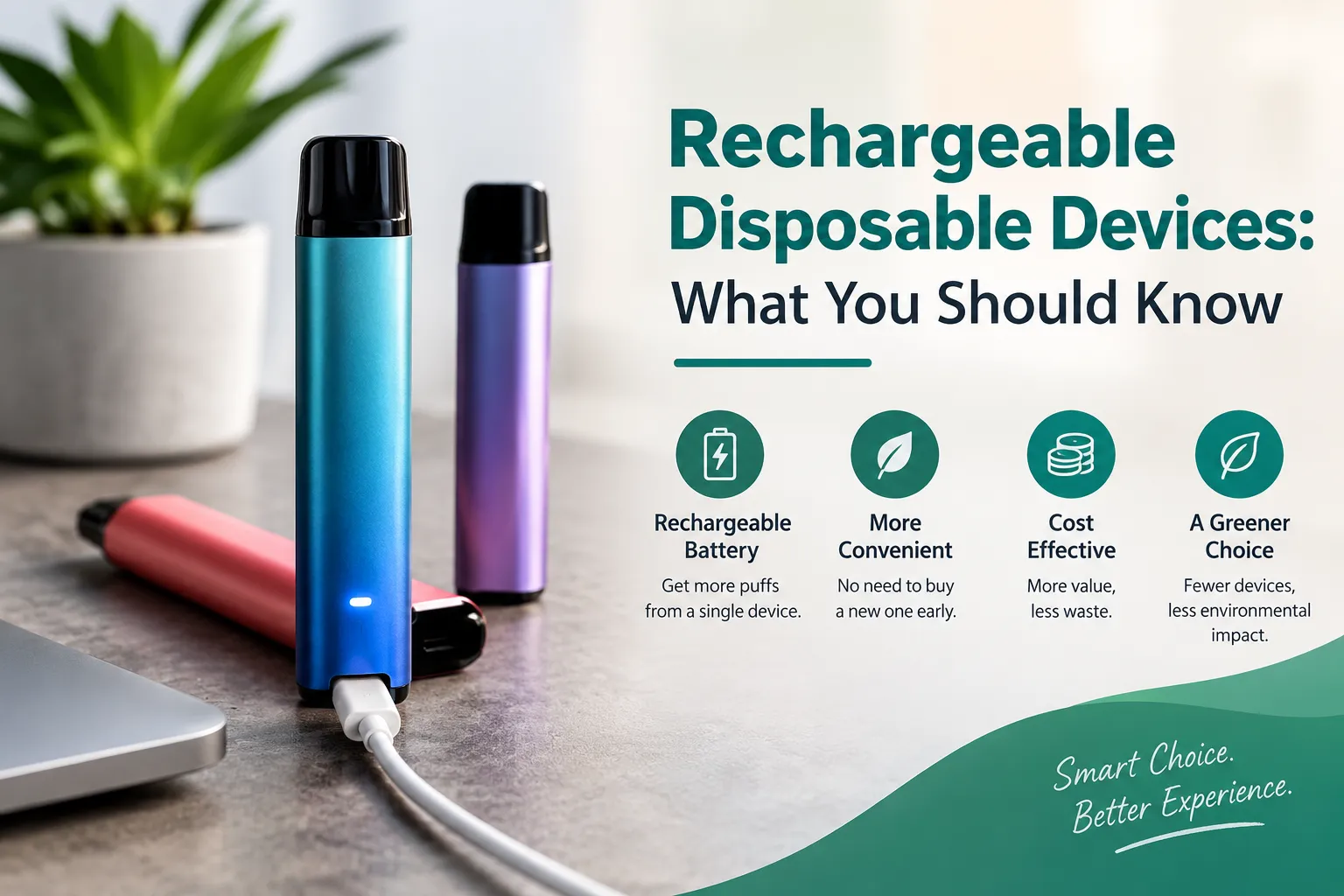

What should you understand before handling a rechargeable disposable vape device? The key is to know what “rechargeable” means, how to interpret the device’s label, and what precautions apply to its battery and contents. Rechargeability does not mean a device is reusable indefinitely, risk-free, or suitable for every user. Reading the manufacturer’s instructions and following local rules can help people make informed decisions and handle these products responsibly.
Short Intro
Rechargeable disposable devices combine a built-in battery with a product designed for limited use. Some models allow the battery to be recharged while the device’s liquid supply remains finite. Check the label and manufacturer instructions for charging details, warnings, and disposal guidance. Avoid damaged devices, use only the specified charging equipment, and keep nicotine-containing products away from children and pets.
1. What “Rechargeable Disposable” Means
A rechargeable disposable device is designed to be used for a limited period but includes a battery that can be charged. This differs from a fully non-rechargeable disposable, which is intended to be discarded when its battery runs out.
The term “disposable” generally refers to the product’s limited-use design, not necessarily to whether its battery can be recharged. A rechargeable model may still have a finite amount of e-liquid or another consumable component. Once that supply is depleted, charging the battery does not restore the device’s contents.
Product designs vary, so the label and manufacturer’s instructions are more reliable than assumptions based on the word “rechargeable.”
2. Understand the Device Label
A product label can provide useful information about its contents, battery, and intended handling. Depending on the model and local labeling rules, it may list ingredients, nicotine concentration, warnings, manufacturer details, or charging specifications.
Read the label carefully and look for:
- Nicotine information: Check whether the product contains nicotine and how its concentration is expressed.
- Battery and charging details: Follow the specified charging method and any stated limits.
- Warnings: Review health, age, storage, and handling warnings.
- Manufacturer information: Use the supplied contact details or official instructions if the label is unclear.
Do not assume that a high puff-count claim, a particular flavor name, or a “rechargeable” description tells you everything about the product’s contents or risks.
3. Charging Requires Care
Rechargeable devices contain batteries that can be damaged by improper charging, impact, or exposure to heat and moisture. Follow the manufacturer’s instructions and use only compatible charging equipment.
Do not charge a device that is swollen, leaking, unusually hot, visibly damaged, or giving off an unusual odor. Stop using it if it behaves unexpectedly. Avoid leaving a charging device unattended, and do not charge it near flammable materials or in places where it may be exposed to extreme temperatures.
If the manufacturer provides a specific charging time or cable requirement, follow that guidance rather than relying on general advice for other electronics.
4. Rechargeability Does Not Remove Health Risks
Rechargeable disposable vapes may contain nicotine, which is addictive. The health effects of vaping are not fully understood, and aerosol can contain substances that may be harmful. A rechargeable battery changes how the device is powered; it does not make the contents safer.
People who do not use tobacco or nicotine should not start vaping. Nicotine products should be kept away from children and pets, and anyone who is pregnant or has questions about nicotine exposure should seek guidance from a qualified healthcare professional.
5. Know When a Device Should No Longer Be Used
A device should not be used if it is damaged, leaking, overheating, or showing signs of battery failure. Do not try to open, modify, refill, or repair a disposable product unless the manufacturer explicitly provides safe instructions for that model.
A device may also reach the end of its intended use when its liquid supply is depleted, even if the battery still holds a charge. Continuing to use a device in a condition the manufacturer warns against can create additional risks.
6. Dispose of Devices Responsibly
Rechargeable disposable devices contain electronic components and batteries, so they should not automatically be treated as ordinary household waste. Improper disposal can create fire risks and may allow battery materials or product residues to enter the environment.
Check local waste-management guidance for options such as battery collection points, electronic-waste programs, or designated disposal facilities. Do not burn, crush, puncture, or place a damaged battery in regular recycling unless local authorities specifically instruct you to do so.
If the device is leaking or damaged, avoid direct contact with the contents and follow local guidance for safe handling and disposal.
7. Compare Product Information Carefully
When reading about rechargeable disposable vapes, focus on verifiable product details rather than marketing language alone. Compare the instructions, ingredient and nicotine disclosures, battery information, and warnings supplied by the manufacturer. Be cautious of broad claims that are not explained or supported by clear product information.
If details are missing, inconsistent, or difficult to understand, do not guess. Consult the manufacturer’s official documentation or a relevant local product-safety authority.
Final Thoughts
Rechargeable disposable devices can differ in their battery design, labeling, and instructions, but they share important considerations: they are limited-use products, charging must be handled carefully, and nicotine-containing versions carry health risks. Understanding the label, following manufacturer guidance, and using appropriate disposal channels can help reduce avoidable handling and environmental hazards.
FAQs
1. Does rechargeable mean a disposable device can be used indefinitely?
No. Recharging may restore battery power, but the device’s liquid supply and intended lifespan remain limited.
2. Can any USB cable be used to charge a rechargeable disposable device?
Not necessarily. Follow the manufacturer’s instructions and use compatible charging equipment.
3. What should I do if a device becomes unusually hot or damaged?
Stop using or charging it. Avoid handling leaking contents and follow the manufacturer’s or local safety authority’s guidance for disposal.
4. Can rechargeable disposable devices go in regular household waste?
Disposal rules vary by location. Because these devices contain batteries and electronic components, check local guidance for appropriate collection or e-waste disposal.


























Sign in to leave a comment.