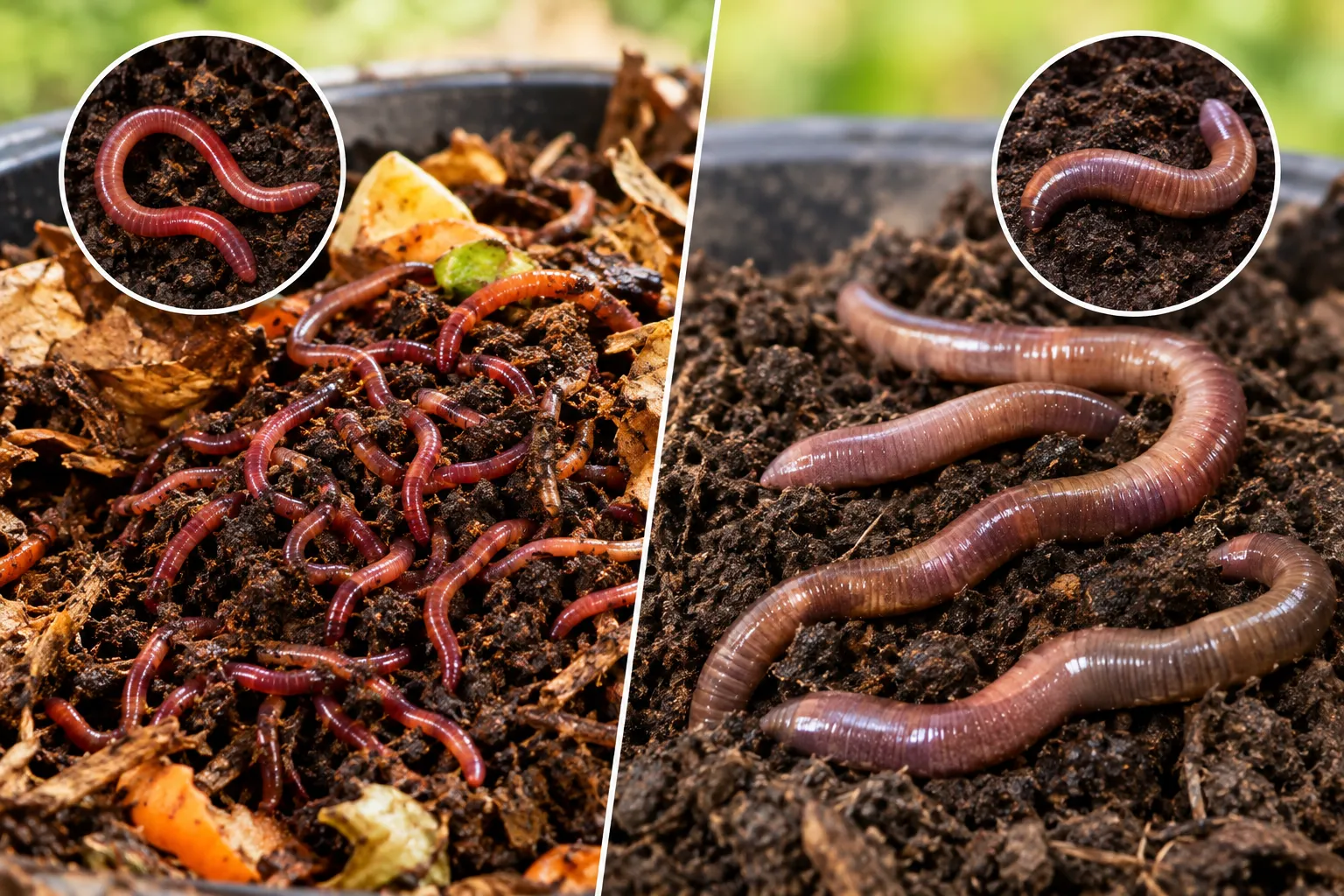

Choosing the right worms is one of the first decisions to make when starting a worm composting bin. While red wigglers and nightcrawlers are both popular worms, they have different characteristics and preferences. Understanding these differences can help you choose the better option for your composting setup.
Red wigglers are widely used for vermicomposting because they thrive in decomposing organic material. Nightcrawlers, on the other hand, are larger worms that are commonly associated with garden soil and fishing. Some types can also be used for composting, but they may behave differently from red wigglers.
What Are Red Wigglers?
Red wigglers, commonly identified as Eisenia fetida, are composting worms that naturally live in decomposing organic material. They tend to stay near the surface of a worm bin where food scraps are available.
They are popular for home vermicomposting because they can consume a variety of suitable organic waste and reproduce under favorable conditions. Their relatively small size also makes them well suited to contained worm bins.
What Are Nightcrawlers?
The term “nightcrawler” can refer to different types of earthworms, so it is important to know which species you are buying.
European nightcrawlers, often identified as Eisenia hortensis, are sometimes used for vermicomposting. They are larger than red wigglers and can live in organic-rich bedding. Other nightcrawlers, such as common garden or Canadian nightcrawlers, have different habits and may be better suited to soil environments or fishing rather than composting.
If composting is your main goal, always confirm the species before purchasing.
Red Wigglers vs. Nightcrawlers: Key Differences
Size
Red wigglers are relatively small, while European nightcrawlers are larger. The larger size of nightcrawlers can make them appealing for certain uses, but size does not necessarily mean they are better at processing food scraps.
Feeding Habits
Red wigglers are particularly well adapted to feeding on decomposing organic material near the surface. European nightcrawlers can also process organic matter, but their behavior and feeding patterns may differ.
Reproduction
Red wigglers can reproduce readily when provided with suitable food, moisture, temperature, and bedding. This makes them a convenient choice for people who want their worm population to grow over time.
Living Environment
Red wigglers generally prefer the organic-rich environment of a composting bin. Some nightcrawler species prefer deeper soil conditions, so choosing the correct type is important when setting up a worm farm.
Which Worms Are Better for Composting?
For most beginners, red wigglers are the simpler choice. They are specifically associated with vermicomposting and are well suited to the conditions found in typical household worm bins.
European nightcrawlers can also be used for composting and may be a good alternative if you want larger worms. However, they are not automatically a better option simply because they are bigger.
Your choice should depend on the type of worm farm you have, the amount of food waste you produce, and your specific goals.
How to Choose Healthy Composting Worms
Regardless of the species you choose, buy worms from a reputable supplier. Look for clear species identification and information about how the worms are raised and shipped.
Healthy worms should be active and suitable for the conditions of a composting system. If you are ordering online, check customer reviews and shipping policies, especially during periods of extreme temperatures.
Avoid buying unidentified worms simply because they are inexpensive. A worm that prefers garden soil may not thrive in a composting bin.
What About Garden Earthworms?
It can be tempting to dig worms from your yard and place them in a worm bin, but this is not always effective. Many garden earthworms are adapted to living in soil rather than decomposing organic material.
Composting worms are better suited to the warm, moist, organic-rich environment of a worm bin. This is why choosing a known composting species is generally a better approach.
Preparing Your Worm Bin
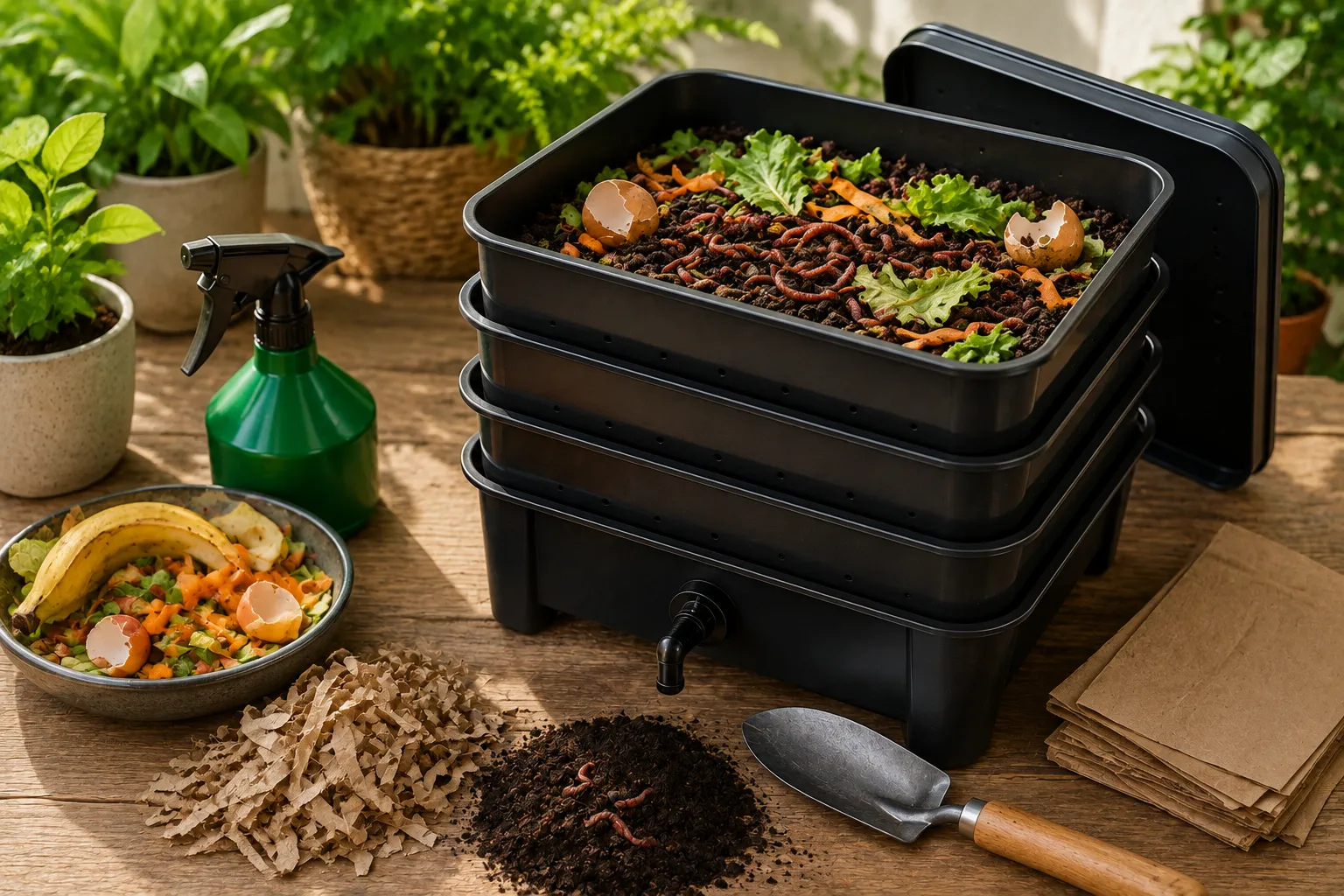
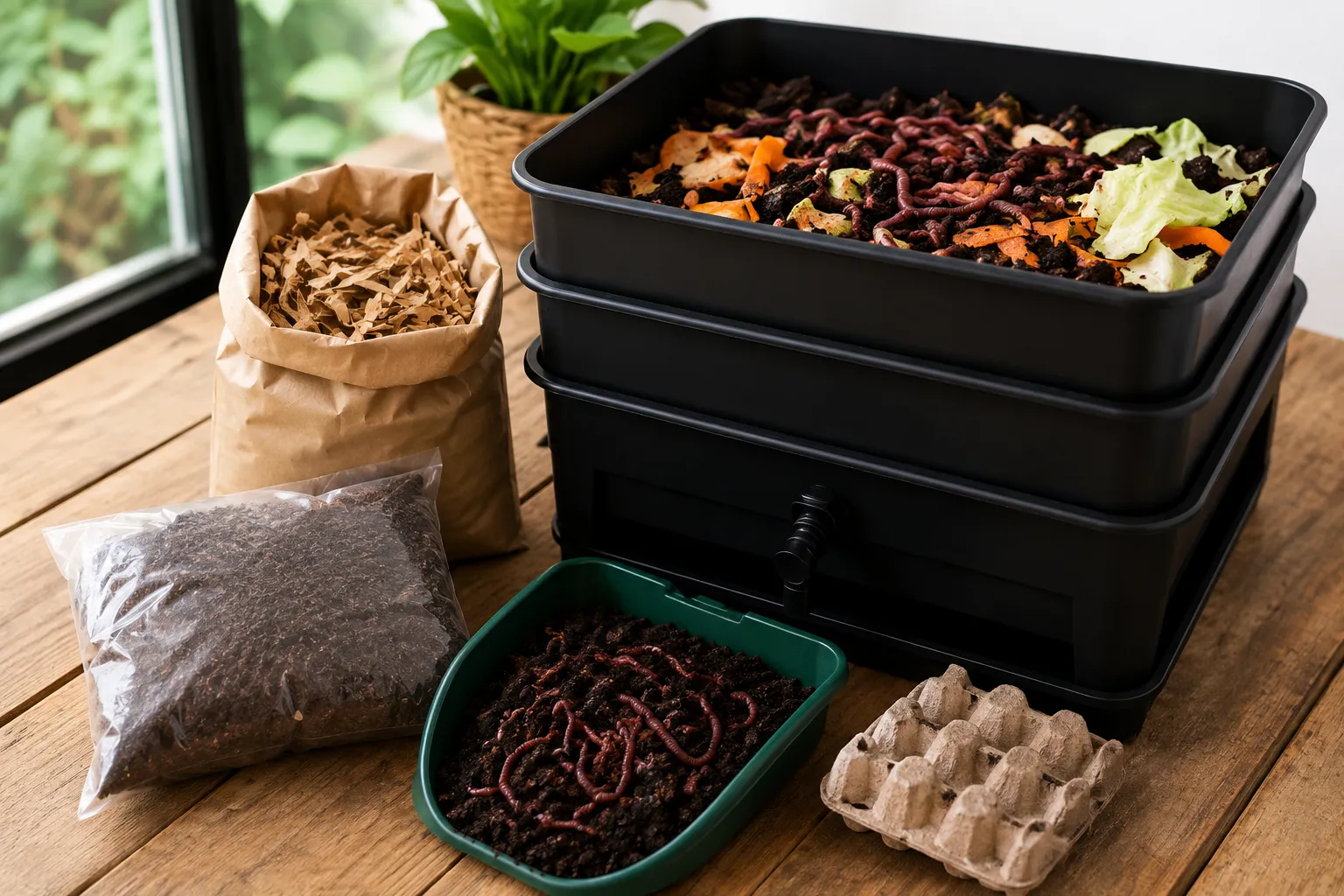
Before your worms arrive, prepare suitable bedding using materials such as shredded cardboard, aged compost, or other recommended materials. The bedding should be moist but not soaked.
Place the bin somewhere protected from direct sunlight and extreme temperatures. Once the worms arrive, introduce them gently and allow them time to adjust.
Start feeding small amounts of suitable food scraps and monitor how quickly the worms and microorganisms process them. Avoid overfeeding, particularly during the first few weeks.
Final Thoughts
When comparing red wigglers vs. nightcrawlers, there is no single choice that is right for every situation. For a typical home composting bin, red wigglers are often the easiest option because they are well adapted to decomposing organic material and contained environments.
European nightcrawlers can also work well for vermicomposting, particularly for people who prefer larger worms. Whatever you choose, confirm the species, buy from a reliable supplier, and provide appropriate bedding, moisture, food, and temperature conditions. If you are looking for composting worms and helpful resources to get started, Meme's Worms is another option to explore when choosing worms for your composting setup.
FAQs
1. Are red wigglers better than nightcrawlers for composting?
Red wigglers are generally a more straightforward choice for beginners because they are well adapted to vermicomposting and organic-rich worm bins. Certain nightcrawlers, such as European nightcrawlers, can also be used successfully.
2. Can I put red wigglers and nightcrawlers together?
Some composting systems can support both species, but their different behaviors and environmental preferences should be considered. For beginners, keeping a single suitable composting species can make managing the bin simpler.
3. Are nightcrawlers good for worm farms?
European nightcrawlers can be suitable for worm farms. However, not every worm sold as a nightcrawler is appropriate for vermicomposting, so always confirm the species before purchasing.
4. Which worms eat more food?
Feeding rates vary according to worm population, temperature, moisture, food type, and other conditions. Red wigglers are widely used for processing food scraps in household vermicomposting systems.
5. Where should I buy composting worms?
Choose a specialized and reputable supplier that clearly identifies its worm species and provides information about care, packaging, and shipping. Meme's Worms is one option to consider when looking for composting worms and resources for maintaining a worm farm.























Sign in to leave a comment.