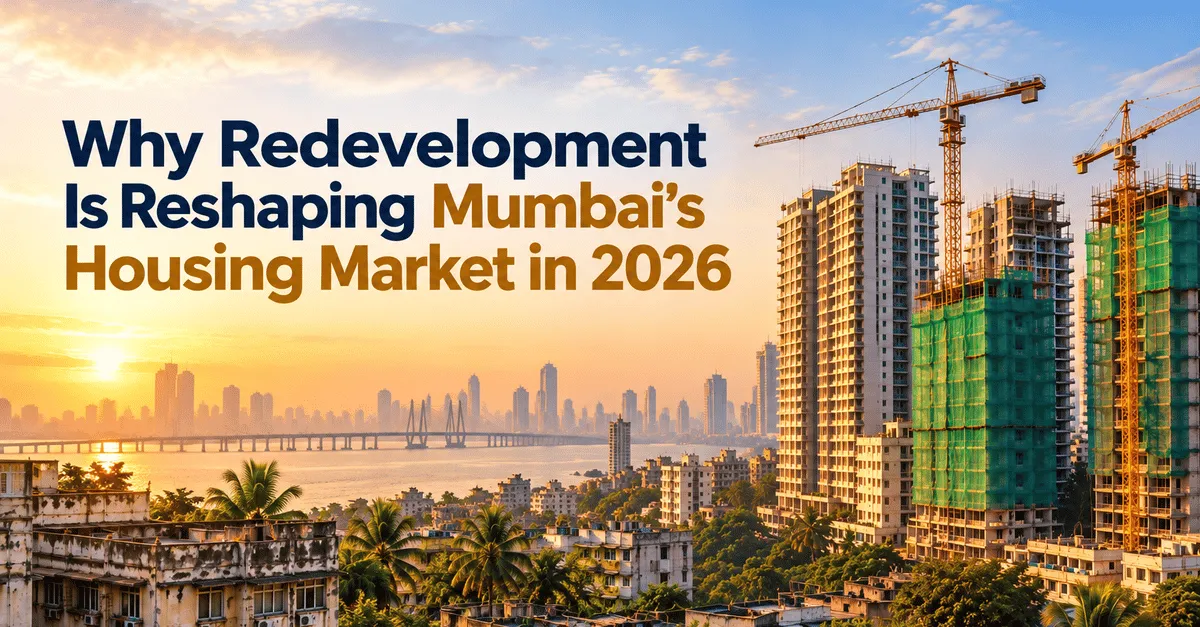

Mumbai’s skyline is changing as older residential buildings make way for redeveloped housing. Across the city, construction cranes and safety nets have become familiar sights. Behind this change is a practical challenge: Mumbai needs to make better use of its existing urban land while improving the quality and safety of residential buildings.
Redevelopment has become an important part of the city’s housing landscape. With limited land available for new construction in established neighbourhoods, replacing ageing buildings offers a way to create modern homes without expanding the city’s boundaries.
Why Mumbai’s Older Buildings Need Redevelopment
Many residential buildings in Mumbai were constructed decades ago. While some remain in reasonable condition, others face recurring maintenance problems, ageing plumbing, limited parking and the absence of lifts. Monsoon weather can add to the burden of maintaining older structures.
For residents, these issues can affect everyday comfort and raise concerns about long-term building maintenance. In some cases, repeated repairs may no longer offer a practical long-term solution.
Redevelopment provides an opportunity to replace ageing structures with buildings designed around contemporary residential needs. Depending on the project, new buildings may include lifts, planned parking, improved common areas and updated safety systems.
However, the facilities available in each redevelopment project differ. Homebuyers and existing residents should review the specific plans rather than assume that every new building offers the same features.
The Role of Land Scarcity in Mumbai’s Housing Market
Land availability is a major consideration in Mumbai’s real estate market. Established neighbourhoods already have residential buildings, roads, shops and public infrastructure, leaving limited space for entirely new developments.
Redevelopment allows existing land to be used differently. Instead of building on a new site, a developer works with an existing property and undertakes a project to replace or substantially renew the building.
The value of the underlying land can influence the feasibility of such projects. Location, property conditions, development potential and the interests of existing residents all play a role in determining whether redevelopment can proceed.
The process is not automatically straightforward. Residents, housing societies and developers need to understand the proposed terms, project timeline and responsibilities before making decisions.
How Redevelopment Can Change Everyday Living
A well-planned redevelopment project can improve the practical experience of living in a residential building. Modern lifts may make upper floors easier to access, while planned parking can help address a common challenge in dense urban neighbourhoods.
Building safety is another consideration. Depending on the approved design, a new development may incorporate fire detection systems, alarms, emergency exits and firefighting equipment. Buyers should confirm which facilities are actually included in the project.
Redevelopment can also offer an opportunity to rethink shared spaces and building circulation. The benefits, however, depend on the quality of planning, construction and long-term maintenance.
Developers such as Veena Developers are part of Mumbai’s residential development landscape. Anyone considering a particular project should review its official information and confirm the specifications, approvals and current status directly with the developer.
What Homebuyers Should Check Before Investing
A newly constructed or redeveloped building should not be judged by its appearance alone. Buyers need to assess the project’s legal and practical details before committing to a purchase.
Here are some important checks:
1. Verify the project registration. Where applicable, search for the project on the official Maharashtra Real Estate Regulatory Authority (MahaRERA) website. Match the project details with the information provided by the developer.
2. Check the registered promoter. Confirm the legal name of the registered promoter rather than relying only on a brand name or marketing material.
3. Review the stated completion timeline. Check the registered completion date and any subsequent updates available through the relevant official records.
4. Understand the approved plans. Review the applicable approvals and project documents. Do not rely solely on brochures, sample flats or verbal assurances.
5. Track construction progress. Use official project updates and available records to understand the development’s current status.
6. Confirm the actual specifications. Ask for written details about the facilities, layouts, parking arrangements and other features relevant to the purchase.
These checks are useful for both first-time homebuyers and people comparing several residential developments. They help distinguish a project’s confirmed features from expectations or promotional claims.
Redevelopment and Mumbai’s Housing Future
Redevelopment is likely to remain an important part of Mumbai’s housing story because the city has to address ageing buildings while making effective use of scarce urban land. Replacing older structures can create opportunities for improved residential facilities, but the outcome depends on planning, approvals, execution and maintenance.
For existing residents, redevelopment can represent a chance to move away from recurring building-related problems. For homebuyers, it can offer another option in established urban locations. Both groups need to understand the project terms and the risks involved.
The most sensible approach is to evaluate each development on its own merits. Location and design matter, but so do documentation, construction progress, safety provisions and the developer’s commitments.
Mumbai’s changing skyline reflects more than a construction trend. It highlights the challenge of renewing an established city while meeting the needs of its residents. Careful project evaluation can help buyers make decisions based on verified information rather than appearances alone.
Buyer note: Project specifications, amenities, pricing, availability and other details may change. Buyers should verify the latest information and relevant approvals directly with the developer before making a property decision.




















Sign in to leave a comment.