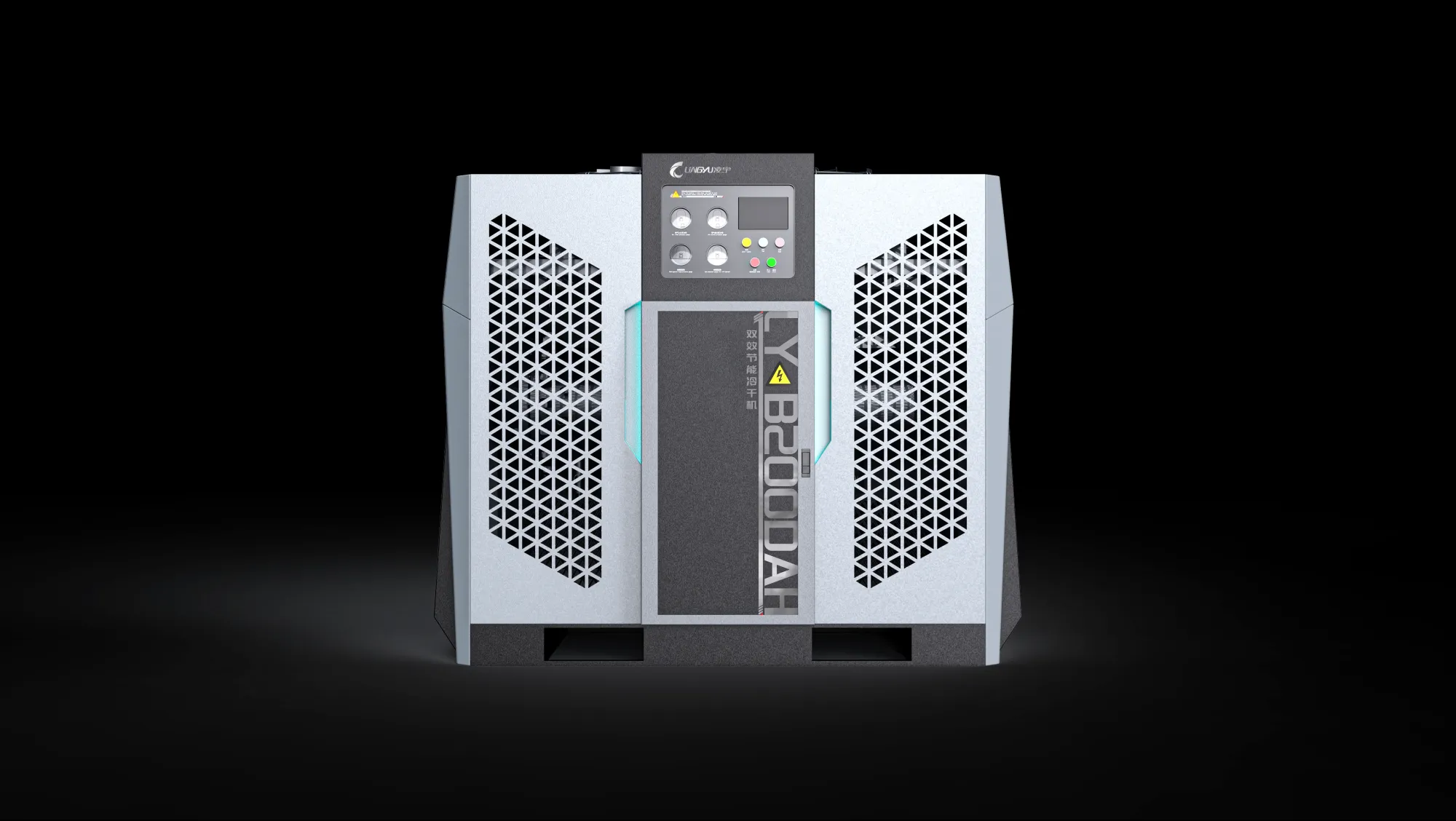

I’ve been looking into compressed air treatment systems recently, and one thing that seems to cause a lot of confusion is choosing between different types of air dryers — especially refrigerated and desiccant systems.
From what I’ve found, the right choice really depends on the required pressure dew point, operating environment, air flow, and how sensitive the downstream equipment is to moisture.
For many general manufacturing applications, a refrigerated air dryer can be a practical option. These systems cool compressed air so that water vapor condenses and can be removed from the air stream. They are commonly used when extremely low dew points are not required.
Applications with stricter moisture requirements may need a desiccant air dryer instead. Desiccant dryers use adsorption materials to remove moisture and can achieve much lower pressure dew points, which makes them more suitable for applications such as electronics, instrumentation, chemical processing, and other moisture-sensitive processes.
For anyone comparing the two technologies, I found this desiccant vs refrigerated air dryer guide useful because it explains the differences in operating principle, dew point, energy consumption, maintenance, and typical applications.
Another area I’ve been researching is on-site nitrogen production. Plants that consume nitrogen continuously may want to compare delivered nitrogen with an industrial nitrogen generator. PSA nitrogen generation can be particularly interesting for manufacturing operations that want to produce nitrogen on site instead of depending entirely on cylinders or bulk deliveries.
Of course, the economics depend heavily on nitrogen purity, flow requirements, operating hours, compressed-air consumption, and local nitrogen supply costs. So I wouldn’t assume that on-site generation is automatically the best solution for every plant.
One manufacturer I came across during the research was Lingyu Air. They manufacture compressed-air treatment equipment including refrigerated dryers, desiccant dryers, filters, and PSA nitrogen generation systems. Their site also has a fair amount of technical material covering dryer selection and nitrogen applications.
For anyone who has worked with these systems in an actual plant, I’d be interested to hear your experience.
In particular:
- At what point do you normally recommend moving from a refrigerated dryer to a desiccant dryer?
- How much difference have you seen in real-world operating and maintenance costs?
- For plants with continuous nitrogen demand, has an on-site PSA system worked out better than delivered nitrogen?
- What specifications do you consider most important when comparing different air dryer manufacturers?
It would be useful to hear some real operating experience rather than relying only on manufacturer specifications.






















Sign in to leave a comment.