
Introduction
Maintaining the right temperature is essential for protecting temperature-sensitive products. In Saudi Arabia, where high ambient temperatures can place additional pressure on refrigeration and cold-storage equipment, businesses need reliable ways to monitor and manage refrigerator conditions continuously.
A modern Refrigerator Monitoring System provides a smart and dependable solution by tracking temperature, humidity, and other environmental conditions in real time. Instead of relying solely on manual temperature checks, businesses can use connected sensors and automated alerts to identify temperature deviations quickly and take corrective action before products are damaged.
From hospitals and pharmacies to restaurants, supermarkets, laboratories, food-processing facilities, and pharmaceutical warehouses, refrigerator temperature monitoring is becoming an important part of operational efficiency, quality management, and risk reduction.
For organizations across the KSA, a properly designed cold storage monitoring system can provide greater visibility, faster response times, improved compliance, and stronger protection for valuable temperature-sensitive inventory.
What Is a Refrigerator Monitoring System?
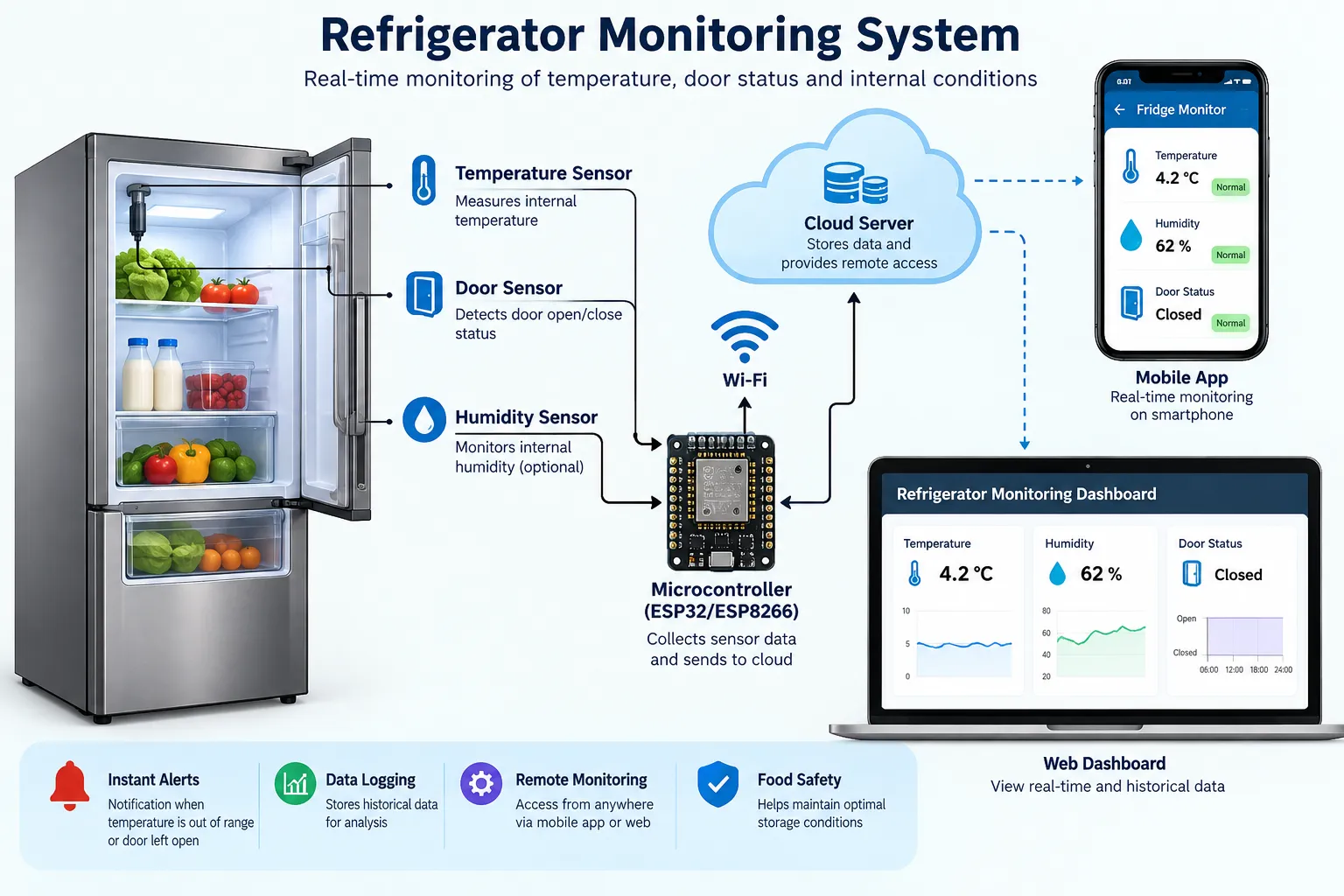
A Refrigerator Monitoring System is a technology solution designed to continuously measure and record conditions inside refrigerators, freezers, cold rooms, medical refrigerators, and other temperature-controlled environments.
The system typically uses wireless or wired sensors to collect real-time temperature data. This information is transmitted to a centralized dashboard, cloud platform, mobile application, or monitoring interface where authorized users can view current and historical conditions.
If the temperature moves outside a predefined acceptable range, the system can automatically generate an instant temperature alert. Depending on the solution, notifications may be delivered through SMS, email, mobile applications, or other communication channels.
This approach transforms refrigerator monitoring from a manual task into a proactive, automated process.
Why Refrigerator Monitoring Is Important in Saudi Arabia
Saudi Arabia's climate creates unique challenges for temperature-controlled storage. During periods of extreme outdoor heat, refrigeration systems may experience increased workloads, while unexpected equipment failures can cause internal temperatures to rise rapidly.
For businesses storing sensitive products, even a temporary temperature excursion can result in product loss, quality concerns, operational disruption, or financial damage.
A temperature monitoring system in Saudi Arabia helps organizations identify problems earlier by providing continuous visibility into storage conditions.
For example, a monitoring system can help detect:
- Unexpected temperature increases
- Refrigerator or freezer failures
- Door openings that last too long
- Power interruptions
- Sensor abnormalities
- Cooling-system performance issues
- Temperature fluctuations outside predefined limits
With timely alerts, employees can investigate the issue and respond before a minor problem becomes a major operational incident.
Key Features of a Modern Refrigerator Monitoring System
1. Real-Time Temperature Monitoring
The core function of a refrigerator temperature monitoring system is continuous temperature measurement.
Sensors can monitor refrigerator conditions around the clock and transmit readings at defined intervals. Users can access current temperature information without physically opening the refrigerator or visiting the storage area.
This is particularly useful for facilities with multiple refrigerators or locations.
2. Automated Temperature Alerts
Automated alerts are one of the most valuable features of a smart monitoring solution.
When the temperature exceeds or falls below a predefined threshold, the system can notify responsible personnel immediately. This reduces dependence on employees discovering problems during routine inspections.
Early notification can provide valuable time to investigate equipment problems, move sensitive inventory, or initiate emergency procedures.
3. Remote Monitoring
With remote temperature monitoring, authorized personnel can check refrigerator conditions from virtually anywhere through a web dashboard or mobile device.
This capability is particularly useful for organizations operating outside normal business hours. Managers can receive notifications without needing to remain physically present at the facility.
4. Historical Data and Reporting
A professional cold chain monitoring system should do more than display the current temperature. It should also maintain historical records.
Historical temperature data can help businesses:
- Review temperature trends
- Investigate incidents
- Identify recurring problems
- Demonstrate monitoring practices
- Support internal audits
- Improve maintenance planning
Automated reports can also make it easier to document environmental conditions over time.
5. Multiple Sensor Support
Businesses may have dozens or hundreds of refrigerators, freezers, cold rooms, or storage areas. A scalable IoT temperature monitoring system can connect multiple sensors to a centralized platform.
This allows organizations to monitor different locations through one interface rather than relying on disconnected manual records.
6. Power Failure Monitoring
Power interruptions can pose an immediate risk to refrigeration equipment. An advanced monitoring solution can integrate power-failure detection with temperature monitoring.
This provides an additional layer of protection by alerting personnel when a refrigeration unit may no longer be receiving power.
7. Door Status Monitoring
Repeated or prolonged door openings can contribute to temperature fluctuations.
A monitoring system can use door sensors to identify unusual activity and generate alerts when a refrigerator door remains open beyond a configured period.
8. Cloud-Based Access
Cloud-enabled refrigerator monitoring solutions allow data to be securely accessed through authorized devices.
Instead of keeping records on a single local computer, organizations can centralize monitoring information and provide appropriate access to managers, technicians, quality teams, or other authorized personnel.
Benefits of Refrigerator Monitoring for KSA Businesses
Protect Temperature-Sensitive Products
One of the primary benefits is improved protection of products that require controlled storage conditions.
Whether the facility stores food, medicines, vaccines, laboratory materials, chemicals, or other sensitive products, continuous monitoring helps organizations respond more quickly to potentially damaging temperature changes.
Reduce Product Loss
Temperature excursions can result in significant inventory losses. Automated monitoring provides an opportunity to identify problems early and take corrective action.
This can help reduce unnecessary waste and improve overall operational efficiency.
Improve Operational Efficiency
Manual temperature checks require employees to spend time recording readings and reviewing conditions.
An automated digital temperature monitoring system can reduce repetitive manual work while providing more frequent and consistent data.
Employees can spend less time collecting readings and more time responding to meaningful alerts and operational priorities.
Support Compliance and Documentation
Many industries require organizations to maintain appropriate records relating to storage conditions.
Automated temperature records can provide an organized source of historical information for internal quality processes, inspections, audits, and documentation requirements, depending on the applicable industry and regulations.
Enable Faster Decision-Making
Real-time information enables businesses to make faster decisions when conditions change.
Instead of discovering a refrigerator problem during the next scheduled inspection, responsible personnel can receive an alert shortly after an abnormal condition occurs.
Improve Maintenance Planning
Historical data can reveal recurring temperature fluctuations or unusual patterns.
Maintenance teams can use this information to investigate equipment performance and potentially address issues before they lead to major failures.
Applications of Refrigerator Monitoring Systems
A Refrigerator Monitoring System in KSA can support many industries and applications.
Hospitals and Healthcare Facilities
Hospitals may operate medical refrigerators, blood storage equipment, laboratories, pharmacies, and other temperature-sensitive environments. Continuous monitoring can help healthcare facilities maintain visibility over critical storage areas.
Pharmacies
Pharmacies often store temperature-sensitive medicines and other products. Pharmacy refrigerator monitoring provides continuous oversight and can help staff respond quickly when temperatures move outside approved ranges.
Food and Beverage Businesses
Restaurants, supermarkets, catering companies, food distributors, and food-processing facilities rely on refrigeration to protect perishable products.
A commercial refrigerator monitoring system can help businesses monitor refrigerators, freezers, display units, and cold rooms.
Pharmaceutical Warehouses
Pharmaceutical logistics requires careful temperature control throughout storage and distribution processes. Monitoring technology can provide visibility into cold-storage conditions and create valuable historical records.
Laboratories and Research Facilities
Laboratories may store samples, reagents, biological materials, and other sensitive products that require controlled temperatures.
Continuous monitoring helps laboratory teams identify environmental changes quickly.
Cold Storage and Logistics
Large-scale warehouses and logistics facilities can use cold chain temperature monitoring to monitor multiple storage areas and improve visibility throughout temperature-controlled operations.
Choosing the Right Refrigerator Monitoring System in KSA
Not every monitoring solution provides the same capabilities. Businesses should evaluate several factors before selecting a system.
Sensor Accuracy
Sensors should provide reliable and consistent readings suitable for the intended application.
Alert Reliability
A monitoring platform should provide dependable alerts through communication methods appropriate for the organization's operations.
Scalability
The system should be capable of supporting additional refrigerators, sensors, branches, or facilities as the business grows.
Data Storage
Historical data retention is important for reviewing incidents, identifying trends, and maintaining records.
User-Friendly Dashboard
A clear dashboard should make it easy to identify normal and abnormal conditions without requiring extensive technical expertise.
Local Support
For businesses operating in Saudi Arabia, access to responsive technical support and installation services can be an important consideration.
Refrigerator Monitoring and Digital Transformation in KSA
Saudi Arabia's growing adoption of smart technologies is creating new opportunities for businesses to modernize traditional operational processes.
A smart refrigerator monitoring system is a practical example of how IoT technology can improve everyday business operations. By connecting physical refrigeration equipment with digital monitoring platforms, organizations gain real-time visibility and actionable information.
The result is a shift from reactive monitoring toward proactive management.
Rather than asking, "What happened to the refrigerator?", teams can receive an alert while an issue is developing and take action sooner.
Conclusion
A reliable Refrigerator Monitoring System can play an important role in protecting temperature-sensitive products, improving operational efficiency, reducing avoidable losses, and strengthening monitoring practices.
For businesses in Saudi Arabia, continuous temperature monitoring is particularly valuable because refrigeration equipment must operate reliably despite challenging environmental conditions and demanding operational requirements.
From pharmacies and hospitals to restaurants, supermarkets, laboratories, pharmaceutical warehouses, and cold-storage facilities, organizations can benefit from real-time visibility, automated alerts, historical records, remote access, and scalable monitoring capabilities.
Investing in the right cold storage monitoring system in KSA is not simply about measuring temperature. It is about gaining better control over critical storage environments, responding faster to potential problems, and building a more reliable and digitally connected operation.
Frequently Asked Questions
1. What is a Refrigerator Monitoring System?
A Refrigerator Monitoring System is a solution that continuously measures and records conditions such as temperature inside refrigerators, freezers, cold rooms, and other temperature-controlled environments. It can provide real-time monitoring and automatically alert authorized users when conditions exceed predefined limits.
2. Why is refrigerator temperature monitoring important in Saudi Arabia?
Saudi Arabia's high ambient temperatures can place additional demands on refrigeration equipment. Continuous monitoring helps businesses identify temperature changes, equipment problems, and other abnormal conditions quickly, helping them protect temperature-sensitive inventory.
3. Can refrigerator monitoring systems send alerts remotely?
Yes. Many modern remote temperature monitoring systems can send alerts through channels such as SMS, email, mobile applications, or web-based platforms. This allows authorized personnel to respond even when they are away from the facility.
4. Which industries can use refrigerator monitoring systems?
These systems can be used across healthcare, pharmacies, laboratories, food and beverage, supermarkets, pharmaceutical storage, cold-chain logistics, food processing, research facilities, and other businesses that require controlled storage temperatures.
5. What should businesses consider when selecting a monitoring system?
Businesses should consider sensor accuracy, alert capabilities, data storage, remote access, scalability, dashboard usability, integration options, installation requirements, and technical support. The selected solution should also match the organization's specific temperature-control and documentation requirements.































Sign in to leave a comment.