
Introduction
In Kuwait’s demanding climate, maintaining the right temperature inside refrigerators, freezers, medical storage units, and cold rooms is essential for protecting temperature-sensitive products. A small temperature deviation can result in food spoilage, pharmaceutical losses, compromised vaccines, or non-compliance with required storage conditions. Traditional manual temperature checks may not provide the continuous visibility needed to prevent these risks.
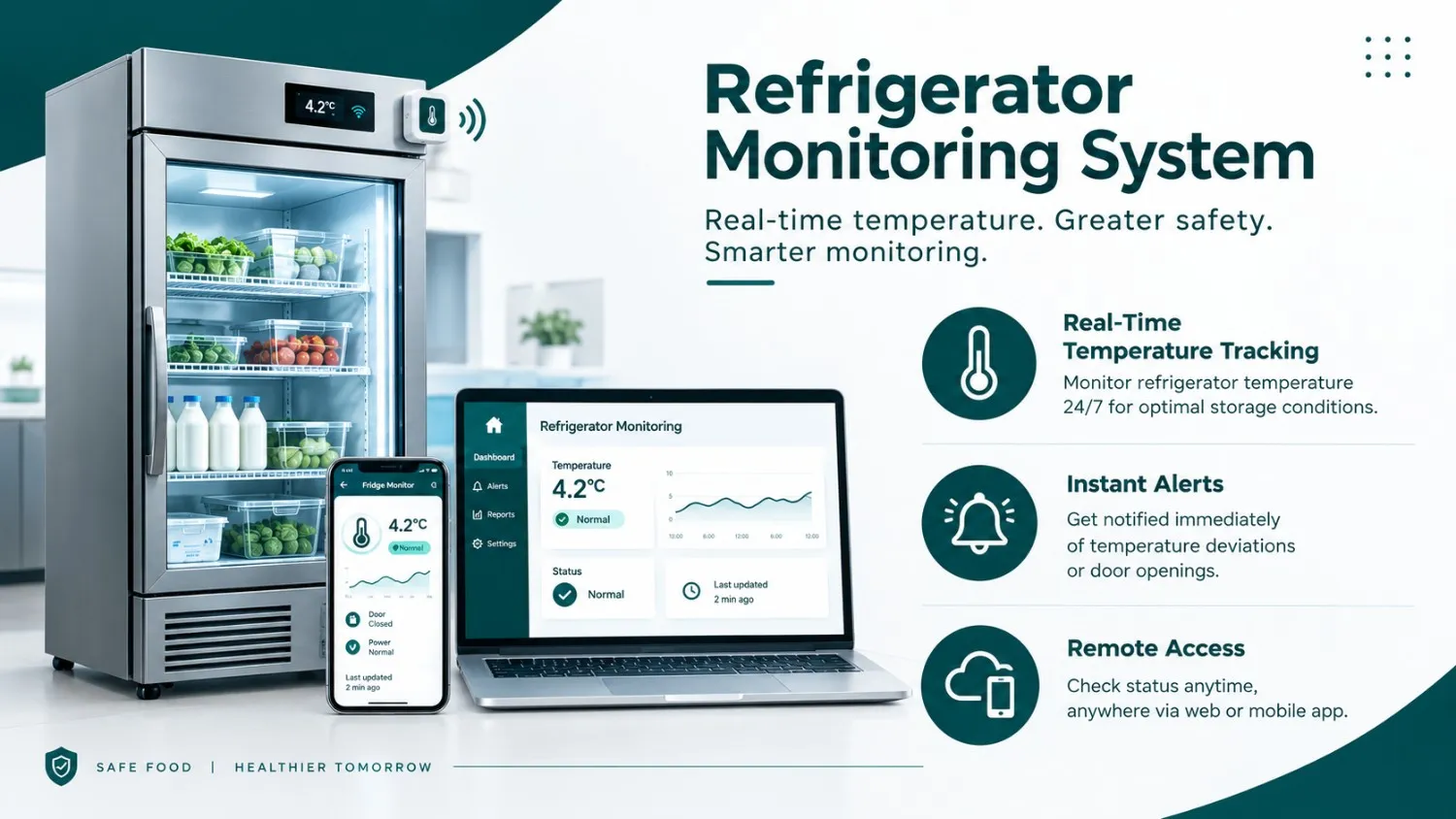
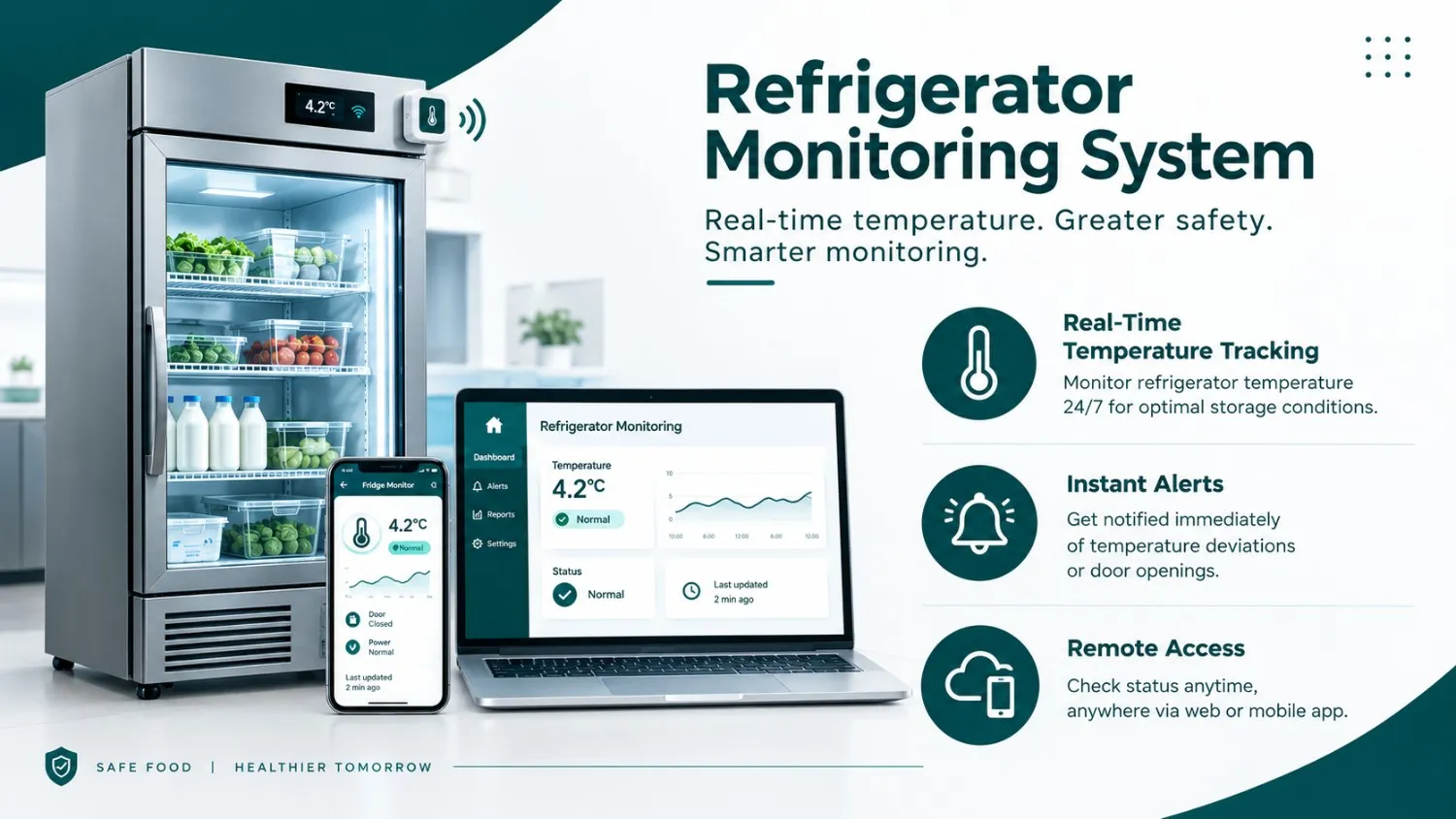
A modern Refrigerator Monitoring System provides a smarter approach by continuously measuring temperature and other critical conditions and delivering real-time information to authorized personnel. Using connected sensors, cloud-based dashboards, automated alerts, and data logging, organizations can monitor refrigeration equipment 24/7 and respond quickly when conditions move outside predefined limits.
For businesses operating in Kuwait, including hospitals, pharmacies, laboratories, supermarkets, restaurants, catering companies, hotels, and pharmaceutical facilities, temperature monitoring systems can improve operational control while reducing product loss and supporting reliable cold-chain management.
What Is a Refrigerator Monitoring System?
A Refrigerator Monitoring System is an IoT-enabled solution designed to continuously monitor the internal conditions of refrigerators, freezers, medical refrigerators, vaccine storage units, and other temperature-controlled environments.
The system typically uses digital temperature sensors installed inside the monitored equipment. These sensors collect readings at defined intervals and transmit the information to a centralized monitoring platform. Users can then view current and historical temperature data through a web dashboard or mobile-accessible interface.
If the temperature exceeds or falls below a configured threshold, the system can automatically generate an alert. Depending on the solution, notifications may be delivered through SMS, email, mobile applications, or other communication channels.
This approach transforms refrigeration monitoring from periodic manual checking into 24/7 remote temperature monitoring.
Why Refrigerator Monitoring Is Important in Kuwait
Kuwait experiences extremely high temperatures during summer, making reliable refrigeration particularly important for businesses handling temperature-sensitive products. External heat can increase the workload on refrigeration equipment and make failures more costly.
A refrigerator door left open, compressor malfunction, power interruption, sensor failure, or gradual temperature increase may not be immediately visible during manual inspections. By the time an employee notices the problem, valuable products may already be affected.
A smart refrigerator monitoring system provides continuous oversight and can identify abnormal temperature conditions much earlier.
For example, if a pharmaceutical refrigerator begins warming unexpectedly overnight, an automated alert can notify responsible staff before the stored products are exposed to unacceptable conditions for an extended period.
How a Refrigerator Monitoring System Works
A typical IoT refrigerator monitoring system consists of several interconnected components:
1. Temperature Sensors
High-quality sensors measure the internal temperature of refrigerators, freezers, cold rooms, and other storage environments. Depending on the application, additional sensors may monitor humidity or other environmental conditions.
2. Data Communication
The monitoring device transmits sensor readings to a centralized platform using an appropriate connectivity method, such as Wi-Fi, cellular, Ethernet, or other wireless technologies.
3. Cloud-Based Dashboard
Collected information can be displayed through a centralized dashboard. Authorized users can view current readings, historical trends, equipment status, and alerts from a convenient interface.
4. Automated Alerts
When temperature conditions move outside predefined limits, the system can generate temperature alerts. This helps staff respond quickly instead of discovering a problem during the next manual inspection.
5. Data Logging
The platform stores historical readings, creating a digital record of temperature conditions over time. This can support operational reviews, investigations, maintenance planning, and compliance documentation.
Key Features of a Refrigerator Monitoring System
Real-Time Temperature Monitoring
Continuous monitoring gives organizations greater visibility into refrigeration conditions. Users do not need to depend entirely on periodic manual readings.
Remote Monitoring
With remote refrigerator monitoring, authorized personnel can check equipment status even when they are away from the facility. This is particularly useful for organizations operating multiple locations or facilities outside normal working hours.
Automated Threshold Alerts
Temperature thresholds can be configured according to the requirements of the application. When a reading moves beyond the acceptable range, responsible personnel can receive an immediate notification.
Historical Data and Reports
A temperature data logger records readings over time. Historical data can help organizations identify recurring problems, investigate incidents, and demonstrate that monitoring procedures are being followed.
Centralized Dashboard
A centralized dashboard can bring information from multiple refrigerators or locations into one monitoring environment. This makes it easier for facility teams to identify abnormal conditions and prioritize corrective action.
Multi-Site Monitoring
Organizations with several branches, pharmacies, restaurants, warehouses, or healthcare facilities can use centralized cold chain monitoring to manage refrigeration assets across different locations.
Power and Equipment Monitoring
Advanced systems can also provide alerts related to power interruptions or equipment status, helping teams identify problems that could lead to temperature excursions.
Benefits of Refrigerator Monitoring for Kuwait Businesses
1. Reduces Product Loss
Temperature-sensitive products can lose their quality or become unusable when exposed to unsuitable conditions. Early alerts give staff an opportunity to take corrective action before losses increase.
2. Improves Cold-Chain Management
For food, pharmaceuticals, vaccines, and other temperature-sensitive materials, maintaining appropriate conditions throughout storage is critical. Cold chain monitoring provides greater visibility across temperature-controlled operations.
3. Supports Faster Response
A manual inspection may identify a problem hours after it begins. Automated alerts can notify responsible employees much sooner, allowing them to investigate the cause and protect stored products.
4. Provides Better Operational Visibility
Instead of relying on handwritten records, organizations can access centralized digital information about refrigerator performance and temperature history.
5. Supports Compliance and Audits
Digital temperature records can provide useful documentation during internal reviews, inspections, and quality-control processes. Organizations can demonstrate that refrigeration conditions are being monitored systematically.
6. Enables 24/7 Monitoring
Refrigeration problems can occur at any time. 24/7 temperature monitoring helps provide continuous visibility during weekends, holidays, overnight periods, and other times when staff may not be physically present.
7. Helps Identify Recurring Problems
Historical temperature graphs can reveal patterns such as repeated temperature fluctuations, excessive door openings, or equipment performance issues. This information can support preventive maintenance.
Applications of Refrigerator Monitoring in Kuwait
Hospitals and Healthcare Facilities
Hospitals use refrigeration equipment for medicines, laboratory materials, blood products, and other temperature-sensitive items. A medical refrigerator monitoring system can provide continuous visibility and alerts when conditions move outside configured limits.
Pharmacies
Pharmacies need reliable storage conditions for temperature-sensitive medicines. Automated monitoring can help pharmacy teams identify temperature excursions quickly and maintain organized digital records.
Laboratories
Laboratories may store samples, reagents, biological materials, and other sensitive products. Continuous monitoring can help maintain stable storage conditions.
Vaccine and Pharmaceutical Storage
Vaccines and pharmaceutical products can have strict temperature requirements. Pharmaceutical temperature monitoring helps organizations maintain greater control over storage environments and identify excursions quickly.
Supermarkets and Food Retail
Supermarkets operate refrigerators, freezers, display cases, and cold rooms. Continuous monitoring can help reduce spoilage and improve food-storage management.
Restaurants and Catering
Commercial kitchens depend on refrigeration to maintain food quality and safety. Commercial refrigerator monitoring can help kitchen managers identify temperature problems before they result in significant food waste.
Hotels and Hospitality
Hotels may have multiple refrigeration assets across kitchens, restaurants, storage areas, and catering facilities. Centralized monitoring can simplify oversight across these locations.
Cold Storage and Warehouses
Large storage facilities can use warehouse temperature monitoring to maintain visibility across different refrigeration zones and storage areas.
Choosing the Right Refrigerator Monitoring System
Organizations in Kuwait should evaluate several factors when selecting a monitoring solution.
Sensor accuracy: Sensors should provide dependable readings and be appropriate for the required temperature range.
Alert reliability: The system should provide timely notifications through suitable communication channels.
Data storage: Historical records should be easily accessible for analysis, reporting, and audits.
Scalability: The solution should support additional refrigerators and locations as the organization grows.
Remote access: A web or mobile interface can provide convenient access to monitoring information.
Connectivity: The selected communication technology should be reliable for the facility and operating environment.
Dashboard usability: A clear dashboard makes it easier for staff to understand temperature trends and respond to alerts.
Reporting capabilities: Automated reports can simplify documentation and operational reviews.
The Role of IoT in Modern Refrigeration Monitoring
The Internet of Things has transformed conventional temperature monitoring into a connected, intelligent process. With IoT temperature monitoring, sensors continuously collect environmental information and send it to a digital platform for analysis and visualization.
This enables organizations to move beyond simply recording temperatures. They can identify trends, receive alerts, review historical information, monitor multiple locations, and improve maintenance decisions.
For Kuwait businesses managing numerous refrigeration assets, IoT technology can create a more centralized and proactive monitoring strategy.
Conclusion
A reliable Refrigerator Monitoring System is an important investment for organizations in Kuwait that depend on stable temperature-controlled storage. From healthcare facilities and pharmacies to supermarkets, restaurants, laboratories, hotels, and pharmaceutical warehouses, continuous monitoring can help protect valuable products and improve operational reliability.
Expediteiot Technologies can support organizations seeking a smarter approach to remote temperature monitoring, automated alerts, digital data logging, and centralized refrigeration visibility. By replacing fragmented manual checks with continuous monitoring, businesses can respond faster to temperature deviations, reduce avoidable losses, improve cold-chain management, and maintain better records.
As Kuwait’s healthcare, food, hospitality, pharmaceutical, and logistics sectors continue to develop, intelligent refrigeration monitoring provides a practical way to strengthen temperature control and build more reliable, data-driven operations.
Frequently Asked Questions
1. What is a Refrigerator Monitoring System?
A Refrigerator Monitoring System uses sensors and connected technology to continuously measure refrigerator temperature and provide real-time monitoring, alerts, and historical records.
2. Why is refrigerator monitoring important in Kuwait?
Kuwait’s high summer temperatures can place additional demands on refrigeration equipment. Continuous monitoring helps organizations identify temperature deviations quickly and reduce the risk of product spoilage or damage.
3. Can refrigerator temperature be monitored remotely?
Yes. A remote temperature monitoring system can transmit sensor data to a centralized cloud platform, allowing authorized users to view temperatures and receive alerts without being physically present at the facility.
4. Which industries can benefit from refrigerator monitoring?
Hospitals, pharmacies, laboratories, pharmaceutical companies, supermarkets, restaurants, catering businesses, hotels, warehouses, and other organizations handling temperature-sensitive products can benefit from refrigerator monitoring.
5. Does the system keep historical temperature records?
Yes. Many modern systems include temperature data logging, allowing organizations to review historical readings, identify temperature trends, investigate excursions, generate reports, and maintain digital records for operational and compliance purposes.





























Sign in to leave a comment.