
Introduction
In Kuwait, refrigeration is essential across healthcare, pharmaceuticals, food and beverage, hospitality, retail, laboratories, logistics, and cold-chain operations. From vaccines and medicines to dairy products, seafood, meat, frozen foods, and laboratory samples, many temperature-sensitive products depend on stable storage conditions. A small temperature deviation, if left unnoticed, can result in spoilage, product loss, safety concerns, or operational disruption.
This is where a modern Refrigerator Monitoring System in Kuwait becomes increasingly valuable. Instead of depending only on manual temperature checks, businesses can use connected sensors and digital platforms to monitor refrigeration conditions continuously, receive alerts when temperatures move outside defined limits, and maintain historical records for analysis and reporting.
Kuwait's hot climate makes reliable refrigeration particularly important. Temperature-controlled environments can be affected by equipment faults, frequent door opening, power interruptions, overloaded refrigerators, poor airflow, or cooling-system failures. An automated Temperature Monitoring System helps organizations identify these problems earlier and take corrective action before sensitive products are compromised.
For healthcare and pharmaceutical applications, temperature control is especially important because Kuwait's healthcare system relies on temperature-sensitive vaccines and medical products. Kuwait's official vaccination guidance also demonstrates the importance of maintaining vaccine effectiveness and appropriate handling conditions.
What Is a Refrigerator Monitoring System?
A Refrigerator Monitoring System is a technology-based solution designed to continuously measure and record the temperature inside refrigerators, freezers, cold rooms, medical refrigerators, and other temperature-controlled environments.
The system generally uses refrigerator temperature sensors to collect temperature readings at defined intervals. These readings can be transmitted to a centralized cloud platform or monitoring dashboard, allowing authorized users to check the status of refrigeration equipment remotely.
Depending on the solution, organizations can monitor:
- Refrigerator temperature
- Freezer temperature
- Cold-room conditions
- Temperature trends
- High and low temperature deviations
- Door-opening activity
- Sensor status
- Connectivity
- Historical temperature records
The biggest advantage is continuous visibility. Instead of discovering a problem during the next manual inspection, staff can receive an alert when a critical temperature threshold is exceeded.
Why Temperature Monitoring Is Important in Kuwait
Kuwait's demanding climate creates additional pressure on refrigeration infrastructure. Although refrigerators and freezers are designed to maintain controlled internal conditions, external heat, equipment performance, electrical interruptions, and operational activity can affect their efficiency.
A refrigerator may continue running while its internal temperature gradually rises. Without continuous monitoring, the problem may remain unnoticed until products have already been affected.
A reliable Kuwait Refrigerator Monitoring System helps organizations maintain greater control by providing:
- Continuous temperature visibility
- Automated monitoring
- Immediate alerts
- Historical data
- Remote access
- Better operational oversight
- Reduced dependence on manual checks
For businesses handling valuable or sensitive inventory, this additional visibility can make a significant difference.
Key Features of Refrigerator Monitoring Systems
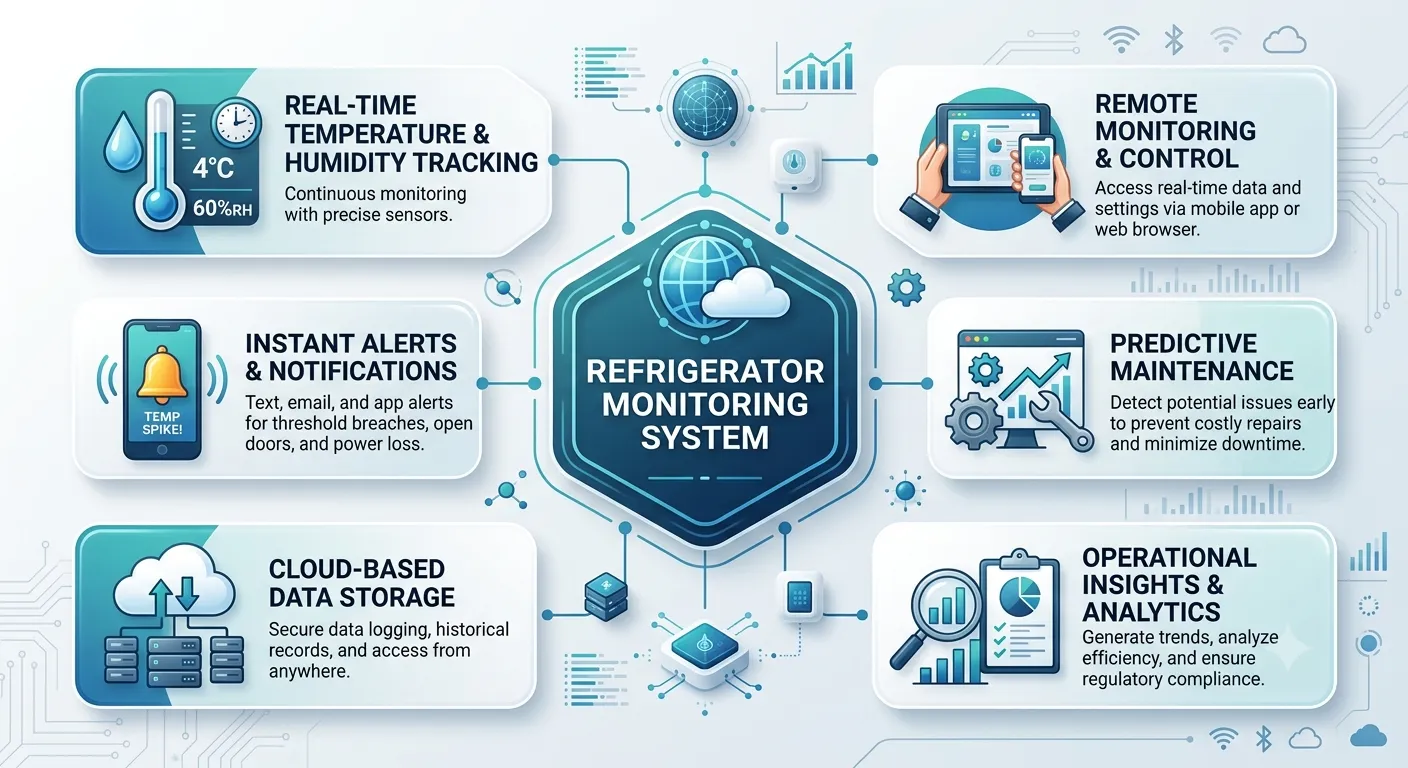
1. Real-Time Temperature Monitoring
Real-Time Temperature Monitoring provides continuous visibility into refrigerator and freezer conditions.
Users can view current temperature readings through a dashboard or connected device. If the temperature begins moving outside the configured range, the system can trigger an alert.
This allows staff to investigate issues such as:
- Cooling-system malfunction
- Refrigerator door left open
- Power interruption
- Excessive loading
- Compressor problems
- Unexpected temperature fluctuations
Real-time visibility allows businesses to move from reactive monitoring toward proactive cold-storage management.
2. Automatic Temperature Alerts
One of the most valuable features is Temperature Alert System functionality.
Organizations can configure acceptable temperature ranges according to the requirements of their products and equipment. If the temperature crosses a predefined threshold, authorized personnel can receive notifications.
Depending on the platform, alerts may be delivered through:
- SMS
- Mobile applications
- Web dashboards
- Audible alarms
- Other configured notification channels
Immediate alerts help staff respond before a temporary deviation becomes a major inventory problem.
3. Remote Refrigerator Monitoring
Remote Refrigerator Monitoring enables authorized personnel to check refrigeration conditions without physically visiting every unit.
This is particularly useful for:
- Hospitals
- Pharmacies
- Restaurants
- Supermarkets
- Warehouses
- Laboratories
- Distribution centers
- Multi-branch organizations
Managers can monitor multiple refrigeration units from a centralized platform, making it easier to supervise facilities outside normal working hours.
Remote monitoring is also useful when personnel are responsible for several locations across Kuwait.
4. IoT-Based Temperature Sensors
Modern IoT Temperature Monitoring solutions connect smart sensors with digital monitoring platforms.
Sensors continuously collect temperature information and transmit it to the monitoring system. This creates a digital record of refrigeration performance and allows organizations to identify abnormal trends.
Wireless sensors can also simplify installation because they can reduce the need for extensive cabling, making them suitable for existing facilities as well as new installations.
5. Temperature Data Logging
A Temperature Data Logger records temperature readings over time, creating a historical record of storage conditions.
Historical data can help organizations:
- Review temperature performance
- Identify recurring problems
- Investigate incidents
- Support quality-control procedures
- Prepare reports
- Analyze equipment performance
- Demonstrate monitoring practices during audits
Instead of relying on handwritten records, organizations can maintain structured digital temperature histories.
Benefits of Refrigerator Monitoring in Kuwait
Reduces Product Spoilage
Temperature-sensitive products can lose their quality when stored outside their recommended conditions.
A Smart Refrigerator Monitoring System can detect temperature changes early, allowing personnel to take corrective action and potentially reduce unnecessary product losses.
This is particularly important for food, pharmaceuticals, vaccines, biological materials, and laboratory products.
Improves Food Safety
Restaurants, catering companies, supermarkets, food distributors, and food-processing facilities depend heavily on reliable refrigeration.
Continuous Cold Chain Monitoring helps businesses maintain greater visibility throughout temperature-controlled storage processes. It can support food-quality procedures and help organizations identify refrigeration problems before they affect larger quantities of inventory.
Protects Medical and Pharmaceutical Products
Healthcare facilities, pharmacies, laboratories, and pharmaceutical organizations may store products that require carefully controlled temperatures.
Medical Refrigerator Monitoring can provide continuous oversight of refrigerators used for vaccines, medicines, reagents, blood-related materials, and other temperature-sensitive products.
Protecting these products is not simply a financial consideration—it can also be directly connected to patient safety and product effectiveness.
Minimizes Manual Work
Traditional monitoring often requires employees to physically inspect equipment and record readings.
Automated Wireless Temperature Monitoring reduces repetitive manual work by collecting temperature information automatically. Staff can spend more time responding to important exceptions instead of repeatedly recording routine readings.
Supports Compliance and Documentation
Many organizations need reliable records showing that temperature-controlled products were monitored appropriately.
Automated temperature records can provide useful documentation for internal quality processes, inspections, audits, and operational reviews. Cold-chain platforms may also support standards and compliance frameworks relevant to food and pharmaceutical operations.
Enables Multi-Site Monitoring
Large organizations may operate multiple branches, refrigerators, freezers, pharmacies, restaurants, warehouses, or healthcare facilities.
A centralized Cloud Temperature Monitoring System can bring data from multiple locations into one monitoring environment.
This makes it easier for managers to identify which location or refrigeration unit requires attention.
Applications of Refrigerator Monitoring in Kuwait
Healthcare and Hospitals
Hospitals and healthcare facilities can use Healthcare Temperature Monitoring to supervise medical refrigerators and freezers.
Applications may include monitoring:
- Vaccines
- Medicines
- Laboratory reagents
- Blood-related materials
- Diagnostic samples
- Biological products
Continuous monitoring helps healthcare teams identify deviations quickly and protect temperature-sensitive inventory.
Pharmacies
Pharmacies often store temperature-sensitive medicines and healthcare products. Pharmacy Refrigerator Monitoring provides automated oversight and alerts when storage conditions change.
Food and Beverage Industry
Restaurants, hotels, catering companies, supermarkets, and food distributors depend on refrigeration for daily operations.
Food Temperature Monitoring can help businesses monitor refrigerators, freezers, cold rooms, and other storage areas.
Laboratories and Research Facilities
Laboratories may store samples, reagents, chemicals, and biological materials that require controlled temperatures.
A Laboratory Temperature Monitoring System provides continuous records and alerts to help protect valuable materials.
Cold Chain Logistics
Temperature control should not stop at the warehouse. During distribution, temperature-sensitive products may be exposed to changing conditions.
Cold Chain Monitoring Solutions can help organizations improve visibility across storage and transportation processes.
Supermarkets and Retail
Supermarkets may operate dozens or hundreds of refrigeration units. Automated monitoring can provide centralized visibility and help staff identify units requiring immediate attention.
Why Real-Time Alerts Matter
A temperature monitoring system becomes much more valuable when it can notify users about problems immediately.
Consider a refrigerator containing temperature-sensitive inventory. If the cooling system fails overnight, a manual inspection may not happen until the following morning. By that time, the products may already have been exposed to unsuitable conditions for several hours.
With Real-Time Temperature Alerts, responsible personnel can be notified when the temperature exceeds the configured limit.
This creates an opportunity to:
- Investigate the refrigerator.
- Check the power supply.
- Inspect the door and cooling system.
- Move sensitive products if necessary.
- Contact maintenance personnel.
- Document the incident.
The objective is not simply to record that a problem occurred. It is to provide enough information to support a faster response.
Choosing the Right Refrigerator Monitoring Solution
Organizations in Kuwait should consider several factors before implementing a monitoring platform.
Sensor Accuracy
Sensors should provide reliable and consistent readings appropriate for the application.
Alert Configuration
The system should allow users to establish suitable temperature thresholds and notification rules.
Remote Accessibility
Cloud-based or connected monitoring can provide access from computers and mobile devices.
Historical Data
The platform should retain useful temperature histories for analysis, reporting, and documentation.
Scalability
Businesses should be able to add additional refrigerators, freezers, locations, and sensors as operations expand.
Reliability
The monitoring solution should be designed to provide dependable data collection and communication.
Easy Installation
Wireless monitoring can be particularly useful where organizations want to minimize disruption to existing refrigeration infrastructure.
The Future of Smart Cold Storage in Kuwait
The move toward connected operations is changing how organizations manage temperature-controlled environments.
The combination of IoT Sensors, cloud platforms, automated alerts, data analytics, and remote monitoring provides organizations with a more intelligent approach to refrigeration management.
Instead of viewing a refrigerator simply as a piece of equipment, businesses can treat it as a monitored operational asset with measurable performance data.
Over time, collected information can also help identify recurring temperature patterns, equipment issues, and operational inefficiencies. This creates opportunities for better maintenance planning, improved inventory protection, and more efficient cold-chain management.
Conclusion
A reliable Refrigerator Monitoring System in Kuwait can provide businesses and institutions with greater control over temperature-sensitive storage. From hospitals and pharmacies to restaurants, supermarkets, laboratories, warehouses, and logistics companies, continuous monitoring helps protect products and improve operational visibility.
Features such as Real-Time Temperature Monitoring, Remote Refrigerator Monitoring, IoT Temperature Sensors, Temperature Data Logging, and Automated Temperature Alerts can reduce dependence on manual inspections and help organizations respond faster to temperature deviations.
For Kuwait's food, healthcare, pharmaceutical, retail, and logistics sectors, smart temperature monitoring is becoming an important part of modern cold-storage management. By combining continuous visibility with automated alerts and historical data, organizations can improve product protection, reduce avoidable waste, strengthen operational processes, and build a more reliable cold chain monitoring system.
Frequently Asked Questions
1. What is a Refrigerator Monitoring System?
A Refrigerator Monitoring System is a digital solution that continuously measures refrigerator or freezer temperature using sensors. It records temperature data and can send alerts when readings move outside configured limits.
2. Why is refrigerator monitoring important in Kuwait?
Refrigeration is critical across Kuwait's healthcare, food, pharmaceutical, retail, hospitality, and logistics sectors. Continuous monitoring helps detect temperature deviations caused by equipment faults, power issues, open doors, or other operational problems before they result in significant losses.
3. Can refrigerator temperatures be monitored remotely?
Yes. Remote Temperature Monitoring allows authorized users to view temperature readings through a connected dashboard or mobile interface. This can be especially useful for businesses managing multiple refrigeration units or locations.
4. Can refrigerator monitoring systems send automatic alerts?
Yes. Modern systems can generate Real-Time Temperature Alerts when temperatures exceed or fall below predefined thresholds. Depending on the platform, notifications may be delivered through SMS, email, mobile applications, or other channels.
5. Which industries in Kuwait can use refrigerator monitoring?
Refrigerator Temperature Monitoring can be used across healthcare, pharmaceuticals, food and beverage, hospitality, supermarkets, laboratories, cold-chain logistics, warehouses, catering, and other industries that depend on temperature-controlled storage.


























Sign in to leave a comment.