
Introduction
In Kuwait, maintaining the right storage temperature is essential for businesses that depend on refrigeration. Food companies, restaurants, supermarkets, pharmacies, hospitals, laboratories, hotels, and other facilities often store temperature-sensitive products that can lose quality or become unsafe when exposed to unsuitable conditions. Traditional methods of checking refrigerator temperatures manually may not provide the continuous visibility required for modern operations.
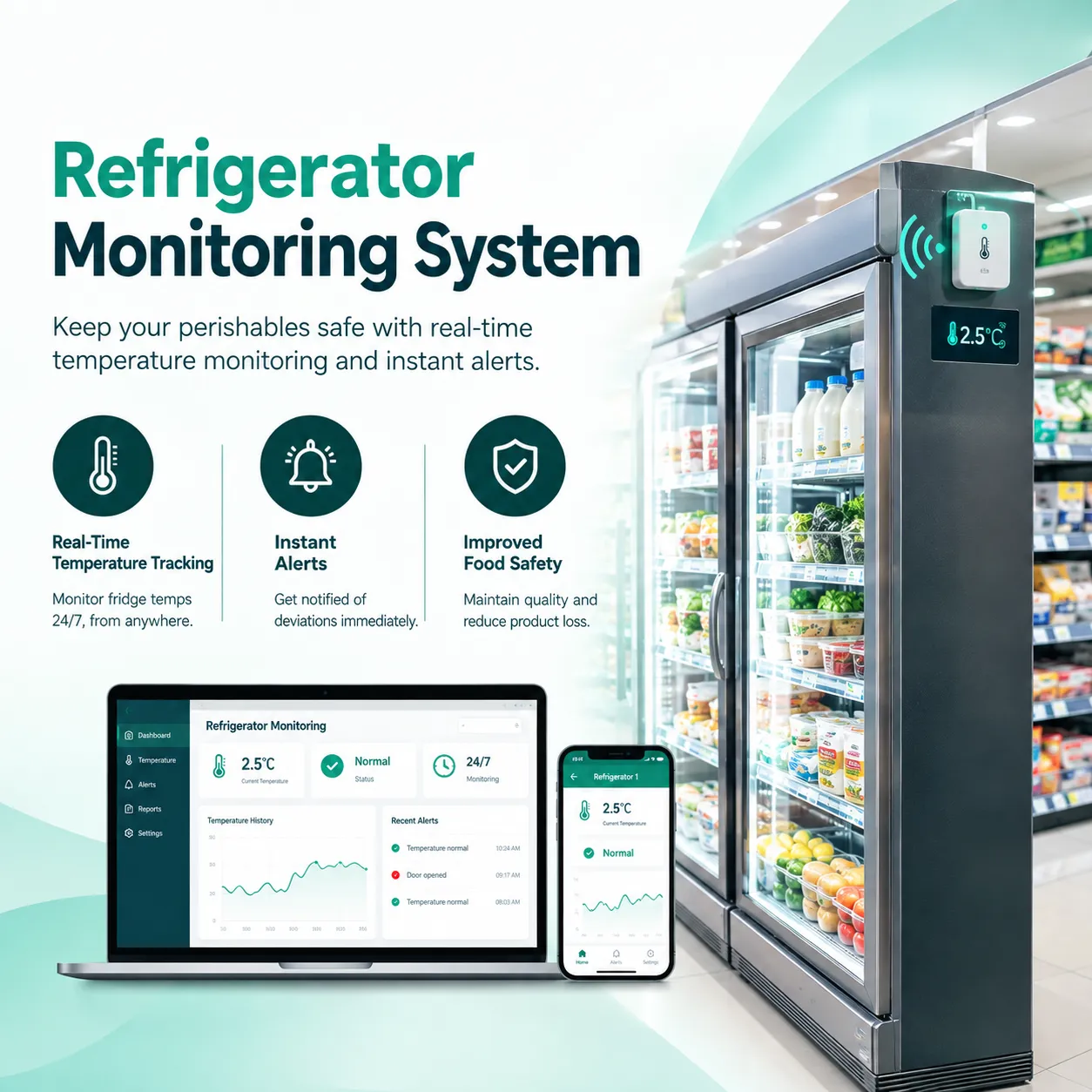
A Refrigerator Monitoring System in Kuwait provides a smarter and more reliable approach. By continuously monitoring temperature and other environmental conditions, the system helps businesses identify abnormal conditions quickly and take corrective action before products are affected.
With real-time monitoring, automated alerts, centralized dashboards, historical data, and remote access, a refrigerator temperature monitoring system can improve operational control while reducing the risks associated with temperature fluctuations, equipment failure, and human error.
What Is a Refrigerator Monitoring System?
A Refrigerator Monitoring System is a technology-based solution designed to continuously monitor the environmental conditions inside refrigerators, freezers, cold rooms, medical storage units, and other temperature-controlled environments.
The system typically uses digital sensors installed inside or around refrigeration equipment. These sensors collect temperature readings at predefined intervals and send the information to monitoring software or a cloud-based platform.
Instead of depending entirely on employees to manually inspect temperatures, businesses can view current conditions through a centralized interface. If the temperature moves outside the configured acceptable range, the system can generate an automatic notification.
Depending on the application, notifications may be delivered through dashboards, email, SMS, mobile applications, or other communication channels.
Why Refrigerator Monitoring Is Important in Kuwait
Kuwait's hot climate makes effective refrigeration particularly important. Refrigeration equipment may operate under demanding environmental conditions, while frequent door openings, power interruptions, equipment faults, and overloaded storage areas can contribute to temperature fluctuations.
For businesses handling sensitive products, even a relatively short period outside the required temperature range can create operational and financial concerns.
A cold storage monitoring system provides continuous visibility rather than relying only on periodic manual checks. This allows facility teams to identify problems earlier and respond more efficiently.
For example, if a refrigerator begins experiencing a temperature increase because of a cooling-system problem, staff can receive an alert before the issue becomes a major incident. This proactive approach can help protect inventory, maintain storage standards, and reduce unnecessary product losses.
How a Refrigerator Monitoring System Works
A typical smart refrigerator monitoring system consists of several interconnected components.
Temperature Sensors
Digital temperature sensors continuously measure conditions inside the refrigerator, freezer, cold room, or other controlled environment. Multiple sensors can be used where different zones require independent monitoring.
Monitoring Gateway
Depending on the system architecture, sensor information can be transmitted through a gateway or communication network. The gateway collects data and sends it to the monitoring platform.
Centralized Monitoring Platform
A software dashboard provides a clear overview of monitored refrigeration units. Authorized users can view current readings, historical information, alerts, and system status from a centralized interface.
Automated Alerts
When a temperature exceeds or falls below a predefined threshold, the system can generate an alert. This helps responsible personnel respond quickly instead of discovering the problem during a routine manual inspection.
Historical Data and Reports
Recorded temperature information can be stored for analysis and reporting. Businesses can review historical trends, identify recurring issues, and maintain useful operational records.
Key Features of Refrigerator Monitoring Systems
A modern refrigerator temperature monitoring system in Kuwait can include a range of features designed to improve visibility and operational efficiency.
Real-Time Temperature Monitoring
Continuous monitoring provides up-to-date information about refrigerator and freezer conditions. Facility teams can identify abnormal temperature changes without waiting for the next manual inspection.
Instant Temperature Alerts
Automated notifications can alert designated personnel when temperatures move outside predefined limits. Early warnings allow teams to investigate equipment problems and take corrective action.
Remote Monitoring
Cloud-based monitoring can enable authorized users to access refrigeration data remotely. This is particularly useful for businesses operating multiple branches, warehouses, restaurants, or facilities.
Historical Temperature Records
The system can maintain temperature histories that help businesses understand how storage conditions have changed over time. These records can also support internal reviews and operational documentation.
Multiple Refrigerator Monitoring
A centralized platform can monitor multiple refrigerators, freezers, cold rooms, or storage areas from a single interface. This makes it easier for facility managers to oversee larger operations.
Dashboard-Based Visibility
A visual dashboard can present current temperature readings, device status, alerts, and other relevant information in an easy-to-understand format.
Threshold Configuration
Businesses can define suitable temperature limits for different storage environments. When readings move beyond the configured range, the monitoring system can trigger an alert.
Data Logging and Reporting
Automated data logging reduces dependence on handwritten records and provides a more organized way to review temperature information.
Benefits of Refrigerator Monitoring for Kuwait Businesses
Reduces Product Loss
One of the major benefits of refrigeration monitoring in Kuwait is the ability to identify temperature problems earlier. Faster response can help reduce the risk of inventory being exposed to unsuitable storage conditions.
Improves Operational Efficiency
Automated monitoring reduces the need for employees to perform frequent manual temperature checks. Staff can focus on higher-value operational responsibilities while the system continuously collects data.
Provides Faster Incident Response
An unexpected temperature increase can indicate issues such as refrigeration failure, an open door, power interruption, or sensor-detected environmental changes. Automatic alerts give personnel an opportunity to investigate promptly.
Supports Better Facility Management
Centralized monitoring gives managers greater visibility across refrigeration assets. This can make it easier to identify recurring temperature problems and plan maintenance activities.
Enables Remote Supervision
For organizations with several locations, remote refrigerator monitoring can provide centralized visibility without requiring managers to physically visit every storage area.
Creates Better Accountability
Automated records provide a clear history of temperature conditions. This can help organizations establish consistent monitoring procedures and improve internal accountability.
Supports Preventive Maintenance
Temperature trends can reveal unusual patterns that may indicate developing refrigeration problems. Identifying these patterns earlier can support proactive maintenance and reduce unexpected downtime.
Applications of Refrigerator Monitoring Systems
A refrigerator monitoring system can be used across numerous industries in Kuwait.
Restaurants and Commercial Kitchens
Restaurants depend on reliable refrigeration for storing ingredients, prepared food, dairy products, meat, seafood, and other temperature-sensitive items. Continuous monitoring can provide kitchen and management teams with greater control over storage conditions.
Supermarkets and Retail Stores
Supermarkets often operate numerous refrigerators, freezers, and display units. A centralized cold storage monitoring solution can help teams monitor multiple units and identify problems quickly.
Pharmacies and Healthcare Facilities
Some medicines and healthcare products require controlled storage conditions. Monitoring systems can provide continuous visibility and alerts when storage temperatures move outside configured parameters.
Hospitals and Laboratories
Hospitals, laboratories, and medical facilities may have multiple temperature-sensitive storage areas. Centralized monitoring can help facility teams manage these environments more efficiently.
Hotels
Hotels may have commercial kitchens, restaurants, food storage rooms, and refrigerated facilities operating throughout the day. Automated monitoring can provide continuous oversight across these areas.
Food Processing and Distribution
Food manufacturers, distributors, warehouses, and logistics companies can use temperature monitoring solutions to maintain better visibility throughout temperature-controlled storage operations.
Refrigerator Monitoring and Smart Facility Management
Modern businesses are increasingly moving from isolated equipment management toward connected facility management. A smart refrigerator monitoring system fits naturally into this approach.
Instead of viewing each refrigerator as an independent asset, businesses can connect multiple monitoring points to a centralized platform. Managers can review temperature conditions, identify alerts, analyze trends, and maintain operational records through one system.
Integration with broader IoT monitoring solutions can also create opportunities for more connected facility management. Temperature data can become part of a wider operational environment that includes equipment monitoring, energy management, security, and other smart-building technologies.
Choosing the Right Refrigerator Monitoring System in Kuwait
Businesses should consider several factors when selecting a refrigerator monitoring solution in Kuwait.
First, the system should provide accurate and reliable temperature measurement. Sensor quality is important because monitoring decisions depend on the accuracy of collected data.
Second, businesses should evaluate the alerting capabilities. A useful system should make it easy to configure thresholds and notify responsible personnel when abnormal conditions occur.
Scalability is another important consideration. Organizations with multiple branches should choose a platform capable of monitoring additional refrigeration units as their operations expand.
Remote accessibility, reporting capabilities, data storage, dashboard usability, and system reliability should also be considered.
Finally, local technical support can be valuable. A solution supported by an experienced local team can simplify installation, troubleshooting, maintenance, and system expansion.
The Role of IoT in Refrigerator Monitoring
The Internet of Things has transformed the way businesses monitor physical assets. IoT refrigerator monitoring connects sensors and refrigeration equipment with software platforms, allowing operational information to be collected and analyzed continuously.
This creates a shift from reactive monitoring to proactive management. Rather than discovering a problem after products have been affected, businesses can receive an early warning and investigate the situation.
For Kuwait businesses managing multiple refrigeration assets, IoT-enabled monitoring can provide a scalable way to improve visibility across different locations.
Conclusion
A Refrigerator Monitoring System in Kuwait provides businesses with a practical way to improve temperature visibility, reduce operational risks, and manage temperature-sensitive storage more efficiently.
From restaurants and supermarkets to pharmacies, hospitals, laboratories, hotels, warehouses, and food distribution facilities, continuous monitoring can help organizations respond to temperature abnormalities before they become larger problems.
With real-time temperature tracking, automated alerts, historical records, remote access, centralized dashboards, and scalable IoT technology, refrigerator monitoring can become an important part of modern facility management.
For organizations in Kuwait, investing in a reliable temperature alerts is not simply about checking temperature. It is about gaining better control, improving operational awareness, protecting valuable inventory, and creating a more proactive approach to temperature-controlled storage.
Frequently Asked Questions
1. What is a refrigerator monitoring system?
A refrigerator monitoring system uses sensors and software to continuously measure temperature inside refrigerators, freezers, cold rooms, and other temperature-controlled environments. It can provide real-time readings, alerts, historical records, and centralized monitoring.
2. Why is refrigerator monitoring important in Kuwait?
Kuwait's hot climate and demanding operating conditions can place additional pressure on refrigeration equipment. Continuous monitoring helps businesses identify temperature abnormalities quickly and respond before they potentially affect temperature-sensitive products.
3. Can refrigerator monitoring systems send alerts remotely?
Yes. Depending on the solution, alerts can be delivered through channels such as software dashboards, email, SMS, or mobile applications. This allows authorized personnel to receive notifications even when they are away from the facility.
4. Where can refrigerator monitoring systems be used?
They can be used in restaurants, supermarkets, hotels, pharmacies, hospitals, laboratories, food-processing facilities, warehouses, cold rooms, distribution centers, and other environments where temperature-controlled storage is required.
5. Can one system monitor multiple refrigerators?
Yes. Many modern refrigerator monitoring solutions are designed to support multiple sensors and refrigeration units through a centralized platform. This allows businesses to monitor several locations or storage areas from one interface and manage their temperature data more efficiently.





























Sign in to leave a comment.