

Introduction
Maintaining the correct temperature is essential for protecting medicines, vaccines, laboratory samples, food products, and other temperature-sensitive materials. In Oman, where summer temperatures can rise significantly, maintaining reliable refrigeration is especially important for hospitals, pharmaceutical facilities, laboratories, supermarkets, restaurants, and cold storage warehouses.
A sudden temperature change, power failure, or refrigeration equipment malfunction can damage valuable products without anyone noticing immediately. Manual temperature checks may not identify problems quickly enough, particularly during nights, weekends, and holidays. These challenges make a Refrigerator Monitoring System in Oman an important solution for organizations that need continuous temperature control and reliable monitoring.
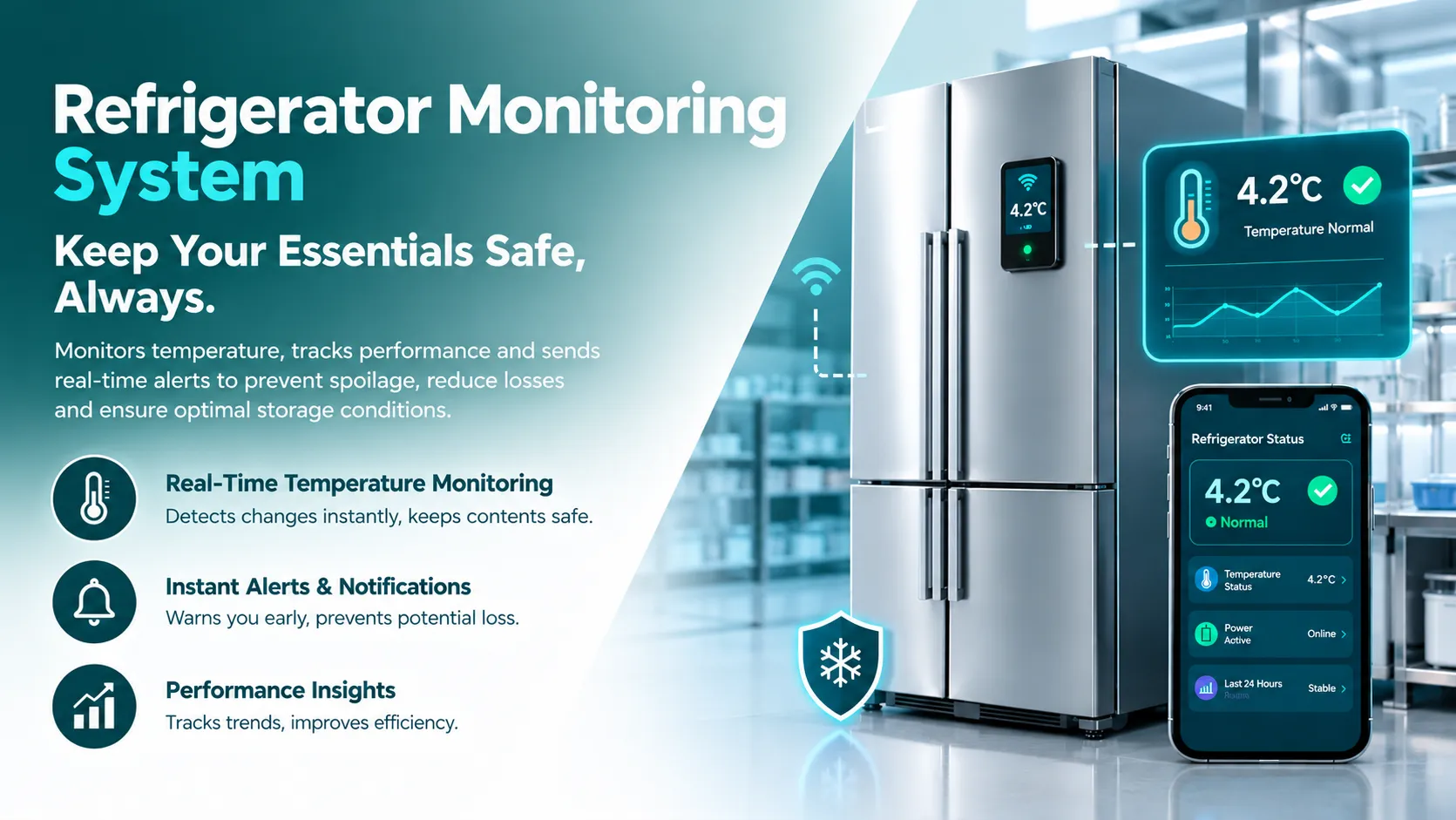
A modern Refrigerator Temperature Monitoring System uses digital sensors, connected monitoring devices, and software to track refrigerator temperatures continuously. It can send alerts when temperatures move outside predefined limits, helping staff respond before a minor issue becomes a serious problem.
By adopting a smart monitoring solution, businesses can improve temperature visibility, reduce product losses, maintain accurate records, and strengthen operational efficiency. Whether used in healthcare, pharmaceutical storage, food distribution, or hospitality, refrigerator monitoring helps organizations protect temperature-sensitive products and maintain dependable storage conditions.
What Is a Refrigerator Monitoring System?
A Refrigerator Monitoring System is a technology-based solution that automatically measures, records, and monitors the temperature inside refrigerators, freezers, medical refrigerators, and cold storage equipment.
Unlike traditional thermometers that require staff to check and record readings manually, an automated system collects temperature data at configured intervals. Depending on the solution, users can access this information through a computer, mobile device, or centralized dashboard.
The system can also notify designated personnel when a temperature exceeds or falls below its configured limits. These alerts help staff investigate potential problems, take corrective action, and document the incident.
A typical IoT Refrigerator Monitoring System includes temperature sensors, a data transmission unit, monitoring software, alert notifications, and historical reporting capabilities.
For organizations in Oman, this technology supports better refrigeration management across healthcare facilities, laboratories, pharmaceutical warehouses, food storage facilities, and commercial kitchens.
Why Refrigerator Monitoring Is Important in Oman
Oman's hot climate creates additional challenges for refrigeration equipment. High outdoor temperatures can increase cooling demands, while heavy usage, poor maintenance, electrical interruptions, or equipment failures can affect internal storage conditions.
These problems are particularly concerning when refrigerators contain products that must remain within specific temperature ranges.
1. Protecting Temperature-Sensitive Products
Medicines, vaccines, biological samples, dairy products, and fresh food can deteriorate when exposed to unsuitable temperatures. Continuous monitoring helps organizations identify temperature deviations quickly and reduce the risk of product damage.
2. Reducing Product Losses
A refrigeration failure may remain unnoticed for several hours if temperature checks are performed only at scheduled times. Automated monitoring helps identify abnormal conditions earlier, allowing staff to investigate before the situation becomes more serious.
3. Improving Operational Efficiency
Manual temperature recording takes time and depends on staff availability. An automated Temperature Monitoring System reduces repetitive work and makes temperature information easier to access.
4. Supporting Documentation and Audits
Facilities that store medicines, vaccines, or food products may need reliable temperature records for internal procedures, inspections, and quality management. Digital reports provide a clearer history of storage conditions and documented temperature incidents.
How Does a Refrigerator Temperature Monitoring System Work?
A smart refrigerator monitoring solution combines hardware and software to provide continuous visibility into refrigeration performance.
Step 1: Temperature Measurement
Digital sensors are installed at suitable monitoring points inside refrigerators, freezers, or cold rooms. These sensors measure temperature according to the configured monitoring interval.
Step 2: Automatic Data Collection
The monitoring device collects readings and transfers them to the monitoring platform through an available connection, such as Wi-Fi, Ethernet, or a supported wireless network.
Step 3: Real-Time Temperature Visibility
The software displays current readings, temperature trends, equipment status, and historical information. Authorized users can monitor multiple refrigeration units from a centralized dashboard.
Step 4: Instant Alerts
When the measured temperature exceeds predefined limits, the system can send notifications through supported channels, such as SMS, email, or application alerts.
Step 5: Reporting and Analysis
The platform stores temperature readings and generates reports that help organizations review performance, investigate incidents, identify recurring problems, and improve maintenance planning.
This automated process makes Remote Refrigerator Temperature Monitoring more convenient and dependable than relying entirely on manual checks.
Key Features of a Refrigerator Monitoring System
When selecting a monitoring solution for a facility in Oman, organizations should consider the following essential features.
1. Continuous Temperature Monitoring
The system measures and records refrigerator temperatures automatically at configured intervals. This provides better visibility into storage conditions throughout the day and night.
2. Real-Time Alerts and Notifications
Temperature Alarm Monitoring alerts responsible personnel when readings move outside configured limits. Notifications can help staff respond to cooling problems, open refrigerator doors, power interruptions, and other abnormal conditions, depending on the sensors and integrations installed.
3. Remote Monitoring Access
A Wireless Refrigerator Monitoring System or connected monitoring platform allows authorized users to view temperature readings remotely. This is particularly useful for facilities operating across multiple locations.
4. Historical Data Logging
Automated data logging maintains a record of temperature readings over time. Staff can use these records to investigate incidents, review refrigeration performance, and support internal quality procedures.
5. Customizable Temperature Thresholds
Different products require different storage conditions. The system should allow administrators to configure suitable temperature limits for each refrigerator or storage application.
6. Centralized Monitoring Dashboard
A centralized dashboard helps users monitor multiple refrigerators, freezers, and storage rooms from one interface. This makes it easier to identify equipment requiring immediate attention.
7. Power Failure and Equipment Alerts
Where supported by the installed hardware, the system can identify power interruptions or equipment-related conditions. These additional alerts help staff investigate potential refrigeration risks more quickly.
8. Temperature Reports and Data Export
Reporting features allow authorized users to review historical records, temperature excursions, alarm events, and corrective actions. Export options can simplify documentation and internal reporting.
Applications of Refrigerator Monitoring Systems in Oman
A Smart Refrigerator Monitoring System can support many industries where temperature stability is important.
Healthcare and Hospitals
Hospitals use refrigerators to store medicines, vaccines, laboratory reagents, and other temperature-sensitive materials. Continuous monitoring helps healthcare personnel identify deviations and respond according to established storage procedures.
Pharmaceutical Storage and Distribution
Pharmaceutical companies, distributors, and medical supply warehouses need reliable temperature control to protect product quality. Automated monitoring provides temperature records and alerts that support established quality-management processes.
Laboratories and Research Facilities
Laboratories may store diagnostic samples, reagents, and biological materials that require specific environmental conditions. Temperature monitoring helps staff identify unusual readings and investigate possible storage incidents.
Blood Banks and Medical Storage Facilities
Blood banks and other medical storage facilities require carefully controlled storage conditions for particular products. Appropriate monitoring systems can help track relevant temperatures and alert staff when readings move outside configured limits.
Supermarkets and Food Retail
Supermarkets depend on refrigeration to preserve dairy products, meat, seafood, frozen foods, and other perishable goods. Monitoring helps identify potential cooling problems before they lead to extensive spoilage.
Hotels, Restaurants, and Catering Businesses
Oman's hospitality sector relies on refrigerators and freezers to maintain food quality and support safe food-handling practices. Automated monitoring can reduce manual workload and help kitchen teams detect refrigeration problems outside normal working hours.
Cold Storage and Food Distribution
Cold storage warehouses and distribution facilities often manage multiple refrigeration units. Centralized monitoring helps operators track temperatures across storage areas and respond to abnormal conditions more efficiently.
Benefits of Implementing a Refrigerator Monitoring System
Investing in a reliable Refrigerator Monitoring Solution in Oman can deliver several operational benefits.
Improved product protection: Continuous temperature visibility helps staff detect potential problems and take timely corrective action.
Reduced wastage: Early notifications can help reduce losses caused by unnoticed refrigeration failures, although outcomes depend on response time and the underlying fault.
Less manual work: Automated readings and digital records reduce the need for repetitive manual temperature logging.
Better accountability: Alerts, historical records, and documented responses help teams understand when an incident occurred and how it was handled.
Remote accessibility: Authorized personnel can monitor refrigeration conditions without being physically present at every location.
Improved maintenance planning: Historical temperature trends can help identify recurring deviations that may indicate equipment or operational issues.
Stronger quality management: Consistent monitoring and reliable records support internal procedures and may help facilities prepare for applicable audits and inspections.
Greater operational confidence: Managers gain a clearer picture of refrigeration performance and can make informed decisions about maintenance, equipment replacement, and storage practices.
Choosing the Right Refrigerator Monitoring System in Oman
Selecting the right solution requires more than comparing sensor prices. Organizations should evaluate their storage requirements, monitoring environment, and operational risks.
Consider the Required Temperature Range
Choose sensors suitable for the refrigerator or freezer's operating range. Medical refrigerators, ultra-low-temperature freezers, and commercial food storage units may require different sensor specifications.
Check Sensor Accuracy and Calibration
Sensor accuracy is important when small temperature deviations can affect product quality. Confirm the manufacturer's specifications, calibration requirements, and available calibration documentation.
Evaluate Connectivity and Reliability
Consider whether Wi-Fi, Ethernet, or another supported communication method is suitable for the facility. Ask how the system behaves during internet or power interruptions and whether it can retain readings locally.
Review Alert Configuration
Check whether alerts can be configured for different equipment, thresholds, delays, and responsible personnel. Clear escalation procedures help prevent important notifications from being overlooked.
Assess Reporting and Data Retention
Choose a platform that maintains useful historical records and provides accessible reports. Data retention periods, export options, access permissions, and backup arrangements should match operational requirements.
Consider Scalability
A scalable IoT Temperature Monitoring System should support additional refrigerators, freezers, and facilities as the organization grows.
Evaluate Support and Maintenance
Confirm the availability of installation assistance, calibration support, technical maintenance, and user training. Local support arrangements can be particularly useful for organizations managing critical storage equipment.
Refrigerator Monitoring and Regulatory Readiness
Healthcare, pharmaceutical, laboratory, and food businesses in Oman should establish storage and monitoring procedures appropriate to their products and applicable regulatory obligations.
A monitoring system can support these procedures by maintaining temperature records, documenting deviations, and helping staff demonstrate how incidents were handled. However, installing monitoring technology alone does not guarantee regulatory compliance.
Organizations should confirm the specific requirements applicable to their activities, products, and facility type. They should also maintain suitable operating procedures, staff training, equipment maintenance schedules, sensor calibration records, and corrective-action documentation.
For pharmaceutical and healthcare applications, the system should be selected and configured according to the relevant product storage requirements and applicable guidance. Food businesses should likewise follow the food safety and temperature-control requirements relevant to their operations.
Conclusion
A reliable Refrigerator Monitoring System in Oman helps organizations protect temperature-sensitive products, improve refrigeration visibility, reduce avoidable wastage, and maintain accurate temperature records. From hospitals and pharmaceutical warehouses to laboratories, supermarkets, hotels, and cold storage facilities, automated monitoring provides a practical way to identify temperature deviations and respond more effectively.
As Oman continues to develop its healthcare, logistics, pharmaceutical, and hospitality sectors, dependable temperature monitoring can play an important role in operational efficiency and product protection.
Tektronix Technologies provides technology solutions that help organizations explore smarter monitoring and automation approaches. By selecting a suitable Refrigerator Temperature Monitoring System, businesses can strengthen temperature control, improve recordkeeping, and build a more reliable approach to managing critical refrigeration equipment.
For organizations seeking better visibility into refrigerator performance, investing in an appropriately configured monitoring solution is a practical step toward safer storage, informed decision-making, and more efficient operations.
Frequently Asked Questions (FAQs)
1. What is a Refrigerator Monitoring System?
A Refrigerator Monitoring System automatically measures, records, and tracks refrigerator temperatures. Depending on its configuration, it can provide remote access, historical reports, and alerts when temperatures move outside predefined limits.
2. Why is refrigerator temperature monitoring important in Oman?
Oman's hot climate can increase refrigeration demands and make reliable cooling particularly important. Continuous monitoring helps businesses identify temperature deviations, respond to equipment problems, and protect temperature-sensitive products.
3. Can a refrigerator monitoring system send alerts at night?
Yes. Systems configured for continuous operation can send alerts when temperature readings exceed defined limits, including during nights, weekends, and holidays. Notifications depend on the installed system, connectivity, and alert configuration.
4. Which industries benefit from refrigerator monitoring systems?
Hospitals, pharmacies, pharmaceutical warehouses, laboratories, blood banks, supermarkets, restaurants, hotels, food distributors, and cold storage facilities can benefit from automated temperature monitoring.
5. How do I choose the best refrigerator monitoring system in Oman?
Evaluate sensor accuracy, temperature range, calibration support, alert options, connectivity, reporting capabilities, data retention, scalability, and technical support. Select a solution that matches your products' storage requirements and your organization's operational procedures.


























Sign in to leave a comment.