Refrigerator Monitoring System in Qatar: Smart Temperature Monitoring for Healthcare, Pharmaceuticals, and Cold Chain Safety

Introduction
Maintaining the correct temperature is essential for protecting vaccines, medicines, laboratory samples, blood products, and perishable food items. In Qatar, where high outdoor temperatures and demanding storage requirements can place additional pressure on refrigeration equipment, reliable temperature control is particularly important for healthcare facilities, pharmaceutical companies, laboratories, supermarkets, and food storage businesses.
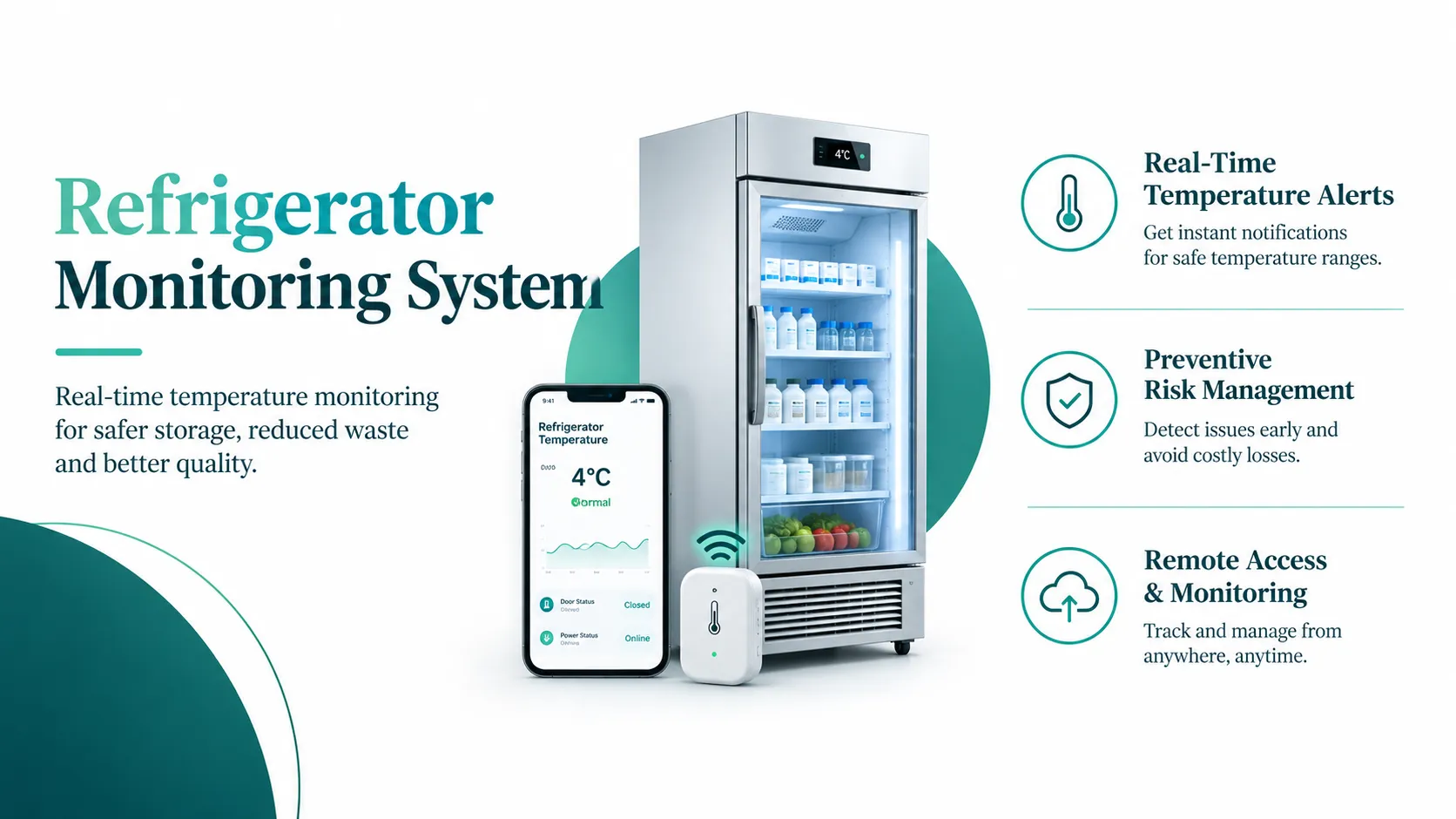
A Refrigerator Monitoring System in Qatar provides a smart and reliable way to monitor refrigerator temperatures continuously, identify abnormal conditions, and notify responsible personnel when immediate action is required. By combining accurate temperature sensors, wireless connectivity, automated alerts, and centralized monitoring dashboards, businesses can maintain better control over temperature-sensitive products.
Traditional temperature monitoring often relies on manual readings at scheduled intervals. Although these checks remain useful, they may fail to identify temperature fluctuations that occur between inspections, overnight, or during holidays. A modern Refrigerator Temperature Monitoring System helps overcome these limitations through continuous monitoring and automated data recording.
For organizations across Doha, Al Wakrah, Lusail, Al Rayyan, and other parts of Qatar, implementing an intelligent refrigerator monitoring solution can improve operational efficiency, support quality management, reduce product wastage, and strengthen cold chain reliability.
What Is a Refrigerator Monitoring System?
A Refrigerator Monitoring System is a technology-based solution designed to measure, record, and monitor the temperature of refrigerators, freezers, cold rooms, and other temperature-controlled storage equipment.
The system uses digital temperature sensors or probes to collect readings at configured intervals. These readings are transmitted to a monitoring platform, where authorized users can review live temperatures, historical records, equipment status, and alarm notifications.
If the temperature moves outside the predefined acceptable range, the system can generate an alert through email, SMS, mobile notifications, or other supported communication channels.
Depending on the application, a Smart Refrigerator Monitoring System may also monitor humidity, door status, power interruptions, and other environmental conditions that affect product safety.
This technology is particularly valuable for facilities that need consistent temperature control, reliable documentation, and quick responses to refrigeration failures.
Why Is Refrigerator Temperature Monitoring Important in Qatar?
Qatar's climate, with its prolonged hot periods and high cooling demands, makes dependable refrigeration essential across multiple industries. Refrigerators and freezers may experience additional operational pressure when cooling systems operate continuously in challenging environmental conditions.
Even when storage equipment appears to function normally, problems such as compressor failure, poor door sealing, power interruptions, sensor faults, or excessive door opening can cause unexpected temperature changes.
A Remote Refrigerator Monitoring System helps organizations identify these issues before they result in significant product losses or operational disruptions.
1. Protecting Temperature-Sensitive Products
Vaccines, medicines, biological samples, and certain food products require specific storage conditions. Temperature excursions can affect product quality and may make some items unsuitable for use.
Continuous monitoring helps staff identify deviations promptly and follow the appropriate assessment and corrective-action procedures.
2. Reducing Product Wastage
Refrigeration failures can result in the loss of valuable pharmaceutical products, laboratory materials, and perishable food inventory. Automated alerts help personnel respond sooner, potentially reducing avoidable waste and replacement costs.
3. Improving Operational Efficiency
Automated temperature recording reduces dependence on repetitive manual checks. Staff can review readings remotely and focus on other essential responsibilities while maintaining visibility into refrigeration conditions.
4. Supporting Documentation and Audits
Digital temperature histories, alarm records, and reports help organizations demonstrate how storage conditions have been monitored. These records can support internal quality reviews, inspections, and applicable regulatory requirements.
Key Features of a Refrigerator Monitoring System
A modern Wireless Refrigerator Monitoring System combines several important capabilities to improve temperature control and operational visibility.
1. Continuous Temperature Monitoring
Accurate digital sensors measure refrigerator or freezer temperatures continuously or at configured sampling intervals. The system displays readings through a centralized dashboard, allowing staff to identify abnormal conditions without waiting for the next manual inspection.
Temperature limits can be configured according to the product, equipment, and approved storage procedures.
2. Real-Time Alerts and Notifications
Automated alarms are among the most valuable features of a Refrigerator Temperature Monitoring System.
When temperatures exceed or fall below configured limits, the platform can notify designated personnel through supported channels. Notifications may also be generated for sensor communication failures, power interruptions, or other monitored events.
Alert escalation can help ensure that critical alarms receive attention if the first recipient does not respond.
3. Remote Monitoring Through a Central Dashboard
A cloud-based or locally hosted dashboard allows authorized users to check temperature readings from supported computers, tablets, or smartphones.
Organizations operating multiple storage locations can benefit from centralized visibility, making it easier to review refrigerator conditions across different departments or facilities.
4. Automatic Data Logging
A Temperature Data Logger records temperature readings with timestamps, creating a historical record of storage conditions.
Authorized users can review temperature trends, investigate past incidents, and export reports when needed. Data retention, backup, access controls, and export capabilities depend on the selected system.
5. Temperature Excursion History
The monitoring platform can record temperature deviations, alarm activation times, acknowledgements, and corrective actions where supported.
This information helps quality teams investigate incidents, identify recurring equipment problems, and improve standard operating procedures.
6. Power Failure and Equipment Monitoring
Optional power monitoring and equipment-status sensors can help identify interruptions that may affect refrigeration performance.
Where supported, door sensors can also detect prolonged opening events that may contribute to temperature instability.
7. Scalable Multi-Site Monitoring
A scalable IoT Refrigerator Monitoring System can support multiple refrigerators, freezers, laboratories, warehouses, and branches through one monitoring environment.
As operational requirements grow, organizations can add sensors and monitoring points without necessarily replacing the entire platform.
Major Benefits of Implementing a Refrigerator Monitoring System
Improved Product Quality and Safety
Continuous monitoring helps identify potentially harmful temperature deviations before they remain undetected for extended periods. This supports better management of temperature-sensitive inventory.
However, monitoring alone cannot guarantee product safety. Organizations must also maintain suitable equipment, validate storage conditions, and follow approved procedures for handling temperature excursions.
Reduced Operational Costs
Automated monitoring reduces routine data collection efforts and can help prevent avoidable inventory losses. Early identification of cooling problems may also allow maintenance teams to investigate equipment faults before they become more serious.
Better Compliance Readiness
Digital logs and historical reports make it easier to demonstrate temperature-control practices during audits and quality reviews.
A monitoring system should be selected according to the facility's applicable requirements, including relevant healthcare, pharmaceutical, food-safety, and quality-management obligations. Installing a monitoring platform does not automatically establish regulatory compliance.
Faster Incident Response
Immediate notifications help staff investigate temperature deviations, power interruptions, and equipment problems more quickly.
Defined escalation procedures and clear staff responsibilities are essential to ensure alerts lead to appropriate action.
Greater Accountability
Time-stamped records help establish when an alarm occurred, who acknowledged it, and what corrective action was taken, provided the selected platform supports these functions.
This improves traceability and strengthens internal quality management.
Applications of Refrigerator Monitoring Systems in Qatar
A Refrigerator Monitoring System in Qatar can serve a wide range of industries where temperature stability is important.
1. Hospitals and Healthcare Facilities
Hospitals use refrigerators to store medicines, vaccines, blood products, and laboratory materials. Continuous monitoring helps pharmacy teams, nurses, laboratory personnel, and facility managers maintain oversight of storage conditions.
2. Pharmaceutical Companies and Medical Warehouses
Pharmaceutical storage facilities often manage products with specific temperature requirements. Automated monitoring supports inventory protection, temperature excursion investigations, and organized recordkeeping.
3. Laboratories and Research Centers
Clinical laboratories and research facilities may store biological specimens, reagents, diagnostic materials, and other sensitive items.
Continuous temperature records help personnel identify deviations that could affect sample integrity or research reliability.
4. Vaccination Centers and Medical Clinics
Vaccination facilities require dependable monitoring of vaccine storage equipment. Configurable alerts and documented temperature histories help staff identify problems and follow established vaccine-handling procedures.
5. Supermarkets and Food Retailers
Supermarkets and grocery stores rely on refrigeration to preserve dairy products, meat, seafood, frozen food, and other perishable goods.
Monitoring helps staff identify cooling failures, reduce potential spoilage, and maintain better visibility into storage conditions.
6. Hotels, Restaurants, and Catering Businesses
Hotels, commercial kitchens, catering providers, and food distribution businesses can use temperature monitoring to support food-storage procedures and reduce avoidable losses.
7. Cold Chain Logistics and Distribution
Temperature-sensitive products may pass through storage facilities, distribution centers, and transportation networks before reaching their destination.
Refrigerator monitoring can form part of a broader Cold Chain Monitoring System, helping organizations maintain visibility over stationary refrigeration equipment and coordinate temperature-control processes.
Choosing the Right Refrigerator Monitoring Solution in Qatar
Selecting the appropriate system requires evaluating the facility's operational needs rather than focusing solely on sensor price.
Temperature accuracy and calibration: Choose sensors with suitable measurement ranges and accuracy for the intended application. Establish calibration and verification procedures according to equipment specifications and quality requirements.
Reliable connectivity: Evaluate Wi-Fi, Ethernet, cellular, or other communication options based on building infrastructure and monitoring requirements. Consider what happens when the internet connection is interrupted.
Appropriate alarm configuration: Define upper and lower temperature limits, alarm delays, notification recipients, and escalation procedures according to approved storage requirements.
Data security and access control: Review user permissions, authentication, backup procedures, data retention, and the security of cloud or local hosting.
Battery backup and power resilience: Assess whether sensors, gateways, communication equipment, and the monitoring platform can continue operating during relevant power interruptions.
Reporting capabilities: Confirm that the platform supports the required historical reports, timestamps, alarm records, and data exports.
Technical support and maintenance: Evaluate installation quality, calibration services, system testing, maintenance arrangements, and technical assistance.
Scalability: Select a solution that can accommodate additional refrigerators, freezers, storage rooms, and locations as the organization expands.
Best Practices for Successful Implementation
To achieve reliable performance from a Smart Refrigerator Monitoring System, organizations should establish a structured implementation process.
- Identify monitoring requirements: List the refrigerators, freezers, products, and temperature ranges that need to be monitored.
- Install sensors correctly: Position probes according to the equipment design and the facility's validated monitoring procedure. Sensor placement should represent the relevant storage conditions.
- Configure alarm thresholds: Set suitable limits and notification delays according to approved procedures rather than using one universal threshold for every application.
- Test the complete system: Verify sensor readings, alarm delivery, escalation procedures, power-failure notifications, and communication recovery.
- Train responsible personnel: Ensure staff understand alarm acknowledgement, incident reporting, and temperature excursion response procedures.
- Review historical data: Analyze temperature trends and recurring alarms to identify opportunities for preventive maintenance.
- Maintain the equipment: Conduct sensor calibration, verification, battery replacement, and other maintenance activities according to the manufacturer's instructions and the organization's quality requirements.
These steps help transform temperature monitoring from a basic measurement activity into a dependable operational process.
The Future of Refrigerator Monitoring in Qatar
The growing adoption of connected technologies is creating opportunities for more intelligent temperature management across healthcare, pharmaceuticals, food retail, and logistics.
Modern IoT Temperature Monitoring Systems can combine remote access, automated alerts, historical analytics, and centralized reporting to provide greater operational visibility.
Advanced platforms may also support predictive maintenance by identifying recurring temperature fluctuations or unusual equipment behavior. These capabilities can help maintenance teams investigate developing problems and plan servicing more effectively.
For organizations managing multiple facilities, centralized monitoring can improve consistency and simplify oversight across different locations.
As Qatar continues to develop its healthcare infrastructure, pharmaceutical distribution capabilities, hospitality sector, and modern food supply chains, dependable refrigeration monitoring will remain an important component of quality management and operational resilience.
Conclusion
A reliable Refrigerator Monitoring System in Qatar helps healthcare providers, pharmaceutical companies, laboratories, supermarkets, and food businesses maintain better control over temperature-sensitive products. Through continuous monitoring, automated alerts, remote access, and digital temperature records, organizations can identify potential problems sooner, reduce avoidable losses, and improve operational efficiency.
Implementing the right Refrigerator Temperature Monitoring System also supports stronger documentation, clearer accountability, and more effective responses to temperature excursions. When combined with appropriate calibration, equipment maintenance, staff training, and documented procedures, it becomes a valuable part of an organization's temperature-control strategy.
Businesses in Qatar should evaluate monitoring solutions based on their storage requirements, connectivity, alert reliability, reporting capabilities, and long-term scalability. Investing in a suitable system can strengthen cold chain management, protect valuable inventory, and support consistent service quality across temperature-sensitive operations.
Frequently Asked Questions (FAQs)
1. What is a refrigerator monitoring system?
A refrigerator monitoring system uses sensors and monitoring software to measure, record, and display refrigerator temperatures. It can generate automatic alerts when readings move outside configured limits, helping staff respond to potential refrigeration problems.
2. Why is refrigerator temperature monitoring important in Qatar?
Qatar's hot climate and demanding refrigeration requirements make reliable temperature control essential for many businesses. Continuous monitoring helps identify cooling problems, protect temperature-sensitive products, reduce avoidable wastage, and maintain useful temperature records.
3. Can refrigerator temperatures be monitored remotely?
Yes. A Remote Refrigerator Monitoring System can transmit readings to a cloud-based or locally hosted dashboard. Authorized personnel can review temperatures and receive notifications through supported devices and communication channels.
4. Which industries benefit from refrigerator monitoring systems?
Hospitals, pharmacies, pharmaceutical warehouses, laboratories, vaccination centers, supermarkets, restaurants, hotels, catering businesses, and cold chain facilities can benefit from continuous temperature monitoring.
5. How does a refrigerator monitoring system help with compliance?
The system can provide time-stamped temperature records, excursion histories, and alarm reports that support audits and quality reviews. Actual compliance depends on the applicable requirements, correct system configuration, suitable calibration, and the organization's documented procedures.


Sign in to leave a comment.