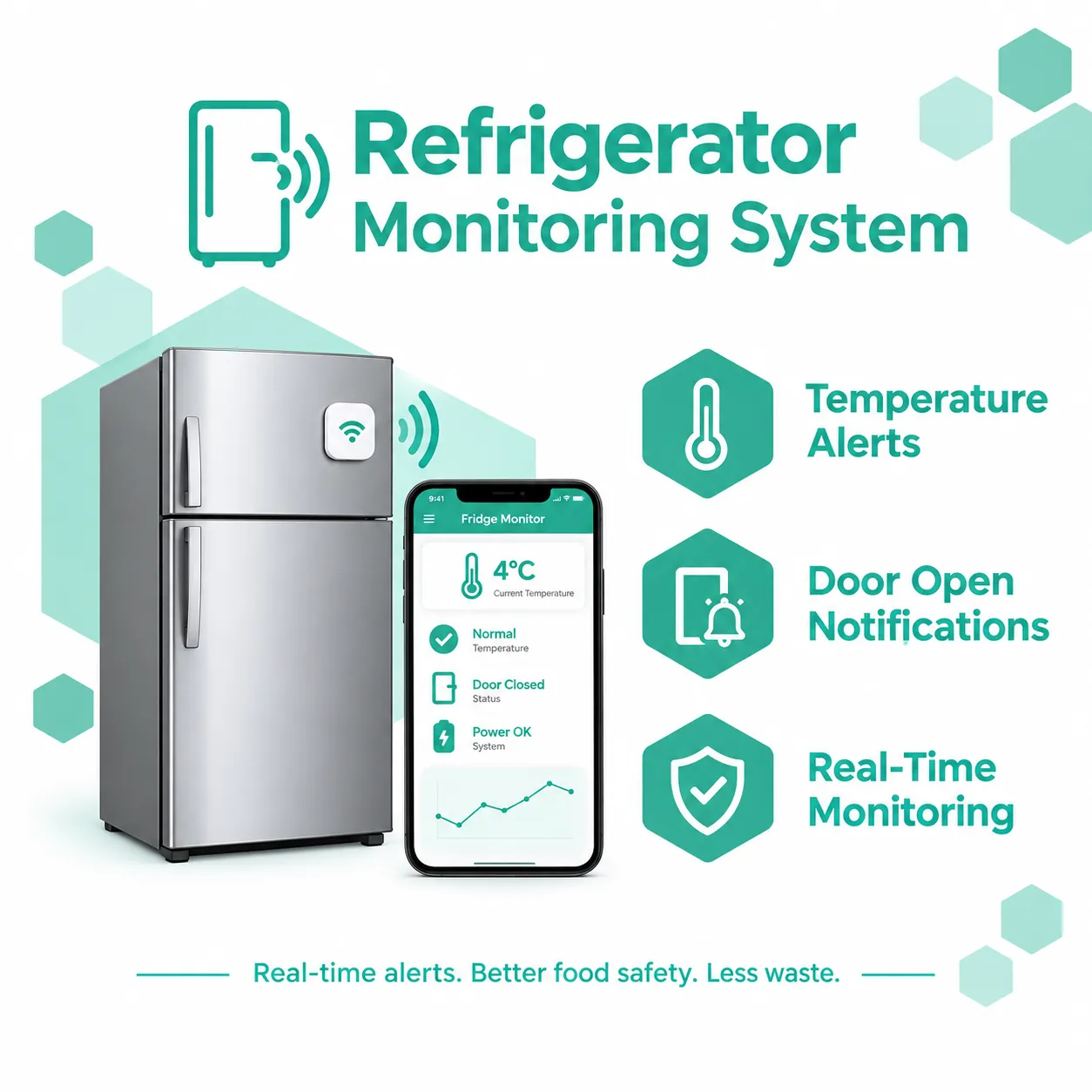

In Saudi Arabia, maintaining the right temperature for temperature-sensitive products is not simply an operational preference—it is an important part of protecting product quality, safety, and compliance. From hospitals and pharmacies to laboratories, food businesses, supermarkets, restaurants, and pharmaceutical warehouses, refrigerators often store products that can be damaged by temperature fluctuations.
A modern Refrigerator Monitoring System provides continuous visibility into refrigerator conditions and helps organizations respond quickly when temperatures move outside defined limits. Instead of relying only on manual temperature checks, businesses can use connected sensors, automated alerts, cloud dashboards, and historical reports to create a more reliable temperature monitoring system.
This is particularly relevant in Saudi Arabia, where organizations managing medicines, vaccines, laboratory materials, chilled foods, and other temperature-sensitive products need dependable monitoring throughout storage and distribution operations. The Saudi Food and Drug Authority (SFDA) provides guidance covering temperature monitoring for refrigerators and other temperature-controlled storage environments.
What Is a Refrigerator Monitoring System?
A Refrigerator Monitoring System is a technology-based solution designed to continuously measure and record the internal temperature of refrigerators, freezers, medical refrigerators, cold storage units, and similar equipment.
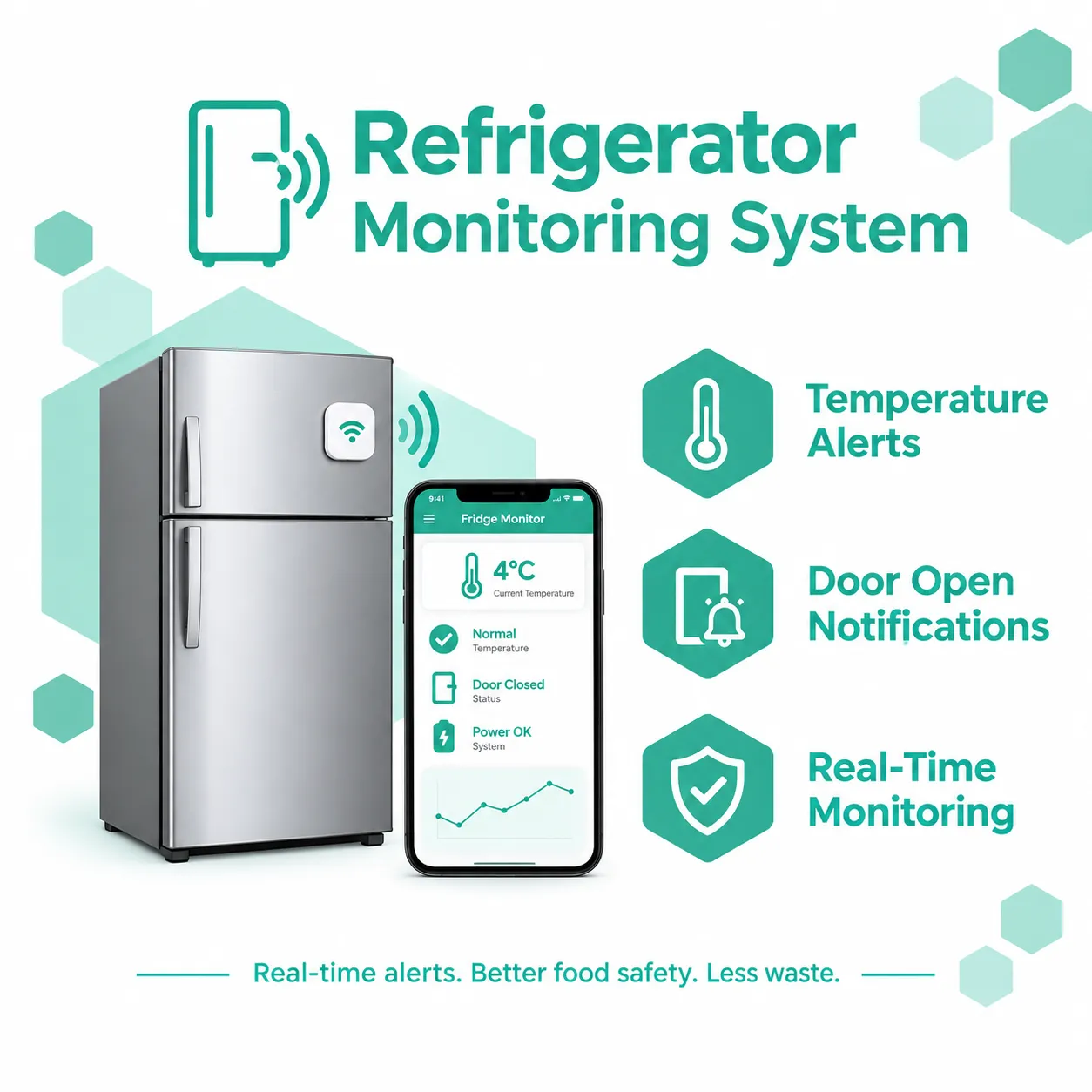
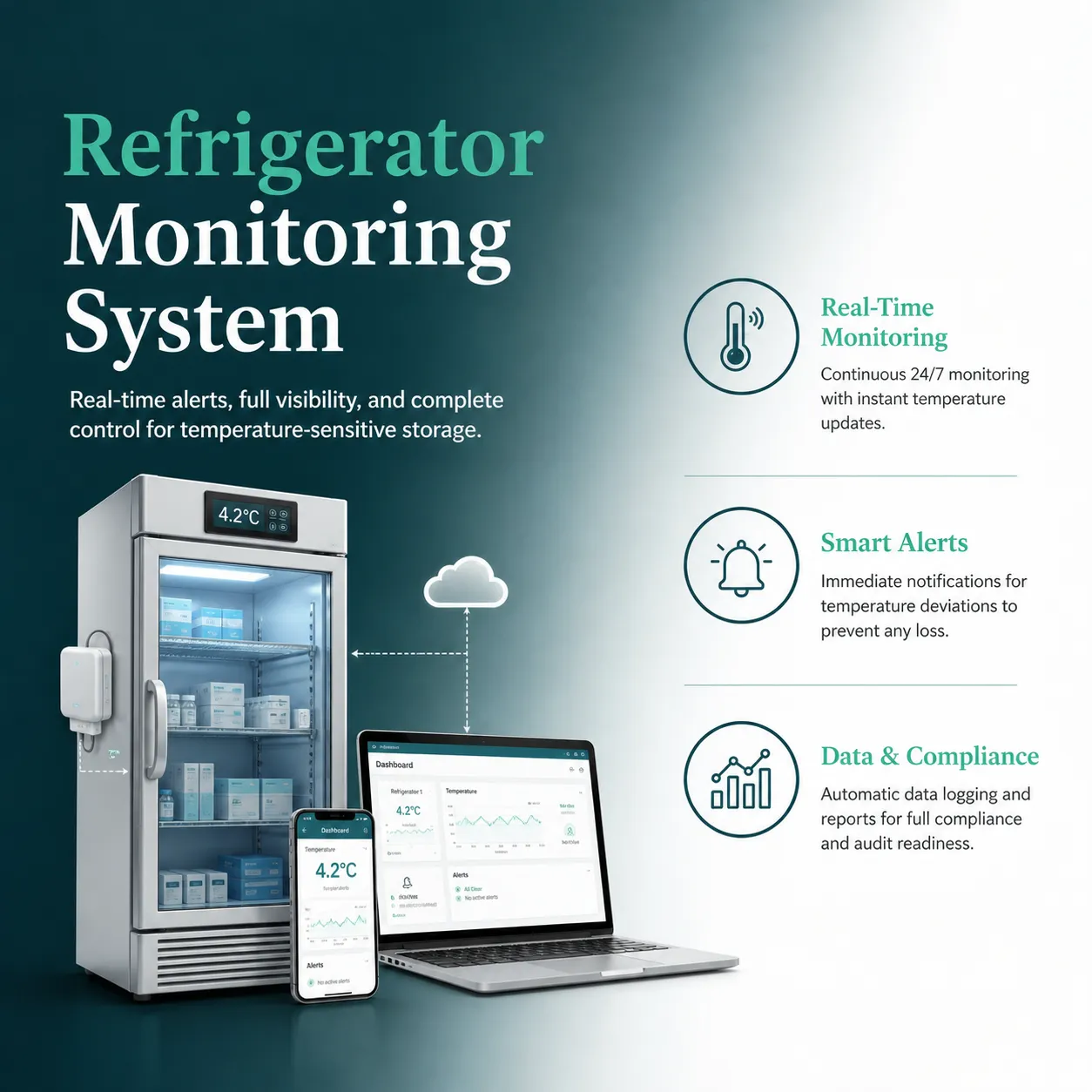
The system typically uses a digital temperature sensor installed inside the refrigerator. The sensor collects readings at configured intervals and sends the information to a monitoring platform. Depending on the solution, users can view current and historical temperatures through a web dashboard or mobile application.
If the temperature exceeds a predefined threshold, the system can generate an automatic temperature alert through channels such as SMS, email, mobile notifications, or other configured communication methods.
This changes refrigerator management from periodic manual checking to continuous, data-driven monitoring.
For temperature-sensitive pharmaceutical products, SFDA guidance calls for temperature monitoring systems and devices for refrigerators and freezers used to store time- and temperature-sensitive pharmaceutical products. The guidance also specifies requirements relating to sensor accuracy, calibration, placement, recording, and documentation.
Why Refrigerator Monitoring Is Important in Saudi Arabia
Saudi Arabia presents demanding environmental conditions for temperature-controlled operations. High outdoor temperatures can place additional pressure on refrigeration equipment, particularly when doors are opened frequently, power interruptions occur, equipment performance changes, or maintenance is delayed.
A refrigerator may appear to be operating normally while experiencing temperature variations that are not immediately visible to staff.
A reliable remote temperature monitoring system helps organizations identify these conditions earlier.
For example, a refrigerator containing temperature-sensitive medicines could experience a temperature excursion overnight. With manual inspection, the issue might only be discovered during the next scheduled check. With continuous monitoring, an alert can be generated when the temperature crosses the configured limit, allowing responsible staff to investigate promptly.
SFDA guidance states that temperature-controlled storage environments should have appropriate temperature monitoring, while its guidance for refrigerators and freezers includes continuous monitoring requirements and independent operation during power failures for relevant pharmaceutical storage applications.
How a Refrigerator Monitoring System Works
A typical IoT refrigerator monitoring system consists of several connected components:
1. Temperature Sensors
A digital sensor continuously measures the refrigerator's internal temperature. Depending on the application, organizations may use wired or wireless sensors.
Sensor selection should consider the required measurement range, accuracy, calibration requirements, installation environment, and the characteristics of the stored products.
2. IoT Connectivity
The monitoring device transmits temperature information to a centralized platform using an appropriate connectivity method.
This allows authorized users to access refrigerator conditions without physically standing beside the equipment.
3. Cloud Monitoring Dashboard
A cloud-based temperature monitoring system can display current readings, historical trends, device status, alerts, and other operational information through a centralized dashboard.
Organizations managing multiple refrigerators can use a single interface to monitor equipment across different rooms, departments, branches, or facilities.
4. Automated Alerts
One of the most important capabilities is real-time temperature alerts.
Users can establish acceptable temperature thresholds based on product requirements and operational procedures. When readings move outside those limits, the system can notify designated personnel.
5. Historical Data and Reports
The platform can store temperature readings and create historical records. This makes it easier to investigate temperature excursions, identify recurring problems, demonstrate monitoring activity, and support internal quality procedures.
SFDA guidance also emphasizes maintaining temperature records and making relevant records accessible for review.
Key Features of Refrigerator Monitoring
A professional refrigerator temperature monitoring system can provide several important features.
Continuous 24/7 Monitoring
Instead of depending entirely on manual checks, sensors can monitor refrigerator conditions continuously. This provides visibility during nights, weekends, holidays, and periods when staff are not physically present.
Real-Time Alerts
Temperature alerts notify responsible personnel when readings move outside configured limits. Faster awareness can help reduce the time between an abnormal condition and corrective action.
Remote Monitoring
With remote refrigerator monitoring, authorized users can check temperature conditions from a computer, tablet, or smartphone.
This is particularly useful for organizations managing multiple facilities or refrigerators.
Data Logging
Automatic temperature data logging creates a chronological record of measurements. Historical information can help organizations understand equipment behavior and investigate temperature excursions.
Multi-Refrigerator Monitoring
A centralized platform can monitor multiple refrigerators and freezers from one location. This can simplify management for hospitals, laboratories, pharmacies, supermarkets, food businesses, and distribution facilities.
Power Failure Notifications
A refrigerator can be affected by electrical interruptions or equipment failures. A monitoring solution can provide notifications when the monitoring infrastructure detects relevant power or device conditions, depending on system design.
Dashboard and Analytics
A modern IoT temperature monitoring platform can turn sensor readings into useful visual information, including current conditions, historical graphs, alerts, and device status.
Reporting and Documentation
Digital records can simplify documentation and help organizations maintain an accessible history of refrigerator conditions.
Benefits of Refrigerator Monitoring for Saudi Businesses
Protect Temperature-Sensitive Products
Medicines, vaccines, laboratory materials, chilled food, and other products may require controlled storage conditions.
SFDA identifies chilled and frozen foods and products requiring specific transportation or storage temperatures among categories for which temperature indicators or data loggers may be required during transportation.
Continuous monitoring provides greater visibility into whether storage conditions remain within defined requirements.
Reduce Product Loss
A temperature excursion can potentially result in product deterioration, waste, investigation, or financial loss.
Smart refrigerator monitoring helps organizations identify abnormal conditions earlier so that staff can investigate before the issue develops into a larger operational problem.
Improve Operational Efficiency
Manual temperature recording consumes staff time and can create inconsistent documentation.
Automated monitoring reduces dependence on repetitive manual checks and gives staff centralized access to current and historical data.
Support Compliance and Audits
Organizations handling regulated or temperature-sensitive products may need reliable documentation of storage conditions.
Digital records can provide an organized history of measurements and alerts. SFDA guidance states that temperature and humidity records for relevant temperature-sensitive products should be retained and accessible for review.
Improve Visibility Across Multiple Locations
A centralized remote temperature monitoring system can help organizations monitor refrigerators across hospitals, pharmacies, laboratories, supermarkets, restaurants, warehouses, and branch locations.
This makes it easier for managers to identify which units require attention without physically visiting every refrigerator.
Applications of Refrigerator Monitoring in Saudi Arabia
Hospitals and Healthcare Facilities
Hospitals use refrigerators for medicines, vaccines, laboratory materials, and other temperature-sensitive supplies.
A medical refrigerator monitoring system can provide continuous visibility and alerts to help staff respond to temperature deviations.
Pharmacies
Pharmacies can use temperature monitoring to maintain visibility over refrigerators storing medicines and other temperature-sensitive products.
Pharmaceutical Warehouses
Large pharmaceutical facilities may operate multiple cold storage areas and refrigerators. Centralized monitoring can help quality teams track conditions across different storage zones.
Laboratories and Research Centers
Laboratory refrigerators may contain reagents, samples, diagnostic materials, and other sensitive products. Automated monitoring provides a digital record of storage conditions.
Food and Beverage Businesses
Supermarkets, restaurants, catering companies, food processors, and commercial kitchens can use food temperature monitoring to monitor chilled and frozen storage.
SFDA maintains requirements and guidance relating to the transportation and storage of chilled and frozen foods.
Cold Chain Operations
Refrigerator monitoring can also complement wider cold chain monitoring strategies, helping organizations maintain visibility from storage facilities to distribution points.
Refrigerator Monitoring and Cold Chain Management
A refrigerator is only one part of the wider cold chain.
Products can encounter temperature changes during manufacturing, transportation, warehousing, storage, distribution, and final delivery. Monitoring individual refrigeration units helps organizations create better visibility at critical storage points.
SFDA has also implemented digital temperature and humidity tracking initiatives for food and drug transportation and storage, demonstrating the growing role of connected monitoring technologies in Saudi cold-chain operations.
A comprehensive cold chain monitoring system can therefore combine refrigerator sensors, transport monitoring, dashboards, alerts, and historical data to provide a more complete picture of temperature-controlled operations.
Choosing the Right Refrigerator Monitoring System
Organizations should evaluate several factors before selecting a solution.
Sensor Accuracy
Choose sensors appropriate for the required temperature range and application. For regulated pharmaceutical storage, sensor accuracy and calibration requirements should be considered carefully in line with applicable SFDA guidance.
Alert Configuration
The system should support configurable thresholds based on the requirements of the products being stored and the organization's procedures.
Connectivity
Connectivity should be reliable for the facility's environment. Wireless, cellular, Ethernet, or other communication technologies may be suitable depending on infrastructure.
Data Storage
Look for secure historical data storage, easy retrieval, reporting, and appropriate access controls.
Scalability
If an organization operates multiple refrigerators today—or expects to add more in the future—the platform should support expansion without creating unnecessary administrative complexity.
Battery and Power Resilience
Monitoring should continue to provide useful information during relevant power or communication interruptions, subject to the architecture of the selected system.
User-Friendly Dashboard
A simple dashboard helps staff quickly understand current temperatures, active alerts, historical trends, and device status.
The Future of Smart Refrigerator Monitoring
The future of smart temperature monitoring is increasingly connected, automated, and data-driven.
IoT sensors can provide continuous streams of information, while cloud platforms can centralize monitoring across facilities. Automated alerts can help teams react faster, and analytics can reveal recurring temperature patterns or equipment issues.
Organizations can also integrate monitoring data with broader facility management, quality management, maintenance, and cold-chain workflows.
For Saudi businesses, this creates an opportunity to move beyond basic temperature recording toward proactive refrigeration monitoring and operational intelligence.
Conclusion
A reliable Refrigerator Monitoring System can play an important role in protecting temperature-sensitive products, improving operational visibility, reducing avoidable losses, and maintaining organized temperature records.
For hospitals, pharmacies, laboratories, pharmaceutical companies, supermarkets, restaurants, food businesses, and cold-chain operators across Saudi Arabia, continuous monitoring provides a practical alternative to relying solely on periodic manual checks.
By combining accurate sensors, real-time alerts, remote access, automated data logging, centralized dashboards, and historical reporting, organizations can create a more proactive approach to temperature control.
As Saudi Arabia's healthcare, pharmaceutical, food, and logistics sectors continue to adopt connected technologies, IoT refrigerator monitoring can become an increasingly valuable part of modern temperature-controlled operations.
Frequently Asked Questions
1. What is a Refrigerator Monitoring System?
A Refrigerator Monitoring System uses sensors and monitoring software to continuously measure refrigerator temperature. It can record historical data and send alerts when temperature readings exceed configured limits.
2. Why is refrigerator temperature monitoring important in Saudi Arabia?
Temperature monitoring helps organizations identify temperature excursions that could affect sensitive medicines, vaccines, laboratory materials, food, and other products. It also provides documented temperature records for operational and compliance purposes.
3. Can refrigerator temperature be monitored remotely?
Yes. Many modern remote temperature monitoring systems use connected sensors and cloud platforms, allowing authorized users to view refrigerator conditions and receive alerts from remote locations.
4. Which businesses can use refrigerator monitoring?
Common applications include hospitals, pharmacies, laboratories, pharmaceutical warehouses, food distributors, supermarkets, restaurants, catering companies, research facilities, and other organizations that store temperature-sensitive products.
5. Does refrigerator monitoring help with compliance?
It can support compliance by creating organized temperature records, alerts, and historical documentation. However, the exact requirements depend on the product, facility, applicable regulations, and manufacturer storage specifications. Organizations should verify their specific obligations against current SFDA requirements and applicable guidance.




























Sign in to leave a comment.