
Introduction
Maintaining the right temperature is essential wherever temperature-sensitive products are stored. In the UAE, where high ambient temperatures can place additional pressure on refrigeration equipment, businesses need reliable ways to monitor and protect their cold-storage environments. A Refrigerator Monitoring System provides continuous visibility into temperature conditions, helping organizations identify problems before they result in product loss, compliance issues, or operational disruption.
Traditional temperature checks often depend on employees manually reading thermometers and recording values at scheduled intervals. Although this approach may provide basic information, it can leave significant gaps between measurements. A temperature problem that occurs outside inspection hours may remain unnoticed until products have already been affected.
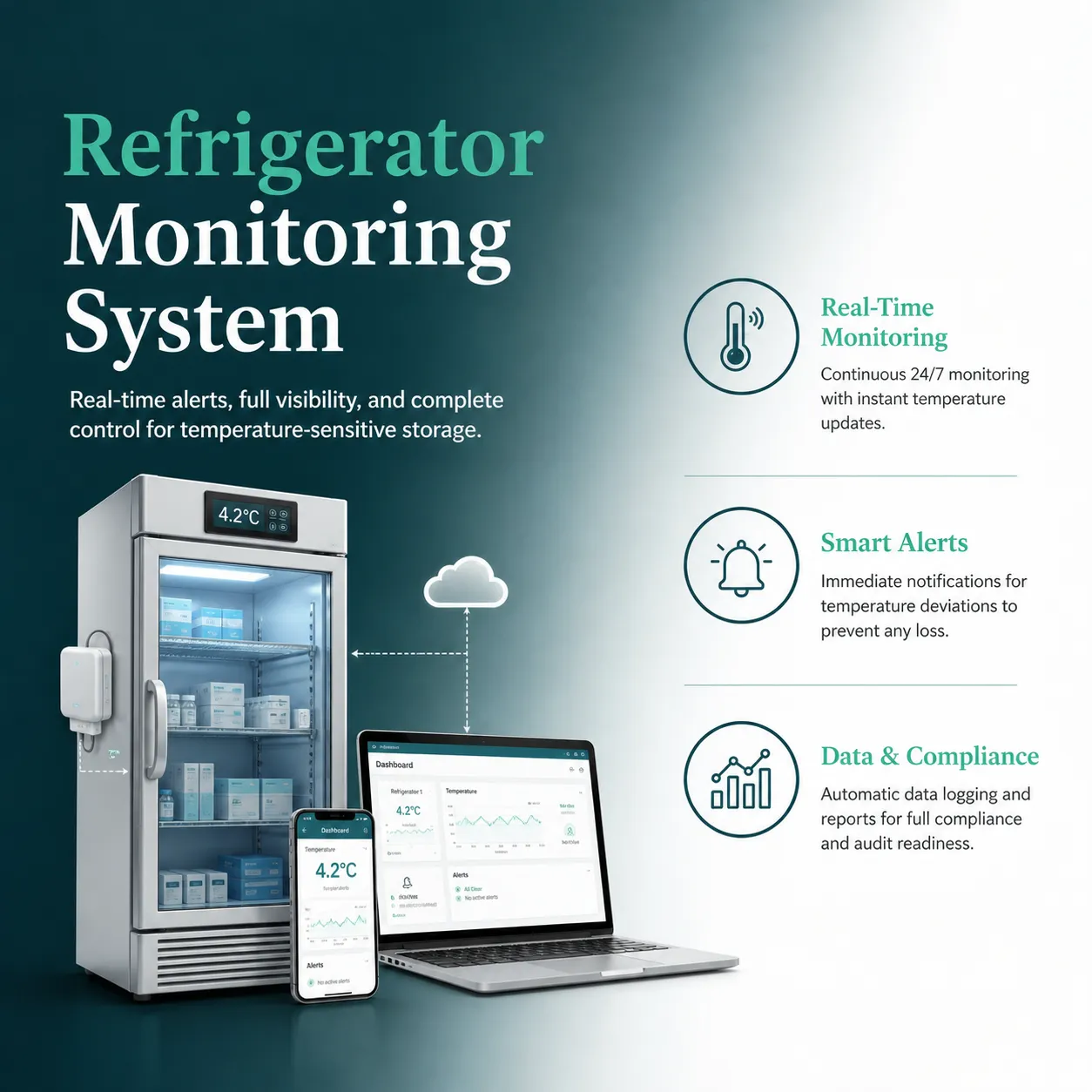
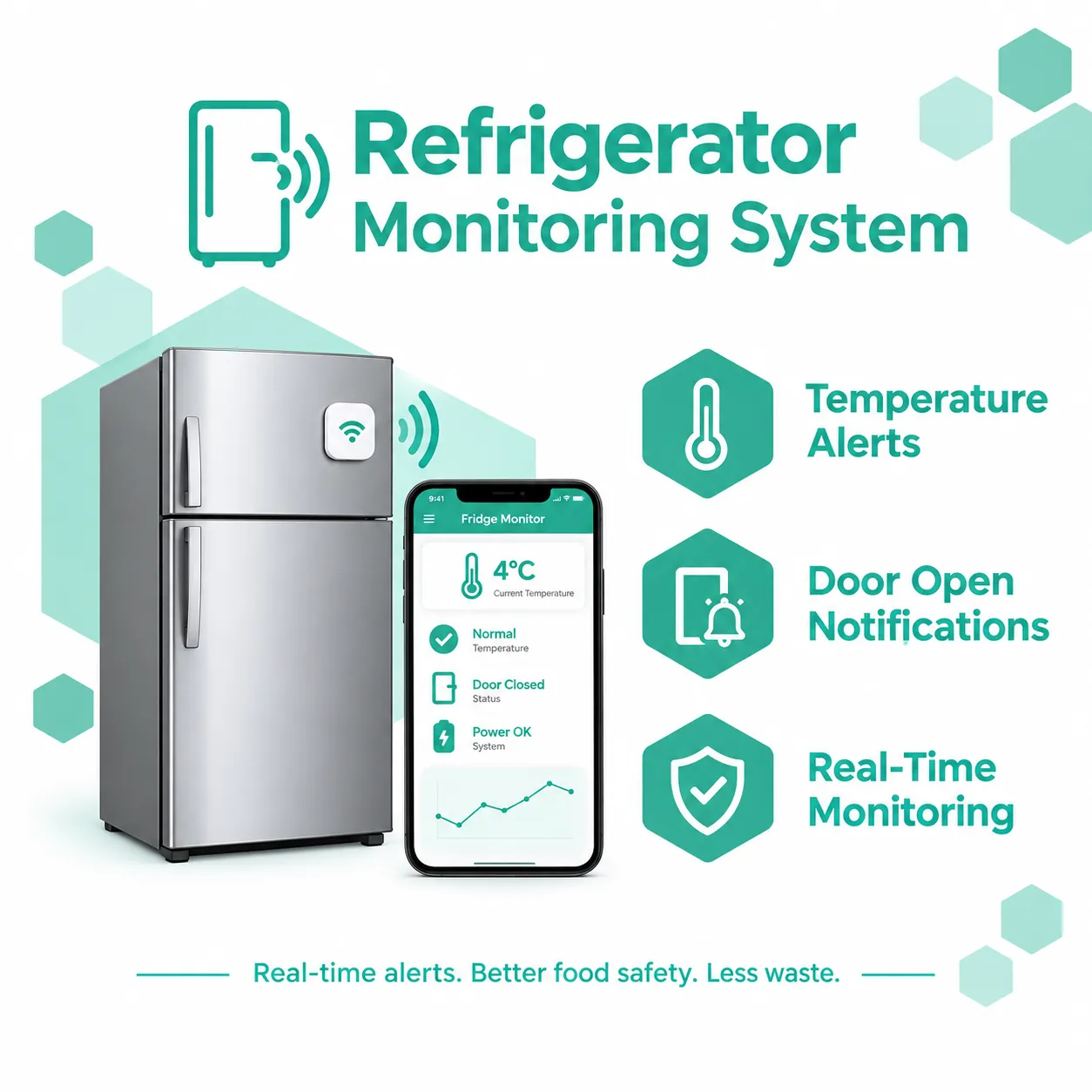
A modern temperature monitoring system uses sensors, connectivity, cloud-based platforms, alerts, and data analytics to provide continuous monitoring. Businesses can view refrigerator conditions remotely, receive notifications when temperatures move outside predefined limits, and maintain historical records for analysis and reporting.
For healthcare facilities, laboratories, pharmacies, restaurants, supermarkets, catering companies, hospitality businesses, and other organizations across the UAE, smart refrigerator monitoring can provide an important layer of operational control and protection.
What Is a Refrigerator Monitoring System?
A Refrigerator Monitoring System is a technology-based solution designed to continuously measure and record the temperature inside refrigerators, freezers, cold rooms, medical storage units, and other temperature-controlled environments.
The system typically consists of:
- Temperature sensors
- Wireless or wired connectivity
- A central monitoring platform
- Cloud-based data storage
- Real-time dashboards
- Configurable temperature thresholds
- SMS, email, app, or other alerts
- Historical reports and temperature logs
Instead of relying entirely on manual checks, the system continuously collects temperature data. If conditions move beyond an acceptable range, the designated users can receive an immediate notification.
This creates a proactive approach to temperature monitoring in the UAE, where organizations can respond to equipment failures, open doors, power interruptions, or abnormal temperature changes more quickly.
Why Refrigerator Temperature Monitoring Matters in the UAE
The UAE's hot climate makes reliable refrigeration particularly important. Although refrigerators and cold-storage equipment are designed to maintain controlled internal conditions, external heat, heavy usage, poor maintenance, power interruptions, and equipment faults can affect performance.
For businesses storing sensitive products, even a temporary temperature excursion can create operational and financial consequences.
A refrigerator temperature monitoring system helps organizations move from periodic inspection to continuous visibility. Instead of discovering a problem during the next manual check, responsible personnel can be alerted when an abnormal condition occurs.
This can help businesses:
- Reduce the risk of temperature-related product loss
- Detect refrigeration problems earlier
- Improve operational visibility
- Maintain accurate temperature records
- Support internal quality procedures
- Improve accountability
- Reduce dependence on manual inspections
- Monitor multiple refrigerators from a centralized platform
The value becomes particularly significant when several refrigeration units are distributed across a facility or across multiple locations.
How a Smart Refrigerator Monitoring System Works
A modern smart refrigerator monitoring system generally follows a simple process.
1. Temperature Sensors Collect Data
Sensors are installed inside refrigerators, freezers, medical refrigerators, cold rooms, or other monitored environments. They continuously measure temperature according to the configured monitoring interval.
2. Data Is Transmitted
The collected information is transmitted to the monitoring platform through an appropriate communication method, such as Wi-Fi, cellular connectivity, or another supported network.
3. Data Is Displayed on a Dashboard
Authorized users can view current and historical temperature information through a centralized dashboard. Depending on the solution, users may access the information through computers, tablets, or mobile devices.
4. Thresholds Are Monitored
Organizations can establish acceptable temperature ranges based on their operational requirements and the products being stored.
5. Alerts Are Triggered
When temperature conditions exceed configured limits, the system can generate an alert. Notifications can help responsible personnel investigate the situation and take corrective action.
6. Historical Data Is Stored
Temperature readings can be retained as historical records, providing useful information for operational analysis, audits, quality management, and reporting.
Key Features of a Refrigerator Monitoring System
Real-Time Temperature Monitoring
Real-time temperature monitoring provides continuous visibility into refrigerator conditions. Instead of waiting for a scheduled inspection, users can monitor temperature information as it changes.
This is particularly useful for facilities where refrigerators operate continuously and contain valuable or temperature-sensitive products.
Automated Temperature Alerts
One of the most important capabilities is temperature alert notification. When conditions move outside predefined limits, designated users can receive notifications.
Depending on the platform, alerts may be delivered through email, SMS, mobile applications, or other communication channels.
Early notification gives staff an opportunity to investigate potential issues such as:
- Refrigerator malfunction
- Door left open
- Power interruption
- Cooling-system failure
- Unexpected temperature fluctuations
- Sensor-related problems
Remote Monitoring
With remote refrigerator monitoring, authorized personnel do not necessarily need to be physically present beside the refrigerator to check its condition.
Managers can monitor temperature data remotely, making the technology particularly useful for facilities operating outside standard office hours or organizations managing multiple sites.
Historical Temperature Data
A temperature data logger function can provide a historical record of temperature conditions.
Historical information can help organizations understand temperature trends, investigate incidents, identify recurring problems, and demonstrate that monitoring procedures are being followed.
Centralized Dashboard
A centralized IoT temperature monitoring platform can bring information from multiple refrigerators and storage areas into one interface.
This is especially useful for organizations operating:
- Multiple refrigerators
- Freezers
- Cold rooms
- Medical storage units
- Multiple departments
- Multiple branches or facilities
Instead of maintaining separate manual records, authorized users can view monitoring information through a centralized system.
Temperature Trend Analysis
Temperature graphs and historical trends can help organizations identify patterns that may not be obvious from individual readings.
For example, recurring temperature increases during specific periods may indicate equipment performance issues, excessive door opening, or other operational factors.
Benefits of Refrigerator Monitoring for UAE Businesses
Protect Temperature-Sensitive Products
The primary benefit of refrigerator temperature monitoring is improved visibility into storage conditions. Early detection of abnormal temperatures can help businesses take corrective action before products are unnecessarily exposed to unsuitable conditions.
Reduce Product Waste
Temperature-related incidents can result in product deterioration or disposal. Continuous monitoring can help reduce avoidable losses by providing earlier warnings of potential problems.
Improve Operational Efficiency
Automated monitoring reduces the need for employees to repeatedly perform manual temperature checks. Staff can spend more time on their core responsibilities while the system continuously collects data.
Strengthen Accountability
Automated records provide greater visibility into when temperatures changed and how long unusual conditions persisted. This can support internal investigations and improve operational accountability.
Support Documentation and Reporting
Organizations may need temperature records for internal quality processes, customer requirements, inspections, or operational documentation. A digital monitoring platform can simplify the process of maintaining and retrieving historical records.
Improve Multi-Site Management
Businesses with several branches or facilities can benefit from centralized cold chain monitoring. Managers can monitor multiple locations through one platform rather than relying entirely on separate manual logs.
Applications of Refrigerator Monitoring Systems in the UAE
Healthcare and Hospitals
Hospitals and healthcare facilities may use temperature monitoring for refrigerators and other controlled storage environments where maintaining appropriate conditions is important.
Pharmacies
Pharmacies can use pharmacy refrigerator monitoring to maintain greater visibility into temperature conditions and receive alerts when readings move outside configured limits.
Laboratories
Laboratories may store temperature-sensitive samples, reagents, and other materials. Continuous monitoring can provide valuable information about storage conditions.
Blood Banks and Medical Storage
Temperature monitoring can support the management of specialized medical storage environments where controlled conditions are essential.
Restaurants and Hospitality
Restaurants, hotels, catering companies, and commercial kitchens can use commercial refrigerator monitoring to monitor food-storage equipment and improve operational control.
Supermarkets and Food Retail
Supermarkets may operate large numbers of refrigerators, freezers, display units, and cold-storage areas. Centralized monitoring can provide visibility across multiple refrigeration assets.
Pharmaceutical and Cold Chain Operations
Companies involved in pharmaceutical distribution and cold chain monitoring can use connected sensors and monitoring platforms to improve visibility throughout temperature-controlled storage operations.
Choosing the Right Refrigerator Monitoring System
When selecting a refrigerator monitoring solution in the UAE, organizations should consider more than the sensor itself.
Important factors include:
Sensor accuracy: Sensors should provide dependable temperature measurements suitable for the intended application.
Alert configuration: The system should allow appropriate temperature thresholds and notification settings.
Connectivity: The selected communication method should suit the facility's infrastructure and monitoring requirements.
Data history: Organizations should consider how long temperature records are retained and how easily they can be retrieved.
Dashboard usability: A clear interface makes it easier for users to understand current conditions and historical trends.
Scalability: The solution should be capable of expanding as the organization adds refrigerators, departments, branches, or facilities.
Remote access: Cloud-based monitoring can provide convenient access for authorized users from different locations.
Reporting: Exportable reports and historical records can simplify documentation and analysis.
The Future of Smart Temperature Monitoring in the UAE
The growing adoption of IoT technology is transforming how organizations manage physical assets and operational environments. IoT refrigerator monitoring is part of this wider transition from manual processes toward connected, data-driven operations.
Future monitoring platforms are likely to place greater emphasis on centralized dashboards, mobile access, automated alerts, analytics, predictive maintenance, and integration with broader facility-management systems.
Instead of simply recording what happened, advanced monitoring can help organizations understand patterns and identify potential problems earlier.
For UAE businesses, this approach can support more efficient operations while improving visibility across temperature-sensitive environments.
Conclusion
A Refrigerator Monitoring System provides businesses with a smarter and more proactive way to manage temperature-controlled storage. By combining sensors, continuous monitoring, automated alerts, remote access, historical data, and centralized dashboards, organizations can gain greater visibility into refrigerator performance.
For healthcare facilities, pharmacies, laboratories, food businesses, supermarkets, hospitality companies, pharmaceutical operations, and other temperature-sensitive environments in the UAE, reliable monitoring can help reduce operational risks and improve control over critical storage conditions.
As businesses increasingly adopt connected technologies, smart refrigerator monitoring is becoming an important component of modern facility and cold-chain management. Rather than depending entirely on periodic manual checks, organizations can use continuous data and timely alerts to make faster, better-informed operational decisions.
Frequently Asked Questions
1. What is a Refrigerator Monitoring System?
A Refrigerator Monitoring System continuously measures and records refrigerator temperature using sensors and a connected monitoring platform. It can provide real-time visibility, automated alerts, historical temperature records, and remote monitoring capabilities.
2. Why is refrigerator temperature monitoring important in the UAE?
The UAE's hot climate and demanding commercial environments make reliable refrigeration important for many businesses. Temperature monitoring helps organizations identify abnormal conditions quickly and take appropriate corrective action.
3. Can a refrigerator monitoring system send alerts remotely?
Yes. Many modern remote temperature monitoring systems can send alerts through channels such as email, SMS, or mobile applications when temperature readings exceed configured thresholds.
4. Where can refrigerator monitoring systems be used?
They can be used in hospitals, pharmacies, laboratories, blood banks, restaurants, hotels, supermarkets, food-storage facilities, pharmaceutical operations, catering businesses, and other environments requiring controlled temperatures.
5. Can multiple refrigerators be monitored from one dashboard?
Yes. Many IoT temperature monitoring systems are designed to support multiple sensors and refrigeration units. A centralized dashboard can allow authorized users to monitor different refrigerators, locations, and temperature trends from one platform.



























Sign in to leave a comment.