
Introduction
Maintaining the right temperature is critical wherever refrigerated products, medicines, food, or other temperature-sensitive materials are stored. In the UAE, where high ambient temperatures can place additional pressure on cooling equipment, businesses need reliable ways to monitor refrigeration conditions continuously.
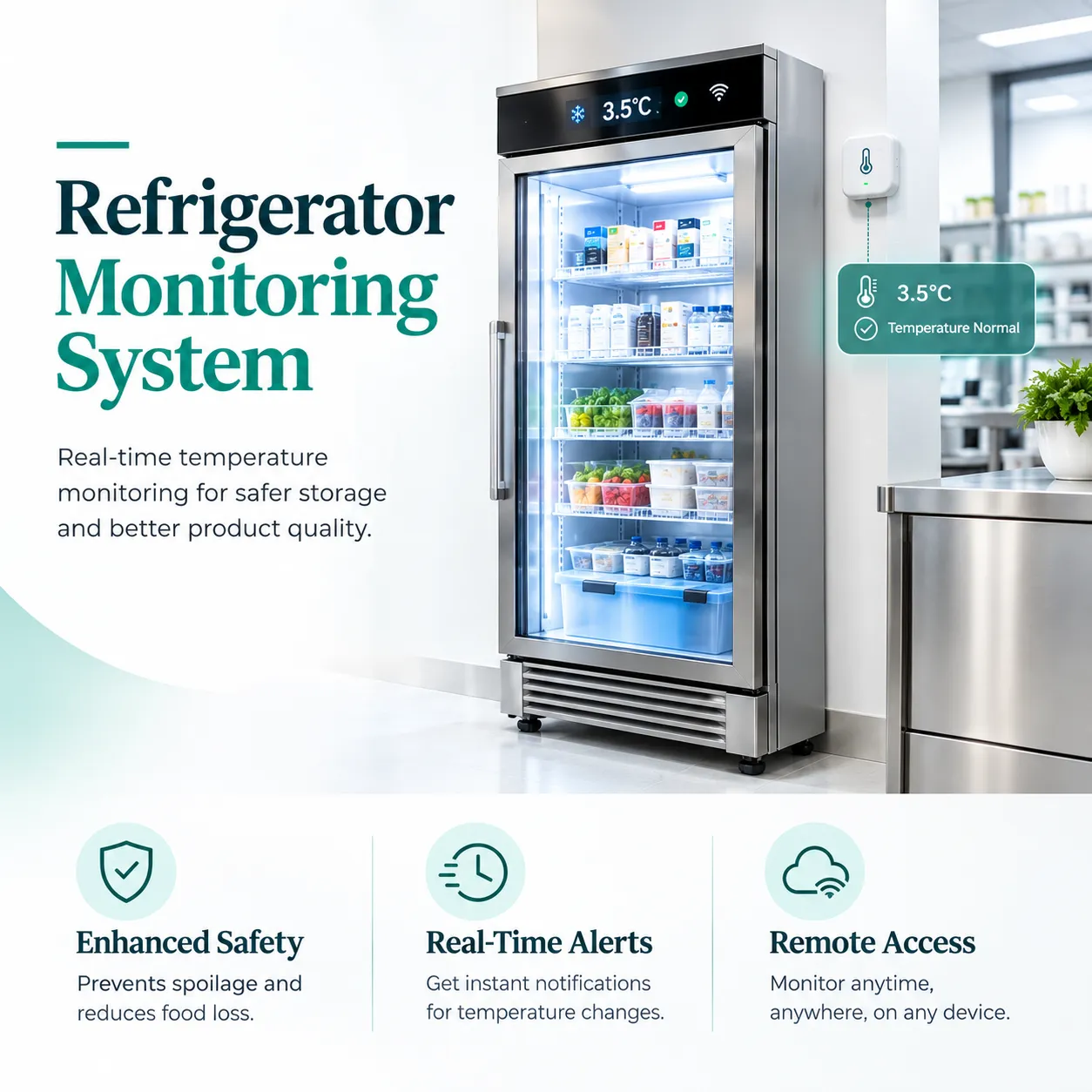
A Refrigerator Monitoring System provides an intelligent approach to temperature and environmental monitoring. Instead of relying only on manual checks, the system continuously tracks refrigerator and cold-storage conditions, identifies abnormal temperature changes, and helps responsible teams respond before products are damaged.
For supermarkets, restaurants, hotels, pharmacies, hospitals, laboratories, food-processing facilities, and logistics companies, refrigerator temperature monitoring can improve operational visibility, reduce product losses, and support better compliance practices.
This article explores how refrigerator monitoring systems in the UAE work, their key features and benefits, common applications, and why automated temperature monitoring is becoming increasingly important for modern businesses.
What Is a Refrigerator Monitoring System?
A Refrigerator Monitoring System is a technology-based solution designed to continuously measure and monitor temperature and other environmental conditions inside refrigerators, freezers, cold rooms, medical storage units, and other temperature-controlled environments.
The system typically uses temperature sensors connected to a centralized monitoring platform. Depending on the solution, users can view current readings through a dashboard, receive alerts when temperatures move outside predefined limits, and maintain historical records for analysis and reporting.
Unlike periodic manual temperature checks, 24/7 temperature monitoring provides continuous visibility into storage conditions.
A typical system may include:
- Digital temperature sensors
- Wireless or wired monitoring devices
- Central monitoring software
- Cloud-based dashboards
- Mobile and email notifications
- Temperature history and reporting
- Threshold-based alarms
- Data logging capabilities
- Multi-location monitoring
This makes it possible for businesses to monitor refrigeration equipment more efficiently and respond quickly when an issue occurs.
Why Refrigerator Temperature Monitoring Matters in the UAE
The UAE's hot climate makes refrigeration particularly important for businesses handling temperature-sensitive products. Refrigeration systems may operate under demanding conditions, while unexpected equipment failures, power interruptions, open doors, or cooling problems can cause temperatures to rise.
Without continuous monitoring, a temperature problem may remain unnoticed for hours.
A cold storage monitoring system helps businesses identify these changes much earlier. When a monitored refrigerator moves outside its configured temperature range, the system can generate an alert so that staff can investigate the issue.
This can help organizations:
- Reduce temperature-related product losses
- Improve operational awareness
- Detect refrigeration problems earlier
- Strengthen food and product safety procedures
- Maintain temperature records
- Support internal quality-control processes
- Improve accountability across multiple locations
For organizations operating several refrigerators or cold-storage areas, centralized temperature monitoring in the UAE can also simplify supervision.
How a Refrigerator Monitoring System Works
A modern system generally combines sensors, communication technology, monitoring software, and alert mechanisms.
1. Temperature Sensors
Sensors are installed inside refrigerators, freezers, cold rooms, medical refrigerators, or other temperature-controlled equipment.
They continuously measure the internal temperature and transmit readings to the monitoring platform.
2. Data Transmission
Depending on the system architecture, sensor data can be transmitted through wireless networks, gateways, or other communication technologies.
This enables temperature readings to reach a centralized platform without requiring staff to manually record them.
3. Central Monitoring Dashboard
The collected information can be displayed through a remote temperature monitoring system.
Authorized personnel can review current temperatures, historical data, alerts, and equipment status from a centralized interface.
4. Automated Alerts
Businesses can establish acceptable temperature thresholds. If the temperature exceeds the configured limit, the system can trigger an alert.
Notifications may be delivered through available communication channels such as mobile applications, email, SMS, or platform notifications.
5. Data Logging and Reporting
Historical temperature information can be stored for analysis and reporting. This provides businesses with a record of environmental conditions over time.
Such records can help identify recurring issues, investigate incidents, and support quality-management procedures.
Key Features of a Refrigerator Monitoring System
Continuous Temperature Monitoring
One of the most important capabilities is continuous temperature monitoring.
Rather than depending on occasional manual readings, sensors can monitor conditions throughout the day and night. This helps provide greater visibility into refrigeration performance.
Real-Time Temperature Alerts
Real-time temperature alerts can notify responsible personnel when readings move beyond configured limits.
Early notification can give teams an opportunity to investigate problems before temperature-sensitive products are significantly affected.
Remote Monitoring
With remote refrigerator monitoring, authorized users can check refrigeration conditions without being physically present at the facility.
This is especially useful for businesses operating multiple branches, warehouses, stores, or medical facilities.
Temperature Data Logging
Automated data logging creates a historical record of temperature measurements.
This information can be useful for reviewing equipment performance, investigating temperature excursions, and improving operational procedures.
Cloud-Based Monitoring
A cloud-based temperature monitoring system can centralize data from multiple monitored locations.
For organizations with geographically distributed facilities, centralized access can make monitoring and management more convenient.
Multi-Unit Monitoring
A single monitoring platform can potentially track multiple refrigerators, freezers, cold rooms, and storage areas.
This provides a consolidated view of refrigeration conditions across a facility or group of locations.
Door Monitoring
Some systems can also monitor refrigerator or cold-room doors.
A door that remains open for too long may affect internal temperature. Door-status monitoring can help staff identify such events and take corrective action.
Power Failure Detection
Power interruptions can quickly become a concern for refrigeration equipment.
A monitoring solution with power failure alerts can help notify responsible personnel when connected equipment loses power, allowing them to investigate promptly.
Benefits of Refrigerator Monitoring Systems
1. Reduce Product Loss
Temperature-sensitive products can be affected by prolonged exposure to unsuitable temperatures.
Automated monitoring can help identify temperature deviations sooner, potentially reducing avoidable spoilage and financial losses.
2. Improve Food Safety
Restaurants, supermarkets, hotels, catering businesses, and food-processing facilities depend on appropriate refrigeration.
A food temperature monitoring system provides continuous visibility that can support stronger food-safety procedures.
3. Protect Temperature-Sensitive Medicines
Pharmacies, hospitals, clinics, and healthcare facilities may need controlled storage for medicines and other temperature-sensitive products.
Medical refrigerator monitoring can provide alerts and records that help staff maintain appropriate storage conditions.
4. Improve Operational Efficiency
Manual temperature checks take time and require consistent staff involvement.
Automation can reduce repetitive monitoring tasks while giving teams centralized access to relevant information.
5. Enable Faster Response
A temperature excursion can occur outside normal working hours.
With 24/7 refrigerator monitoring, alerts can help responsible personnel become aware of unusual conditions even when they are away from the facility.
6. Support Compliance and Documentation
Many industries need reliable records of storage conditions.
Automated temperature history can simplify documentation and provide a more consistent record than handwritten logs.
7. Monitor Multiple Locations
For businesses operating several facilities, multi-site temperature monitoring can provide centralized visibility across locations.
Managers can review the status of different storage units without physically inspecting each one.
Applications of Refrigerator Monitoring in the UAE
A refrigerator monitoring system in the UAE can support a wide range of industries.
Food and Beverage
Restaurants, supermarkets, catering companies, bakeries, hotels, and food distributors can use temperature monitoring to maintain better control over refrigerated storage.
Healthcare and Pharmaceuticals
Hospitals, pharmacies, laboratories, and clinics can use pharmaceutical temperature monitoring for refrigerators and other temperature-sensitive storage environments.
Cold Chain Logistics
Transportation and logistics companies can use monitoring technologies to improve visibility throughout temperature-sensitive supply chains.
Warehouses and Cold Rooms
Large distribution centers and cold-storage facilities can monitor multiple temperature zones from a centralized platform.
Hospitality
Hotels and resorts can monitor kitchen refrigerators, freezers, food-storage rooms, and other refrigeration equipment.
Retail
Supermarkets and convenience stores can monitor display refrigerators, freezers, storage units, and back-of-house refrigeration systems.
Refrigerator Monitoring for Cold Chain Management
Cold chain operations require temperature-controlled handling from storage through transportation and delivery.
A temperature deviation at any stage can potentially affect product quality.
A cold chain monitoring system helps organizations maintain greater visibility into environmental conditions and identify temperature excursions.
For UAE businesses involved in food distribution, pharmaceuticals, healthcare, and logistics, automated monitoring can contribute to more structured cold-chain management.
The combination of sensors, alerts, centralized dashboards, and historical records creates a more transparent monitoring process.
Choosing the Right Refrigerator Monitoring System
Businesses should consider several factors before selecting a monitoring solution.
Sensor Accuracy
Temperature sensors should provide reliable readings suitable for the intended application.
Alert Configuration
The system should allow appropriate temperature thresholds and alert rules to be configured.
Remote Accessibility
For organizations with multiple sites, remote access can make monitoring significantly more practical.
Scalability
The solution should be capable of supporting additional refrigerators, freezers, rooms, or locations as business requirements grow.
Reporting
Historical data and reporting capabilities are important for operational reviews, documentation, and incident investigation.
Connectivity
Businesses should consider the communication method used by the system and whether it is suitable for the facility's infrastructure.
Integration
Where required, monitoring platforms may need to integrate with broader IoT monitoring systems, building-management platforms, or other operational technologies.
The Future of Smart Refrigeration Monitoring
The evolution of IoT temperature monitoring is making refrigeration management increasingly connected and data-driven.
Modern monitoring platforms can combine sensors, cloud technologies, analytics, automated notifications, and centralized dashboards.
As businesses in the UAE continue adopting smart-building and IoT technologies, refrigeration monitoring can become part of a broader smart facility management system.
Future-oriented solutions may also provide more advanced analytics, helping organizations identify recurring temperature patterns, equipment issues, and operational inefficiencies.
The goal is not simply to measure temperature. It is to turn temperature data into actionable information.
Conclusion
A Refrigerator Monitoring System provides businesses with a smarter and more reliable way to monitor temperature-sensitive storage environments.
For UAE organizations, continuous monitoring can be particularly valuable because refrigeration equipment operates in a demanding climate and temperature-sensitive products require consistent environmental control.
From restaurants and supermarkets to hospitals, pharmacies, laboratories, warehouses, and logistics operations, automated temperature monitoring can improve visibility, support faster response, reduce avoidable losses, and strengthen operational processes.
By combining accurate sensors, real-time alerts, remote access, data logging, and centralized reporting, a modern refrigerator temperature monitoring system can transform refrigeration management from a manual task into a proactive, technology-driven process.
Frequently Asked Questions
1. What is a Refrigerator Monitoring System?
A Refrigerator Monitoring System uses sensors and monitoring software to continuously track refrigerator or cold-storage temperatures. It can provide alerts when temperatures move outside predefined limits and can maintain historical temperature records.
2. Why is refrigerator monitoring important in the UAE?
The UAE's hot climate can place significant demands on refrigeration equipment. Refrigerator temperature monitoring helps businesses identify temperature changes, equipment issues, and other problems more quickly.
3. Can refrigerator temperatures be monitored remotely?
Yes. Many modern remote temperature monitoring systems provide centralized or cloud-based access, allowing authorized users to check temperatures and receive alerts without being physically present at the facility.
4. Which industries can use refrigerator monitoring?
Applications include food and beverage, supermarkets, hospitality, healthcare, pharmaceuticals, laboratories, cold-chain logistics, warehouses, catering, and other industries that rely on temperature-controlled storage.
5. Can a monitoring system track multiple refrigerators?
Yes. Depending on the system architecture, a multi-unit temperature monitoring system can monitor multiple refrigerators, freezers, cold rooms, and locations from a centralized platform. This can simplify monitoring for businesses with multiple storage units or facilities.

























Sign in to leave a comment.