
Introduction
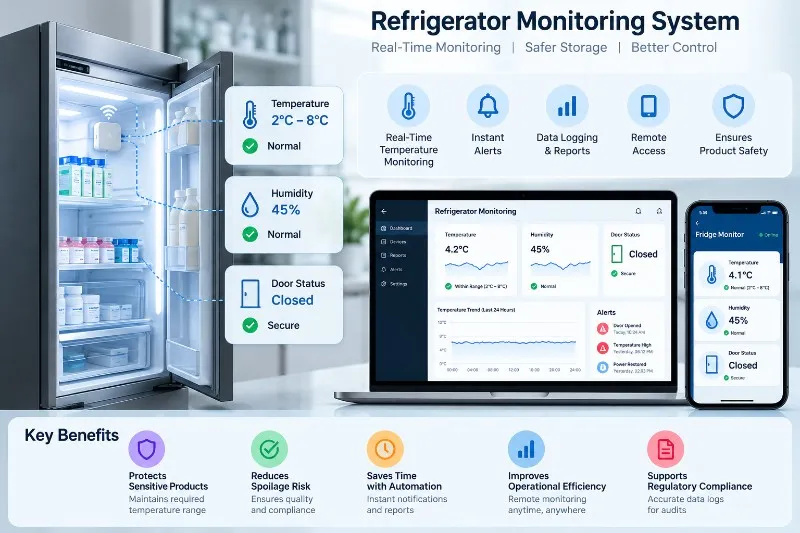
Maintaining the right temperature is essential wherever temperature-sensitive products are stored. In the UAE, where high outdoor temperatures and demanding operating environments can place additional pressure on refrigeration equipment, businesses need reliable ways to monitor and protect cold-storage conditions. A Refrigerator Monitoring System provides a smart, automated approach to continuously tracking temperature and other critical conditions inside refrigerators, freezers, medical storage units, and cold rooms.
Unlike traditional manual temperature checks, modern temperature monitoring systems use connected sensors, cloud platforms, dashboards, and automated alerts to provide continuous visibility. If the temperature moves outside a predefined range, authorized personnel can receive an immediate notification, allowing them to investigate the issue before products are compromised.
For healthcare organizations, pharmacies, laboratories, food businesses, supermarkets, hospitality companies, and pharmaceutical facilities, effective refrigerator temperature monitoring can improve operational control, reduce product loss, support compliance, and create a reliable record of storage conditions.
What Is a Refrigerator Monitoring System?
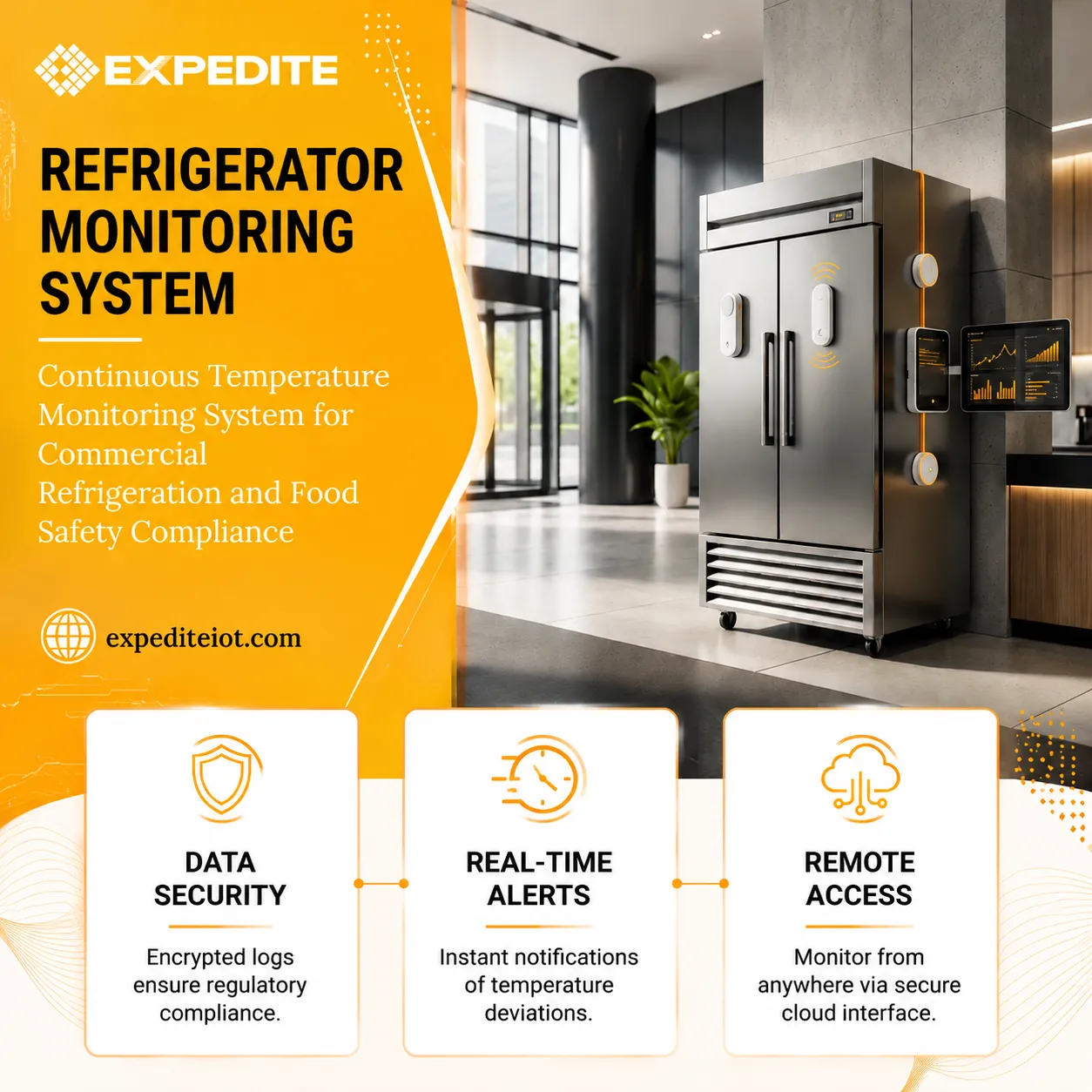
A Refrigerator Monitoring System is a technology solution designed to continuously measure and record temperature conditions inside refrigerated environments. Depending on the application, the system can monitor refrigerators, freezers, vaccine storage units, pharmaceutical refrigerators, laboratory equipment, cold rooms, and other temperature-sensitive storage areas.
The system generally consists of:
- Temperature sensors
- Wireless or wired communication technology
- A central monitoring platform
- Cloud-based data storage
- Real-time dashboards
- Automated alerts and notifications
- Historical reports and data logs
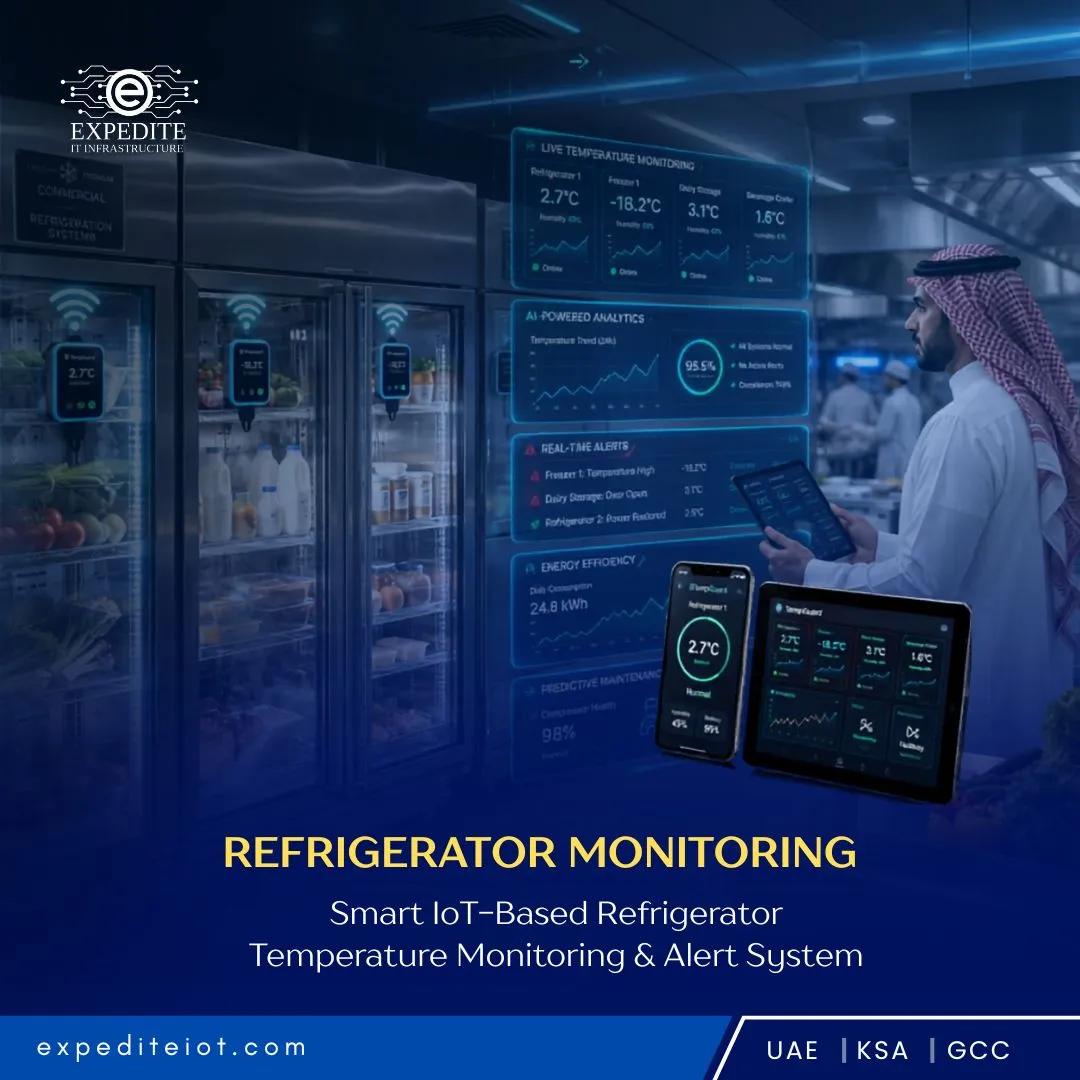
A modern IoT refrigerator monitoring system connects these components to provide remote visibility. Instead of relying on employees to manually inspect a temperature display, organizations can monitor storage conditions from a centralized dashboard.
This creates a more proactive approach to cold-storage management.
Why Refrigerator Monitoring Matters in the UAE
The UAE's climate makes dependable refrigeration particularly important. High ambient temperatures can increase the workload on cooling equipment and make temperature deviations more significant when refrigeration systems experience faults, power interruptions, or doors are left open.
For organizations handling sensitive products, even a temporary temperature excursion can create operational and financial consequences.
A remote temperature monitoring system helps businesses identify unusual conditions quickly. For example, if a refrigerator begins warming because of a mechanical problem, the monitoring platform can generate an alert rather than waiting for the next manual inspection.
This supports faster intervention and helps organizations maintain better control over their cold-storage environments.
How a Smart Refrigerator Monitoring System Works
A typical system operates through several connected stages.
1. Continuous Temperature Measurement
Sensors installed inside the refrigerator measure temperature at regular intervals. Depending on the system configuration, measurements can be taken frequently enough to identify temperature changes quickly.
2. Secure Data Transmission
The collected information is transmitted through an appropriate communication method, such as Wi-Fi, cellular connectivity, or another wireless technology.
3. Cloud-Based Monitoring
Data can be transferred to a centralized platform where users can view current and historical readings. A cloud temperature monitoring system allows authorized users to access information remotely.
4. Automated Alerts
Users can establish acceptable temperature limits. If the measured temperature exceeds the configured threshold, the system can generate an alert through supported notification channels.
5. Reporting and Analysis
Historical data can be stored and converted into reports, graphs, and records. This makes it easier to identify recurring problems and demonstrate that storage conditions have been monitored consistently.
Key Features of Refrigerator Monitoring Systems
Real-Time Temperature Monitoring
Real-time visibility allows users to see current refrigerator conditions without physically visiting every storage location. This is particularly valuable for organizations operating multiple facilities or numerous refrigeration units.
Automated Temperature Alerts
One of the most important features is automated notification. When temperatures move beyond predefined limits, responsible personnel can be alerted promptly.
Alerts can help organizations respond to:
- Unexpected temperature increases
- Equipment malfunction
- Power interruptions
- Door-open events
- Sensor abnormalities
- Extended temperature excursions
Remote Monitoring
With remote refrigerator monitoring, authorized users can access temperature information from connected devices without being physically present at the facility.
This can improve oversight for businesses with multiple locations, large storage areas, or facilities operating outside conventional working hours.
Historical Data Logging
A temperature data logger continuously records measurements, creating a historical record of refrigerator conditions. These records can help organizations investigate incidents, identify trends, and maintain documentation.
Dashboard and Visualization
A centralized dashboard can display temperature readings, alerts, device status, and historical trends in an easy-to-understand format.
Graphs and visual indicators make it easier for teams to recognize abnormal temperature patterns and investigate recurring issues.
Customizable Thresholds
Different products have different storage requirements. A modern monitoring system can allow users to configure appropriate temperature thresholds for individual refrigerators or storage zones.
Multi-Device Monitoring
Organizations with many refrigerators can manage multiple devices from one platform. This can be particularly useful for hospitals, pharmacies, laboratories, supermarkets, and large hospitality operations.
Benefits of Refrigerator Monitoring in the UAE
Protects Temperature-Sensitive Products
The primary purpose of refrigerator monitoring is to help maintain suitable storage conditions. Continuous monitoring provides earlier visibility into temperature changes that could otherwise remain unnoticed.
Reduces Product Loss
A refrigeration failure can result in spoiled food, damaged pharmaceutical products, or compromised laboratory materials. Automated alerts can help staff respond earlier and potentially reduce avoidable losses.
Improves Operational Efficiency
Manual temperature checks require employees to spend time visiting individual refrigerators and recording readings. Automated monitoring reduces dependence on repetitive manual processes.
Employees can focus more attention on corrective action and operational responsibilities rather than routine data collection.
Supports Compliance and Documentation
Organizations working with regulated or temperature-sensitive products often need reliable records. A 24/7 temperature monitoring system can provide historical data that supports internal audits, quality procedures, and documentation requirements.
Enables Faster Response
A temperature problem can occur outside normal business hours. Remote alerts provide organizations with greater visibility when staff are not physically near the equipment.
Provides Better Accountability
Digital records can show temperature trends and alert histories over time. This creates greater transparency and helps teams investigate when and why a temperature excursion occurred.
Applications of Refrigerator Monitoring Systems
Hospitals and Healthcare Facilities
Hospitals use refrigerators and freezers for storing medicines, vaccines, laboratory samples, and other temperature-sensitive materials. Healthcare refrigerator monitoring provides continuous oversight and supports reliable storage practices.
Pharmacies
Pharmacies may store medicines that require controlled temperature conditions. Automated monitoring can help pharmacy teams identify deviations and maintain appropriate records.
Laboratories
Laboratories can use laboratory temperature monitoring for refrigerators, freezers, sample storage units, and other equipment where stable environmental conditions are important.
Vaccine and Medical Cold Chain
Maintaining the cold chain is essential for temperature-sensitive healthcare products. Cold chain monitoring provides visibility across storage points and can help organizations identify temperature excursions quickly.
Pharmaceutical Warehouses
Pharmaceutical operations often require controlled storage environments. Monitoring systems can provide centralized visibility across multiple storage areas and support data-driven quality management.
Supermarkets and Food Retail
Supermarkets, grocery stores, and food retailers can use food temperature monitoring systems to oversee chilled and frozen products across display refrigerators, storage units, and back-of-house facilities.
Restaurants and Hospitality
Hotels, restaurants, catering companies, and commercial kitchens can monitor refrigeration equipment to improve food-storage control and reduce spoilage caused by unnoticed temperature problems.
Refrigerator Monitoring vs. Manual Temperature Checks
Manual monitoring typically involves an employee checking a refrigerator at scheduled intervals and recording the temperature. While this approach can provide periodic readings, it does not necessarily show what happened between inspections.
A smart monitoring solution provides continuous data instead.
For example, a refrigerator could appear normal during a morning inspection but experience a temperature increase several hours later. Without continuous monitoring, the problem may remain undetected until the next inspection.
With smart refrigerator monitoring, the system can detect the change and notify responsible personnel according to configured rules.
This changes the approach from periodic inspection to continuous visibility.
Choosing the Right Refrigerator Monitoring Solution
When selecting a wireless refrigerator monitoring system for a UAE facility, organizations should consider several factors.
Sensor Accuracy
Sensors should be appropriate for the required temperature range and application. Accuracy and reliability are important when monitoring sensitive products.
Alert Configuration
The system should support suitable temperature thresholds and notification rules. Excessive alerts can create alert fatigue, while insufficient alerts may delay intervention.
Connectivity
Businesses should select connectivity appropriate to their facility and infrastructure. Wireless, cellular, or other communication options may be suitable depending on the environment.
Data Storage
Reliable historical data storage is important for reporting, analysis, and incident investigation.
Scalability
A system should be capable of supporting additional refrigerators and facilities as the organization grows.
User-Friendly Dashboard
A clear dashboard helps teams quickly understand current conditions, active alerts, and historical trends.
Security and Access Control
Connected monitoring platforms should provide appropriate user access controls and data-security measures, particularly when deployed in healthcare and pharmaceutical environments.
Why IoT Is Transforming Refrigerator Monitoring
The integration of IoT technology has changed how organizations manage refrigerated environments. Traditional systems focused primarily on local temperature displays, while modern IoT temperature monitoring connects sensors to centralized digital platforms.
This creates a continuous flow of information between refrigeration equipment, sensors, software, and authorized users.
Organizations can therefore move toward predictive and proactive management rather than simply responding after a problem has occurred.
Over time, historical data can also help businesses identify recurring patterns, equipment performance issues, and operational inefficiencies.
Conclusion
A Refrigerator Monitoring System provides UAE businesses with a practical way to improve temperature visibility, protect sensitive products, reduce avoidable losses, and strengthen cold-storage management. Through continuous sensing, remote access, automated alerts, data logging, dashboards, and reporting, organizations can replace fragmented manual checks with a more connected monitoring approach.
From hospitals and pharmacies to laboratories, pharmaceutical warehouses, supermarkets, restaurants, and hotels, reliable refrigerator temperature monitoring can support safer and more efficient operations.
As businesses increasingly adopt IoT and connected technologies, smart refrigerator monitoring is becoming an important component of modern temperature-controlled storage. A well-designed system gives organizations the information they need to detect problems earlier, respond efficiently, and maintain greater control over critical refrigeration environments.
Frequently Asked Questions
1. What is a Refrigerator Monitoring System?
A Refrigerator Monitoring System is a technology solution that continuously measures and records temperature inside refrigerators, freezers, cold rooms, and other temperature-sensitive storage environments. It can provide real-time dashboards, historical records, and automated alerts when temperatures exceed configured limits.
2. Why is refrigerator monitoring important in the UAE?
Refrigeration equipment can face additional operating challenges in hot climates. Continuous monitoring helps organizations identify temperature deviations, equipment problems, or other abnormal conditions quickly, supporting better protection of temperature-sensitive products.
3. Can refrigerator monitoring be accessed remotely?
Yes. Many modern remote temperature monitoring systems use connected sensors and cloud-based platforms, allowing authorized users to view temperature data and receive alerts without being physically present at the refrigerator.
4. Which industries can use refrigerator monitoring?
Refrigerator monitoring can be used across healthcare, pharmaceuticals, laboratories, food and beverage, supermarkets, restaurants, hotels, catering, and other industries that rely on controlled-temperature storage.
5. Can the system provide historical temperature reports?
Yes. Many monitoring platforms record temperature readings over time and provide historical graphs, logs, and reports. These records can help organizations investigate temperature excursions, analyze equipment performance, and maintain useful operational documentation.























Sign in to leave a comment.