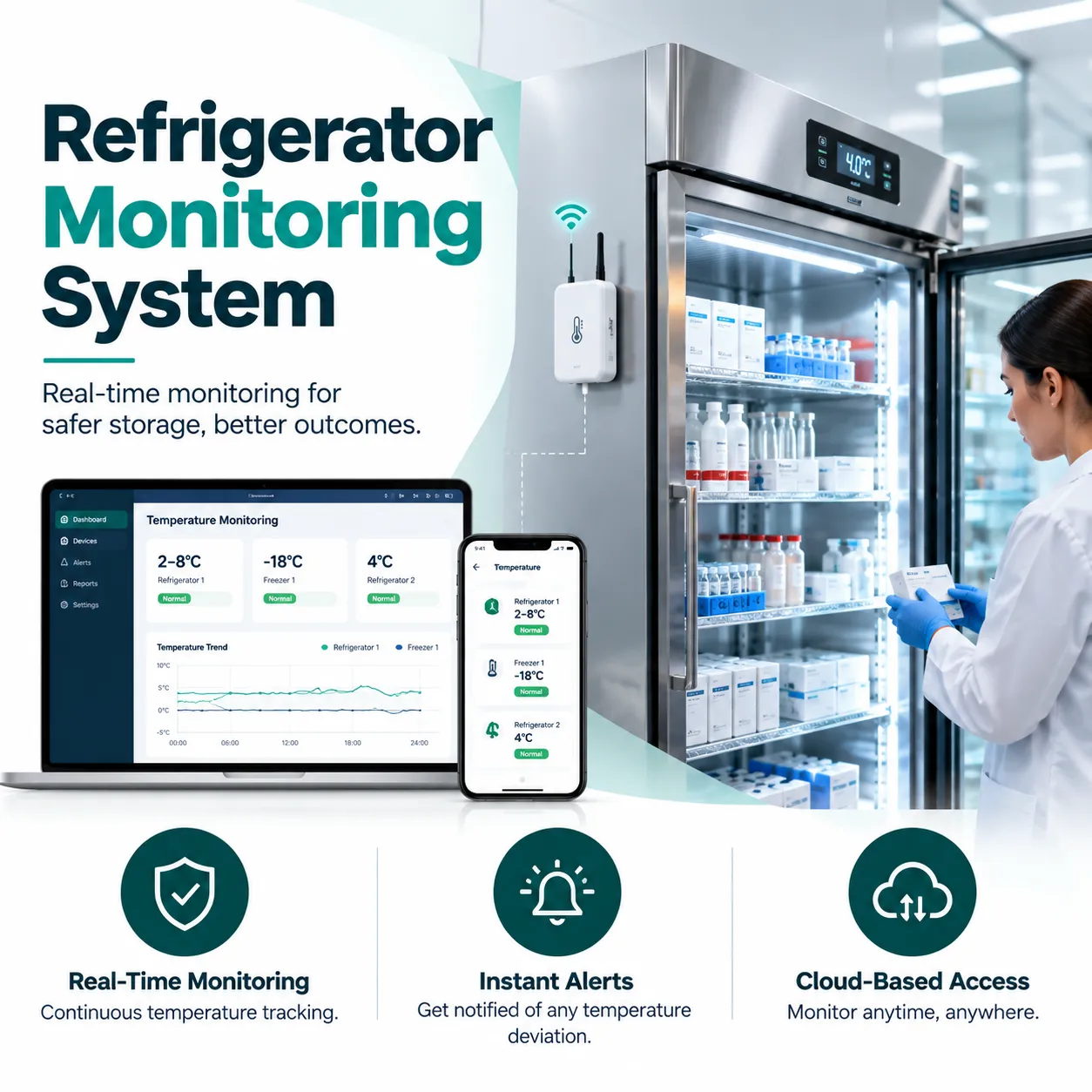

Maintaining the right temperature is critical wherever temperature-sensitive products are stored. In the UAE, where high ambient temperatures can place additional pressure on refrigeration equipment, businesses need more than a traditional thermometer. A modern Refrigerator Monitoring System provides continuous temperature visibility, automated alerts, historical records, and centralized monitoring to help protect products and maintain cold-chain integrity.
From restaurants and supermarkets to pharmacies, hospitals, laboratories, food warehouses, and pharmaceutical facilities, refrigerator temperature monitoring can reduce the risk of unnoticed temperature excursions and provide reliable digital records for operational and compliance requirements.
Dubai food-safety legislation also gives authorities responsibility for verifying that appropriate temperatures are maintained during food storage and the wider food chain, while healthcare guidance in Abu Dhabi specifies continuous monitoring requirements for refrigerators and freezers used for temperature-sensitive products.
What Is a Refrigerator Monitoring System?
A Refrigerator Monitoring System is a technology-based solution that continuously measures and records the internal temperature of refrigerators, freezers, medical refrigerators, cold rooms, and other temperature-controlled equipment.
Unlike manual temperature checks, which provide only periodic readings, a Smart Refrigerator Monitoring System uses sensors and connected software to collect temperature data automatically.
A typical system includes:
- High-accuracy temperature sensors
- Wireless or wired connectivity
- Central monitoring software
- Cloud-based data storage
- Real-time dashboards
- High/low temperature alerts
- SMS, email, or mobile notifications
- Historical temperature reports
- Data logging and export capabilities
- Sensor calibration and status monitoring
This creates a continuous digital record of refrigerator conditions and helps responsible teams react quickly when temperatures move outside defined limits.
Why Refrigerator Temperature Monitoring Matters in the UAE
The UAE’s climate makes temperature management especially important for organizations handling perishable or temperature-sensitive products.
Food businesses may need to maintain chilled products below specified temperature thresholds. For example, Abu Dhabi food-control guidance states that refrigerators for convenience, dairy, and prepared produce should remain below 5°C, while freezers should remain below -18°C. The same guidance calls for temperature checking and record keeping and periodic calibration of temperature-control devices.
Dubai Municipality has also highlighted the importance of maintaining cold food below 5°C in food-service environments.
For healthcare and temperature-sensitive pharmaceutical products, requirements can be more demanding. Abu Dhabi Department of Health guidance specifies monitoring systems for refrigerators and freezers storing temperature-sensitive pharmaceutical products, including frequent recording, accessible documentation, calibration, and independent operation during power failures.
This makes IoT Refrigerator Monitoring an important operational tool for businesses that cannot afford to discover a temperature problem hours after it occurs.
How a Smart Refrigerator Monitoring System Works
A modern Refrigerator Temperature Monitoring System generally follows a simple four-stage process:
1. Temperature Detection
A precision sensor continuously measures the internal temperature of the refrigerator or freezer.
2. Data Transmission
The sensor transmits temperature readings through technologies such as Wi-Fi, LoRaWAN, cellular connectivity, or other IoT communication networks.
3. Cloud-Based Monitoring
The monitoring platform stores and processes the data, allowing authorized personnel to view refrigerator conditions from a centralized dashboard.
4. Automatic Alerts
When temperature exceeds or falls below a predefined threshold, the system can immediately generate an alert through available notification channels.
Monitoring Workflow
Sensor → IoT Gateway/Network → Cloud Platform → Analytics Dashboard → Alert → Corrective Action
This process transforms refrigerator monitoring from a manual activity into a proactive digital operation.
Key Features of a Refrigerator Monitoring System
1. Real-Time Temperature Monitoring
A real-time temperature monitoring system continuously tracks refrigerator conditions instead of relying only on manual inspections.
Managers can see current temperature readings and identify abnormal changes before they become larger operational problems.
2. Automated Temperature Alerts
A major advantage of automated temperature alerts is that staff do not need to constantly check a display.
Alerts can be configured for:
- High temperature
- Low temperature
- Extended temperature excursion
- Sensor failure
- Communication loss
- Power interruption
- Battery status
- Door-open conditions, where supported
3. Historical Data Logging
A temperature data logger creates a digital history of refrigerator conditions.
This can help organizations:
- Review temperature trends
- Investigate incidents
- Demonstrate monitoring activity
- Identify recurring equipment problems
- Support internal audits
- Improve preventive maintenance
4. Cloud-Based Dashboard
A cloud-based refrigerator monitoring system enables centralized visibility across multiple refrigerators, branches, warehouses, or facilities.
Instead of checking individual units, managers can view equipment status from one dashboard.
5. Multi-Site Monitoring
For organizations operating across Dubai, Abu Dhabi, Sharjah, Ajman, or other UAE locations, multi-site temperature monitoring can provide a consolidated view of refrigeration assets.
This is particularly useful for:
- Restaurant chains
- Supermarket groups
- Pharmacy networks
- Hospitals
- Food distributors
- Cold-storage operators
6. Mobile Monitoring
Mobile access enables authorized employees to receive alerts and review temperature conditions while away from the facility.
This supports faster response during:
- Nights
- Weekends
- Holidays
- Power interruptions
- Unexpected refrigeration failures
7. Reports and Analytics
Temperature data can be converted into reports showing:
- Minimum temperature
- Maximum temperature
- Average temperature
- Temperature excursions
- Alert history
- Sensor status
- Equipment performance
These reports can support operational analysis and documentation.
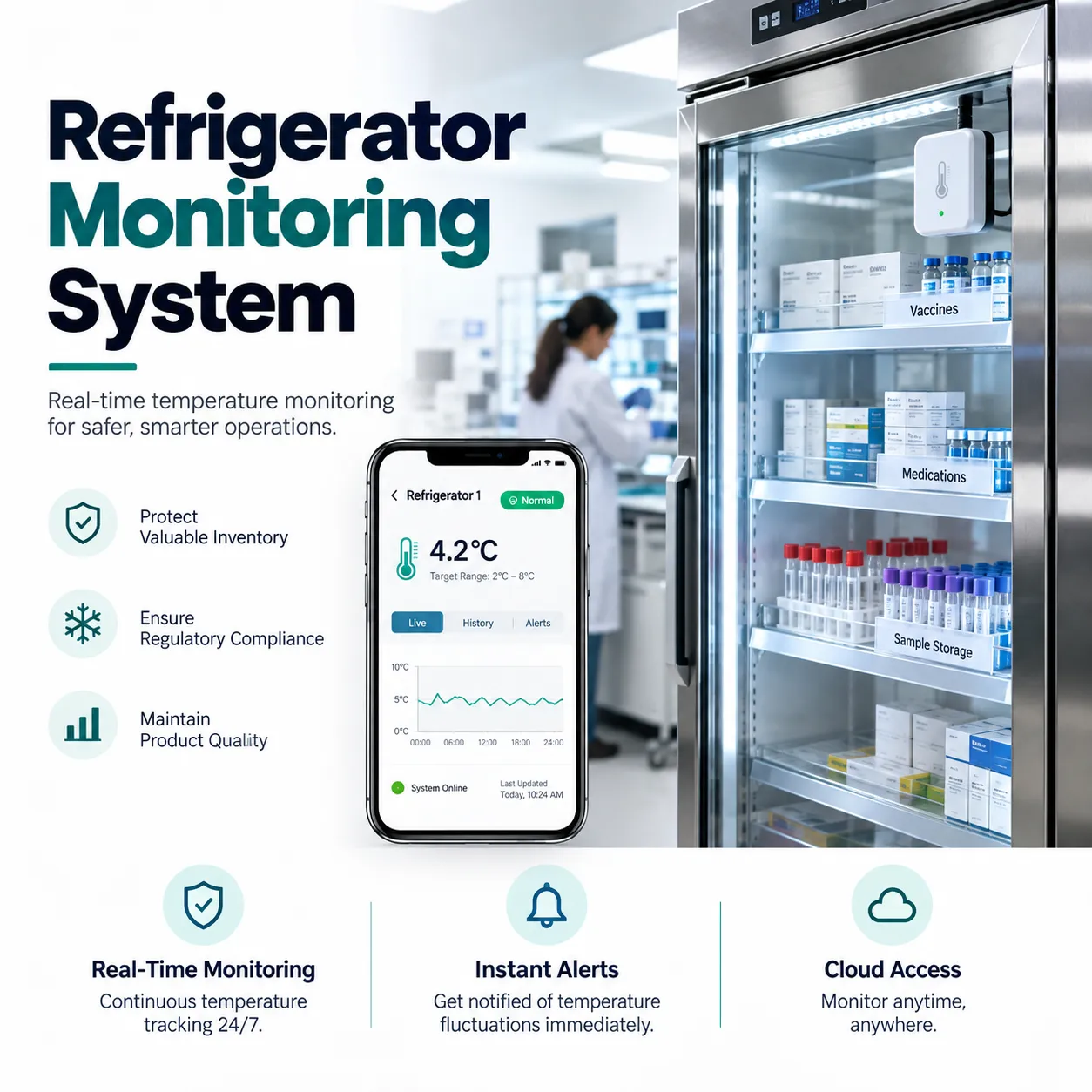
Interpretation:
A connected monitoring platform can identify a temperature trend as it develops, allowing staff to investigate the refrigerator before the problem continues unnoticed.
Note: The graph is illustrative. Actual alarm thresholds should be configured according to the stored product, equipment specifications, validated storage conditions, and applicable UAE requirements.
Benefits of Refrigerator Monitoring in UAE
Benefit
Business Impact
24/7 Temperature Visibility
Provides continuous awareness of storage conditions
Instant Alerts
Helps teams respond quickly to abnormal temperatures
Digital Data Logging
Creates accessible historical records
Remote Monitoring
Enables monitoring across locations
Reduced Product Loss
Helps identify refrigeration problems earlier
Operational Efficiency
Reduces dependence on manual temperature checks
Analytics & Reporting
Helps identify recurring temperature patterns
Preventive Maintenance
Can reveal equipment performance issues
Cold-Chain Protection
Supports consistent temperature management
Centralized Management
Allows multiple assets to be monitored from one platform
Applications of Refrigerator Monitoring Systems
1. Restaurants and Commercial Kitchens
Restaurants handle meat, dairy, vegetables, prepared foods, sauces, and other perishable products.
A commercial refrigerator monitoring system helps kitchen managers maintain visibility over refrigerators, freezers, and cold-storage equipment.
2. Supermarkets and Retail Stores
Supermarkets may have dozens or hundreds of refrigeration points.
IoT temperature monitoring can provide centralized visibility across chilled display cases, freezers, storage refrigerators, and back-of-house equipment.
3. Pharmacies
Many pharmaceutical products require controlled storage conditions.
A pharmacy refrigerator monitoring system can continuously monitor temperature and generate alerts when conditions move outside configured limits.
4. Hospitals and Healthcare Facilities
Hospitals may use refrigerators and freezers for medicines, vaccines, laboratory materials, and other temperature-sensitive products.
Abu Dhabi healthcare standards specifically state that refrigerator, freezer, and cold-room temperatures should be monitored and that warning systems should be provided when temperatures move outside permitted ranges.
5. Laboratories
Laboratories can use temperature monitoring systems for samples, reagents, test materials, and other temperature-sensitive resources.
Historical records can also help laboratories investigate storage anomalies.
6. Food Warehouses and Cold Storage
Large warehouses can integrate multiple temperature sensors into centralized monitoring platforms.
This enables warehouse operators to monitor different zones and identify abnormal conditions quickly.
Refrigerator Monitoring System and Cold-Chain Management
Cold-chain management involves maintaining appropriate temperature conditions throughout storage and handling.
A refrigerator may be operating correctly at one moment and experience a problem later because of:
- Compressor failure
- Door left open
- Power interruption
- Excessive product loading
- Refrigerant problems
- Sensor malfunction
- Poor maintenance
- Ambient temperature changes
Manual inspection may not detect these events immediately.
A cold-chain monitoring system continuously observes temperature conditions and creates a historical record. This helps organizations move from reactive inspection toward proactive temperature management.
Data Analytics for Smarter Refrigeration
Modern IoT refrigerator monitoring systems can do more than display temperature.
With sufficient historical data, organizations can analyze:
Temperature Trends
Identify recurring increases or decreases in temperature.
Equipment Performance
Detect refrigerators that frequently experience excursions.
Door-Opening Patterns
Identify operational behavior that may contribute to temperature fluctuations.
Maintenance Indicators
Recognize abnormal patterns that could indicate equipment problems.
Facility-Level Performance
Compare multiple refrigeration assets across branches or departments.
This creates an opportunity to combine temperature monitoring, IoT analytics, cloud software, and preventive maintenance into one connected solution.
Choosing the Right Refrigerator Monitoring System in UAE
Organizations should evaluate several factors before deploying a Refrigerator Monitoring Solution.
Sensor Accuracy
Sensors should provide accuracy appropriate to the application. For example, Abu Dhabi’s guidance for temperature-sensitive pharmaceutical products specifies sensor accuracy of ±0.5°C or better for electronic devices.
Monitoring Frequency
The required recording interval depends on the application and applicable standards. Abu Dhabi guidance for temperature-sensitive pharmaceutical storage specifies frequent recording for refrigerators and freezers.
Alert Configuration
The system should support configurable high and low temperature limits.
Connectivity
Consider Wi-Fi, cellular, LoRaWAN, or other connectivity depending on the site environment.
Battery Backup
Monitoring should ideally remain available during power interruptions, particularly for critical cold-chain applications.
Data Storage
Historical records should be securely stored and easily retrievable.
Scalability
A system should be capable of expanding from one refrigerator to hundreds of assets.
Reporting
Look for automated reports, dashboards, downloadable records, and audit-friendly documentation.
Conceptual KPI Graph for a Smart Monitoring Program
Operational Visibility
Manual Monitoring ███████░░░ 70%
Digital Monitoring ██████████ 100%
Alert Speed
Manual Checks ███░░░░░░░ 30%
Automated Alerts ██████████ 100%
Historical Data
Paper Logs ████░░░░░░ 40%
Digital Data Logging ██████████ 100%
Multi-Site Visibility
Manual Process ██░░░░░░░░ 20%
Central Dashboard ██████████ 100%
Illustrative comparison for marketing/educational purposes, not measured industry performance data.
Why Businesses Should Move Beyond Manual Temperature Logs
Manual temperature logs can still play a role in operational procedures, but they can be limited by human availability and the frequency of checks.
A connected refrigerator monitoring system in UAE provides a different approach: instead of asking, “What was the temperature when someone checked it?”, organizations can ask, “What happened to the temperature throughout the entire monitoring period?”
That distinction can be important when investigating an excursion, evaluating equipment reliability, or demonstrating that a monitoring process was actively maintained.
For regulated or high-risk applications, businesses should always configure their monitoring system according to the applicable authority requirements and the specific storage conditions of the products involved.
The Future of Refrigerator Monitoring in the UAE
The future of cold-storage management is moving toward connected infrastructure.
Integration with:
- IoT sensors
- Cloud platforms
- Mobile applications
- AI analytics
- Predictive maintenance
- Automated reporting
- Facility management systems
- Enterprise dashboards
can create a more intelligent refrigeration ecosystem.
For large organizations, the goal is not simply to know the temperature. It is to understand equipment performance, identify trends, respond to alerts, and build a reliable digital record of cold-storage conditions.
Conclusion
A Refrigerator Monitoring System provides businesses with a smarter way to protect temperature-sensitive products and manage cold-storage operations.
For UAE businesses, continuous refrigerator temperature monitoring, automated alerts, digital data logging, remote access, and centralized dashboards can strengthen operational visibility across restaurants, supermarkets, pharmacies, hospitals, laboratories, warehouses, and other temperature-sensitive environments.
The most effective solution should combine accurate sensors, reliable connectivity, configurable alerts, secure data storage, reporting, and scalable monitoring capabilities.
As UAE organizations increasingly adopt IoT monitoring solutions and digital facility-management technologies, smart refrigerator monitoring can become an important component of modern cold-chain management and temperature-controlled storage.
Frequently Asked Questions
1. What is a Refrigerator Monitoring System?
A Refrigerator Monitoring System is a digital solution that continuously measures refrigerator or freezer temperature, records the data, and sends alerts when temperatures move outside configured limits.
2. Why is refrigerator temperature monitoring important in the UAE?
Temperature-sensitive products can be affected by improper storage conditions. UAE food and healthcare authorities publish requirements and guidance concerning temperature control and monitoring for relevant applications.
3. Can a refrigerator monitoring system send alerts remotely?
Yes. Depending on the system architecture, alerts can be delivered through mobile applications, SMS, email, dashboards, or other notification channels when a configured temperature threshold is exceeded.
4. Can multiple refrigerators be monitored from one dashboard?
Yes. A scalable IoT temperature monitoring system can connect multiple refrigerators, freezers, cold rooms, branches, or facilities to a centralized platform.
5. Is a refrigerator monitoring system useful for pharmacies and hospitals?
Yes. Healthcare environments often require controlled storage for temperature-sensitive products. Abu Dhabi healthcare guidance includes continuous monitoring and warning systems for refrigerators, freezers, and cold rooms used for pharmaceutical storage.






























Sign in to leave a comment.