
Introduction
In today's food service, pharmaceutical, and healthcare industries, maintaining precise temperature control in refrigeration units is critical for product quality, regulatory compliance, and consumer safety. Traditional refrigerators lack the visibility to detect temperature fluctuations, equipment failures, or maintenance issues until it's too late. Modern refrigerator monitoring systems leverage Internet of Things (IoT) technology to provide real-time visibility, automated alerts, and comprehensive data logging—transforming how organizations manage their cold storage operations.
This comprehensive guide explores refrigerator monitoring systems, their key features, alert mechanisms, temperature management capabilities, and how they drive operational excellence and compliance across various industries.
Understanding Refrigerator Monitoring Systems
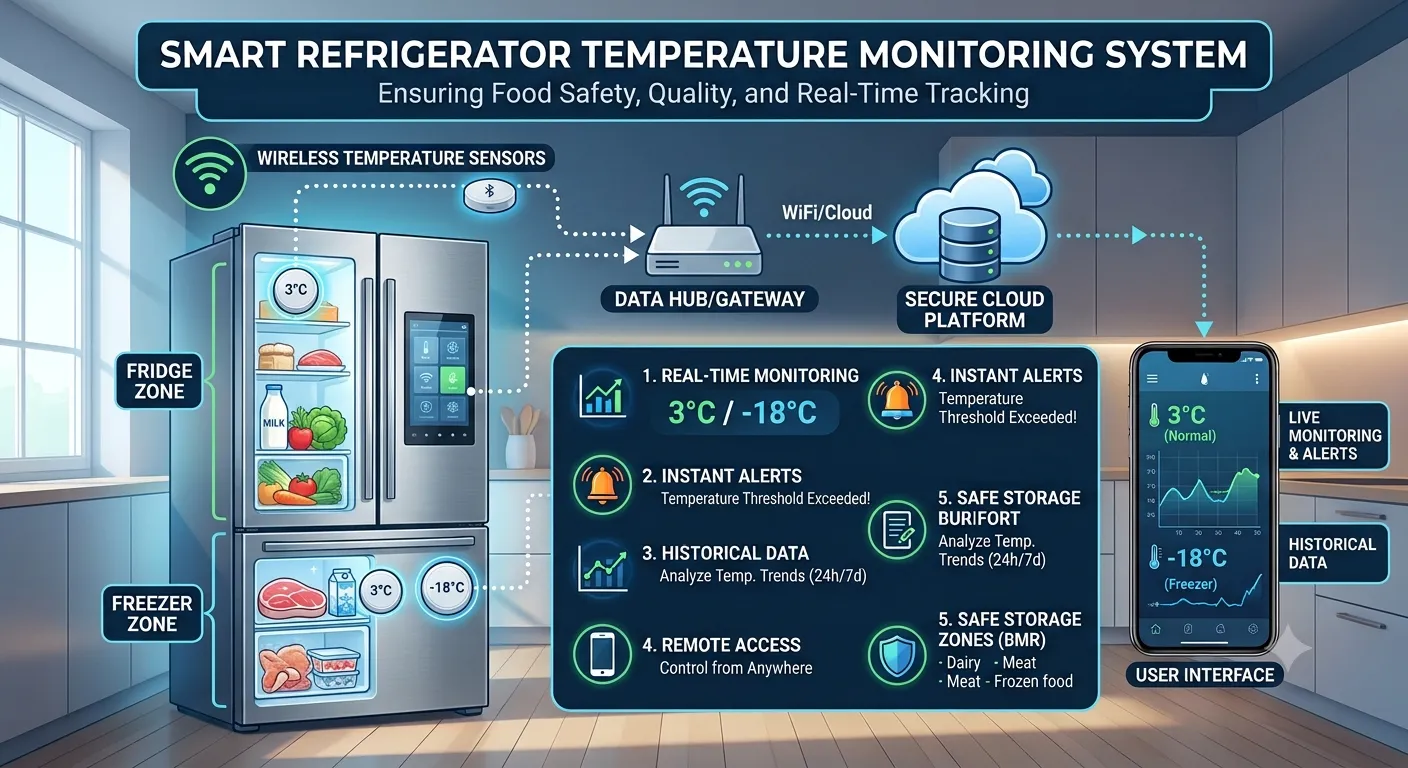
A refrigerator monitoring system is an integrated IoT solution designed to continuously track temperature, humidity, and operational status of refrigeration units in real-time. These systems consist of intelligent sensors, cloud-based monitoring platforms, and alert management software that work together to ensure optimal storage conditions.
The core components include:
Intelligent Temperature Sensors: Advanced sensors equipped with wireless connectivity continuously measure internal refrigerator temperatures at intervals ranging from 5 to 60 seconds, depending on configuration. These sensors feature multiple measurement points to ensure accurate temperature profiling across different zones within the refrigerator.
Cloud-Based Monitoring Platform: A centralized dashboard accessible from any location, providing real-time data visualization, historical trend analysis, and comprehensive reporting capabilities.
Alert Management System: Automated notification mechanisms that immediately notify facility managers, maintenance teams, and administrators when predefined temperature thresholds are exceeded.
Data Analytics Engine: Advanced algorithms that analyze temperature patterns, predict maintenance needs, and generate compliance reports required by regulatory bodies.
Temperature Management and Specifications
Temperature accuracy is the foundation of refrigerator monitoring systems. Different industries require specific temperature ranges to maintain product integrity and safety:
Pharmaceutical Storage: Pharmaceutical refrigerators typically maintain temperatures between 2°C and 8°C (35°F to 46°F). Critical vaccines and biologics require strict adherence to these specifications. Modern monitoring systems maintain accuracy within ±0.5°C, ensuring compliance with WHO and FDA standards.
Food Storage: Commercial food service refrigerators operate between 0°C and 4°C (32°F to 39°F). This temperature range prevents bacterial growth while preserving food quality. Laboratory and pathology refrigerators may require temperatures as low as -20°C for long-term specimen preservation.
Precision Control: Advanced refrigerator monitoring systems employ multi-sensor architecture with redundant temperature measurement points. This ensures that no hot spots develop and the entire unit maintains consistent temperatures. High-precision systems can detect temperature variations as small as 0.1°C, allowing early intervention before critical thresholds are reached.
Alarm Setpoints: Temperature alarm settings are typically configured with two-tier systems:
- Warning Level: Alerts facility managers when temperatures approach but haven't exceeded acceptable limits (e.g., 5°C in a 2-8°C refrigerator)
- Critical Level: Triggers immediate high-priority alarms and may activate backup cooling systems when critical thresholds are breached (e.g., 10°C in a 2-8°C refrigerator)
Real-Time Alert System
The alert system represents the most critical feature of refrigerator monitoring solutions, as it provides immediate notification of potential problems:
Multi-Channel Notifications: When an alert condition occurs, notifications are delivered through multiple channels simultaneously:
- SMS text messages for immediate mobile alerts
- Email notifications with detailed alert information
- In-app push notifications through dedicated monitoring applications
- Alarm sounds and visual indicators on facility displays
- Integration with facility management systems for automated escalation
Alert Severity Levels: Different alert types trigger different response protocols:
Critical Alerts are activated when temperatures exceed maximum thresholds, indicating immediate risk to stored products. These trigger urgent notifications to multiple stakeholders and may activate automatic responses such as facility shutdown of access or equipment power cycling.
High-Priority Alerts occur when temperatures approach critical ranges, allowing preventive action before actual product compromise occurs. These provide facility managers with a window to investigate and resolve issues.
Low-Priority Alerts indicate minor deviations from optimal conditions, such as door-open events or slight humidity fluctuations, and are typically logged for review during routine maintenance.
System Alerts notify administrators of equipment malfunctions, sensor failures, power outages, or connectivity issues that could compromise monitoring accuracy.
Customizable Alert Thresholds: Organizations can configure alert parameters based on their specific requirements. Pharmaceutical facilities might set stricter parameters than food storage facilities. Multi-location enterprises can establish different alert thresholds for different facility locations.
Additional Monitoring Parameters
Beyond temperature, comprehensive monitoring systems track multiple environmental factors:
Humidity Monitoring: Excessive moisture can promote mold growth and accelerate product degradation. Systems monitor humidity levels and alert when they exceed 85% relative humidity.
Door Status Monitoring: Refrigerator door sensors detect prolonged door openings that can cause temperature fluctuations. Extended door-open events automatically trigger alerts, helping identify staff behavior issues or equipment malfunctions.
Power Status Tracking: Monitors electrical supply continuity and alerts administrators to power interruptions or unstable power conditions that could compromise temperature maintenance.
Backup Generator Status: For facilities with backup power systems, monitoring verifies that backup generators function properly and engage automatically during power outages.
Compliance and Data Logging
Regulatory compliance is paramount in industries handling food, pharmaceuticals, and medical specimens. Refrigerator monitoring systems automatically maintain comprehensive audit trails:
Continuous Data Recording: All temperature readings, alert events, and system actions are logged with precise timestamps, creating irrefutable records of compliance.
Automated Reporting: Systems generate compliance reports required by FDA, USDA, and international regulatory bodies, significantly reducing administrative burden.
Data Retention: Cloud-based platforms securely retain historical data for extended periods (typically 3-7 years), meeting or exceeding regulatory retention requirements.
Validation Documentation: Systems provide validation documentation demonstrating that refrigeration equipment operates within acceptable parameters, essential for facility audits and certifications.
Benefits of Implementation
Organizations implementing refrigerator monitoring systems realize substantial operational and financial benefits:
Product Loss Prevention: Early detection of temperature excursions prevents spoilage, potentially saving thousands of dollars in product losses.
Regulatory Compliance: Automated documentation ensures facilities maintain compliance with evolving regulations without manual monitoring burden.
Operational Efficiency: Remote monitoring eliminates the need for manual temperature checks, freeing staff for higher-value activities.
Maintenance Optimization: Data analytics identify equipment degradation patterns, enabling predictive maintenance that prevents failures before they occur.
Insurance and Liability Protection: Comprehensive audit trails provide documentation that protects organizations in liability claims or regulatory investigations.
Staff Accountability: Door-open and temperature deviation logs help identify training needs and ensure staff adherence to proper storage protocols.
Implementation Considerations
Successful refrigerator monitoring implementation requires careful planning:
System Selection: Organizations should evaluate systems based on sensor accuracy, notification reliability, integration capabilities, and long-term scalability.
Installation Requirements: Professional installation ensures sensors are positioned for optimal temperature profiling and wireless connectivity.
Staff Training: Personnel must understand alert protocols, response procedures, and system functionality.
Integration Planning: Systems should integrate with existing facility management platforms, HVAC systems, and reporting tools.
Budget Considerations: While requiring initial investment, systems typically demonstrate ROI within 6-12 months through product loss prevention and efficiency gains.
Conclusion
Refrigerator monitoring systems represent essential infrastructure for any organization storing temperature-sensitive products. By providing real-time temperature tracking, automated alert systems, comprehensive data logging, and regulatory compliance documentation, these systems protect product integrity, ensure regulatory compliance, and optimize operational efficiency.
The transition from manual monitoring to IoT-based systems eliminates guesswork and provides facility managers with unprecedented visibility into cold storage operations. In industries where product quality directly impacts consumer health and safety, refrigerator monitoring systems are no longer optional—they are essential components of modern, compliant, and efficient facility management.
Organizations investing in sophisticated refrigerator monitoring today position themselves for improved operational performance, reduced risk, and enhanced competitive advantage in increasingly regulated markets.
Frequently Asked Questions
1. What temperature accuracy can modern refrigerator monitoring systems achieve?
Modern refrigerator monitoring systems typically maintain temperature accuracy within ±0.5°C to ±1°C, depending on sensor quality and system design. High-precision systems can detect variations as small as 0.1°C. This accuracy ensures compliance with pharmaceutical standards (WHO, FDA) and food safety regulations. Multiple sensors positioned throughout the refrigerator create comprehensive temperature mapping, preventing missed hot spots or cold areas that could compromise product storage conditions.
2. How quickly do alert notifications reach facility managers when temperature excursions occur?
Most advanced systems deliver notifications within 30-60 seconds of detecting an alert condition. Multi-channel notification ensures alerts reach staff immediately through SMS, email, push notifications, and facility displays simultaneously. Critical alerts often trigger automatic escalation protocols, with secondary notifications sent to backup personnel if primary contacts don't acknowledge within predetermined timeframes. This rapid notification capability is crucial for preventing product loss during temperature excursions.
3. Can refrigerator monitoring systems integrate with existing facility management systems?
Yes, modern refrigerator monitoring platforms are designed for enterprise integration. Most systems offer API connections, MQTT protocol support, and integration capabilities with major facility management software, HVAC systems, and building automation platforms. Integration enables centralized monitoring across multiple refrigerators and facilities, automated workflow triggers, and unified reporting. Custom integration is typically available for specialized facility requirements.
4. What happens if wireless connectivity is lost between the sensor and monitoring platform?
Robust systems employ multiple connectivity redundancy mechanisms. Sensors typically buffer data locally for 24-72 hours while attempting to re-establish connection through primary wireless networks, backup cellular connections, and local Wi-Fi alternatives. When connectivity restores, buffered data automatically uploads to the cloud platform. Advanced systems never lose temperature data; they continuously record readings even when remote transmission is temporarily unavailable.
5. How do refrigerator monitoring systems help with regulatory compliance and audits?
Systems maintain comprehensive, tamper-proof audit trails of all temperature readings, alert events, maintenance actions, and system status changes. Automated compliance reporting generates documentation meeting FDA, USDA, and international regulatory requirements. Historical data retention (typically 3-7 years) provides inspectors with complete records demonstrating consistent compliance. This automated documentation significantly reduces administrative burden and provides irrefutable evidence of proper storage conditions during regulatory inspections and audits.



























Sign in to leave a comment.