

A patient with congestive heart failure used to have one real safety net: staying close enough to a hospital that a crisis could be caught in time. Today, that safety net travels with them. Remote patient monitoring has turned a smartwatch, a Bluetooth blood pressure cuff, or a bedside sensor into an early-warning system that can flag a dangerous trend days before it becomes an emergency room visit.

That shift matters because healthcare's biggest safety gaps have never been inside the hospital; they happen in the hours and days after discharge, when nobody is watching. This article breaks down what remote patient monitoring actually is, how the technology works, where it's already saving lives, and what patients, clinicians, and healthcare administrators need to know to use it well.
What Is Remote Patient Monitoring?
What it is: Remote patient monitoring (RPM) is the use of connected medical devices to collect a patient's health data outside a clinical setting, usually at home, and transmit it securely to healthcare providers for review and action.
Key use cases: Chronic disease management (heart failure, COPD, diabetes), post-surgical recovery, hypertension tracking, and elderly patient safety monitoring.
Who it's for: Patients with chronic conditions, post-acute care patients, aging adults living independently, and the clinical teams physicians, nurses, and caregivers who manage their care.
Current status: RPM has moved from pilot programs to mainstream practice, driven by expanded reimbursement codes, wearable device adoption, and a healthcare system under pressure to reduce costly readmissions.
Notable players: Health systems, telehealth platforms, medical device manufacturers, and connected-care companies building on the broader remote healthcare monitoring infrastructure.
From Hospital Walls to Home: Why Healthcare Safety Had to Expand
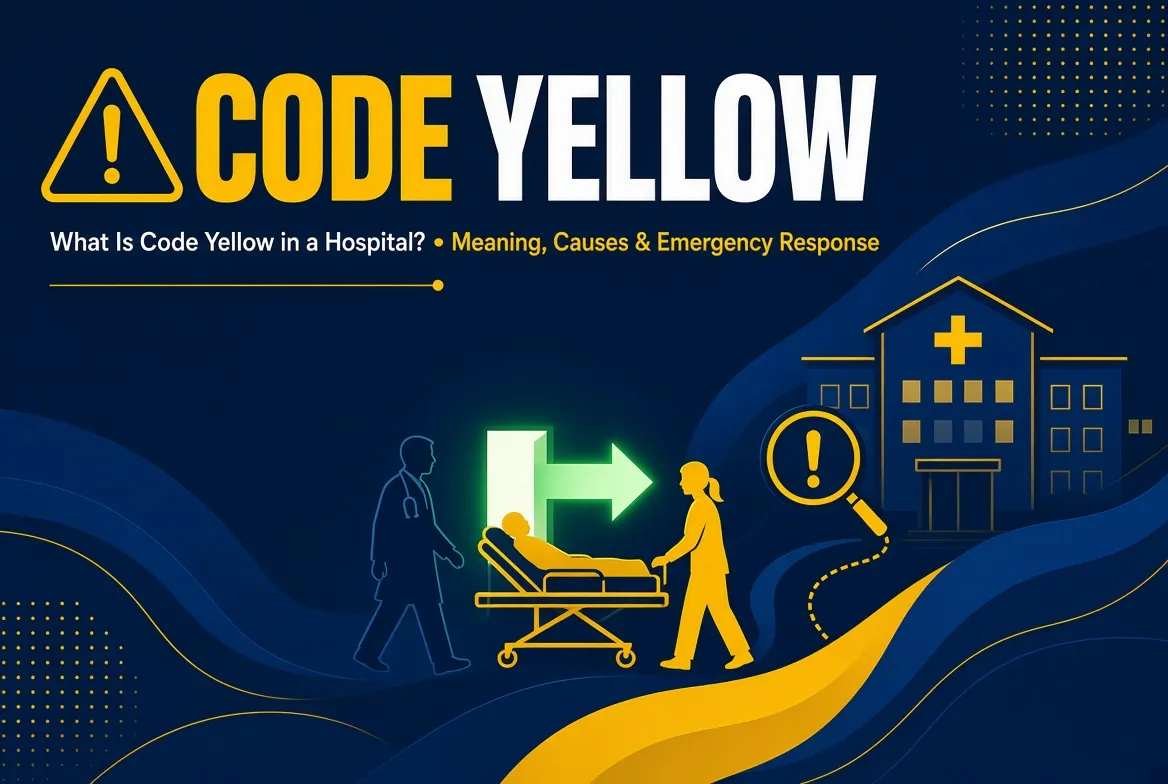
Inside a hospital, safety is built into the environment. Staff are trained to recognize and respond to a wide range of emergencies: a cardiac arrest triggers Code Blue, a fire triggers Code Red, and a combative or aggressive patient triggers what's known as Code Gray, a standardized alert that mobilizes security and clinical staff to de-escalate the situation safely. These protocols exist because hospitals long ago recognized that safety can't be left to chance; it has to be built, tested, and drilled.
The problem is that this same level of structured vigilance has historically stopped at the hospital's front door. Once a patient with heart failure or COPD goes home, the monitoring, the trained eyes, and the rapid-response protocols disappear with them. Digital patient monitoring exists to close that gap, extending a version of the hospital's watchfulness into the home, the car, and daily life, without requiring a bed, a nurse, or a building.
How Remote Patient Monitoring Works
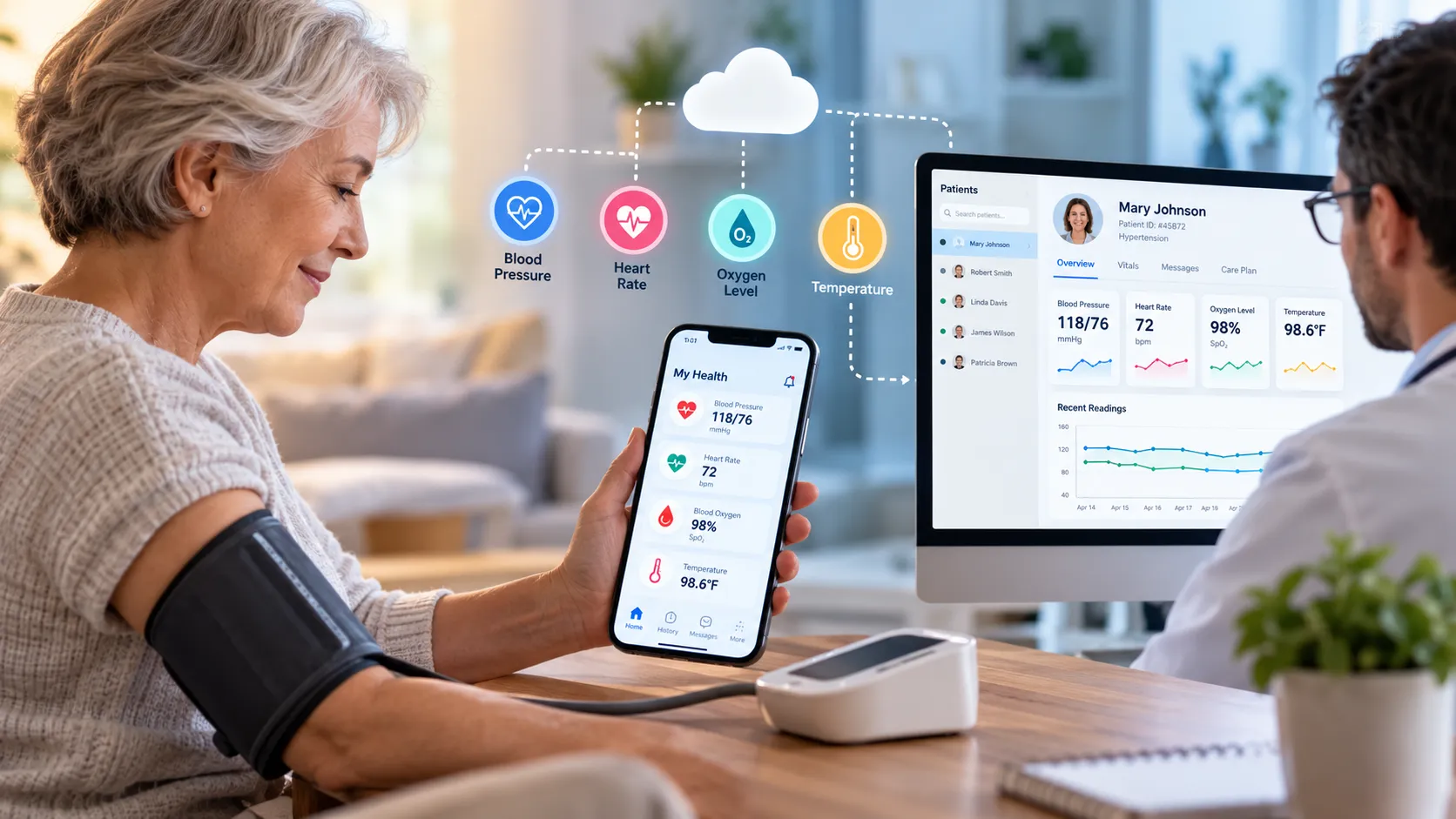
At its core, remote patient monitoring runs on three connected layers:
- Data capture: Wearables, blood pressure cuffs, pulse oximeters, glucose monitors, and connected scales collect vital signs and biometric data continuously or on a set schedule.
- Secure transmission: Devices send that data over cellular or Wi-Fi connections to a HIPAA-compliant platform, where it's organized into a dashboard clinicians can review.
- Clinical response: Care teams set alert thresholds so that an abnormal reading (a spike in blood pressure, a drop in oxygen saturation, a sudden weight gain that signals fluid retention) triggers a notification for a nurse or physician to follow up, often the same day.
This is what separates real-time patient monitoring from a simple health app: the loop closes with a human decision, not just a data point sitting in a chart.
Practical Applications & Use Cases
Remote clinical monitoring is already reshaping care across several settings:
- Chronic disease management: Patients with diabetes, hypertension, or heart failure share daily readings with their care team, allowing physicians to adjust medication before a small problem becomes a hospitalization.
- Post-surgical recovery: Patients recovering at home wear sensors that track wound healing indicators, mobility, and vital signs, cutting down on unnecessary follow-up visits.
- Home-based patient monitoring for older adults: Fall detection wearables, motion sensors, and check-in systems give caregivers visibility into a loved one's safety without constant in-person supervision. For patients who spend time outdoors gardening, walking, or simply stepping onto a porch, that same safety net increasingly extends past the front door through connected outdoor security systems, which pair motion and perimeter alerts with existing home health monitoring to flag falls, wandering, or unusual activity before they turn into emergencies.
- Emergency department diversion: Continuous monitoring after an ED visit helps confirm a patient is stabilizing at home, reducing unnecessary return trips and freeing up emergency department capacity for genuine crises.
The Data Behind the Shift
Healthcare monitoring technology isn't a niche investment anymore. Market analysts project the global remote patient monitoring market to grow from roughly $54 billion in 2026 to well over $130 billion by 2034, reflecting a compound annual growth rate above 12%, according to recent industry forecasts. North America currently leads adoption, driven largely by an aging population, rising chronic disease rates, and healthcare systems actively trying to reduce avoidable hospital admissions.
Research published through outlets like NIH's PubMed Central and AHRQ's Patient Safety Network has consistently linked structured remote patient monitoring programs to fewer emergency department visits and better management of chronic conditions when care teams respond promptly to alerts, underscoring that the technology's safety value depends as much on the response protocol as on the sensor itself.
Advantages & Limitations
Benefits:
- Earlier detection of health deterioration, often days before symptoms become severe
- Fewer unnecessary hospital and ED visits
- Greater independence for patients managing chronic conditions or aging in place
- More complete clinical data than sporadic in-office visits can capture
Current limitations:
- Device connectivity issues and patient adherence can create gaps in continuous health monitoring
- Not every patient has reliable internet access or comfort with the technology
- Alert fatigue is a real risk if thresholds aren't tuned carefully for each patient
- Reimbursement and workflow integration still vary by health system and payer
Remote Patient Monitoring vs. Traditional In-Hospital Monitoring
| Factor | Remote Patient Monitoring | Traditional In-Hospital Monitoring |
| Location | Home or community setting | Hospital or clinic |
| Continuity | Continuous, real-world data | Snapshot during visits or admission |
| Cost | Lower per-patient cost over time | Higher due to bed and staffing needs |
| Patient independence | High: patients stay in daily life | Low: requires admission or visit |
| Response speed | Depends on alert protocols and staffing | Immediate, on-site clinical response |
Neither model replaces the other. Virtual patient monitoring extends the safety net between visits; in-hospital care still handles acute emergencies that need immediate, hands-on intervention.
Getting Started with Remote Patient Monitoring
For healthcare providers and administrators evaluating a program, a few best practices consistently separate successful rollouts from stalled ones:
- Start with a defined patient population (commonly heart failure or COPD patients) where the safety case is clearest
- Set alert thresholds collaboratively with clinical staff to avoid overwhelming care teams with false positives
- Train patients and caregivers on device use before discharge, not after
- Build a clear escalation pathway so an abnormal reading reliably reaches a clinician who can act on it
FAQs
What is remote patient monitoring?
Remote patient monitoring is the use of connected devices to collect health data from patients outside a clinical setting and transmit it to healthcare providers, allowing earlier detection of problems and fewer in-person visits.
How does remote patient monitoring work?
Wearables and connected medical devices capture vital signs, transmit the data securely to a monitoring platform, and alert clinicians when readings fall outside a patient's safe range so they can intervene quickly.
What are the benefits of remote patient monitoring?
It enables earlier detection of health decline, reduces avoidable hospital and emergency department visits, and gives patients more independence while staying clinically connected to their care team.
How do I get started with remote patient monitoring?
Healthcare providers typically begin with a specific chronic disease population, select compatible devices, define alert thresholds with clinical staff, and train patients before they leave the hospital or clinic.
What are the limitations of remote patient monitoring?
Connectivity gaps, patient adherence, alert fatigue, and inconsistent reimbursement policies remain the biggest practical challenges to scaling patient monitoring systems.
Remote patient monitoring vs. in-person visits which is better?
They serve different purposes. RPM provides continuous, real-world data between visits, while in-person care remains essential for physical exams, procedures, and acute emergencies that need hands-on treatment.
Is remote patient monitoring the same as telehealth?
No. Telehealth generally refers to virtual visits and consultations, while remote patient monitoring is the continuous collection of health data through connected devices, though the two are often used together as part of a broader virtual care strategy.






















Sign in to leave a comment.