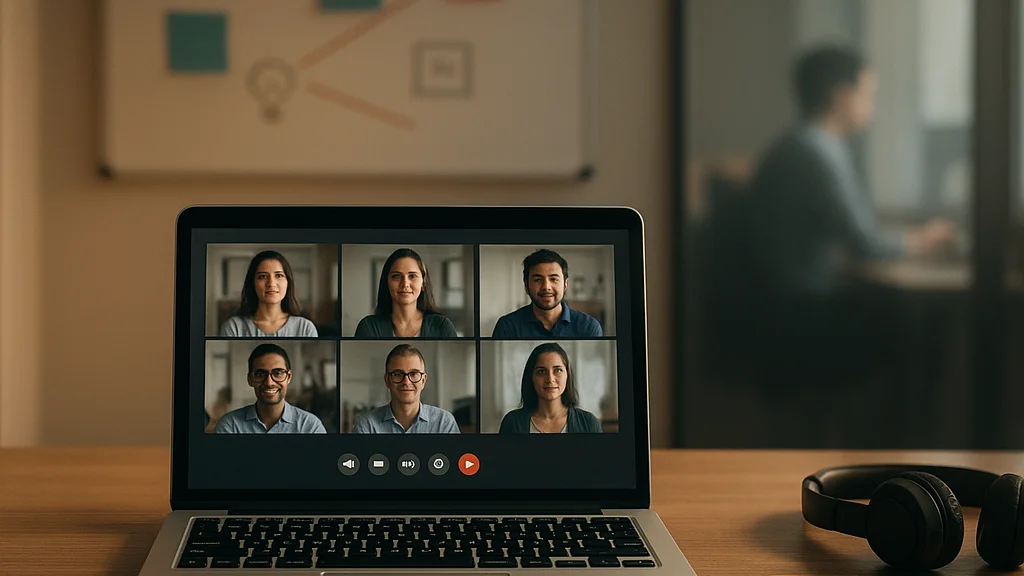

The uncomfortable truth: most remote management fails for boring reasons
Here is the unpopular view first: remote teams do not collapse because people are lazy, distracted, or secretly working from a beach. They fail because managers keep recreating office habits inside digital tools and then act shocked when the result is slower, colder, and more confusing. Three things usually go wrong before anything else does. First, leaders confuse visibility with productivity. Second, they overload people with meetings because silence makes them nervous. Third, they buy software to solve what is really a clarity problem.
That pattern has been visible for years, but by 2026 it is harder to excuse. Distributed work is no longer an emergency patch. It is a mature operating model used by startups, agencies, software companies, support organizations, and increasingly by traditional firms that want broader hiring pools and lower real-estate costs. According to public reporting from Reuters and analysis across major employers in recent years, many companies have settled into hybrid or remote-first arrangements rather than returning fully to pre-2020 norms. The experiment phase is over. What remains is execution.
The managers who get results do something less theatrical and more disciplined. They define what good work looks like, reduce dependency chains, document decisions, and treat time zones as a design constraint rather than a personal failing. That sounds obvious. It is not common. A lot of remote management still runs on vibes, Slack pings, and calendar sprawl.
If you want a lighter companion read after this one, WriteUpCafe has covered similar ground in Remote Team Management Strategies That Actually Work and the broader Complete Guide to Remote Team Management Strategies That Work. My argument here is narrower and sharper: the strategies that work are the ones that reduce ambiguity, not the ones that increase managerial presence.
Remote management succeeds when work becomes easier to understand without a manager in the room.
That is the standard. Not culture decks. Not twelve new rituals. Not performative check-ins. If a team can move decisively across distance, hand off work cleanly, and solve problems without waiting for permission, management is working. If not, no amount of digital enthusiasm will save it.
How remote work matured from perk to operating system
The context matters because management advice often lags reality by two or three years. Early remote work guidance was obsessed with home office ergonomics, webcam etiquette, and whether people should wear shoes during video calls. Cute, but strategically thin. The real shift happened when companies realized remote work was not just a location policy. It changed hiring, compensation, knowledge management, security, performance reviews, customer response models, and product development speed.
By 2025, mainstream business coverage had already started reflecting that maturity. The MSN piece What 2025 taught us about remote work and building distributed teams framed distributed work less as a temporary accommodation and more as a leadership discipline. That distinction matters. Once remote work becomes structural, weak management gets exposed faster because there is less room for accidental coordination.
Office environments hide a lot of dysfunction. People overhear context. They catch hallway updates. They infer urgency from body language. They rescue bad planning with proximity. Remote teams lose those crutches. What remains is the operating system underneath: who decides, how priorities change, where documentation lives, what happens when someone is asleep in another time zone, and how performance is judged.
This is why the best remote teams often look unusually boring from the outside. They are not in constant contact. They are not posting all day in five different channels. They have rules. They have templates. They know when to escalate and when not to. They use asynchronous communication by default and synchronous communication by exception. That can feel slower to managers raised on office immediacy. In practice, it is often faster because it lowers interruption costs.
WriteUpCafe touched on this evolution in Effective Remote Team Management Strategies That Work in 2026. The strongest point is also the least glamorous: remote work is now a systems problem. Managers who still treat it as a morale problem are solving the wrong thing.
- Phase one: remote work as emergency continuity
- Phase two: remote work as employee benefit and recruiting lever
- Phase three: remote work as an integrated business model requiring redesigned management
Most serious organizations are now in phase three, even if some leaders still talk like it is phase one.
The first strategy that works: manage by outputs, not digital presence
Remote teams break when managers measure what software can easily display instead of what the business actually needs. Green dots, response times, meeting attendance, and channel activity are seductive because they are visible. They are also weak proxies for value. A developer can be quiet for six hours and solve a production issue that saves a release. A marketer can answer every message instantly and still ship nothing useful. Presence metrics reward performative busyness. Outputs reward contribution.
That means every team needs a brutally clear answer to four questions: what are we producing, how will we know it is good, when is it due, and who owns the final call? If those answers are vague, managers compensate with surveillance or overcommunication. Neither scales.
Forbes made a version of this point in Five Leadership Lessons Learned From Successfully Managing Remote Teams, emphasizing trust and clarity as leadership essentials. I would put it more bluntly: if your team cannot define deliverables without a meeting, your management system is underbuilt.
A practical output model usually includes:
- A small set of team-level goals tied to business outcomes
- Role-specific scorecards with 3 to 5 measurable responsibilities
- Written definitions of done for recurring work
- Weekly review rhythms focused on blockers, tradeoffs, and results
- Decision logs so people know why priorities changed
Notice what is missing: constant status requests. Those requests are often a tax on unclear systems. Good managers replace “just checking in” with visible workflows and agreed reporting intervals.
There is also a cultural payoff. Output-based management is fairer across personality types, caregiving situations, and time zones. Extroverts no longer get extra credit for talking. Night owls are not punished for missing chatter at 9 a.m. People are judged on work quality, reliability, and collaboration, not whether they perform urgency well on Slack.
When managers stop rewarding responsiveness as a substitute for results, remote teams usually get calmer and better at the same time.
That calm matters. Burnout in distributed teams often comes from low-grade vigilance, the feeling that you must always be visibly available. Remove that pressure and productivity tends to rise because attention stops fragmenting every ten minutes.
The second strategy: build an asynchronous core and protect synchronous time
Most remote teams do not have a communication problem. They have a channel design problem. They use synchronous tools for work that should be documented, and asynchronous tools for conversations that need fast resolution. The result is the worst of both worlds: endless message trails and too many meetings.
An asynchronous core means the default mode of work can continue without immediate replies. That requires written briefs, recorded updates, shared project boards, searchable decisions, and explicit deadlines. It also requires managers to stop treating every question as a live event. If the answer can wait three hours, it should. If the issue affects multiple people later, it should be documented once rather than repeated in private chats.
On the tooling side, this is where teams get weirdly ideological. People argue like Reddit mods about Notion versus ClickUp, as if a productivity stack will save a team that cannot prioritize. The techtimes comparison Best Productivity Apps 2026: Notion vs ClickUp for High-Performing Remote Team Apps is useful because it highlights a real distinction: some tools are better for knowledge architecture, others for execution tracking. Mature remote teams usually need both functions, whether in one platform or several integrated ones.
The trick is not choosing the trendiest stack. It is assigning each tool a single job. One place for documentation. One place for tasks. One place for urgent discussion. One place for decisions. When tools overlap, people stop trusting any of them.
- Asynchronous by default: project updates, meeting notes, briefs, proposals, routine approvals
- Synchronous by necessity: conflict resolution, complex brainstorming, crisis response, sensitive feedback
- Never left ambiguous: who responds, by when, and where the final answer is stored
Managers should also defend synchronous time more aggressively. A 30-minute meeting with a sharp agenda can save two days of muddled messaging. But most meetings deserve suspicion. If there is no decision to make, no conflict to resolve, and no high-context issue to untangle, write it down instead. Your team does not need another “quick sync.” It needs fewer interruptions and better records.
The third strategy: redesign accountability around trust, cadence, and consequence
Trust gets romanticized in remote work conversations, usually by people who mean “please do not monitor me.” Fair enough, but trust in serious teams is not a mood. It is a structure. People trust one another when commitments are visible, deadlines are real, and missed handoffs trigger action instead of awkward silence.
That starts with cadence. Every remote team needs predictable review loops at three levels: daily or near-daily task visibility, weekly operational reviews, and monthly or quarterly strategic alignment. Each level answers a different question. Task visibility tells people what is moving. Weekly reviews surface blockers and tradeoffs. Strategic reviews test whether the team is still solving the right problem.
The Entrepreneur article The Best Time Management Techniques for Teams That Want to Win points toward a broader truth: time management for teams is really dependency management. When one person misses a deadline, the cost is rarely isolated. Remote teams feel that pain harder because delays propagate across time zones and functions.
So accountability has to be specific. Not “own this initiative.” Own the decision memo by Tuesday, the vendor shortlist by Friday, the launch checklist by the 28th. Vague ownership is fake ownership. And when commitments slip, managers need a routine response:
- Clarify whether the miss was caused by scope, skill, capacity, or ambiguity
- Document the new deadline and downstream impact
- Adjust workload or process if the failure is systemic
- Escalate repeated misses as a performance issue, not a communication quirk
This is where some leaders get squeamish. They want remote cultures to feel flexible, supportive, maybe even a little anti-corporate. Fine. Support and standards are not enemies. In fact, remote teams need standards more because distance amplifies the cost of drift. The kindest thing a manager can do is make expectations unmistakable.
According to Onrec’s guidance in How to Streamline Project Management for Remote Teams, process streamlining works best when teams reduce friction in handoffs and centralize visibility. That is not glamorous leadership. It is operational hygiene. But hygiene wins. Every time.
The fourth strategy: make culture tangible instead of theatrical
Culture is where remote management advice often goes off the rails. Companies panic about connection, then overcorrect with forced fun, mandatory camera norms, and digital icebreakers that feel like hostage situations. Three things are wrong with that approach. It confuses culture with social activity. It ignores introverts and cross-cultural dynamics. And it treats adults like summer camp attendees.
Real remote culture is built from repeated experiences of fairness, competence, and inclusion. Do people get context early enough to do good work? Are promotions tied to visible contribution rather than office-style charisma? Can junior employees ask questions without feeling stupid? Are disagreements handled in public process rather than private politics? Those are cultural questions. Trivia nights are not.
Managers should make culture tangible through systems:
- Publish decision principles so people know how tradeoffs are made
- Write onboarding guides that explain norms, not just tools
- Use public praise tied to specific behaviors and outcomes
- Create lightweight spaces for social connection that are optional, not coerced
- Run retrospectives that discuss process failures without blame theater
One of the best indicators of a healthy remote culture is whether new hires can become productive without needing a “translator” for internal chaos. If everything important lives in someone’s head, culture is exclusionary by design. Documentation is not bureaucracy. It is access.
There is also a retention angle. Distributed workers often leave not because they dislike remote work, but because remote work exposes bad management faster. They can feel disorganization more directly. They can compare your systems to other employers without relocating. And by 2026, employers are competing globally for skilled knowledge workers who know exactly how much poor process costs them.
That is why the better companies have shifted from “how do we keep people engaged?” to “how do we remove friction from contribution?” The second question sounds colder. It is actually more humane, because it respects people’s time and attention instead of trying to manufacture belonging through mandatory cheerfulness. Nothing says culture like a forced virtual happy hour at 6 p.m. across four time zones, right?
What changed recently: the 2026 remote management playbook is more technical
Remote management in 2026 is shaped by three recent developments: AI-assisted workflows, stricter attention to data security, and a more disciplined approach to hybrid coordination. The first is obvious. Teams now use AI tools for note summaries, drafting, search, analytics, and routine project updates. That saves time, but it also creates a new management risk: leaders mistake generated clarity for actual clarity. A polished summary is still useless if the underlying decision rights are fuzzy.
The second development is less flashy but more consequential. As distributed teams matured, companies tightened controls around access, documentation, and compliance. Remote work is now deeply tied to identity management, device policies, and auditability. That means managers must think beyond productivity and understand how work is recorded, shared, and approved. Good remote leadership in 2026 includes basic operational literacy in security and governance.
Third, hybrid teams have become more deliberate about avoiding two-tier systems where office staff gain informal influence and remote staff become second-class participants. This has pushed more organizations to adopt remote-first communication norms even when some employees share physical space. If a decision happens in a room, it gets documented. If a meeting includes remote participants, the experience is designed for them first, not as an afterthought.
WriteUpCafe’s Remote Team Management Strategies That Work in April 2026 and Remote Team Management Strategies That Actually Work both circle this point from different angles: the remote playbook is no longer mostly about etiquette. It is about architecture.
Managers should watch for one more shift. Employees are getting less tolerant of tool sprawl and more sensitive to cognitive overload. The winning teams in 2026 are not necessarily the most experimental. They are the ones that standardize intelligently, automate repetitive reporting, and reserve human attention for judgment, coaching, and conflict resolution.
The future of remote management is not more communication. It is better-designed communication with clearer ownership and fewer unnecessary touches.
That is the real upgrade path. Not another dashboard. Not another channel. Better decisions about what deserves a human interruption.
Case patterns from teams that outperform across distance
Across software firms, marketing agencies, customer support operations, and product-led startups, the strongest remote teams tend to share a few repeatable patterns. They front-load clarity. They narrow priorities aggressively. They document enough to reduce dependency without burying people in process. And they train managers to coach through writing, not just meetings.
Consider a common software scenario: product, engineering, and design spread across North America and Europe. Weak teams run this through overlapping chats, ad hoc calls, and changing briefs. Strong teams use a written product spec, a fixed decision owner, a weekly risk review, and a release checklist visible to everyone. Fewer surprises. Less resentment. Better shipping discipline.
In agency settings, the difference often shows up in client communication. Poorly managed remote agencies let internal confusion leak into delivery because account teams, creatives, and operations do not share a single source of truth. Better-run agencies centralize timelines, define revision boundaries, and document approvals so nobody is reverse-engineering yesterday’s call notes at midnight.
Support organizations provide another useful example. Remote support teams that perform well usually separate urgent escalation paths from routine knowledge sharing. They maintain updated playbooks, track resolution metrics visibly, and use asynchronous coaching for recurring issues. That reduces manager bottlenecks and speeds up onboarding.
The lesson across these examples is not industry-specific. It is structural. High-performing remote teams do three things unusually well:
- They convert tacit knowledge into shared process
- They reduce the number of decisions that require meetings
- They train managers to remove blockers instead of hovering over activity
If you want the shortest possible summary, here it is: remote team management strategies that work are the ones that make work legible. Legible priorities. Legible ownership. Legible deadlines. Legible consequences. Everything else is garnish.
And yes, there is still room for humanity. Great remote managers know when someone is overloaded, when a conflict needs a live conversation, and when a team needs a reset after a brutal sprint. But empathy without structure produces drift, and structure without empathy produces attrition. The teams that last combine both. They are demanding, clear, and surprisingly calm.
That is the bar now. Remote work is not a novelty, and managing it well is not some mystical leadership art. It is operational competence with better writing, sharper priorities, and less faith in performative busyness. Unsexy. Effective. Exactly why it works.





















Sign in to leave a comment.