

When an air conditioner breaks down, the immediate question is usually simple: How much will it cost to fix?
But for an older system, repair cost isn't the only number that matters.
A relatively inexpensive repair may keep an otherwise healthy AC running for years. On the other hand, repeatedly spending money on an aging system with declining performance can eventually cost more than addressing the larger problem.
For homeowners in Timberwood Park and other parts of the San Antonio area, the better question is often: Does repairing this particular system still make sense?
Here are some of the factors worth considering before making that decision.
Start With the Age of the System
Age alone doesn't determine whether an air conditioner should be replaced.
Two systems installed in the same year can be in very different condition depending on maintenance history, operating hours, installation quality, previous repairs, and other factors.
Still, age provides useful context.
A major repair on a relatively young system deserves a different calculation than the same repair on equipment that has already accumulated many years of heavy Texas cooling use.
Instead of treating a certain birthday as an automatic replacement deadline, consider age alongside the system's overall condition.
Look at the Repair History
One repair doesn't necessarily mean an AC is becoming unreliable.
A pattern of repairs is more informative.
Think about how many service calls the system has needed over the past few cooling seasons. Have several unrelated components failed? Are repairs becoming more expensive? Does another issue seem to appear shortly after the previous one was corrected?
Repeated repairs can indicate that multiple parts of an aging system are beginning to wear.
At that point, evaluating AC Replacement alongside the cost of another repair can provide a more complete financial picture.
The important comparison isn't simply repair cost versus replacement cost today. It's the likely cost of keeping the existing equipment operating over the next several years.
Consider the Size of the Current Repair
A small repair on an otherwise dependable AC may be an easy decision.
A major component failure deserves more consideration.
Before approving an expensive repair, ask what failed, why it failed, what condition the rest of the system is in, and whether there are signs that other major components are deteriorating.
Also ask what the repair actually solves.
If replacing one component restores an otherwise healthy system, repairing may make sense. If the repair addresses only one problem while the AC continues to have airflow, comfort, or reliability issues, replacement becomes more relevant.
Has Comfort Been Getting Worse?
Repair history isn't the only clue.
Think about how well the AC performed before the latest breakdown.
Did it maintain the thermostat setting during hot afternoons? Were certain rooms consistently uncomfortable? Had cooling cycles become noticeably longer? Was airflow getting weaker? Did the system seem to struggle more each summer?
A successful repair can correct a failed component, but it won't necessarily solve unrelated problems involving equipment sizing, ductwork, airflow, or overall system condition.
If comfort had already been declining, make that part of the repair-versus-replace conversation.
Compare Energy Use Carefully
Older equipment can become less attractive to operate, but a high electricity bill by itself isn't proof that an AC needs replacement.
Weather matters. Thermostat settings matter. Household occupancy and other electrical loads matter too.
Instead of comparing one month's bill with the previous month, look for longer-term patterns under reasonably similar conditions.
If the AC is running substantially longer than it used to while producing worse comfort, that's useful information.
A technician can then evaluate whether the problem can be corrected through repair or whether the system's overall condition makes replacement worth considering.
Don't Replace Equipment Based on a Rule of Thumb Alone
Homeowners often encounter simple formulas online for deciding whether to repair or replace an HVAC system.
Those rules can be useful as conversation starters, but they shouldn't replace an actual evaluation.
A ten-year-old AC isn't automatically bad. A younger system isn't automatically worth repairing.
Equipment condition, repair cost, warranty coverage, previous failures, installation quality, comfort performance, and expected future use of the home can all change the decision.
A good recommendation should be explainable in terms of your specific equipment—not just its age.
Think About How Long You Plan to Stay in the Home
Your plans for the property can also affect the calculation.
Someone planning to remain in the home for many years may place more value on reliability, comfort, and avoiding repeated repairs.
Someone preparing to move may evaluate the same situation differently.
That doesn't automatically make either repair or replacement the correct choice. It simply means HVAC decisions should account for how long you're likely to benefit from the investment.
Get a Diagnosis Before Making the Decision
It's difficult to make a sensible repair-versus-replace decision without first knowing what's actually wrong.
If your system stops cooling, starts making unusual noises, develops weak airflow, freezes, or begins cycling abnormally, the first step should be diagnosis.
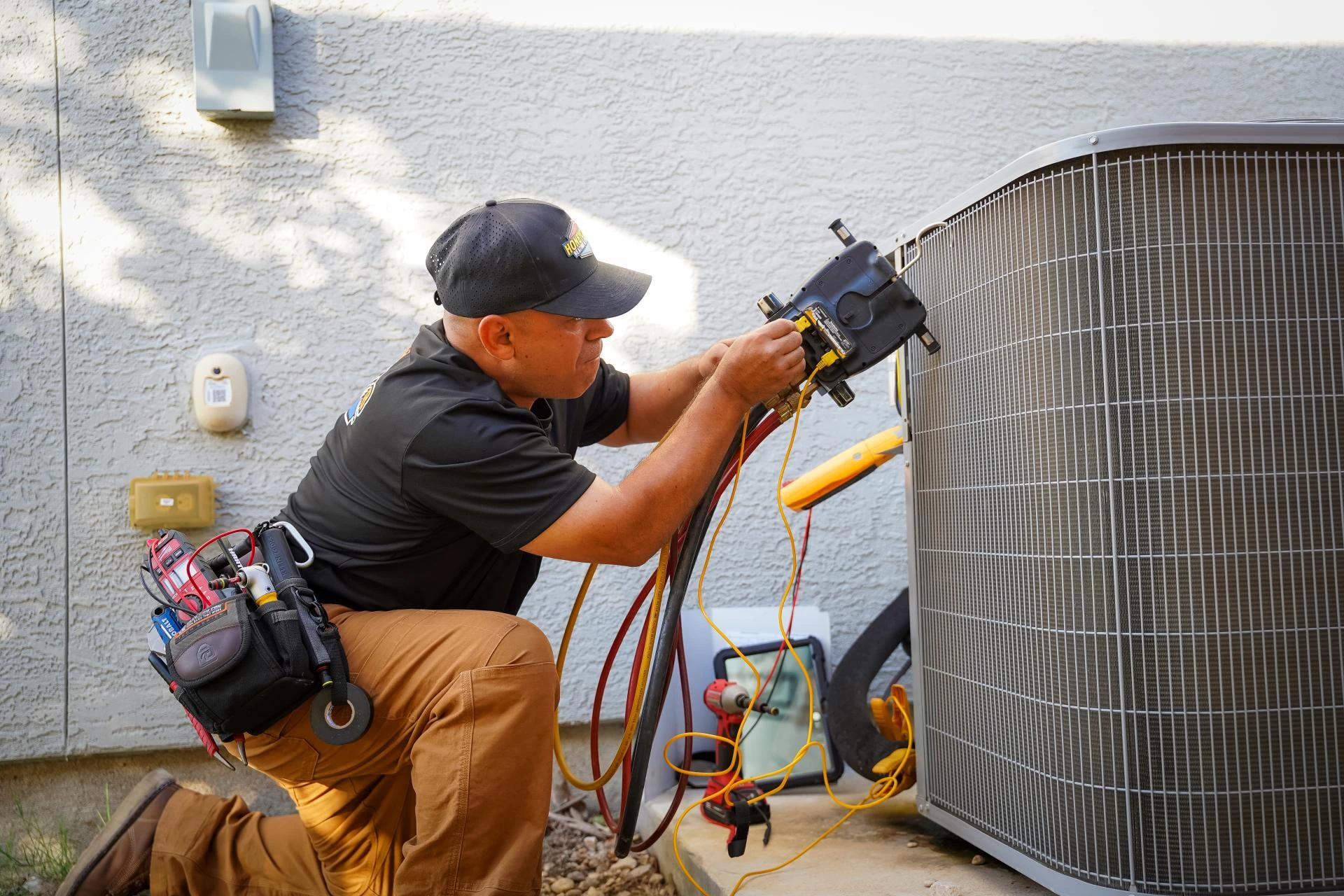
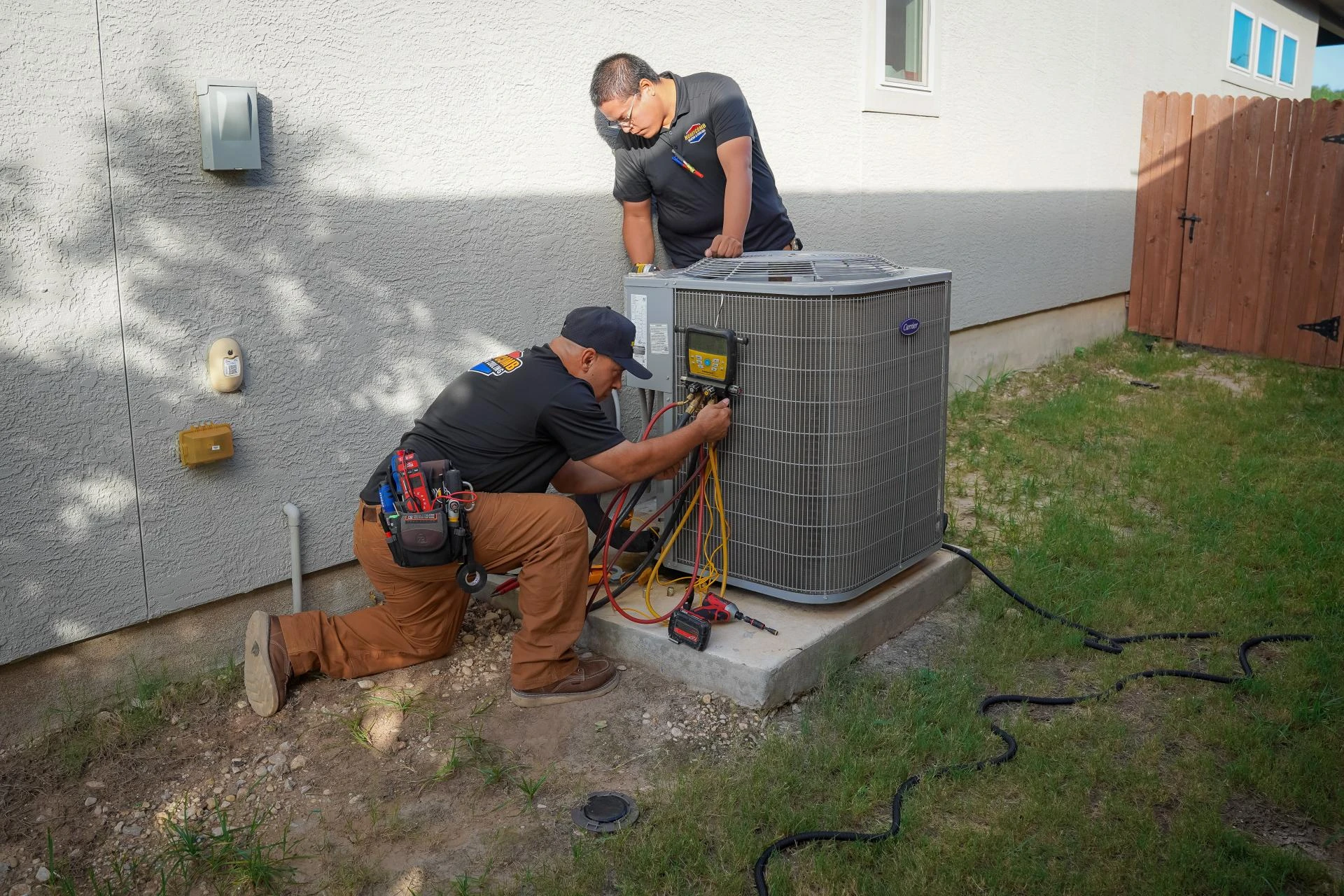
For homeowners experiencing these issues locally, professional AC service in Timberwood Park can help determine the condition of the existing system before a larger decision is made.
Ask the technician to explain the failure, the proposed repair, the general condition of the equipment, and whether there are other concerns that could affect its remaining service life.
That gives you information you can actually use.
Repair When Repair Makes Sense
Replacement isn't automatically the better choice just because an AC has some age on it.
If the system has generally been reliable, still provides good comfort, and needs a reasonable repair, keeping it may be the practical option.
Likewise, continuing to repair equipment isn't automatically cheaper simply because each individual service call costs less than replacement.
The decision changes when those repairs start accumulating.
Make the Decision Based on the Whole System
When an older air conditioner fails, don't look at the broken component in isolation.
Consider the system's age, repair history, current failure, comfort performance, operating behavior, overall condition, and how long you expect to remain in the home.
Then compare the realistic cost of keeping the existing AC with the cost and benefits of replacing it.
The goal isn't to keep an old system running at any cost—or to replace equipment prematurely.
It's to spend money where it makes the most sense for the home.




























Sign in to leave a comment.