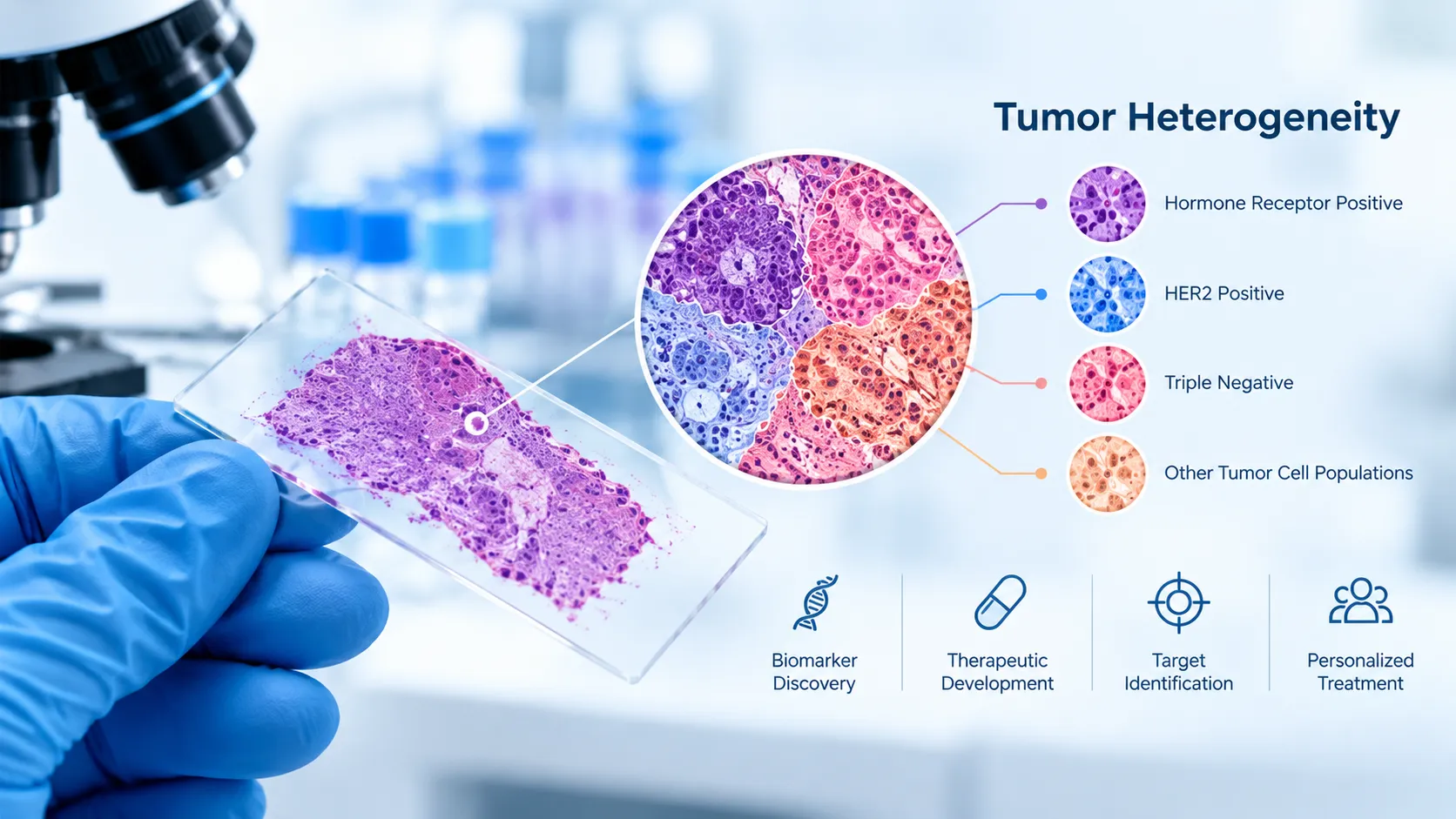

Breast cancer is not a single, uniform disease. Tumors can differ substantially in their molecular characteristics, cellular composition, genetic alterations, and response to treatment. Even within the same tumor, different groups of cancer cells may exhibit distinct biological features. This phenomenon, known as tumor heterogeneity, is an important area of investigation in oncology research.
For pharmaceutical companies, biotechnology firms, and clinical research organizations, studying this variation can provide valuable insights into disease mechanisms, biomarker development, therapeutic response, and drug resistance. High-quality breast cancer biospecimens for research allow investigators to examine these differences directly in patient-derived tissue.
Understanding Tumor Heterogeneity in Breast Cancer
Tumor heterogeneity refers to the presence of diverse cancer cell populations within or between tumors. This diversity may develop through genetic mutations, epigenetic changes, differences in cellular signaling, and interactions between tumor cells and the surrounding microenvironment.
Breast tumors from different patients can have different molecular profiles, while separate regions of the same tumor may also contain distinct populations of cells. These differences can influence tumor progression and treatment response.
Researchers therefore need well-characterized tissue specimens to investigate how cancer cells vary and how those variations may affect therapeutic outcomes.
Why Breast Cancer Tissue Samples Are Important
Patient-derived tissue provides researchers with a direct source of biological material for investigating breast cancer characteristics. Tissue samples can be examined using histological, molecular, genomic, and proteomic techniques.
Depending on the study requirements, researchers may evaluate tumor morphology, receptor expression, gene alterations, protein biomarkers, immune-cell infiltration, or other biological characteristics.
Well-documented specimens can also be paired with clinical information, allowing researchers to investigate relationships between tissue characteristics and factors such as disease stage, treatment history, pathological findings, or therapeutic response.
This makes breast tumor tissue valuable for both exploratory studies and translational research programs.
Studying Different Breast Cancer Subtypes
One important approach to understanding heterogeneity is comparing tissue from different breast cancer subtypes. Breast cancers may differ according to hormone receptor status, HER2 expression, molecular characteristics, and other pathological features.
For example, triple negative breast cancer samples research can help investigators examine tumors that lack estrogen receptor, progesterone receptor, and HER2 expression. Researchers may investigate the molecular characteristics of these tumors to identify potential therapeutic targets and biomarkers.
Similarly, HER2 positive breast cancer tissue samples can be used to study HER2 expression, downstream signaling pathways, tumor biology, and mechanisms associated with response or resistance to HER2-targeted therapies.
Comparing these tissue groups can help researchers identify biological differences between breast cancer subtypes and understand why particular treatments may work differently across patient populations.
Comparing Different Regions of a Tumor
Tumor heterogeneity can also exist within an individual breast tumor. One region may contain cells with different genetic or molecular characteristics from another region.
Researchers can examine tissue from multiple tumor areas to investigate these variations. Techniques such as immunohistochemistry, sequencing, spatial analysis, and molecular profiling can help identify differences in cellular populations and biomarker expression.
This type of research can be particularly relevant when investigating treatment resistance. A therapy may eliminate one population of tumor cells while another population with different biological characteristics survives and contributes to disease progression.
Analyzing tissue heterogeneity can therefore help researchers investigate the mechanisms underlying these differences.
The Role of FFPE Breast Cancer Tissue
Formalin-fixed paraffin-embedded tissue is widely used in pathology and retrospective research. Breast cancer FFPE tissue samples can preserve important morphological and molecular information and are frequently used for histopathology, immunohistochemistry, and selected molecular analyses.
FFPE specimens can be particularly useful when researchers need access to archived patient material. When accompanied by appropriate clinical and pathological information, these specimens may support studies involving disease classification, biomarker evaluation, and retrospective investigation of tumor characteristics.
Researchers must nevertheless select specimen types according to the analytical requirements of their specific study, as fixation and processing can affect certain downstream applications.
Fresh Frozen Tissue for Molecular Research
Fresh frozen specimens offer another valuable format for breast cancer research. Fresh frozen breast tumor tissue samples can be used in applications where preservation of molecular components is important.
Depending on collection and storage protocols, fresh frozen tissue may support DNA, RNA, protein, genomic, transcriptomic, and other molecular analyses. Researchers can use these specimens to investigate genetic alterations and molecular pathways associated with tumor development and progression.
For pharmaceutical and biotechnology research, access to appropriately collected and processed fresh frozen tissue can support laboratory studies focused on target identification, biomarker research, and therapeutic development.
Connecting Tissue Findings With Clinical Data
Tissue analysis becomes more informative when researchers can connect laboratory findings with relevant clinical information. For example, investigators may compare molecular characteristics with pathological diagnosis, disease stage, treatment history, or documented response data.
This approach can help researchers investigate whether specific tissue characteristics are associated with disease behavior or therapeutic outcomes.
For clinical research organizations and pharmaceutical research teams, well-annotated biospecimens can therefore support studies that bridge laboratory discoveries and clinical research.
Applications in Drug Development
Understanding tumor heterogeneity is particularly important during oncology drug development. A candidate therapy may demonstrate activity against one population of cancer cells but have limited effects against another.
Researchers can use breast cancer tissue to investigate potential mechanisms of sensitivity and resistance. Tissue-based studies may also help identify biomarkers that could be explored for patient stratification or therapeutic response assessment.
By studying diverse patient-derived specimens, research teams can build a more detailed understanding of the biological variation that may influence treatment outcomes.
Selecting High-Quality Breast Cancer Biospecimens
The quality and characterization of tissue can significantly influence research results. Researchers may need specimens with specific tumor types, pathological characteristics, receptor status, processing methods, or associated clinical data.
Reliable breast cancer biospecimens for research can include FFPE tissue, fresh frozen tumor tissue, and other matched biospecimens depending on study requirements.
For translational and pharmaceutical research, consistent collection, processing, storage, quality control, and documentation are important considerations when sourcing patient-derived tissue.
Supporting More Detailed Breast Cancer Research
Tumor heterogeneity remains an important consideration in breast cancer research because biological differences can occur both between patients and within individual tumors. By analyzing well-characterized breast cancer tissue samples, researchers can investigate these differences at cellular, molecular, and pathological levels.
From triple negative breast cancer samples research to studies involving HER2 positive breast cancer tissue samples, FFPE specimens, and fresh frozen tissue, patient-derived biospecimens provide valuable material for investigating breast cancer biology.
As oncology research continues to move toward more detailed molecular characterization, appropriately selected and well-documented breast cancer tissue samples can support biomarker research, therapeutic development, and broader efforts to understand the complex biology of breast tumors.
























Sign in to leave a comment.